Why Won’t My Child Make Eye Contact During Play With Me?
By Wellness Hub
Last Updated: March 23, 2026
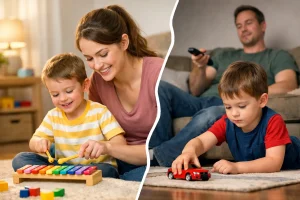
If you have found yourself thinking, “why won’t my child make eye contact” during play, you are in very good company. Many loving, attentive parents notice it and feel a sting of worry, or even a little rejection, especially when they are trying so hard to connect. The hard part is that low eye contact can look like disinterest, when it often has much more to do with attention, comfort, and how your child processes the moment.
This is not about blaming you or blaming your child. It is about understanding what might be getting in the way, and noticing the small signs of connection that can be easy to miss when you are focused on the face looking piece.
Why It Can Feel Personal, Even When It Is Not
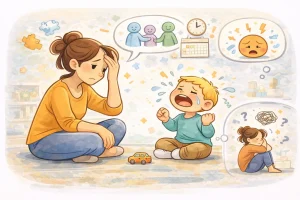
Play is one of the most tender places in parenting. You sit down, you offer your time, you bring warmth, and you hope for that little look that says, “I’m with you.” When it does not happen, it is normal to wonder if your child is avoiding you.
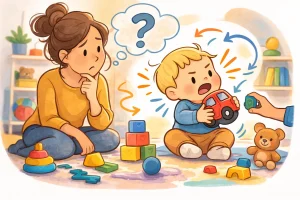
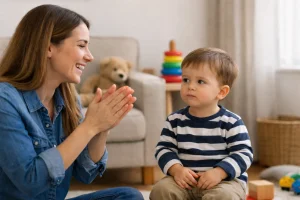
Many toddlers and young children connect in ways that do not look like steady eye contact. They might bring you a toy without looking up. They might lean into you, smile at the toy, or repeat a silly action because they want you to react. Some children show connection through their bodies first, not their eyes.
It also helps to remember that play can be busy inside a child’s brain. A new toy, a moving car, a puzzle, bubbles, a song, the dog walking by, the fan on the ceiling. All of that competes for attention. When a child is deeply focused on an object, looking away from it can feel like losing their place. So they hold on with their eyes, even if they are enjoying you being there.
If you are feeling a little hurt, that does not make you sensitive. It makes you human. The goal is not to talk yourself out of that feeling, but to add a second thought beside it: “My child may be connected, even if they are not looking right now.”
Also read: When to Get Extra Support for Joint Attention Without Panic or Labels
Why won’t my child make eye contact, even with me?
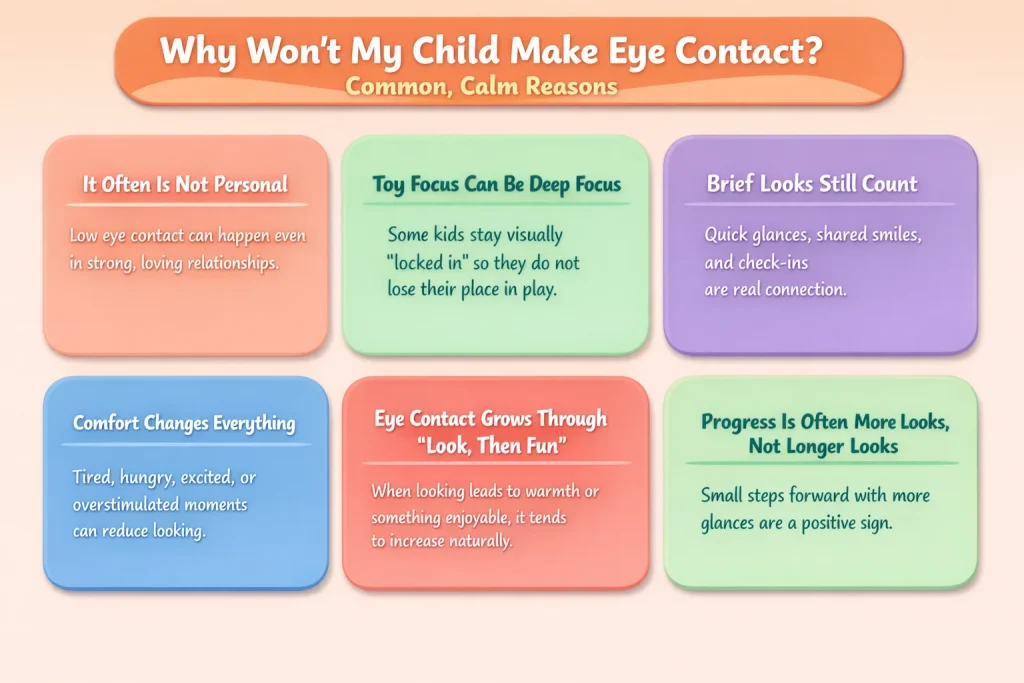
When parents ask this question, they are usually picturing eye contact as a clear sign of bonding. And it can be. But there are also many everyday, non-scary reasons a child might not look up much during play.
Here are some common ones I see in real homes:
1. Some kids are toy first kids
They love figuring things out. They get absorbed. Their attention sticks to the object, and faces are more like background information. This can be a temperament thing, not a relationship problem.
2. Your child may be using their ears more than their eyes
Some children listen closely while they play. They may understand you, enjoy your voice, and still not look up often. You might notice they respond to your tone, pause when you pause, or laugh at the right moment.
3. Eye contact can feel like too much in certain moments
When a child is excited, tired, hungry, or overstimulated, looking at a face can be harder. Faces move, eyes are bright, expressions change quickly. For some kids, it is simply more comfortable to glance briefly, then look away.
4. They may not know what eye contact is for yet
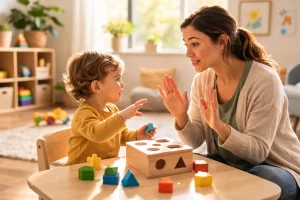
Eye contact is a social tool. It develops through thousands of tiny experiences where looking at you leads to something good: a smile, a fun surprise, a turn, a shared laugh. If your child has not had many of those “look and something happens” moments, they may not think to look up.
5. They might be unsure what you want
If a child has heard “look at me” a lot, eye contact can start to feel like a demand. Even gentle prompting can accidentally turn play into a test. Some children then protect the play by keeping their eyes on the toy.
6. It can also vary by person and setting
A child may look more at one caregiver than another, or more at home than outside, or more during routines than during free play. That does not mean they love one person more. It often means they feel more regulated and predictable in certain situations.
If you are also noticing that your child avoids looking at faces in most settings, not just during play, it can be helpful to think about the whole picture. Comfort, sensory load, and communication style all matter.
What counts as eye contact during play and what progress really looks like
A lot of stress comes from the idea that eye contact should be long and steady. For young children, especially toddlers, it is usually quick and functional. Eye contact during play often looks like tiny check-ins.
You might see:
1. A fast glance right before you do something fun
This is the classic “anticipation look.” Your child learns that your face is part of the fun.
2. Looking up after they do something interesting
They stack a block, crash a car, make a sound, then glance at you as if to say, “Did you see that?”
3. Shared smiles that come and go
A smile while looking, then eyes back to the toy. That still counts as connection.
4. Shifting gaze between the toy and you
This back and forth is a big building block for shared attention, even if each look is brief.
5. More looks during routines than during toy play
Many children find mealtimes, dressing, bath, and greetings more predictable. Predictability makes it easier to look.
Progress often shows up as frequency before duration. More little glances, more often, is a meaningful step. It is also common for eye contact to appear more when your child is calm and playful, and less when they are working hard on a task.
If you are comparing your child to another child who looks up constantly, it can help to compare your child to themselves. Are the check-ins slowly increasing over weeks? Are smiles showing up more? Do you feel more “back and forth” even without many looks? Those are real signs.
Moments that naturally bring eye contact out without asking for it
If you have been trying hard during play and getting very little looking, it can help to switch the question from “How do I get eye contact?” to “When does my child already look, even a little?”
Eye contact often pops up in moments with:
- Anticipation
Think of the pause before something fun. Many children glance up when they are waiting for the next part. - Surprise and humor
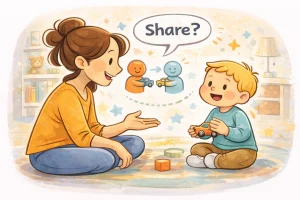
Silly sounds, funny faces, and playful mistakes often invite a quick look because your child is checking your reaction. - Turn taking
When you and your child are taking turns, there is a natural reason to look. “Is it my turn?” “Are you going to do it again?” - Help moments
When a toy is tricky, some children look up briefly to request help without words. - Routines with a predictable pattern
Eye contact during routines can be easier because your child knows what comes next. That frees up attention for connection. - This is why classic games like peekaboo, bubbles, rolling a ball, songs, mirror play, and even snack time often support connection. Not because they force looking, but because they create a reason to check in.
Gentle ways to support connection when your child looks at toys, not faces
You do not need to turn play into a training session to support this skill. Most families do best with small shifts that make it easier for a look to happen, and easier for you to notice it.
Here are a few parent-friendly ideas to hold in mind:
1. Make your face easy to find
Being at your child’s eye level helps. So does being close enough that your face is part of the play space, not across the room.
2. Use warm waiting instead of prompting
A short pause, a soft smile, and quiet presence can be more inviting than repeated reminders. Many kids need a beat to shift their gaze.
3. Respond to any glance like it matters
If your child flicks their eyes toward you for half a second, that is the moment. A smile, a playful comment, or continuing the fun tells them, “Yes, that worked.”
4. Keep your language light
Instead of questions that can feel like pressure, simple comments often work better. You are sharing the moment, not testing it.
5. Let routines do some of the work
Meals, dressing, bath, and greetings are already repeated every day. Tiny pauses in these moments can create natural check-ins without extra effort.
If you are looking for a little structure without pressure, the BASICS App can be a gentle place to start. It is parent-guided and self-paced, and it focuses on everyday moments that build connection, not perfect performance.
When to reach out for extra support and what that support can look like
Sometimes parents try all the calm, connection-first ideas and still feel stuck. Or the worry starts taking up too much space in the day. Getting support is not a big dramatic step. It can be practical and reassuring.
You might consider extra help if:
- You rarely see shared smiles or check-ins across most settings
- Play often feels one-sided, even when you slow down and follow your child’s lead
- Routines feel tense because you are both working hard to connect
- You would like a professional to watch a short interaction and offer simple tweaks
In the final third of this conversation, I also want to name something gently: if concerns persist, some families consider developmental screening to better understand communication differences or possible autism-related differences. This is not about jumping to conclusions. It is about having options that can bring clarity and support.
The best support should feel respectful. It should focus on connection, routines, and what helps your child feel comfortable engaging.
A gentle closing thought if you keep thinking, why won’t my child make eye contact?
If you are still sitting with the question, “why won’t my child make eye contact,” I want you to hear this clearly: your child’s lack of looking is not a measure of your bond. Many children show love and safety through closeness, play sounds, shared routines, and the way they keep you nearby, even when their eyes stay on the toy.
Watch for the small moments. A quick glance before you blow bubbles. A grin after a silly sound. A tiny check-in during snack. Those are real, meaningful pieces of connection, and they tend to grow when they are met with warmth, not pressure.
You are not doing anything wrong. And your child is not refusing you. Often, they are simply learning, in their own timing, that your face is part of the fun.
About the Author:
Shravanaveena Gajula
M.Sc ., Speech and Language Pathology (5+ years of experience)
Shravanaveena Gajula is a dedicated Speech-Language Pathologist with a BASLP and an M.Sc in Speech and Language Pathology. With experience spanning multiple settings, including Wellness Hub , Veena specializes in a wide range of disorders from developmental issues in children to speech and language assessments in adults. Her expertise includes parent counseling, managing speech sound and fluency disorders, and creating individualized therapy programs. Veena is also PROMPT certified and an author of several insightful blogs on speech and language pathology, aiming to educate and assist caregivers in supporting their loved ones.
Book your Free Consultation Today
Parent/Caregiver Info:
Client’s Details:
* Error Message