Online Speech Therapy for Toddlers: A Parent’s Ultimate Guide
By Wellness Hub
Last Updated: September 1, 2026
If your toddler is not talking as much as expected, uses only a few words, struggles to put words together, or becomes frustrated when trying to communicate, you may be wondering whether speech therapy could help.
Then comes another question:
Can speech therapy really work online with a toddler who may not even sit still for five minutes?
For many toddlers, the answer is yes.
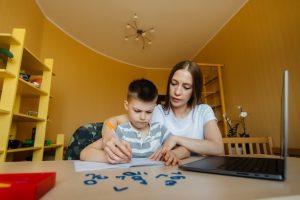
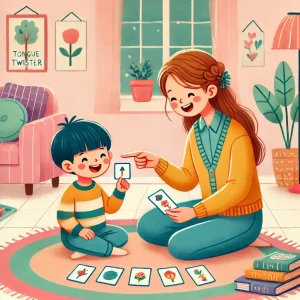
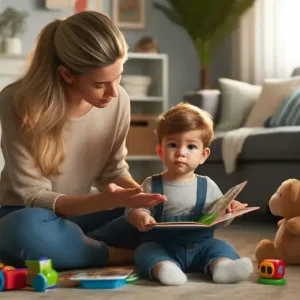
Online speech therapy for toddlers is not simply a child sitting in front of a laptop repeating words after a therapist. Good early-language therapy is interactive and often involves the parent or caregiver. The speech-language pathologist observes how your child communicates, uses play and familiar routines, and shows you practical ways to build communication throughout the day.
Research increasingly supports telepractice as a useful way to deliver speech-language and early-intervention services when it is appropriate for the individual child and family.
Quick Answer: Does Online Speech Therapy Work for Toddlers?
Online speech therapy can work well for many toddlers, especially when a parent or caregiver actively participates.
A 2026 meta-analysis examining speech-language telepractice for children found outcomes comparable to, and in some measures greater than, in-person intervention. Importantly for younger children, the review included caregiver-mediated approaches in which adults were coached to use communication strategies at home.
A separate systematic review focused specifically on children aged 0–3 years found telehealth to be a viable option for early intervention, although the evidence varies by condition and intervention. Caregiver participation was central across the studies reviewed.
This does not mean online therapy is automatically the best choice for every toddler. The child’s communication needs, attention, sensory needs, family participation and type of assessment or therapy required all matter.
What is Online Speech Therapy for Toddlers?
Online speech therapy, sometimes called teletherapy, telepractice or virtual speech therapy, connects a child and caregiver with a speech-language pathologist through secure online technology.
The American Speech-Language-Hearing Association describes telepractice as using telecommunications technology to provide services such as screening, assessment, intervention, consultation and education. It can be used by itself or together with in-person services.
For a toddler, the therapist may work on areas such as:
- understanding words and instructions
- using gestures and sounds to communicate
- building first words
- increasing vocabulary
- combining words into short phrases
- requesting and commenting
- taking turns during interaction
- improving speech clarity when developmentally appropriate
- supporting social communication
- helping caregivers create more opportunities for communication at home
The exact goals should depend on an assessment of your child’s individual communication strengths and needs.
But My Toddler Won’t Sit in Front of a Screen
They shouldn’t have to.
This is one of the biggest misunderstandings about online speech therapy for young children.
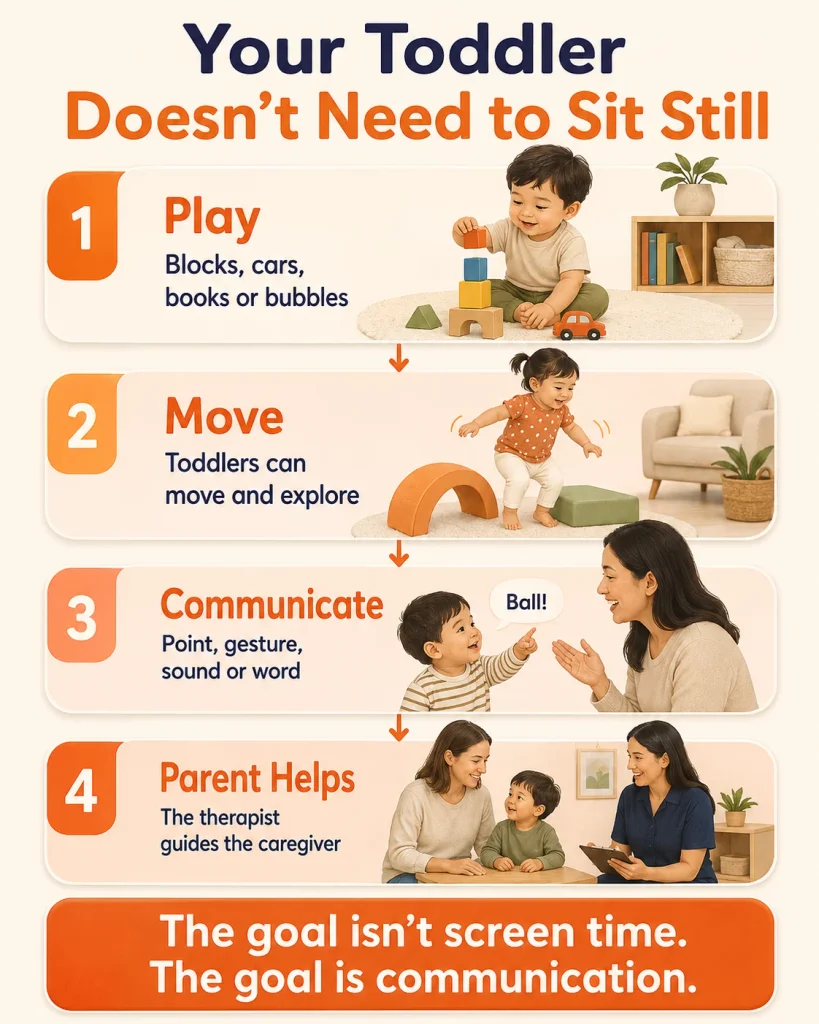
A good toddler session does not require your child to sit quietly and watch the therapist for 45 minutes.
Toddlers naturally move.
They may:
- bring a favourite toy
- play with blocks
- look at a book
- request a snack
- move around the room
- sing
- point
- imitate an action
- interact with you
- lose interest and return later
The therapist can use these moments as communication opportunities.
For younger toddlers, the therapist may spend part of the session coaching the caregiver rather than trying to control the child through the screen.
For example, if your child reaches for bubbles, the therapist might guide you to pause, model a simple word such as “more,” wait for your child’s attempt to communicate, and then respond naturally.
The therapy therefore moves from:
Therapist → Child
to:
Therapist → Parent → Child → Everyday life
That is one reason caregiver involvement matters so much in early intervention.
How Do I Know If My Toddler’s Speech Needs Attention?
Children develop at different rates, so milestones should be treated as useful guides rather than pass-or-fail tests.
However, they can help parents know when to ask questions.
ASHA’s communication milestones for children between 19 and 24 months include using and understanding at least 50 different words, combining two or more words, following two-step directions and using words to ask for help.
The CDC also lists putting at least two words together, such as “more milk,” among communication milestones that most children demonstrate by age 2.
Consider speaking with a speech-language pathologist if you notice concerns such as:
Your toddler uses very few words
A limited vocabulary by itself does not tell you why a child is talking less, but it can be worth evaluating alongside understanding, gestures, play and other communication skills.
Your 2-year-old is not combining words
If your child knows individual words but is not beginning to combine them into simple phrases, professional guidance can help determine whether monitoring or intervention would be useful.
Your child has difficulty understanding simple instructions
Speech therapy is not only about pronunciation. Speech-language pathologists also work on receptive language—how children understand words, sentences and instructions.
Your toddler rarely uses gestures to communicate
Pointing, showing, reaching, waving and other gestures are important parts of early communication.
Your toddler becomes frustrated when trying to communicate
Frequent communication breakdowns may cause a toddler to cry, pull an adult toward an object, scream or give up rather than communicate their needs successfully.
You have concerns even though your child meets some milestones
Parents do not need to diagnose a speech disorder before asking for professional guidance.
A speech-language assessment can help separate normal variation from an area that may benefit from support.
What Happens During Online Speech Therapy for a Toddler?
The exact structure varies depending on your child’s age, communication goals and therapist.
At Wellness Hub, online speech therapy sessions for children are currently offered as 45-minute one-to-one sessions.
But a 45-minute appointment does not mean forcing a toddler to look at a screen for 45 minutes.
A session may look something like this:
1. Parent Update
The therapist first checks how things have been going since the previous session.
You might discuss:
- new words
- communication difficulties
- situations where your child gets frustrated
- activities that worked well
- changes noticed at home
2. Play and Interaction
The therapist begins with something interesting to the child.
This may involve:
- toys
- bubbles
- songs
- pictures
- movement
- familiar objects
- interactive digital activities
3. Goal-Based Communication Practice
Activities are selected around your child’s specific goals.
For example, if your toddler uses single words, the therapist may work toward simple combinations such as:
“more juice”
“mama come”
“big ball”
“car go”
If understanding language is the concern, the therapist may work on simple instructions or identifying familiar objects and actions.
4. Parent Coaching
The therapist shows you how to use similar strategies during everyday situations.
This is particularly important with toddlers because most language learning does not happen during a single appointment.
It happens while:
eating breakfast
getting dressed
playing
taking a bath
reading
going outside
talking with family
5. Home Practice
Instead of giving parents a long list of drills, home practice should ideally be simple enough to fit naturally into daily routines.
Why Parent Involvement Matters So Much
For toddler speech therapy, parents are not simply there to keep their child sitting near the computer.
You are part of the intervention.
A therapist may see your child once or twice during the week.
You communicate with your child every day.
That creates hundreds of natural opportunities to practice communication.
During online therapy, parents can learn strategies such as:
Follow Your Child’s Lead
If your toddler is interested in cars, you do not necessarily need to switch to flashcards.
Use the cars.
You can model:
“car”
“red car”
“car go”
“fast car”
“more car”
Language is easier to learn when it connects to something the child already cares about.
Model Simple Language
Avoid turning every interaction into a test.
Instead of repeatedly asking:
“What is this?”
“What colour is this?”
“Say ball.”
you can model the language yourself:
“Ball.”
“Big ball.”
“Ball goes up!”
This gives your toddler language to hear without creating constant pressure to perform.
Pause and Wait
Children need opportunities to initiate communication.
If adults immediately anticipate every need, the child may have fewer reasons to communicate.
A small pause before handing over a favourite toy or snack can create an opportunity for your child to point, look, make a sound or use a word.
Expand What Your Child Says
If your toddler says:
“car”
you might respond:
“Red car.”
If they say:
“more”
you might model:
“More bubbles.”
The goal is to build naturally on what your child can already do.
Is Online Speech Therapy as Effective as In-Person Therapy?
The most accurate answer is:
It can be for many children, but online and in-person therapy should not be treated as interchangeable in every situation.
Recent research supports telepractice as an effective service-delivery option across several areas of pediatric speech-language intervention. A 2026 meta-analysis found telepractice outcomes comparable with or better than in-person intervention across the outcomes studied.
Research specifically involving children from birth to age 3 also supports telehealth as a viable early-intervention model, particularly when caregivers are involved. However, the research base is still developing and not every type of communication or developmental difficulty has been studied equally.
Professional guidance also emphasizes individual suitability.
Indian Speech-Language and Hearing Association telepractice guidance states that the appropriateness of telepractice should be determined case by case based on clinical judgment, informed choice and professional standards.
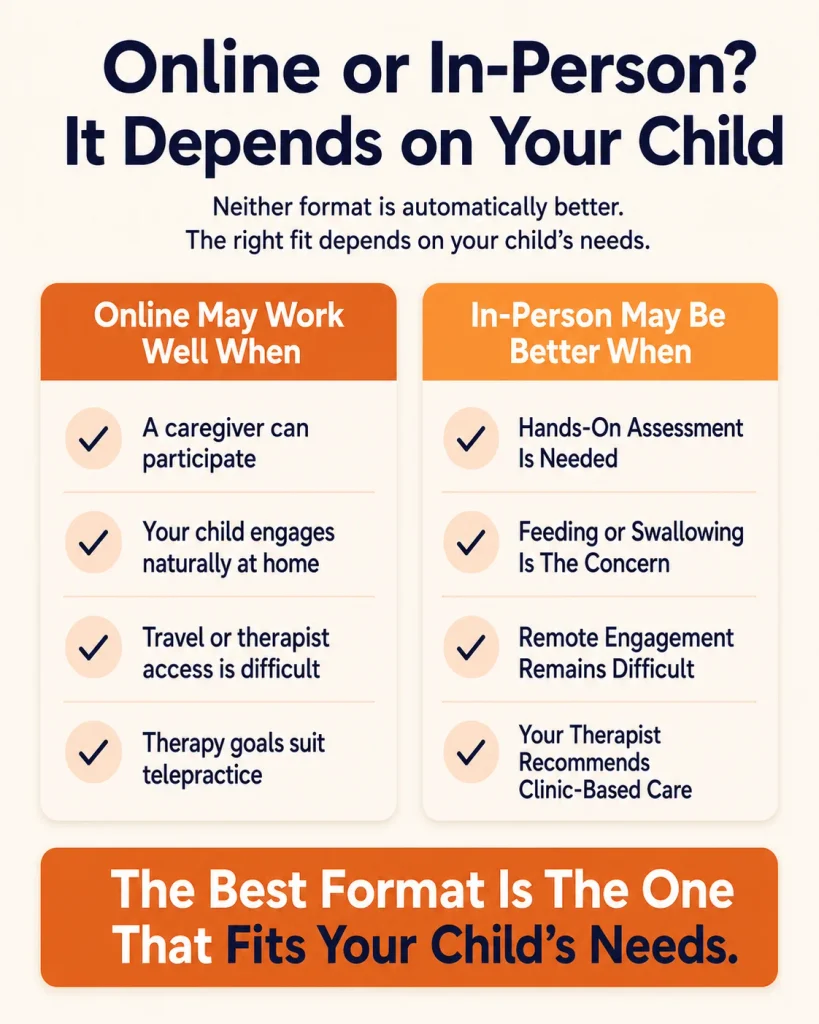
Online therapy may be a good fit when:
- a caregiver can participate
- your toddler responds to play and interaction at home
- travelling to therapy is difficult
- qualified therapists are not available nearby
- your child is comfortable at home
- therapy goals can be addressed effectively through telepractice
In-person or hybrid care may be more appropriate when:
- the speech-language pathologist needs hands-on assessment
- feeding or swallowing is the primary concern
- your child consistently cannot engage through telepractice
- sensory, behavioral or developmental needs make remote sessions difficult
- the therapist recommends an in-person evaluation
The correct question is not:
“Is online therapy better?”
It is:
“Which delivery method is appropriate for my child?”
Online vs In-Person Speech Therapy for Toddlers
| Factor | Online Speech Therapy | In-Person Speech Therapy |
|---|---|---|
| Location | Home | Clinic or centre |
| Travel | None | Usually required |
| Caregiver involvement | Often high | Depends on model |
| Use of home routines | Very easy | Requires carryover after session |
| Therapist access | Can expand geographic options | Limited to accessible local providers |
| Technology | Requires stable connection and device | Usually not required |
| Hands-on assessment | More limited | Easier when clinically necessary |
| Best choice | Depends on child and goals | Depends on child and goals |
Neither format should automatically be considered superior.
Clinical suitability matters more than convenience.
What Do You Need for a Toddler’s Online Speech Session?
You usually do not need special equipment.
A useful setup includes:
- laptop or tablet with camera and microphone
- reliable internet connection
- comfortable room
- favourite toys
- simple books
- bubbles or balls
- everyday objects
- caregiver nearby
Avoid creating a classroom at home.
Your child’s normal environment is actually useful because the therapist can help you use activities your family already does.
How Wellness Hub Approaches Online Speech Therapy for Toddlers
Wellness Hub combines therapist-led sessions with technology and continued practice at home.
Current online speech therapy for kids includes 45-minute one-to-one sessions, with speech therapy listed at ₹750 per session and a free speech consultation available before starting therapy.
Sessions use Tele-BASICS, Wellness Hub’s interactive therapy platform, rather than relying only on standard video conferencing. The current service describes interactive therapy activities, games and communication tools designed for online sessions.
But the important part is what happens after the call ends.
Therapists can guide parents on ways to continue practicing communication throughout the week.
Wellness Hub’s BASICS app can also support guided home practice through therapist-created speech, language and developmental activities.
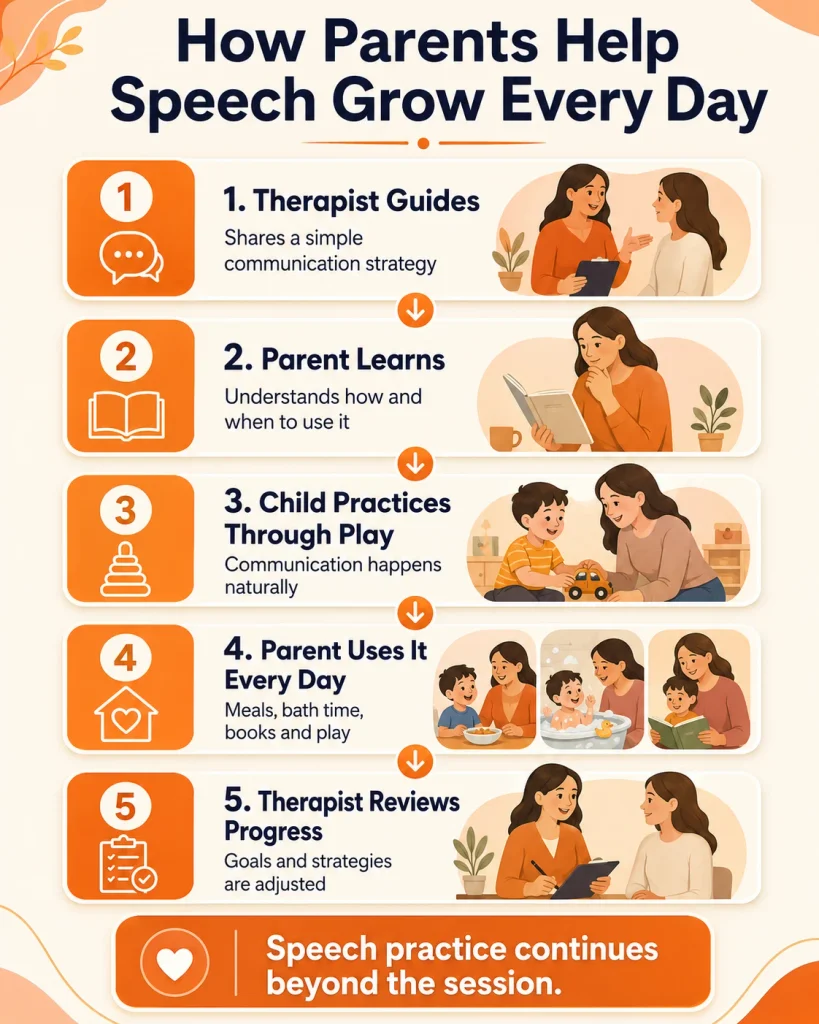
This creates a simple cycle:
Therapist guidance → child practice → parent practice at home → progress review → updated goals
That continuity is especially useful for toddlers, because language develops through repeated communication in everyday life.
Concerned about your toddler’s speech or language development? Talk to a speech-language therapist through Wellness Hub’s free speech consultation before deciding whether therapy or an assessment is needed.
Simple Speech and Language Activities You Can Try at Home
Home activities should support professional therapy—not replace an assessment when one is needed.
Talk During Everyday Routines
During bath time:
“Water in.”
“Wash feet.”
“More bubbles.”
During meals:
“Hot rice.”
“More banana?”
“Cup empty.”
Keep your language short and connected to what your toddler is doing.
Read the Same Books Again
Repetition is useful.
Children often learn new words from familiar books because they begin to predict what comes next.
Pause occasionally and allow your child to point, make a sound or complete a familiar word.
Offer Choices
Instead of:
“What do you want?”
try:
“Apple or banana?”
Choices reduce the language demand while still encouraging communication.
Add One Step
If your child says one word, model two.
Child:
“Dog.”
Parent:
“Big dog.”
Child:
“Car go.”
Parent:
“Car go fast.”
You do not need to make your toddler repeat you every time.
Create Reasons to Communicate
Put a favourite toy where your toddler can see it but needs help reaching it.
Wait.
Your child might look at you, point, reach, make a sound or use a word.
Respond to the communication attempt and model the language naturally.
Questions to Ask Before Choosing an Online Speech Therapist
Before starting virtual speech therapy for your toddler, ask:
- What qualifications does the therapist have?
- Are they registered to practice where required?
- How much experience do they have with toddlers?
- How will my child’s communication be assessed?
- What goals will we work toward?
- How will I participate during sessions?
- How will progress be measured?
- What home practice will I receive?
- What happens if my toddler does not engage online?
- When would you recommend in-person assessment instead?
A good provider should be comfortable answering these questions.
Can an App Replace Speech Therapy?
No app should be presented as a replacement for a qualified speech-language pathologist when a child requires assessment or individualized therapy.
Apps can, however, support practice.
A speech and language app may help parents repeat therapist-recommended activities, model vocabulary, practice matching or listening tasks, and create more opportunities for communication between therapy sessions.
The strongest model is not:
Therapist OR app.
It is:
Therapist guidance + parent involvement + appropriate home practice.
Questions Parents Often Ask About Online Speech Therapy
Can a 2-Year-Old Do Online Speech Therapy?
Yes. Many 2-year-olds can participate in online speech therapy, but the session should be designed for their age. A toddler is not expected to sit quietly and watch a screen for the entire session.
For young children, the speech-language therapist often works closely with the parent or caregiver. The therapist may use toys, songs, books, everyday objects and simple routines to encourage communication while showing the parent how to use the same strategies at home.
The success of online therapy depends on the child’s communication needs, attention, development and caregiver participation. A speech-language therapist should first decide whether online, in-person or hybrid therapy is the most suitable option for the child.
When Should I Consider a Speech Evaluation for My Toddler?
Consider speaking with a speech-language therapist if you are concerned about how your toddler understands, speaks or communicates.
Possible signs worth discussing include:
- using very few words for their age
- not beginning to combine words around age 2
- difficulty understanding simple instructions
- rarely pointing or using gestures to communicate
- difficulty imitating sounds or words
- speech that is very difficult for familiar people to understand
- frequent frustration because the child cannot communicate what they want
- losing words or communication skills they previously used
Development varies from child to child, so one missed milestone does not automatically mean there is a speech or language disorder.
A professional evaluation can help determine whether your child needs therapy, monitoring, additional developmental assessment or simply more opportunities for language development.
Can Online Speech Therapy Help a Late-Talking Toddler?
It can help some late-talking toddlers, but “late talking” is not a diagnosis by itself.
A speech-language therapist should look at the child’s overall communication profile, including:
- how many words they use
- how well they understand language
- whether they use gestures
- how they interact with other people
- whether they imitate sounds and actions
- how they play
- whether they are beginning to combine words
Therapy may focus on helping the child communicate more intentionally, learn new words, combine words and reduce frustration.
For toddlers, one of the most valuable parts of therapy is teaching parents how to create more language-learning opportunities during normal daily routines.
How Long Does Online Speech Therapy Take to Show Progress?
There is no fixed timeline because children progress at different rates.
Some parents may notice small changes within a few weeks, such as more gestures, better eye contact during communication, increased imitation or more attempts to use words.
Other children may need longer-term support.
Progress depends on factors such as:
- the child’s starting communication level
- the type and severity of the difficulty
- how frequently therapy takes place
- consistency of home practice
- caregiver involvement
- other developmental needs
A good speech therapy plan should use clear goals and review progress regularly rather than promising results within a specific number of sessions.
Related Reading
- My Toddler Is Not Talking Yet: What Parents Should Check First
- Speech Delay Red Flags in Toddlers: 18–24 Month Warning Signs for Parents
- 2-Year-Old Developmental Milestones: What Parents Should Know
- Boost Speech in Toddlers: Fun Home Activities for 1–2 Year Olds
- Want Your Toddler to Talk More? Try These 7 Tips
- Speech Therapy App for Toddlers (1–3 Years): What Actually Works at Home
References
- American Speech-Language-Hearing Association. Telepractice.
- Centers for Disease Control and Prevention. Milestones by 2 Years.
- Vanderauwera J, et al. The effectiveness of telepractice for speech-language pathology intervention with children younger than 12 years: A meta-analysis. Journal of Telemedicine and Telecare. 2026.
- Shin Y, Park EJ, Lee A. Early Intervention for Children With Developmental Disabilities and Their Families via Telehealth: Systematic Review. Journal of Medical Internet Research. 2025.
- Indian Speech-Language & Hearing Association. Telepractice Guidelines for Audiology and Speech-Language Pathology Services in India.
About the Author
Rajini Darugupally, M.Sc. Speech Language Pathology | Speech-Language Pathologist, Wellness Hub
Rajini Darugupally is a Speech-Language Pathologist specializing in child speech and language development, including delayed and disordered speech, receptive and expressive language, social communication, play skills and caregiver guidance. Her approach includes individualized communication goals, everyday routines and parent involvement to help children use communication skills beyond therapy sessions.
Book your Free Consultation Today
Parent/Caregiver Info:
Client’s Details:
* Error Message