How a Speech Therapy App Helps Children With Autism Communicate
By Wellness Hub
Last Updated: December 10, 2025
If your child has autism and struggles with speech or communication, you’re not alone—thousands of parents look for simple, effective ways to help their kids express themselves. Today, many families are discovering that a speech therapy app for autism can make communication easier, more engaging, and more consistent at home. These apps use SLP-designed activities, visual supports, first-word practice, and communication games to help autistic children learn at their own pace.
For children who are nonverbal, minimally verbal, or facing speech delay, a structured app becomes a safe space to practice everyday communication skills. And for parents, it offers easy, guided routines that fit into daily life without stress.
Why Communication Is Challenging for Many Autistic Children
For many parents, one of the earliest concerns they notice is that their child struggles to communicate clearly. This can look different for every child with autism, but the underlying challenges often follow a similar pattern. Understanding why communication is difficult helps you support your child with the right tools—like a speech therapy app for autism that provides structure, visuals, and practice opportunities at home.
Autism Communication Difficulties
Children with autism often learn to communicate in a different way. Some may use gestures more than words, some may echo phrases, and some may speak but struggle with using language in social situations. These challenges can impact:
- Using words to express wants or needs
- Understanding what others say (receptive language)
- Using language naturally in conversations
- Playing, sharing, and responding to others
A speech and language therapy app for autistic children supports both expressive and receptive communication by breaking skills into small, simple, visual steps.
Nonverbal and Minimally Verbal Children
Not all autistic children use spoken language—and that’s completely okay. Many are nonverbal or minimally verbal, especially early on. These children may:
- Use gestures, pointing, or sounds but not words
- Struggle to form speech due to motor planning difficulties
- Prefer visual communication instead of verbal communication
Social Communication and Joint Attention Challenges
Communication is more than words; it’s also about connecting with people. Many autistic children find joint attention—looking, sharing, or focusing on something together—hard to develop. This impacts skills like:
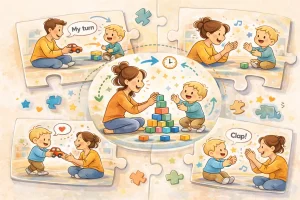
- Taking turns
- Looking when their name is called
- Sharing interests (“Look, Mom!”)
- Understanding facial expressions and tone
Apps designed by speech-language pathologists (SLPs) use interactive communication games, modeling, and simple visuals to help children practice social responses in a predictable, low-pressure environment.
The Power of Early Intervention for Autism Speech and Language Development
Research is clear: early intervention significantly boosts communication outcomes for autistic children. Starting early—between ages 1 and 5—creates new learning pathways for:
- First words
- Vocabulary growth
- Better understanding of daily instructions
- Stronger social communication routines
- Reduced frustration and behavior issues
A parent-guided speech therapy app for autism makes early intervention possible even if you don’t have daily access to a therapist. It helps you turn everyday moments into short, meaningful practice sessions that support your child’s long-term speech and language development.
What Is a Speech Therapy App for Autism?
A speech therapy app for autism is a digital tool designed to help children build communication, language, and social skills in a simple, engaging, and child-friendly way. For many parents, it becomes a reliable support system—especially when in-person therapy is limited or inconsistent. These apps are created to make speech practice easy, fun, and accessible right at home.
An Online Speech Therapy App for Children, Anytime and Anywhere
Unlike traditional therapy that happens once or twice a week, an online speech therapy app for children offers daily, bite-sized learning moments. This consistency is extremely important for autistic children, who learn best through repetition and routine. With guided lessons, simple visuals, and predictable activities, your child gets the chance to practice essential communication skills every day—without pressure or overwhelm.
Designed by Speech-Language Pathologists (SLPs)
Quality matters, especially when it comes to your child’s development. The best speech therapy apps are created with input from speech-language pathologists (SLPs) who understand how autistic children learn. This ensures:
- Clear, step-by-step modeling of speech sounds and words
- Activities that match developmental levels
- Visual supports to reduce confusion
- Age-appropriate vocabulary and concepts
- Structured routines for better language learning
Apps built with SLP expertise focus on evidence-based strategies that support both expressive and receptive language development, helping your child understand, imitate, and eventually use language more naturally.
Both serve different purposes:
- Help children who can already use some sounds/words
- Build vocabulary, sentence use, and basic communication skills
- Offer speech practice, naming tasks, WH questions, and social communication games
Parent-Guided Speech and Language Learning Tools
The true strength of a speech therapy app lies in how easily parents can use it at home. You don’t need special training or therapy experience. The app guides you with:
- Short, easy-to-follow exercises
- Child-friendly visuals
- Step-by-step prompts
- Play-based communication activities
- Real-life scenarios (e.g., asking for help, naming objects, making choices)
With just 10–15 minutes a day, you can turn regular routines—mealtime, playtime, bath time—into meaningful opportunities for communication growth.
Key Benefits of Using a Speech Therapy App for Autistic Children
A well-designed speech therapy app for autistic children gives parents a simple, accessible way to support speech, language, and social communication at home. Whether your child is nonverbal, minimally verbal, or experiencing speech delay, the right app can make learning easier, calmer, and more consistent. Below are the most important benefits for families looking to build strong communication skills.
1. Helps Nonverbal and Minimally Verbal Children Express Needs
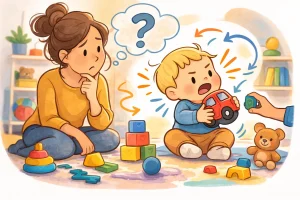
For many nonverbal or minimally verbal children, expressing basic needs like “eat,” “play,” “help,” “stop,” or “more” can be challenging. This often leads to frustration, meltdowns, or behavior struggles—not because the child doesn’t understand, but because they can’t communicate.
A dedicated app for nonverbal autism bridges this gap by using:
- Visual supports that simplify communication
- Picture symbols to help children make choices
- Voice output buttons that speak for the child
- Clear categories (food, toys, actions) to reduce overwhelm
These tools empower children to express themselves confidently, even without spoken words. Over time, this reduces frustration and can help build the foundation for future speech.
2. Builds Vocabulary and First Words for Autistic Toddlers
Many autistic toddlers need extra support learning first words. They may understand more than they can say, or they may need repeated modeling to produce sounds and simple vocabulary.
A speech therapy app for first words is especially helpful because it:
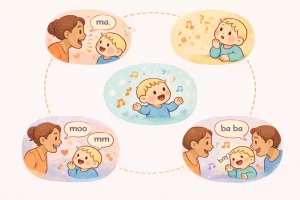
- Introduces words through step-by-step modeling
- Uses visuals that match real-life objects
- Encourages children to tap, repeat, and label items
- Helps practice early language skills like naming, pointing, and choosing
These features support early language development and make it easier for toddlers to connect words to everyday experiences. This is a gentle, child-friendly way to build vocabulary at home—without pressure.
3. Supports Expressive & Receptive Language Development
Communication isn’t just about speaking; it’s also about understanding. Children with autism often need help with both expressive (speaking) and receptive (understanding) language.
A high-quality speech therapy app for speech delay and autism supports both by offering:
- Repeating activities for practicing sounds and words
- Naming tasks for vocabulary growth
- Labeling games to connect objects with their meanings
- Simple instructions to improve listening and comprehension
These activities mimic strategies used by speech-language pathologists (SLPs). With regular practice, children become more confident in understanding everyday language and expressing themselves clearly.
4. Encourages Social Communication Skills
Social communication can be one of the biggest challenges for autistic children. Skills like eye contact, turn-taking, and responding to others don’t always develop naturally—and that’s okay.
A child-friendly speech therapy app supports autism social communication practice by guiding children through:
- Eye contact cues
- Turn-taking activities
- Simple conversational exchanges
- Interactive communication games
- Imitation and joint attention tasks
Because the app gives predictable, visual instructions, children feel less overwhelmed and more willing to participate. This helps build early social communication skills in a safe, structured way.
5. Enables Structured Home Practice Between Therapy Sessions
One of the biggest advantages of a speech therapy app is consistency. Many families cannot access daily therapy, and children benefit from short, repeated practice throughout the week.
A good app makes parent-led speech therapy at home simple by offering:
- Clear routines
- Short modules (5–10 minutes)
- Child-friendly visuals
- Step-by-step prompts
- Progress tracking
This creates daily communication practice with autism apps, helping reinforce what children learn during therapy and making every day a chance to grow.
How a Speech Therapy App Helps Autistic Children Improve Communication
A well-designed speech therapy app for autism does much more than show pictures or play sounds—it uses structured, therapist-approved methods to help children understand, imitate, and use language in real-life situations. By combining evidence-based strategies with interactive, child-friendly activities, these apps make communication practice easier for both children and parents.
Evidence-Based Teaching Methods Used in the App
One of the biggest strengths of a high-quality speech therapy app is that it follows SLP-approved strategies—the same techniques used in real speech therapy sessions. These methods are proven to help autistic children learn speech, language, and communication more effectively.
A strong app uses:
- Visual modeling to show the child exactly how to produce sounds or words
- Simple natural communication cues such as pointing, labeling, and showing
- Breakdown of skills into small, manageable steps
- Repetition and routine, which autistic children benefit from
- Clear, predictable structure to reduce overwhelm
When a child watches and imitates these models again and again, learning becomes easier and more natural. This creates the foundation for stronger communication over time.
Interactive Activities That Boost Communication Skills
Children learn best when they are engaged—and apps use interactive, playful activities to keep their attention. These activities are not random games; they are carefully designed to support key communication skills.
A good communication app for autistic children includes:
- Naming activities (labeling pictures, identifying items)
- WH questions (What? Who? Where?) to build comprehension
- Describing tasks to expand vocabulary
- Requesting activities so the child can ask for things
- Communication games that practice turn-taking and response skills
Each activity teaches something important:
- Naming helps build vocabulary
- WH questions strengthen receptive language
- Describing encourages expressive language
- Requesting teaches functional communication
- Games build social skills and joint attention
This variety keeps your child engaged while improving core speech and language abilities.
Personalized Learning Experience
Every autistic child learns differently. That’s why the best speech therapy apps offer a personalized learning experience instead of a one-size-fits-all approach.
They use:
- Tailored lessons based on your child’s developmental stage
- Adaptive tasks that adjust difficulty as your child learns
- Customized vocabulary that matches your child’s everyday life
- Progressive steps to guide your child from simple words to longer expressions
When lessons match a child’s skill level, learning feels more natural and less stressful. And when the app adapts as your child improves, parents can see steady growth—no matter where their child starts.
How Parents Can Use a Speech Therapy App at Home Effectively
Using a speech therapy app for autism at home can make a big difference in your child’s communication progress—especially when the practice is consistent, gentle, and built into your daily routine. Parents don’t need professional training to help their child learn. With the right structure, even 10–15 minutes a day can create meaningful improvements in speech, language, and social communication.
Step-by-Step Usage Routine
A simple, predictable routine helps autistic children feel safe and confident while practicing communication. Here’s an easy step-by-step structure you can follow:
1. Choose a calm, distraction-free space
Sit with your child in a quiet area with minimal noise and fewer toys around. This helps them stay focused.
2. Start with warm-up activities (1–2 minutes)
Let your child tap, explore pictures, or look at familiar words. This gets them comfortable before the session begins.
3. Do short, guided lessons (5–7 minutes)
Follow the app’s daily plan or choose modules like naming, WH questions, first words, or communication games. Keep sessions short and fun.
4. Model and repeat naturally
Repeat the word or action shown on the screen. Use gestures, pointing, and showing—just like the app teaches through visual modeling.
5. Practice one real-life example
After each lesson, pick an item around you (ball, cup, toy) and repeat the same word or phrase in real situations.
6. End with a positive cue
Celebrate small efforts with claps, smiles, or a favorite reward. Positive reinforcement increases motivation.
This consistent, predictable pattern helps children learn faster and feel more confident using new skills outside the app.
Screen Time Guidance for Autistic Kids
Speech therapy apps are not traditional screen time—they are interactive, structured, learning-focused tools. But balance is still important.
Here are parent-friendly guidelines:
- Keep sessions short: 10–15 minutes at a time
- Use the app 2–3 times a day instead of long sessions
- Ensure your child is actively participating, not passively watching
- Avoid late-night usage that might affect sleep
- Combine digital practice with real-life interaction (label objects, imitate actions, practice requests)
Think of the app as a “learning helper,” not entertainment. When screen time is purposeful, it helps the child stay engaged without overstimulation.
Parent Tips for Faster Improvement
You play a major role in how quickly your child learns to communicate. Here are simple, evidence-based tips to boost progress:
1. Follow your child’s interests
If they love cars or animals, choose lessons with those themes. Interest increases attention and learning.
2. Use everyday routines for practice
Mealtime, bath time, getting dressed, playtime—these moments naturally create opportunities for naming, requesting, pointing, and answering simple questions.
3. Repeat words consistently
Children with autism benefit from repetition. Repeat the same word several times during daily tasks (e.g., “cup… cup… cup”).
4. Use clear, simple language
Short sentences help your child understand and respond better.
5. Celebrate every attempt
Small improvements—eye contact, pointing, tapping a picture, making a sound—deserve praise.
6. Be patient and consistent
Progress may be slow at first, but daily practice builds strong communication habits over time.
Conclusion
A speech therapy app for autism is one of the easiest and most effective ways to support your child’s communication at home. With SLP-guided lessons, visual supports, and simple daily practice, it helps children learn first words, understand language, and build social skills at their own pace. Short, consistent sessions give your child the early intervention they need to grow confidently. Whether your child is nonverbal, minimally verbal, or starting to speak, the app makes learning calm, fun, and stress-free for parents too. With the BASICS app, you give your child a strong foundation for better communication and everyday connection.
Frequently Asked Questions:
1. How does a speech therapy app help children with autism?
A speech therapy app for autism teaches children to understand and use words through simple visuals, modeling, and guided activities. It helps improve first words, listening skills, and social communication in a fun and stress-free way.
2. Can a speech therapy app help a nonverbal or minimally verbal child?
Yes. Many apps include AAC tools and picture symbols that help nonverbal children express needs like “eat,” “more,” or “help.” This reduces frustration and builds communication confidence.
3. What is the best age to start a speech therapy app for autistic children?
Early intervention is best. Children between 1–6 years show strong progress because they learn through repetition, visuals, and simple routines.
4. How often should my child use the speech therapy app?
Short, daily sessions work best. Aim for 10–15 minutes, 2–3 times a day, instead of long sessions. Consistency supports faster learning.
5. Are speech therapy apps safe for screen time?
Yes. These apps offer interactive, learning-based screen time, not passive watching. Keep sessions short, guided, and structured.
6. What skills can a speech therapy app improve?
Apps help with first words, vocabulary, WH questions, naming, describing, requesting, eye contact, and turn-taking. They support both expressive and receptive language.
7. Should I choose an AAC app or a speech therapy app?
Choose an AAC app if your child is nonverbal and needs a way to express needs. Choose a speech therapy app if your child is speaking or starting to use words and needs structured practice.
8. Can I use the app even if my child already goes to speech therapy?
Absolutely. Daily home practice helps children make faster progress and reinforces what they learn in therapy sessions.
9. How can I help my child learn faster with the app?
Sit with your child, model words, repeat sounds, follow their interests, and celebrate small successes. Parent involvement makes a big difference.
10. Is the BASICS speech therapy app good for autistic children?
Yes. BASICS is designed for speech delay and autism, using SLP-approved lessons, visuals, AAC support, and daily routines that help children communicate more clearly at home.
About Wellness Hub
Wellness Hub is a trusted digital platform that empowers parents, caregivers, and professionals with science-backed tools for childhood development. From online speech therapy to home therapy resources, we offer a holistic ecosystem for children facing speech delays, autism, ADHD, and other developmental challenges.
Rooted in evidence-based practices and delivered by certified experts, Wellness Hub bridges the gap between accessibility and quality care. Whether you need at-home speech strategies, developmental checklists, or interactive mobile apps like BASICS, we make early intervention affordable and family-friendly.
Start your journey today with expert guidance tailored to your child’s unique communication and learning needs—anytime, anywhere.
Book your Free Consultation Today
Parent/Caregiver Info:
Client’s Details:
* Error Message