Why Does My Child Follow My Eyes Sometimes but Not Other Times?
Last Updated: March 10, 2026
Why can signaling be harder than it seems?
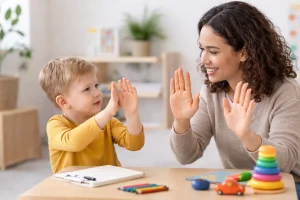
Pointing is one of those gestures that adults use all the time without thinking. But for children, it’s a very special type of communication. Sometimes a child may or may not follow a pointing gesture, and that variation can be part of learning shared attention. It can mean more than “I want this.” It can also mean “That’s interesting!” or “Let’s figure it out together.”
This “together” piece is important. It’s often easier to track a point when a child already feels connected, when the interaction is warm, fun, and unhurried. It can be more difficult if everyone is rushing, if the child is disorganized, or if the moment feels like a test. If you find yourself pointing it out over and over, your voice getting louder, feeling more urgent, trying to make it happen, you’re not alone. It’s a very human reaction. But this can also make the moment seem tense, which sometimes makes it harder for the child to tune in.
The goal is not to get a perfect answer. The goal is to keep the relationship safe and positive while you keep up with your child’s skills.
Also read: My Child Doesn’t Look Where I Point — Is That Normal?
Gentle ways to make pointing easier without turning it into practice
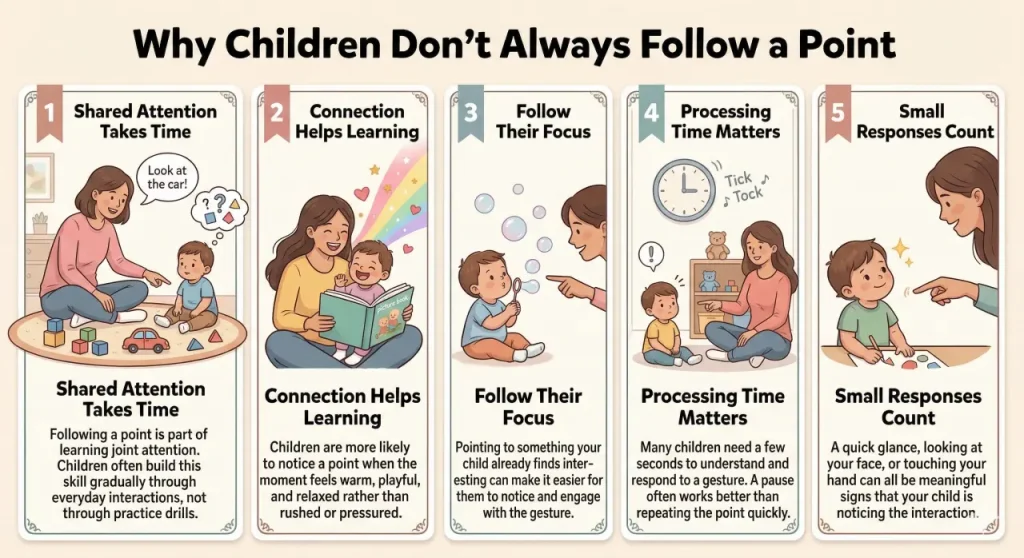
Most children learn to follow a pointing gesture through everyday life: books, snacks, routines, walks, and playing on the floor. The best support is often the simple, quiet moments when your child has time to notice what you notice.
Many parents find it helpful to point out things that are already interesting to their child rather than trying to redirect them to something else. If your child is already looking at the bubbles, pointing to the bubbles may be better than pointing to the picture on the wall. Children often need more processing time. A pause, just a little space, helps more than repeating the gesture quickly.
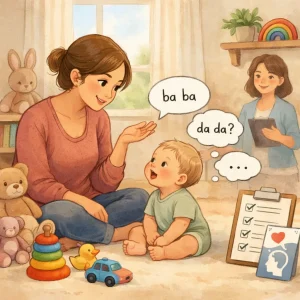
It’s okay if your child doesn’t answer “correctly.” If they look briefly, glance at your face, or touch your hand, it’s still communication. You can treat these little responses as meaningful because they are.
A note on comparison because it’s hard not to
Pointing can be one of those milestones that seems very obvious. You might see other children at the park easily follow a pointing gesture, and it’s natural to wonder why it doesn’t always work the same way with your child.
But children don’t develop social attention in a perfectly straight line. Some notice gestures quickly. Others first focus more on objects, movement, or sensory exploration, and later become more tuned into shared attention.
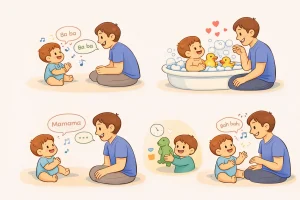
Many children show connection in other ways before pointing clicks: bringing a toy, pulling you toward something, leaning on you while playing, or watching your face closely when you talk.
These are real signs of connection and engagement, even if pointing is still developing.
When additional support could be helpful
Sometimes parents want more than reassurance, they want clarity and a plan that feels realistic.
You may want to seek further guidance if your pointing is rarely followed across many situations, if you don’t see gradual change over time, or if you feel stuck and unsure how to support communication in a way that works for both of you. Support doesn’t mean you did anything wrong. It simply means you want someone in your corner.
Some families prefer a structured, parent-friendly tool that helps guide what to watch for and how to encourage joint attention in everyday routines. The BASICS app is one option designed to support parents with skills such as pointing and shared attention through short videos and practical ideas that fit into real life without making the day feel “therapeutic.”
A quiet reminder to carry with you
If your child doesn’t always follow where you point, it doesn’t mean they’re ignoring you, and it doesn’t mean you’re doing something wrong. Learning to follow a pointing gesture often develops slowly, with many inconsistencies along the way.
What matters most is the feeling behind the interaction: that you and your child are building a shared world together, one small moment at a time. Every look, every pause, every tiny shift toward what you notice is part of that journey.
And the fact that you care about communication, not just obedience: says a lot about the kind of safe, supportive parent your child is growing up with.
About the Author:
Shravanaveena Gajula
M.Sc ., Speech and Language Pathology (5+ years of experience)
Shravanaveena Gajula is a dedicated Speech-Language Pathologist with a BASLP and an M.Sc in Speech and Language Pathology. With experience spanning multiple settings, including Wellness Hub , Veena specializes in a wide range of disorders from developmental issues in children to speech and language assessments in adults. Her expertise includes parent counseling, managing speech sound and fluency disorders, and creating individualized therapy programs. Veena is also PROMPT certified and an author of several insightful blogs on speech and language pathology, aiming to educate and assist caregivers in supporting their loved ones.
Book your Free Consultation Today
Parent/Caregiver Info:
Client’s Details:
* Error Message