15 Simple Activities Parents Can Use at Home to Encourage Eye Contact
By Wellness Hub
Last Updated: January 9, 2026
If you’re hoping to encourage eye contact with your child, it’s natural to want ideas that feel simple and doable. Many parents worry they should be “teaching” eye contact, even when that approach doesn’t feel right. The good news is that eye contact often grows best through everyday moments you’re already sharing.
You don’t need special tools, long sessions, or constant reminders. Small, playful interactions at home can gently invite eye contact in ways that feel safe and enjoyable for your child.
Quick Reassurance
You can encourage eye contact at home through simple, playful activities that focus on connection rather than instruction. Eye contact often appears naturally during shared routines, pauses, and moments of enjoyment. Short glances count as progress, and gentle, pressure-free interaction helps eye contact grow over time.
Why Activities Work Better Than Direct Instruction
Eye contact is not a skill most children learn by being told what to do. For many, being asked to “look at me” can feel confusing or stressful. Activities work because they:
- Feel natural and enjoyable
- Reduce pressure
- Build shared attention
- Allow eye contact to come and go
When children feel comfortable, eye contact often becomes part of the interaction on its own.
Read More: How to Help Your Child Maintain Eye Contact During Play and Daily Routines
What to Keep in Mind Before You Start
Before trying any activity, it helps to shift expectations:
- Eye contact does not need to be long
- Brief glances are meaningful
- There is no “right” amount
- Comfort matters more than consistency
Think of these activities as invitations, not goals.
15 Simple Activities to Encourage Eye Contact at Home
| Activity | How It Encourages Eye Contact |
|---|---|
| Pause During Play | Brief pauses create anticipation, often prompting a natural glance toward you. |
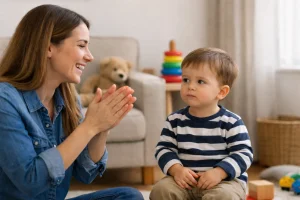
| Get on Your Child’s Level | Being face-to-face makes eye contact easier without asking for it. |
| Use Playful Sounds | Silly noises or sound effects gently draw attention to your face. |
| Copy Your Child’s Actions | Imitation encourages your child to look up and “check in.” |
| Roll a Ball Back and Forth | Waiting before your turn invites eye contact during shared play. |
| Peekaboo Variations | Surprise and predictability naturally invite looking and smiling. |
| Snack-Time Pauses | Holding the next bite briefly often leads to a quick glance. |
| Mirror Facial Expressions | Expressive faces spark curiosity and visual attention. |
| Sing Familiar Songs | Pausing before a favorite part encourages your child to look at you. |
| Bubbles With a Pause | Stopping bubble play briefly invites anticipation and eye contact. |
| Book Sharing (No Pressure) | Pausing on pictures allows your child to look up naturally. |
| Dressing Routine Check-Ins | Small pauses during dressing create shared moments of connection. |
| Gentle Tickles With Waiting | Stopping and waiting often brings a look before continuing. |
| Say Their Name and Pause | A warm call followed by silence can invite a glance without pressure. |
| Follow Shared Laughter | Enjoyable moments often bring spontaneous eye contact. |
How to Tell If These Activities Are Helping
Progress doesn’t always look obvious. You might notice:
- More frequent brief glances
- Checking in during play
- Increased comfort during interaction
- Longer shared moments
These small changes matter and often build gradually.
What to Avoid While Encouraging Eye Contact
While trying these activities, it helps to avoid:
- Repeatedly asking for eye contact
- Physically guiding your child’s face
- Turning play into a test
- Comparing progress day to day
Keeping interactions relaxed supports connection more than any specific activity.
Read More: Is It Okay If My Child Doesn’t Make Eye Contact? A Gentle Explanation for Parents
Using Daily Routines as Opportunities
Many of the best moments for eye contact happen during routines you already have:
- Meals
- Bath time
- Bedtime
- Getting ready to go out
These predictable moments offer natural pauses where eye contact can appear.
A Gentle Reminder for Parents
Encouraging eye contact doesn’t mean pushing for more. It means creating moments where your child feels safe, seen, and connected. Even if eye contact remains brief, those shared experiences still build strong foundations for communication.
Frequently Asked Questions
1. How often should I try activities to encourage eye contact at home?
There is no required schedule or number of times per day. Eye contact grows best through short, natural moments that happen during play and routines you already share. Instead of setting aside special sessions, look for everyday opportunities to pause, connect, and enjoy time together. Consistency over time matters more than frequency in a single day.
2. Do these eye contact activities work for toddlers and older children?
Yes, many of these activities can be adapted across ages. Younger children may respond to simple games like peekaboo or bubbles, while older children may show eye contact during shared jokes, conversations, or cooperative play. The key is adjusting activities to match your child’s interests, developmental level, and comfort rather than focusing on age-based expectations.
3. What if my child still avoids eye contact during these activities?
Avoiding eye contact doesn’t mean the activities aren’t working. Some children need more time to feel comfortable, while others show connection in different ways first. Continue focusing on shared enjoyment rather than watching for eye contact. Often, connection builds quietly, and eye contact appears later as trust and comfort grow.
4. How long should eye contact last for it to “count”?
There is no minimum amount of time that eye contact needs to last. Even a quick glance can be meaningful and shows shared attention. Many children naturally use short looks to check in rather than holding eye contact. These brief moments are a normal and valuable part of how eye contact develops.
5. Can encouraging eye contact too much cause stress for my child?
Yes, too much focus on eye contact can sometimes add pressure. Repeated requests or close monitoring may make interactions feel tense instead of enjoyable. That’s why gentle, playful activities work better. When eye contact happens naturally, it supports connection without making your child feel watched or evaluated.
6. Should I praise my child every time they make eye contact?
Simple, natural responses—like smiling, continuing the activity, or showing warmth—are usually enough. Overly enthusiastic praise can sometimes make eye contact feel like a performance. Keeping your reactions relaxed helps eye contact remain part of a comfortable interaction rather than something your child feels they need to “get right.”
7. What if my child is more interested in toys than people?
Many children explore the world through objects first. Being interested in toys doesn’t mean they aren’t social or connected. Playing alongside your child, following their interests, and sharing attention around toys can still support connection. Eye contact often emerges during these shared moments over time.
8. Are daily routines better than play for encouraging eye contact?
Both play and routines are helpful, and they support eye contact in different ways. Routines offer predictability and comfort, while play adds fun and spontaneity. Together, they create many low-pressure opportunities for connection. You don’t need to choose one over the other—using both naturally supports development.
9. How long does it usually take to see progress with eye contact?
Progress often happens gradually and may not be obvious right away. Some parents notice small changes over weeks, while others see shifts over months. Looking for subtle signs—like more frequent glances or increased comfort—can help you recognize progress even when changes feel slow.
10. When should parents consider getting extra support for eye contact?
If you continue to feel unsure, notice multiple areas of concern, or simply want reassurance, seeking guidance can be helpful. Asking for support doesn’t mean something is wrong—it means you want to understand your child better. Many parents find peace of mind through gentle, parent-centered guidance.
Book your Free Consultation Today
Parent/Caregiver Info:
Client’s Details:
* Error Message