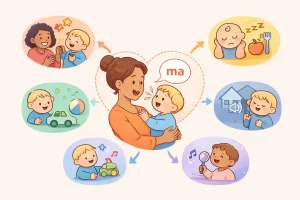
How to Help Your Child Maintain Eye Contact During Play and Daily Routines
By Wellness Hub
Last Updated: January 7, 2026
Gentle, Expert-Designed Ways Parents Can Use
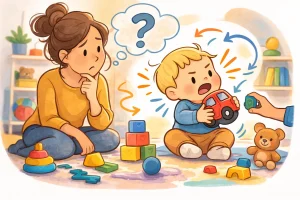
If you’ve noticed that your child doesn’t look at you very often during play or daily routines, you’re not alone. Many parents wonder what it means when eye contact feels brief, inconsistent, or easy to miss—and whether they should be doing something differently.
The reassuring part is this: eye contact is not about making a child “look on command.” It develops naturally through connection, shared moments, and everyday interactions. Small glances, quick check-ins, and shared smiles all count—and they often grow gradually over time.
In this guide, we’ll focus on simple, pressure-free ways you can support eye contact at home during play and daily routines. The goal isn’t perfection or long looks. It’s helping everyday moments feel more shared, relaxed, and connected—for both you and your child.
My child doesn’t look at me — should I be worried?
If this thought has crossed your mind, you’re not alone. Many parents notice moments when their child seems to look past them during play or daily routines, and it can feel confusing, concerning, or even emotional. It’s natural to wonder what this means and whether you should be doing something differently.
Here’s the reassuring truth: eye contact develops gradually, and it doesn’t look the same for every child. For many babies and toddlers, eye contact shows up as brief glances, quick smiles, or short “check-ins” during play rather than long, steady looks. These small moments are meaningful and often part of normal early communication.
Limited eye contact on its own does not automatically mean something is wrong. Children connect and communicate in different ways, and eye contact is just one piece of that process.
This guide will help you understand what eye contact development really looks like, what progress means in everyday life, and how you can support eye contact gently and naturally at home—without pressure or forcing. The focus isn’t perfection. It’s connection, comfort, and shared moments that grow over time.
What Eye Contact Really is (And What It’s Not)
When parents think about eye contact, it’s easy to imagine a child looking up and holding a long, steady gaze. In real life, that’s not how early eye contact usually develops—and it’s not what matters most.
Eye contact is about connection, not obedience.
It’s a child’s way of briefly checking in: “You’re here. We’re sharing this moment.” Those quick looks during play or routines are meaningful because they show awareness and engagement, even if they last only a second or two.
Brief, natural glances count.
A short look up during peekaboo, a quick smile before taking another bite, or a glance toward your face after something fun—these moments are real progress. They don’t need to be long or frequent to be valuable. Over time, many small moments add up.
Eye contact should be invited, never forced.
Children learn best when interactions feel safe and enjoyable. Pausing, getting to eye level, and responding warmly can invite a look. Asking repeatedly, insisting, or holding a child’s face can make eye contact feel uncomfortable—and that can have the opposite effect.
Looking away does not mean disinterest or weak bonding.
Children often look away to regulate themselves, process what’s happening, or focus on an object they’re exploring. This is normal. Looking away doesn’t mean they aren’t connected to you or enjoying the interaction.
The goal isn’t to “train” eye contact. It’s to create shared moments where looking at each other feels natural and positive. When expectations shift from how long a child looks to how comfortable the interaction feels, parents can notice progress more clearly—and enjoy those small connections as they happen.
Why Eye Contact is an Important Early Communication Skill
Eye contact is one of the earliest ways children connect with the people who care for them. It’s not about asking a child to “look properly” or expecting long, steady eye contact. Instead, it’s about small moments of shared attention that make interactions feel warm, responsive, and two-way.
When a child briefly looks at a caregiver’s face during play or daily routines, something important happens: the interaction becomes shared, not one-sided. These short glances help children notice expressions, smiles, and emotional cues. Over time, this supports emotional bonding and helps children feel safe and understood during everyday moments.
Eye contact also plays a role in shared attention. For example, when a child looks at a toy and then glances back at you, they’re beginning to connect their experience with yours. This back-and-forth is an early building block for communication. It’s how children start to understand that play, routines, and learning happen with someone, not just alongside them.
Another reason eye contact matters is that it helps children learn from faces. Facial expressions carry a lot of information—joy, surprise, encouragement, reassurance. Even brief looks give children access to these social cues. Over time, this supports early interaction skills such as turn-taking, responding to others, and staying engaged during shared activities.
Most importantly, eye contact supports communication in a natural and gentle way. It often develops through play, routines, and moments of connection rather than through direct teaching. These small, meaningful looks help interactions feel easier and more enjoyable for both the child and the parent.
Eye contact is not about perfection or duration. It’s about connection, built gradually through everyday moments that already exist in your child’s world.
What Eye Contact Development Often Looks Like
Every child develops eye contact in their own way and at their own pace. It’s very common for parents to notice differences when they compare their child with others—but eye contact does not follow a fixed timeline, and small variations are completely normal.
For many children, eye contact begins to show up as brief, natural moments rather than steady or prolonged looking. A baby or toddler may glance at a caregiver’s face for a second, then look away. Over time, these short looks may happen more often and feel more intentional, especially during play, routines, or shared moments of enjoyment.
It’s important to remember that development is not linear. Some days you may notice more eye contact, and other days less. This doesn’t mean progress is lost. It simply reflects how children respond to energy levels, mood, environment, and interest in the moment.
Rather than focusing on exact ages or milestones, it helps to look for patterns over time, such as:
- Your child occasionally looking at your face during play
- Brief eye contact during feeding, dressing, or greeting
- A quick look after doing something fun or interesting
Children with developmental differences may follow different timelines, and that’s okay. Their eye contact may look less frequent, shorter, or appear in specific situations rather than consistently. These differences don’t automatically mean something is wrong—they simply reflect how each child engages with the world.
The most helpful approach is to move away from asking “Is my child doing this like others?” and instead ask, “Am I noticing more shared moments than before?”
When you focus on connection rather than perfection, it becomes easier to see progress for what it truly is: small, meaningful steps that build over time.
What Progress With Eye Contact Really Looks Like
When parents think about eye contact, they often imagine long, steady looks. In real life, progress usually looks much smaller and much gentler—and that’s exactly how it should be.
Eye contact develops in tiny moments, not in big leaps. Noticing and valuing these moments helps you stay encouraged and confident as a parent.
Signs of Real Progress You May Notice
You might start to see:
- Brief glances during play
Your child may look at your face for just a second while playing, then return to the toy. These quick looks are meaningful. They show your child is aware of you and beginning to share the experience. - Looking up after something fun or interesting
After a silly sound, a surprise, or a fun action, your child may glance at you as if to say, “Did you see that?” This is an important form of connection. - Shared smiles or facial “check-ins”
A smile exchanged during play or routines is a powerful sign of social engagement. These moments often come before longer or more frequent eye contact. - Looking during daily routines
You may notice brief looks during feeding, dressing, greeting, or bath time. These routine-based glances are especially valuable because they happen naturally and without pressure.
What’s Important to Remember
- Short looks count as real progress
Even a one-second glance is meaningful. Eye contact does not need to be long to be effective. - Progress builds gradually
Eye contact usually increases slowly over time. First come quick looks, then more frequent looks, and later, slightly longer moments of connection. - Consistency matters more than duration
Regular, relaxed opportunities throughout the day are far more helpful than trying to “practice” eye contact for long periods.
If you are noticing small changes; more glances, more shared smiles, more moments of checking in; you are already seeing progress. These are signs that your child is learning that interactions with you are safe, enjoyable, and worth sharing.
How Everyday Activities Help Build Eye Contact Naturally
Many parents assume that helping a child build eye contact means setting aside special “practice time.”
In reality, eye contact develops most comfortably inside everyday moments your child already enjoys.
Here’s why simple activities during play and daily routines are so effective—and why you don’t need to turn this into a task.
Pauses create natural opportunities to look
When everything happens quickly, your child doesn’t need to look up—they already know what comes next.
But when you pause briefly, something important happens.
That small pause gives your child:
- Time to notice you
- A reason to check your face
- A chance to connect before the activity continues
For example, pausing before blowing bubbles, handing a snack, or taking your turn in play gently invites your child to look; without asking or prompting.
Eye contact that happens this way is natural, not forced.
Why being at eye level makes a difference
Children are far more likely to look at you when your face is easy to see.
When you sit, kneel, or position yourself at your child’s eye level:
- Your face becomes part of the interaction
- Looking up feels effortless, not demanding
- Connection feels shared, not one-sided
This isn’t about getting closer to “teach” something; it’s about making connection accessible.
Warm responses reinforce connection
What you do after your child looks matters just as much as the look itself.
When a brief glance is met with:
- A smile
- A warm reaction
- Continuing the fun activity
your child learns an important lesson:
“Looking at you feels good and meaningful.”
There’s no need to praise or comment on the eye contact itself.
Your natural, positive response is enough to reinforce the connection.
Repetition across routines builds comfort and confidence
Eye contact grows through many small moments, not one big breakthrough.
When similar pauses and warm responses happen:
- During play
- At snack time
- While dressing
- During greetings
your child begins to feel more comfortable checking in visually. Over time, these brief looks may happen more often and feel easier for your child.
Consistency matters more than duration.
Why play and daily routines work better than “practice sessions”
Structured practice can sometimes add pressure; especially for young children.
Play and routines work better because:
- They are familiar and predictable
- Your child is already engaged and relaxed
- There’s no expectation to “perform”
Eye contact that develops during real interactions feels natural, not trained. This helps your child connect because they want to, not because they’re asked to.
When parents understand why these everyday moments work, things often feel less overwhelming.
This is usually the moment parents think:
“Oh—this makes sense. I can do this.”
And that confidence is just as important as the eye contact itself.
Activities You Can Use at Home to Support Eye Contact
You don’t need special tools, long sessions, or perfect timing to support eye contact.
Most children build this skill best through small, everyday moments—especially when play and routines already feel comfortable.
The activities below are simple ways eye contact naturally shows up during play and daily life. You don’t need to do all of them, and you don’t need to do them perfectly. Even trying one or two, in your own way, is enough.
Think of these as opportunities for connection, not tasks to complete.
Simple Activity Ideas That Invite Eye Contact Naturally
| Activity | How It Supports Eye Contact |
|---|---|
| Peekaboo: Pause & Reveal | Brief pauses before revealing your face naturally invite your child to look and anticipate what’s coming next. |
| Bubble Time: Look → Blow | Waiting a moment before blowing bubbles creates a natural reason for your child to glance toward your face. |
| Rolling Ball: Look Before You Roll | A short pause before rolling the ball encourages shared attention without asking for it. |
| Funny Faces & Sounds | Exaggerated expressions and playful sounds often draw quick, spontaneous looks. |
| Singing Face-to-Face | Songs with gestures or pauses naturally encourage looking and shared enjoyment. |
| Snack or Feeding Look & Connect | Pausing briefly before offering a bite can lead to a quick look that feels meaningful, not forced. |
| Mirror Play: Look at Me, Look at You | Looking at reflections together helps children notice faces in a relaxed way. |
| Light-Up Toy: Pause & Look | Holding a toy briefly before activating it creates anticipation and eye contact opportunities. |
| Book Reading With Face Checks | Looking up from the book to share a smile helps connect words, pictures, and faces. |
| Greeting Rituals (Morning & Evening) | Simple hello and goodbye routines encourage brief eye contact through familiarity. |
| Daily Routine Eye Contact Moments | Dressing, bathing, or transitions often include natural moments to pause and connect. |
| Choice-Making With Eye Contact | Holding two options and waiting allows eye contact to emerge as part of decision-making. |
What Doesn’t Help With Eye Contact
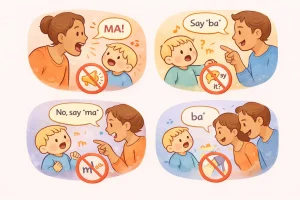
When parents notice that their child isn’t looking at them very often, it’s natural to want to fix it quickly. Many well-meaning strategies come from love, concern, and a desire to connect. However, some common approaches can unintentionally make eye contact harder rather than easier.
Many parents try these things — and that’s completely understandable. Knowing what doesn’t help can make it easier to shift toward approaches that feel more comfortable for both you and your child.
1. Repeatedly calling your child’s name
Calling your child’s name again and again to get their attention can sometimes feel necessary in the moment. But frequent repetition may overwhelm your child or cause them to tune the sound out over time. Instead of inviting connection, it can turn into background noise that doesn’t feel meaningful to them.
Eye contact grows best from shared moments, not from repeated verbal prompts.
2. Forcing your child to look
Gently holding your child’s face, lifting their chin, or insisting that they “look at me” may seem like it should help. In reality, this often creates discomfort or pressure. Eye contact is a social behavior that needs to feel safe and voluntary. When it’s forced, children may look away more or avoid interaction altogether.
Connection happens when a child chooses to look, not when they feel made to.
3. Expecting long or sustained eye contact
Many parents worry if eye contact is brief or fleeting. It’s important to know that short glances are not only normal — they are meaningful. Expecting a child to maintain eye contact for several seconds at a time can set unrealistic expectations and lead to frustration for both of you.
Early eye contact usually starts as quick looks that slowly build over time. Duration comes later.
4. Turning eye contact into a task or demand
When eye contact becomes something a child feels they must “perform” — like a task to complete or a requirement before an activity continues — it can lose its natural purpose. Instead of feeling like a shared moment, it may start to feel like pressure or work.
Eye contact grows best as part of play, routines, and enjoyable interactions — not as a separate skill to practice or test.
How You Can Gently Support Eye Contact at Home
Supporting eye contact does not require special tools, long practice sessions, or asking your child to “look at me.” In fact, the most effective support often happens in the simplest, everyday moments—when interactions feel relaxed, playful, and shared.
The goal here is connection, not duration or perfection. Small, brief looks matter more than long stares.
1. Sit at Your Child’s Eye Level
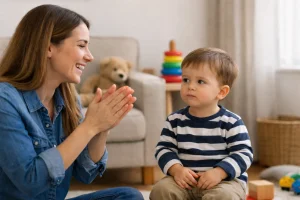
Getting down to your child’s eye level makes it easier for them to notice your face naturally. This might mean sitting on the floor during play, kneeling during routines, or leaning in gently during shared moments. When your face is within their natural line of sight, eye contact can happen without effort or prompting.
You don’t need to hold their face or position them. Just being present at their level creates more opportunities for connection.
2. Use Playful Pauses
One of the simplest and most powerful strategies is the pause.
During play, try briefly pausing before:
- Rolling a ball
- Blowing bubbles
- Giving a toy
- Taking your turn
Pause, smile, and wait for a moment. Many children will naturally glance up to check what’s happening next. That quick look is meaningful—it shows shared attention.
The pause doesn’t need to be long. Even one or two seconds is enough.
3. Respond Warmly to Every Look
When your child looks toward your face—even briefly—respond right away with warmth. This could be:
- A smile
- A happy expression
- A gentle comment like “There you are!”
- Continuing the activity they enjoy
Your response teaches your child that looking at you makes interactions more fun and rewarding. Over time, this encourages them to check in more often.
Remember: every look counts, even if it’s quick.
4. Keep Interactions Relaxed and Pressure-Free
Eye contact grows best when there is no pressure attached to it. Avoid:
- Asking your child to “look at me”
- Repeating their name to get a response
- Turning eye contact into a task
Instead, focus on enjoying the moment together. When interactions feel playful and safe, children are more likely to look naturally.
It’s okay if eye contact doesn’t happen every time. Progress often looks like gradual changes—more frequent glances, shared smiles, or checking in during familiar routines.
When Extra Support May Be Helpful
Supporting eye contact at home can feel natural and enjoyable for many families. At the same time, it’s also okay to pause and ask for extra guidance—especially if you’re feeling unsure or stuck. Seeking support doesn’t mean something is “wrong.” It simply means you want clarity and reassurance.
You might consider additional support if:
- You’re feeling uncertain or overwhelmed.
If you’ve been trying playful pauses and gentle routines but still feel confused about what to do next, talking with a professional can help you feel more confident and supported. - Your concerns show up across different settings.
When your child seems to avoid looking toward caregivers not just at home, but also during outings or with familiar people, it can be helpful to get another perspective. - Your child appears distressed during interactions.
If your child becomes upset, frustrated, or overwhelmed during play or daily routines, extra guidance can help you adjust interactions so they feel more comfortable and enjoyable. - Progress feels slow despite consistent efforts.
Development happens at different paces. If you’re not noticing the small signs of progress you expected, a professional can help you understand what’s typical for your child and suggest gentle next steps.
Remember, support is about guidance, not labels. Many families find that a brief check-in provides reassurance, practical ideas, and peace of mind. You’re already doing meaningful work by paying attention and responding with care—and reaching out for help can be another positive step along the way.
A Gentle Note for Parents
If you’re reading this, it already says something important about you: you care deeply about connecting with your child. And that matters more than any single skill or milestone.
Eye contact doesn’t grow through pressure or perfection. It grows through small, shared moments—a quick glance during play, a smile exchanged during a routine, a brief look that says, “I see you.” These moments may seem tiny, but they are meaningful. Over time, they add up to connection, trust, and comfort.
It’s also okay if progress feels slow or inconsistent. Many children build eye contact gradually, in their own way and at their own pace. What matters most is that interactions feel warm, relaxed, and enjoyable—for both of you. When connection comes first, skills tend to follow.
Try to notice the efforts you’re already making: sitting close, waiting patiently, smiling back, creating space for shared moments. That is real support. You don’t need to do everything perfectly, and you don’t need to compare your child to anyone else.
Keep focusing on connection over perfection. Small moments truly matter—and you are already doing meaningful work for your child every day.
Frequently Asked Questions
1. Is it normal if my toddler avoids eye contact during play?
Yes, it can be normal. Many toddlers look briefly or inconsistently at faces, especially when they are focused on toys, movement, or exploring their environment.
2. At what age do children usually start making eye contact?
Eye contact can begin very early, but it develops gradually over time. Some children show more eye contact before 12 months, while others build it later through play and daily routines.
3. Does limited eye contact always mean something is wrong?
No, limited eye contact does not automatically mean something is wrong. Children develop social skills at different paces, and many factors—like temperament, attention, or sensory preferences—can affect eye contact.
4. Should I ask my child to “look at me” to improve eye contact?
It’s best not to demand eye contact. Eye contact develops more naturally when it is invited through play, pauses, and warm interaction rather than direct instructions or pressure.
5. How can I encourage eye contact without forcing it?
You can encourage eye contact by pausing during play, positioning yourself at your child’s eye level, and responding warmly whenever your child looks toward your face—even briefly.
6. What counts as progress with eye contact?
Progress often looks like small changes, such as brief glances, shared smiles, or your child looking at you after doing something enjoyable. Short looks are meaningful and count as real progress.
7. Can daily routines help improve eye contact?
Yes, daily routines like feeding, dressing, bathing, and greeting are great opportunities for eye contact because they are predictable, relaxed, and naturally interactive.
8. What should I avoid doing when working on eye contact?
Avoid forcing your child to look, repeating their name to demand attention, or turning eye contact into a task. These approaches can create pressure and make interaction less enjoyable.
9. When should I consider seeking extra support for eye contact?
You may consider extra support if concerns continue across different settings, progress feels very limited over time, or interactions feel stressful for you or your child.
10. Can professional support help with eye contact development?
Yes, professional support can help by guiding parents on play-based strategies and routines that encourage eye contact naturally, while keeping interactions comfortable and child-led.
Book your Free Consultation Today
Parent/Caregiver Info:
Client’s Details:
* Error Message