Hand-Eye Coordination and Visual-Motor Skills at Home
By Wellness Hub
Last Updated: August 19, 2026
Connecting what your child sees with what their hands do — with guided visual-motor activities in the BASICS app.
Catching a ball, copying a shape, completing a puzzle, pouring a drink and forming letters on a line all require visual information and movement to work together.
Hand-eye coordination is the ability to use what the eyes see to guide the hands during activities such as catching, building and placing objects. Visual-motor integration is closely related but more specific: it involves interpreting visual information and reproducing or responding to it through movement, such as copying a shape or following a path with a pencil.
These skills contribute to play, self-care and school participation. They develop gradually through everyday experiences, and this guide explains how to practise them through play, with the BASICS app providing guided occupational therapy activities for continued support at home.
Every child develops at their own pace. The goal is not to demand neat work or compare one child with another, but to provide enjoyable opportunities for looking and doing to work together. Activities can be made easier or more challenging according to your child’s comfort and current ability.

Speech and Autism Learning App for Kids Ages 2–8


What Visual-Motor Skills Really Involve
Visual-motor activities bring several abilities together:
- Visual perception — recognising and interpreting what the eyes see, including shapes, sizes, positions, patterns and differences.
- Motor control — moving the hands with the timing and precision required for the task.
- Visual-motor integration — connecting visual information with an appropriate movement, such as placing a puzzle piece or copying a line.
Visual tracking is related but different. It means following a moving object or moving the eyes along a line of print. Tracking, visual perception and visual-motor integration may work together during an activity, but they should not be treated as the same skill.
Posture and hand control can support performance. A comfortable, stable position gives the arms and hands a reliable base from which to move. Hand strength and dexterity also help a child manipulate tools. However, strength alone does not create visual-motor integration; the child still needs repeated opportunities to use visual information to guide movement.
Why It Matters for Everyday Life
Visual-motor skills contribute to many daily activities, often alongside attention, bilateral coordination, motor planning and fine-motor control:
- School activities: copying shapes and letters, using a ruler, completing mazes and placing writing on a line.
- Self-care: pouring into a cup, aligning fasteners, using cutlery and directing a toothbrush toward different areas of the mouth.
- Play and sport: catching, throwing, building, completing puzzles and aiming at targets.
- Early learning: copying patterns, matching objects to a model and placing shapes, letters or numbers in the correct position.
When visual information and movement work together more efficiently, everyday tasks may require less effort and feel more manageable.
Playful Ways to Build Hand-Eye Coordination
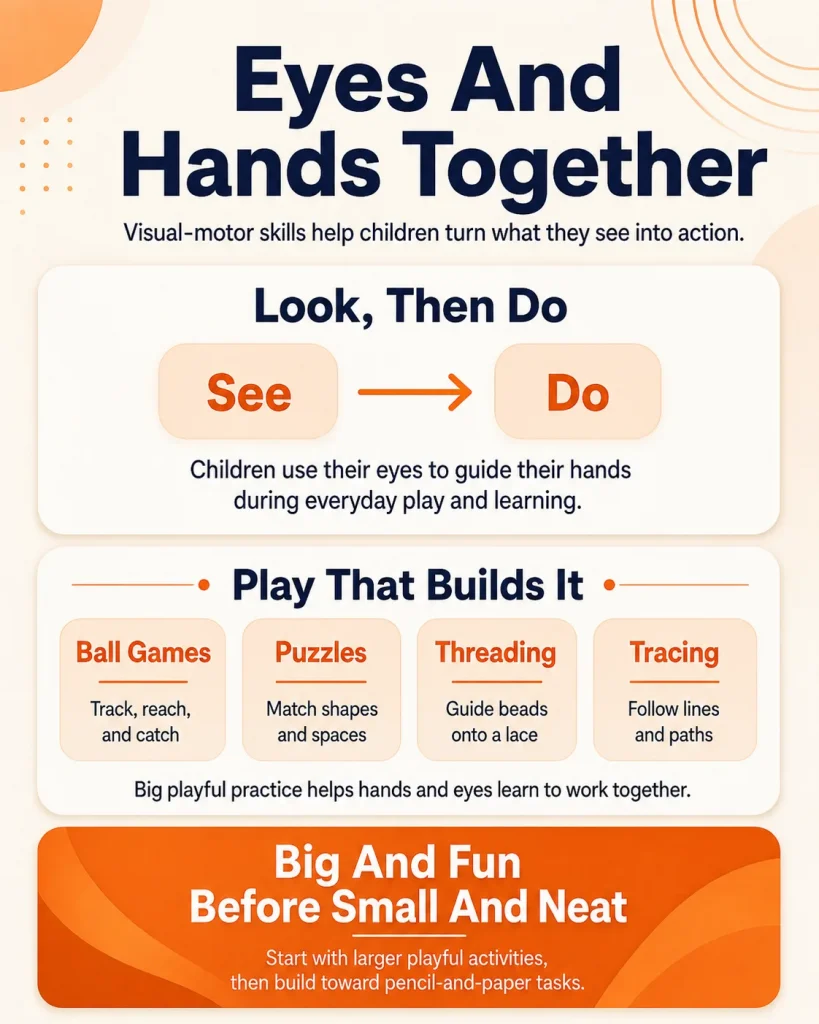
1. Ball Games — Roll, Throw and Catch
Rolling a ball back and forth, throwing towards a target and catching a large, soft ball all build visually guided timing. Kicking towards a target similarly develops eye-foot coordination.
Begin with a large ball, a short distance and slow movement. Increase the distance or reduce the ball size only when your child is comfortable and successful.
2. Puzzles, Posting and Matching
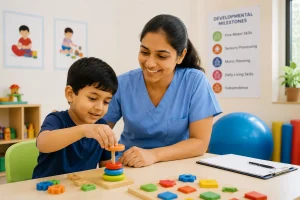
Jigsaw puzzles, shape sorters and posting games ask children to examine a shape, judge where it belongs and guide it into position.
Begin with a few large pieces or clearly different shapes. Turn pieces the correct way up if needed, offer a visual hint and allow your child time to attempt the placement.
3. Threading, Pegs and Construction
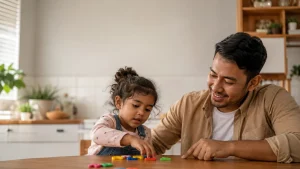
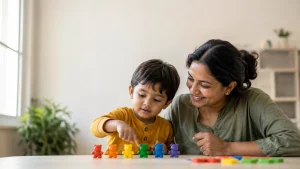
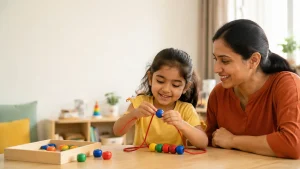
Threading large beads, placing pegs into a board and building with blocks connect careful looking with controlled hand movements.
Start with large, easy-to-grasp materials and simple arrangements. Children can later copy a basic block model, repeat a colour pattern or place pegs in marked positions.
4. Drawing, Tracing and Mazes
Copying simple lines and shapes, tracing wide paths, joining dots and completing basic mazes practise the visual-motor skills used in drawing and early writing.
Begin with large movements and short paths before introducing smaller or more detailed work. Prioritise comfortable movement and participation rather than perfect accuracy.
5. Pouring, Scooping and Filling
Water and sand play provide relaxed opportunities to guide the hands towards a visible target. Children can pour between large containers, scoop material into a bowl or fill a marked container.
Begin with wide containers and small quantities. Trays or outdoor play can make spills easier to manage so the activity remains enjoyable.
6. Sticker and Stamp Play
Placing stickers on large targets, stamping inside broad shapes and matching stickers to marked positions require children to look carefully and guide the hand towards a specific location.
Make the target larger or move it closer when the activity is difficult. Gradually introduce smaller targets or simple patterns as control improves.
Always supervise activities involving water, beads, pegs or other small materials. Choose materials appropriate for your child’s age and development, particularly if they still place objects in their mouth. Stop or simplify an activity if your child becomes tired, uncomfortable or frustrated.
When to Seek Help
Visual-motor skills develop gradually, and children show considerable variation. Consider speaking with an occupational therapist if your child persistently avoids drawing, puzzles, construction play or ball activities, or if these difficulties interfere with self-care, play or school participation.
Because eyesight, eye movements and visual-motor performance can affect one another, discuss possible vision concerns with your child’s doctor or a qualified eye-care professional. Possible signs include frequently squinting, covering one eye, tilting the head, an eye turning in or out, repeatedly losing place, headaches or difficulty following moving objects.
Sudden changes in vision, double vision, eye pain, new weakness or loss of a previously acquired skill require prompt medical attention. The BASICS app supports guided home practice; it does not replace an occupational therapy, medical or vision assessment.
Common Worries – and What They Often Mean
“They can’t catch a ball.”
Catching requires visual tracking, timing, body positioning and coordinated hand movement. Begin by rolling a ball, then try gently tossing a large, soft ball from a short distance. Balloons or scarves can also move more slowly and give your child additional time to prepare. Keep the activity relaxed rather than counting catches or misses.
“Their drawing looks messy or their letters wander off the line.”
Untidy marks can have several causes, including developing pencil control, visual-motor integration, attention, posture or limited familiarity with letter formation. Begin with large shapes, wide paths and short copying activities instead of repeatedly correcting neatness. If writing remains unusually effortful or interferes with school participation, an occupational therapist can help identify what is making it difficult.
“They struggle with puzzles.”
Puzzles combine visual perception, spatial problem-solving and precise hand placement. Start with a few large pieces or a simple shape sorter. Show your child how to look for matching colours, edges or pictures, but allow them to complete the final placement whenever possible. Increase the number of pieces gradually.
How the BASICS App Helps You Build Visual-Motor Skills
Recognising that your child needs more looking-and-doing practice is only the beginning. Parents also need activities that are clearly demonstrated, manageable at home and connected to useful developmental goals.
The BASICS app is developed with input from a multidisciplinary team that includes occupational therapists. It organises home practice around selected goals and provides three guided activities each day, with demonstrations, parent prompts and therapist tips.
Guided Practice for Visual-Motor Skills
The occupational therapy section of BASICS includes support for hand-eye coordination, fine-motor control, motor planning and daily living activities. These areas provide opportunities to practise reaching, placing, matching, building, drawing and using everyday objects.
Activities are broken into clear steps so parents can understand what to practise and how to make the task easier when necessary.
Activities and Resources That Build the Skills
BASICS combines guided activities with resources that can extend practice beyond the screen. Depending on the selected goal, children may practise matching, placing, drawing, tracing or manipulating objects during play and daily routines.
Choose resources that match your child’s present ability rather than expecting them to complete every task independently or accurately on the first attempt.
Games That Pair Looking With Responding
BASICS learning games include activities involving matching, sorting, identifying and selecting. These games ask children to examine visual information and make a response.
Digital games can provide additional practice, but they do not replace real-world movement. Parents can extend the same idea by matching household objects, sorting toys or recreating a simple pattern away from the screen.
Foundations That Support the Whole Child
Visual-motor skills connect with fine-motor control, bilateral coordination, motor planning, self-care and early writing. BASICS brings these areas together so parents can support meaningful everyday goals rather than treating each developmental skill as an isolated exercise.
A Gentle Last Word
The partnership between vision and movement develops through many small experiences: catching a ball, completing a puzzle, building a tower, following a path, pouring water and placing a sticker.
Keep the activities playful, adjust the challenge and notice effort rather than neatness. With repeated opportunities, children can become more comfortable using visual information to guide their movements.
If difficulties continue to affect your child’s play, self-care or school participation, an occupational therapist can assess the functional skills involved. When there are signs of a possible vision problem, seek advice from your child’s doctor or an appropriate eye-care professional.
Eyes and hands learning to work together — through everyday play.
Related Reading
- Pincer Grasp at Home: 15 Therapist-Approved Activities for Stronger Fingers
- Unlock Motor & Sensory Skills: Key to Child Development
References and Further Reading
The guidance in this article is consistent with occupational therapy and children’s vision information from the following sources:
- Visual Perception — Hampshire and Isle of Wight Healthcare NHS Foundation Trust
- Occupational Therapy Pathway — NELFT NHS Foundation Trust
- Fine Motor Skills: Five Steps to Function — Alder Hey Children’s Hospital
- Preschool Vision: 2 to 5 Years of Age — American Optometric Association
- Eye Problems in Children and How They’re Treated — HealthyChildren.org
Book your Free Consultation Today
Parent/Caregiver Info:
Client’s Details:
* Error Message