Helping Your Child Use Both Hands Together (Bilateral Coordination)
By Wellness Hub
Last Updated: August 19, 2026
Cutting, catching, threading — the two-handed skills behind daily tasks, supported by occupational therapy activities in the BASICS app.
Cutting with scissors, catching a ball, doing up buttons and holding paper steady while colouring all require the hands to work together. This ability is called bilateral coordination: using both sides of the body together in a controlled, organised way.
When bilateral coordination is still developing, everyday tasks that require two hands may feel slow, tiring or frustrating. The encouraging part is that children can practise these skills through ordinary movement, play and daily routines. This guide explains how to support that development at home, with the BASICS app providing guided occupational therapy activities for continued practice.
Every child develops at their own pace, and the aim is never to force a skill or compare one child with another. Instead, offer enjoyable opportunities to use both hands together and adjust the activity when it feels too difficult. Repeated, pressure-free practice helps children discover what their hands can do as a team.
What Bilateral Coordination Really Means
Bilateral coordination includes several movement patterns. Children may use different patterns depending on the activity:
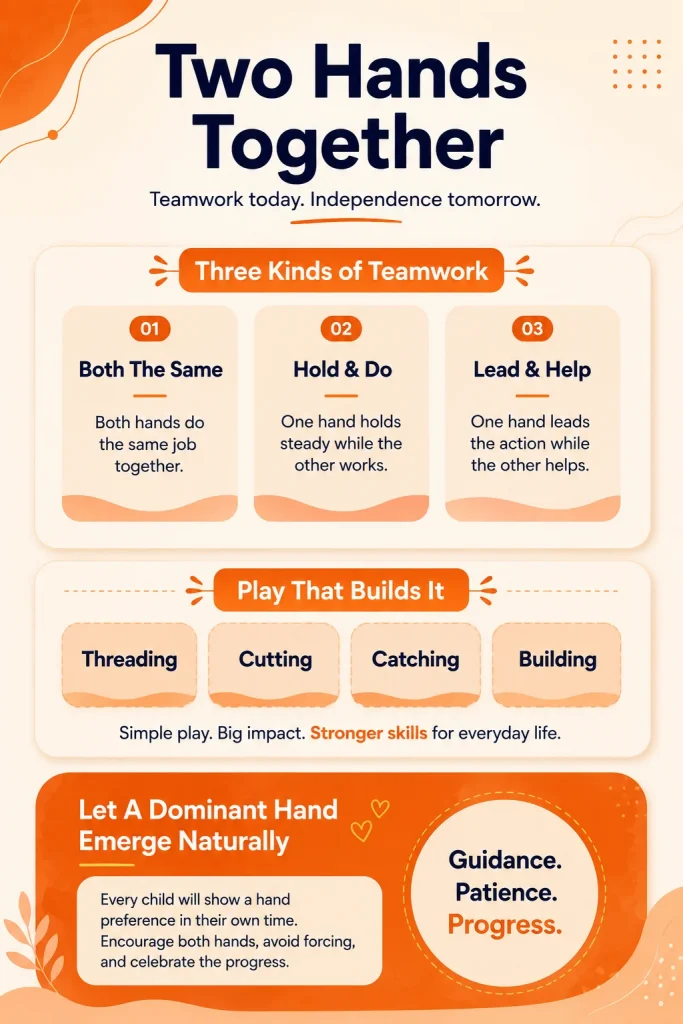
- Symmetrical movements — both hands perform the same action at the same time, such as catching a large ball or pushing a rolling pin.
- Alternating movements — the hands take turns in a coordinated rhythm, such as pulling hand-over-hand, climbing or tapping a drum with alternating hands.
- Different roles for each hand — one hand stabilises while the other manipulates, such as holding paper while cutting or holding a bead while guiding a lace.
Crossing the midline is a related skill. It means reaching across the imaginary line dividing the left and right sides of the body—for example, using the right hand to pick up an object on the left. This allows a child to use a preferred hand across a wider working space instead of switching hands when reaching the middle.
Why It Matters for Everyday Life
Bilateral coordination supports many daily activities:
- Self-care: managing buttons and zips, tying laces and washing hands.
- School activities: cutting with scissors, stabilising paper while writing and using a ruler.
- Play and movement: catching and throwing, riding a bicycle and building with construction toys.
- Mealtimes: holding a bowl while stirring and using a knife and fork together.
As the hands become better at cooperating, everyday activities may require less effort and children can participate more independently.
Bilateral Coordination Activities to Build Two-Handed Teamwork
1. Tear, scrunch and pull apart
Tearing paper, scrunching tissue and pulling apart age-appropriate construction toys all encourage the hands to work together. Try offering paper of different thicknesses, beginning with materials that are easy to tear.
2. Thread, lace and string
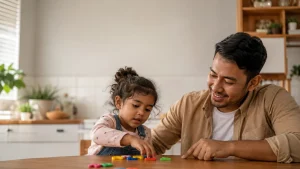
Threading large beads onto a lace, guiding string through holes and using lacing cards require one hand to hold while the other guides. Begin with large, easy-to-grasp materials before progressing to smaller pieces.
3. Cut and hold with scissors
Cutting naturally gives the hands different jobs: one hand opens and closes the scissors while the other turns and steadies the material. Begin by snipping playdough or narrow strips of paper, then progress to simple lines and shapes. Use age-appropriate child scissors with close adult supervision.
4. Roll, squeeze and build
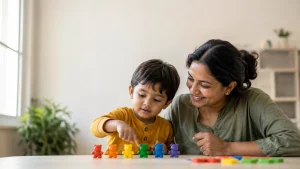
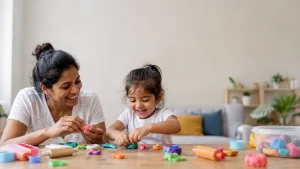
Rolling playdough with a rolling pin, squeezing soft dough with both hands and joining large construction pieces encourage symmetrical and cooperative hand movements. Adjust the resistance if the activity becomes tiring.
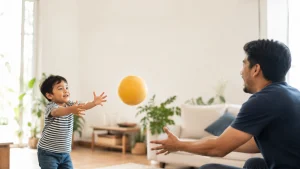
5. Play catch and clap
Catching a large, soft ball with both hands, playing clapping games and following action rhymes can build symmetrical coordination and timing. Start slowly and stay close so your child has time to prepare for the movement.
6. Encourage crossing the midline
Wiping a large table, drawing wide rainbows and reaching for objects placed slightly across the body can encourage midline crossing. Keep objects within comfortable reach and avoid forcing your child’s body into a particular position.
Always supervise activities involving scissors, beads or other small materials. Choose materials appropriate for your child’s age and development, particularly if they still place objects in their mouth. Stop or simplify an activity if your child becomes tired, uncomfortable or frustrated.
When to Seek an Occupational Therapist
Bilateral coordination develops gradually, and there is a wide range of typical development. Consider speaking with an occupational therapist if your child persistently avoids two-handed activities, regularly leaves one hand out, struggles with everyday tasks or becomes distressed when using both hands together.
Pain, sudden weakness, a marked difference between the two sides, or loss of a previously acquired skill should be discussed promptly with your child’s doctor. The BASICS app can support guided home practice, but it does not replace an occupational therapy or medical assessment.
Common Worries — and What They Often Mean
“They keep swapping hands—I can’t tell if they’re left- or right-handed.”
Hand preference often becomes clearer during the preschool and early school years. Switching hands can still happen while this develops, especially when an activity is new or tiring. Avoid choosing a hand for your child. Offer activities that use both hands and place materials near the centre so your child can initiate the task naturally. Ask an occupational therapist for guidance if hand-switching continues to interfere with school or daily activities, or if your child consistently avoids one side.
“They struggle with scissors.”
Cutting is a complex skill because the hands must perform different actions while the eyes guide the movement. Begin with simple snipping, use suitable child scissors and offer paper that is easy to cut. Short, successful attempts are more useful than continuing until your child becomes frustrated.
“They don’t hold the paper while they draw.”
Using a helper hand to stabilise paper is a developing skill. Place the paper directly in front of your child and gently model the two roles: “This hand holds; this hand draws.” Activities involving stencils, stickers or paper that moves easily can make the need for a helper hand more obvious.
How the BASICS App Helps You Build Bilateral Coordination
Recognising that your child needs two-handed practice is only the beginning. Parents also need activities that are manageable, clearly demonstrated and connected to meaningful goals.
The BASICS app is developed with input from a multidisciplinary team that includes occupational therapists. It organises home practice around developmental goals and provides three guided activities per day, helping families practise in short, manageable moments.
A Guided Pathway for Two-Handed Skills
The occupational therapy section of BASICS includes goal-based support for fine-motor skills, gross-motor coordination, hand-eye coordination, motor planning and daily living activities. These areas can provide opportunities to practise using both hands during play and everyday routines.
Activities include clear steps, demonstrations, parent prompts and therapist tips, helping parents understand what to practise and how to adjust the activity.
Activities That Use What Is Already at Home
Many BASICS activities are designed around everyday objects and familiar routines. This allows children to practise relevant movements using toys, household materials and daily tasks rather than relying on specialist equipment.
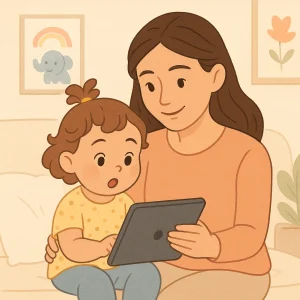
Parents can watch the demonstration, prepare the activity and practise it with their child away from the screen.
Practice That Moves Beyond the Screen
The screen is used to explain and demonstrate the activity; the actual practice can happen through play, dressing, mealtimes, crafts and other ordinary moments. This helps children experience two-handed movements in the situations where they are genuinely needed.
Short activities can be repeated or simplified according to the child’s comfort, interest and current ability.
Skills That Connect Across Development
Bilateral coordination is connected with fine-motor control, hand-eye coordination, self-care, play and school participation. BASICS brings these developmental areas together so parents can work toward meaningful everyday goals instead of treating each skill as an isolated exercise.
A Gentle Last Word
The ability to use both hands together develops through many small experiences: tearing, threading, cutting, catching, building and reaching across the body.
Keep the activities playful, follow your child’s pace and notice effort rather than expecting immediate mastery. If two-handed tasks continue to interfere with your child’s comfort or participation, an occupational therapist can help identify what is making the activity difficult and recommend appropriate support.
Two hands working as a team—built one playful moment at a time.
Related Reading
- Pincer Grasp at Home: 15 Therapist-Approved Activities for Stronger Fingers
- Unlock Motor and Sensory Skills: Key to Child Development
References and Further Reading
The guidance in this article is consistent with developmental and occupational therapy information from the following sources:
Book your Free Consultation Today
Parent/Caregiver Info:
Client’s Details:
* Error Message