My Child Isn’t Pointing Yet – Is That Okay?
By Wellness Hub
Last Updated: January 21, 2026
You’re holding your child on your hip at the grocery store, and you notice another toddler pointing excitedly at the bananas. Or you’re at home reading a book, and you find yourself waiting for that little finger to pop up and show you the dog on the page. And if your child isn’t pointing yet, you might think, Isn’t this something they’re supposed to be doing by now?
Pointing is one of those milestones parents hear about often, and it can start to feel like a must-have skill. But in real life, pointing usually develops gradually, with plenty of in-between stages that still count as meaningful communication.
Is it okay if my child isn’t pointing yet?
For many children, yes—it can be completely okay.
Pointing isn’t usually an instant, all-or-nothing skill. It tends to show up in small, inconsistent ways first, and it may look different from child to child. Some children point with a single finger early on. Others use their whole hand, reach, or bring things to you instead. Some point more when they’re relaxed at home and less when they’re out in the world. Some point for one purpose (to request) before they point for another purpose to share interest.
What matters most is not whether your child is doing a perfect point, but whether they’re finding ways—any ways—to connect with you and communicate what they want, don’t want, or find interesting.
What pointing really is and why it matters
Parents often think of pointing as a simple gesture—finger out or arm extended. But pointing sits inside a bigger set of early communication skills: gestures that help children express needs and share experiences before words fully develop. Children use pointing to request (“I want that”), refuse (“No, not that”), or share (“Look at that!”). It’s one of many gestures children use as they learn how communication works—when they send a message, someone responds. Those little back-and-forth moments carry power. They build connection, confidence, and a sense of I can make myself understood.
And here’s the good news: children often practice the idea of pointing long before the classic finger point appears.
What counts as early versions of pointing?
If your child isn’t pointing with one finger yet, you can still look for gestures that serve the same purpose, communicating through the body.
In everyday life, early pointing can look like reaching toward something they want, lifting their arms to be picked up, or leaning their body toward an item. It can look like giving you something (even if it’s not exactly what you asked for), placing an object in your hand, or holding something up as if to say, Here. Some children show by bringing you a toy and hovering near you, waiting for your reaction. Others look at an object and then look back at you, as if checking, Are you seeing this too? That look-back is a big deal—it’s a quiet sign that your child is starting to treat communication as shared.
You might also notice gestures like pushing something away to refuse, shaking their head no, nodding yes, or waving hello and goodbye. These are all part of using gestures to communicate. So if you’re not seeing a clear point yet, but you are seeing some actions like reaching, showing, giving, looking back, waving, nodding, shaking their head, or pushing away—those are meaningful steps in the same direction.
Why pointing can be inconsistent even when it’s emerging
Even when children are capable of a gesture, they don’t always use it reliably. That’s normal for early communication. Sometimes a child is so absorbed in play that they don’t think to involve anyone else. Sometimes they’re tired, hungry, or overstimulated and rely on simpler signals. They communicate differently depending on the setting, more at home, less in new places, or more with one parent than another.
And sometimes, a child has a gesture in their toolbox, but they haven’t learned to pull it out in lots of situations yet. That’s not a sign of failure. It’s just how skills grow: first they appear, then they become more frequent, then they become more flexible.
Signs your child is on a healthy communication path even without pointing
If you’re trying to get a sense of whether things are moving forward, it can help to zoom out and notice the overall pattern of connection.
Many parents find reassurance in small moments like these: their child reaches for what they want, brings items to a parent, looks toward a familiar voice, or reacts when a parent responds. They may use sounds, facial expressions, or body movement to make their message clearer. They may pause and watch you, as if waiting to see what you’ll do.
These moments can be easy to miss because they don’t look like a milestone checklist. But they’re often the building blocks of gesture communication—your child learning, little by little, that you’re a partner in what they’re doing.
How to support pointing without turning it into a test
It’s completely understandable to want to help. But most children learn gestures best through low-pressure, everyday interactions, not through repeated prompting or show me moments that start to feel like a quiz.
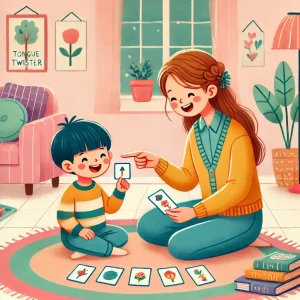
In daily routines, many parents naturally model gestures without thinking about it: pointing to the shoes before going outside, holding up the cup at snack time, waving at the door, nodding when something is yes, gently shaking their head when something is no. When children see gestures used in real situations, they begin to understand what those gestures do; they make life smoother, more connected, and more predictable.
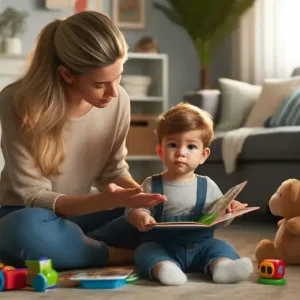
It also helps when parents notice and respond to any attempt at communication, even if it’s not the gesture you were expecting. If your child reaches instead of pointing, or hands you the container instead of pointing to what’s inside, that’s still communication. When those attempts work, children often feel encouraged to keep trying and experimenting with new ways to send their message.
The goal isn’t to get a perfect score on demand. The goal is to make communication feel worthwhile and enjoyable—something that brings you closer.
When it might be helpful to get extra support
Sometimes the hardest part is not knowing whether to wait, watch, or seek guidance. Support can be helpful when you feel stuck or unsure, or when gestures aren’t becoming more frequent over time. You might consider reaching out for extra input if your child rarely uses gestures to request, refuse, or share; if it’s hard to get those back-and-forth moments going during play and routines; or if you simply want a clearer sense of what to look for and how to support communication in a calm, everyday way.
Some families like having a simple structure to follow at home—something that helps them notice progress and choose a focus without pressure. best speech therapy app like BASICS can be a gentle option here, offering parent-friendly guidance around goals like using gestures to communicate (including pointing, reaching, giving, showing, waving, nodding, and shaking the head). It’s not about pushing skills faster—it’s about making the next steps feel clearer and more doable.
A gentle reminder for parents
If your child isn’t pointing yet, it doesn’t mean you’ve missed a window or that you’ve done something wrong. Pointing is one part of a much bigger story: your child learning how to share their needs, feelings, and interests with you. And that story often begins with small, easy-to-overlook moments—an outstretched hand, a toy offered to you, a look back that says, Did you see that? Those moments are real communication. They matter. And when you meet them with warmth and attention, you’re already supporting the very skills you’re worried about.
Book your Free Consultation Today
Parent/Caregiver Info:
Client’s Details:
* Error Message