My Child Ignores the Name call When Playing – Is That Normal?
By Wellness Hub
Last Updated: January 20, 2026
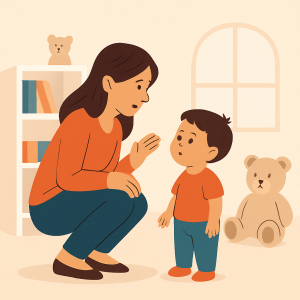
You’re watching your child play, completely absorbed. You say their name once. Nothing. You try again—still nothing. Meanwhile, they’re building, lining up toys, pretending, or figuring something out with such intensity that it can feel like you’re not even in the room. If that moment has ever made you wonder, “Is he/she ignoring me? Do they hear me? Should they be responding by now?” you’re in very good company. Many parents notice that name response seems to “disappear” during playtime, even when their child responds just fine in other moments.
In most families, this is less about defiance or disconnection and more about how young attention works. Play is often the exact time children are *least* available to respond quickly, because their brains are busy doing something important.
Why is playtime a common “blind spot” for name response?
When children are playing, they’re not just passing time. They’re experimenting, planning, remembering, imagining, and problem-solving. Even simple-looking play can take a lot of mental energy. And when a child is deeply focused, their attention can narrow, almost like they’re wearing invisible earmuffs. That’s why a child may respond to their name when they’re walking around the house or sitting at the table, but seem to “ignore” it when they’re in the middle of something exciting. It’s not necessarily that they don’t hear you. It’s often that they’re not ready to shift gears yet.
This is especially true during play that feels high-interest to them, like trains, dolls, sensory play, puzzles, or anything with a strong “I need to finish this” feeling.
What does “responding to name” really mean (especially during play)?
It can help to zoom out and remember what this skill includes. Responding to their name isn’t just about hearing a sound and obeying. It’s a small social moment that asks your child to do several things at once: notice a familiar voice, recognize that they’re being called, pause what they’re doing, and connect with you in some way.
That connection might look like turning their head, pausing their hands, making eye contact, smiling, or even giving you a quick “hmm?” without fully stopping what they’re doing. During play, those tiny responses often come before the bigger ones. In other words: a brief glance counts. A small pause counts. A quick look and then returning to play can still be a meaningful step.
Also read: Why Your Child May Not Respond to Their Name
Is it normal for kids to respond inconsistently when they’re playing?
For many children, yes. Name response is not an on/off switch. It tends to come and go depending on the moment. You might notice your child responds more when they’re calm, not deeply engaged, or already looking in your direction. And you might notice they respond less when they’re excited, concentrating hard, or in the middle of a pretend storyline they don’t want to interrupt.
This “ups and downs” pattern can be part of typical development. It doesn’t automatically mean something is wrong. It often means the skill is still growing and playtime is simply the hardest setting to show it.
Why might your child not look up right away (even if they can)?
Parents often assume that if a child doesn’t respond immediately, they must be ignoring them. But there are many everyday, non-worrisome reasons a child might not look up during play.
Sometimes they’re in deep concentration. Some children focus with their whole body, like eyes fixed, hands busy, and their mind locked in. Shifting attention can feel genuinely difficult, even when they want to connect. Sometimes they’re riding a wave of excitement. When play is thrilling, children can get “tunnel vision.” Their brain is prioritizing the fun task right in front of them. So, they would need extra processing time. Even when children understand their name well, switching from play to listening can take a beat. A delay doesn’t mean they didn’t understand—it may mean they’re catching up.
Sometimes the environment is noisy or busy. If there’s music, siblings, TV, or lots happening around them, your voice may blend into the background more than you realize. And sometimes, they’re simply being a kid. Children are learning how to balance their own interests with shared attention. That’s a skill that grows gradually, through many small moments of connection.
What progress can look like (and it’s often quieter than you expect)
Many parents look for a clear, consistent response, like immediate eye contact, a “yes?” and full attention. But early progress often shows up in smaller ways, especially during play. You might start noticing that your child pauses their hands for a second when you say their name, even if they don’t look up yet. Or they glance quickly and then return to what they’re doing. Or they smile because they recognize you’re trying to connect. Over time, those small moments can become more consistent across routines.
A helpful way to think about it is that the goal isn’t perfection in every moment. It’s a growing pattern of noticing and reconnecting—more often, in more places, with less effort from you.
Setting realistic expectations during playtime
Play is often the hardest time to get a response, so it helps to set expectations that match the situation. If your child is building something carefully or acting out a story, it’s reasonable that they may not respond the same way they would during a quieter routine.
It can also help to remember that “responding” doesn’t always mean stopping. Sometimes it’s enough that your child acknowledges you briefly and then goes back to play. That’s still a form of connection, and it can be a healthy, age-appropriate way of staying engaged in what they’re doing while also noticing you. Many families find it reassuring to aim for a gentle, relationship-based version of this skill: your child learns that their name is an invitation to connect—not a demand that interrupts every moment of play.
How you can support name response without turning play into a test
Most parents don’t want playtime to become a constant “Did you hear me?” moment, and of course, it doesn’t have to. The most supportive approach is usually the simplest: warm, calm connection in everyday moments.
In real life, this might look like using a friendly tone, giving your child a little space to respond, and then acknowledging even small signs that they noticed you. When children feel that responding leads to pleasant connection rather than pressure, they’re more likely to tune in over time. It also helps to choose your moments. If your child is in the middle of something delicate or intense, it’s okay to wait until there’s a natural pause. Many parents find that name response grows more easily when it’s practiced in low-stress moments throughout the day, not only during the most absorbing parts of play.
When it might be worth getting extra support (without assuming the worst)
Sometimes parents aren’t just noticing “selective ignoring during play.” They’re noticing that name response is rare across the day, or that it isn’t becoming easier over time, or that they feel unsure how to build this skill in a way that stays positive.
In those situations, extra support can feel grounding—not because something is necessarily wrong, but because parenting is easier when you don’t have to guess. Some families like having a simple plan for building connection across routines, with realistic expectations and gentle ways to notice progress.
Tools like BASICS can be one optional way to support goals like responding to names through everyday moments, especially if you’d appreciate guidance that fits naturally into playtime and daily routines, without making home feel like a “program.”
A calm reminder to take with you
If your child seems “in their own world” when they play, that can actually be a sign of something positive: they’re engaged, curious, and focused. And if they don’t respond to their name every time, especially during play, it doesn’t automatically mean they aren’t connected to you.
Responding to the name is a relationship skill that grows with time. It often starts with tiny signals—a pause, a glance, a smile—and becomes more consistent as children practice shifting attention and sharing moments with the people they trust the most. And if you’re noticing it, wondering about it, and looking for ways to support connection gently, you’re already doing something that matters!!
Book your Free Consultation Today
Parent/Caregiver Info:
Client’s Details:
* Error Message