Why Your Child Copies Sounds One Day and Not the Next
By Wellness Hub
Last Updated: March 2, 2026
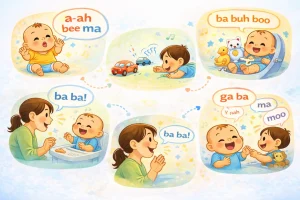
One day your child is full of playful noises coos, squeals, raspberries, maybe even a little “moo” after you try it first. You catch their eye, repeat it back, and it feels like you’re having a tiny conversation made of sound.
Then the next day… nothing.
You try the same silly sound. You wait. You try again. Your child looks away, runs off, or goes quiet. And it’s hard not to wonder: Did we lose it? Did I do something wrong? Are they choosing not to do it anymore?
If this sounds familiar, you’re in very common parent territory. Sound imitation often appears in bursts. It can feel strong one day and disappear the next, not because your child “forgot,” but because early communication skills naturally rise and fall. These playful sound exchanges are meaningful and joyful, but they also depend a lot on timing and circumstance.
What sound imitation really is and why it can be inconsistent
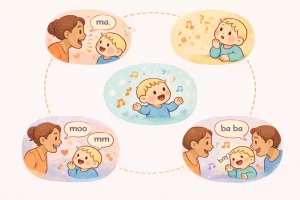
Imitating sounds and playful noises means your child repeats coos, squeals, raspberries, animal-like sounds, or echoes your playful vocalizations during interaction. It is often one of the earliest ways children join in socially without using words.
These moments matter because they are not just cute noises. They are how your child practices using their voice, experiences turn-taking, and learns the rhythm of interaction—you go, I go, we share something together. Over time, these playful exchanges help build comfort and confidence with communication.
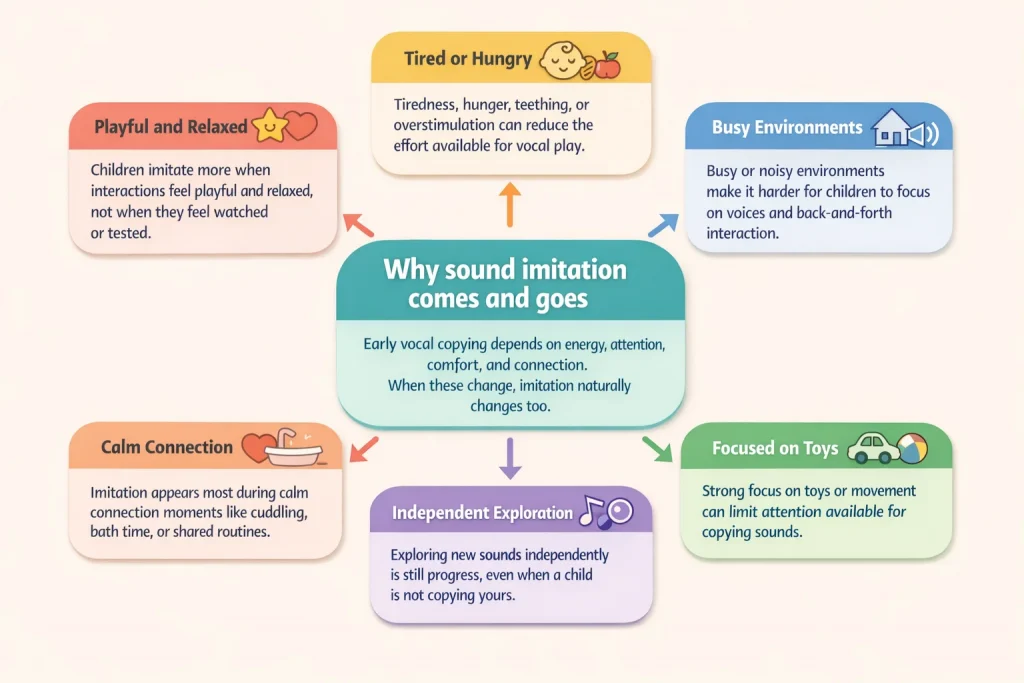
But imitation is not something you can switch on at will. It depends on many things at once: interest, energy, attention, timing, and emotional connection. When even one of these pieces is missing, your child may be less likely to copy sounds even if they are fully capable of doing so.
Also read: How to Get More Sound “Back-and-Forth” Without Pressuring Your Child
Why your child might copy sounds one day and not the next
When parents notice inconsistency, it can feel like refusal or regression. More often, it simply means the situation has changed. Here are some very normal reasons sound imitation may come and go.
Your child’s energy is different
Some days your child has extra energy for playful back-and-forth. Other days they may be tired, hungry, teething, overstimulated, or just emotionally worn out. On low-energy days, children tend to choose what feels easiest quiet play, movement, or comfort.
Sound play still takes effort. Even when it is fun, it requires coordination of breathing, mouth movement, and attention to you. If your child’s body is saying “slow down,” you may see fewer attempts.
Their attention is elsewhere
A child who is deeply focused is not ignoring you, they are concentrating. If your child is lining up toys, figuring out how something works, climbing, or watching something interesting, they may not have enough attention available to also notice your sound and respond with their own.
This is especially common for toddlers, whose attention can be very intense and very single-focused.
The environment is louder or busier
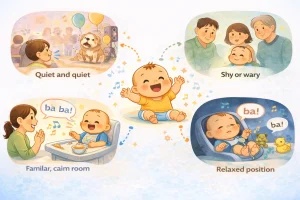
Sound imitation tends to appear more often in calm, predictable moments. When the TV is on, siblings are playing, or you are in a busy or unfamiliar place, your child may struggle to tune into your voice.
Even happy excitement, such as visitors, outings, or new settings, can make some children quieter while they take everything in.
The timing isn’t quite right
Many parents notice that imitation shows up when they are not actively trying for it. That is because children often imitate best when the interaction feels light and unpressured.
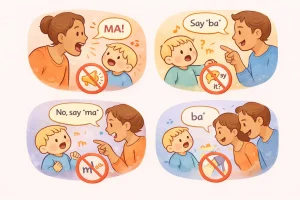
If your child senses a “Now do it” moment (even gently), they may look away or change activities. This is not stubbornness. It often means they are not ready to perform on demand.
They’re experimenting in their own way
Sometimes a child stops copying one sound because they are busy exploring others. You may be offering “ba-ba,” while they are happily squealing, humming, or making raspberries on their own.
This still counts as vocal play. It often shows growing confidence with their voice—trying new rhythms, volumes, and sound patterns. Imitation may return once that exploration settles.
Read more: What Counts as “Imitating Sounds” It’s More Than First Words
What progress can look like when it isn’t consistent
Many parents expect progress to be a straight line: once a child can do something, they should do it more and more reliably. Early communication rarely works that way.
With sound imitation, progress often appears as small signs of engagement rather than steady copying. You might notice your child:
- Look at you after making a sound, as if waiting for your reaction
- Smile or pause when you make a silly noise
- Make more sounds overall, even if they are not the same ones you modeled
- Join in during certain routines (bath time, bedtime, car rides) but not others
- Have bursts of sound play followed by quieter days
These patterns are very common. They suggest the skill is developing, even if it is not yet consistent.
How to spot the conditions that make imitation more likely
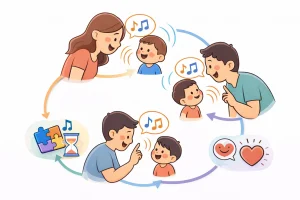
Without turning your day into an experiment, it can help to notice when sound imitation tends to happen. Many parents find it shows up most when:
- The moment is face-to-face and relaxed
- Your child feels comfortable and unhurried
- There is a natural pause after you make a sound
- The environment is quieter
- You respond warmly to any attempt, even a small one
Think of it like finding good lighting for a photo you are not forcing anything, just noticing when conditions make it easier for your child to shine.
If you discover, “They copy sounds most in the bath,” or “They do it when we cuddle before bed,” that is not random. Those are moments when your child feels regulated, connected, and ready for playful interaction.
Keeping expectations flexible without lowering the bar
Flexible expectations do not mean giving up. They mean recognizing that your child’s needs change from day to day.
If your child does not imitate on a particular day, it can help to think of it like a missed high-five rather than a failure. You can still enjoy connection follow their lead and respond to whatever communication they are offering: eye contact, movement, facial expression, gestures, or their own sounds.
A helpful mindset is: We invite, we notice, and we enjoy, without requiring.
This protects the joy of sound play, which is one of the reasons it helps communication grow in the first place.
When parents benefit from a little extra support
Sometimes the hardest part is not your child’s ups and downs, but the uncertainty it creates for you. If you find yourself thinking, I’m not sure what’s normal or I don’t know what to watch for, you are not alone.
Some families like having a simple framework to help them notice progress and choose everyday ways to encourage vocal back-and-forth. Speech and Autism therapy apps like BASICS can offer this kind of gentle guidance short, parent-friendly support that fits into routines and keeps the focus on connection rather than perfection.
It is not about doing more. It is about feeling steadier in what you are already doing.
A calm reminder to take with you
If your child copies sounds one day and not the next, it does not mean the skill is gone. It usually means something in the moment has changed energy, attention, environment, or focus.
Imitating coos, squeals, raspberries, and playful noises is meant to be joyful. It is how your child joins you, experiments with their voice, and begins to feel the rhythm of conversation long before words are needed.
When you keep things light, respond warmly, and accept the ups and downs, you are already giving your child what they need most: a safe and happy place to practice being heard.
About the Author:
Rajini Darugupally
M.Sc., Speech-Language Pathologist (9+ years of experience)
Rajini is a passionate and dedicated Speech-Language Pathologist with over 9+ years of experience, specializing in both developmental speech and language disorders in children and rehabilitation in adults. Driven by a desire to empower each individual to find their voice, Rajini brings a wealth of experience and a warm, genuine approach to therapy. Currently, at Wellness Hub, she thrives in a team environment that values innovation, compassion, and achieving results for their clients. Connect with Rajini to learn more about how she can help you or your loved one find their voice.
Book your Free Consultation Today
Parent/Caregiver Info:
Client’s Details:
* Error Message