It is Not Bad Parenting if Your Child is Clumsy With Their Hands
By Wellness Hub
Last Updated: April 9, 2026
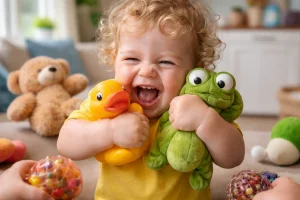
If you have a child clumsy with hands, it can feel like every day comes with a new mess. The spilled cup. The snapped crayon. The tower that crashes the second it gets tall. And because it happens right in front of you, it is easy to wonder, “Did I do something wrong?” I want to say this clearly and kindly: clumsy hands are not a parenting grade. They are a skill in progress.
Many children use their hands with a lot of effort before they use them with a lot of control. They might look rough, rushed, or uncoordinated, even in a calm home with attentive parents. For most families, the most helpful shift is moving from self blame to simple curiosity about what your child’s hands are still learning.
Learn More: It Can Be Normal If Your Toddler Hears You but Does Not Look Up to Their Name
Why a Child Clumsy With Hands is Not a Reflection of Your Parenting
Parents often assume that if a child is careful, it means the parent taught them well, and if a child is clumsy, it means the parent missed something. Real life is not that neat.
Hand control develops in layers. A child might be bright, affectionate, and eager to help, and still knock over the bowl while trying to pour. Another child might sit quietly with puzzles, then suddenly squeeze a glue bottle so hard it floods the page. These are not character flaws. They are signs that the brain and body are still figuring out how much force to use, how to steady the wrist, how to coordinate two hands, and how to slow down when excited.
It also helps to remember that kids do not practice hand skills in a straight line. Growth tends to show up in bursts. A child can seem “better” for a week, then look more clumsy again when they are tired, hungry, distracted, or going through a big developmental leap in another area.
If you are carrying guilt, it usually comes from how much you care. Your attention matters. Your relationship matters. But you did not cause every dropped spoon, and you do not need to earn your way out of it by correcting every movement.
Read More: How to Get My Child to Respond to Their Name Using Everyday Routines
Common Everyday Reasons Hands Look Rough or Uncoordinated
When parents ask, “why is my child so rough with toys,” they are usually noticing a pattern: too much force, too fast, too big of a movement for the task. There are a few very ordinary reasons this can happen, and none of them point to “bad parenting.”
Some children are still learning graded force. That means matching pressure to the job. A soft squeeze for a sponge. A firmer push for a button. A gentle hold for a paper page. This takes time, and it is especially tricky when a child is excited or trying hard.
Some kids move quickly because speed feels easier than control. Slowing down requires planning. It also requires confidence that their hands will do what they want. If a child is unsure, they may rush, grip tightly, or use their whole arm instead of small finger movements.
Body position can play a bigger role than most people expect. If a child is leaning, perched on their knees, or reaching too far, their hands have to work harder to be precise. Even a slightly wobbly posture can show up as clumsy fingers.
Sensory preferences can also shape hand use. A child who seeks strong input may squeeze, crash, or press hard because it feels organizing. Another child may avoid certain textures and look hesitant, using stiff fingers or dropping items quickly.
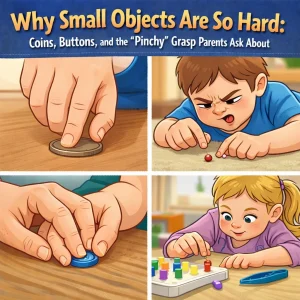
And then there is the simple reality of being little. Small hands, short fingers, and developing coordination make many tools and toys genuinely challenging. A twist cap, a tight marker lid, a tiny zipper pull. These are hard even for motivated kids.
What Fine Motor Control Really Means in Day to Day Life
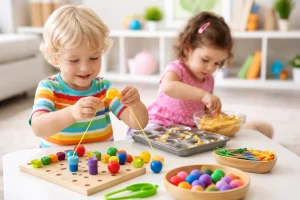
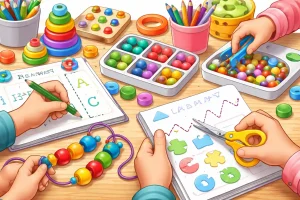
When therapists talk about child fine motor control, we are not talking about perfect handwriting or fancy crafts. We are talking about the everyday ability to use hands and fingers smoothly, with just enough force, and with a steady start and stop.
In real life, that looks like picking up a snack without crushing it, turning a page without tearing it, stacking without slamming, and placing a toy where they meant to place it. It also includes being able to adjust when something changes, like when a cup is heavier than expected or a block is more slippery than the last one.
A child can have strong hands and still struggle with control. Strength is “I can squeeze.” Control is “I can squeeze gently, then stop.” Control is also “I can hold steady while the other hand works,” which is why tasks like opening containers or peeling stickers can be surprisingly tough.
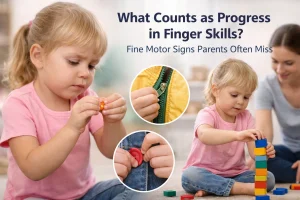
If your child has trouble using fingers for smaller actions, you might see them rely on their whole hand, or even their whole arm. They may poke with one stiff finger, or press with a flat hand rather than using a pinch. Again, this is not laziness. It is their current best strategy.
The goal is not to make a child careful all the time. The goal is to help their hands learn a wider range of options, from gentle to firm, from fast to slow, from big movements to small ones.
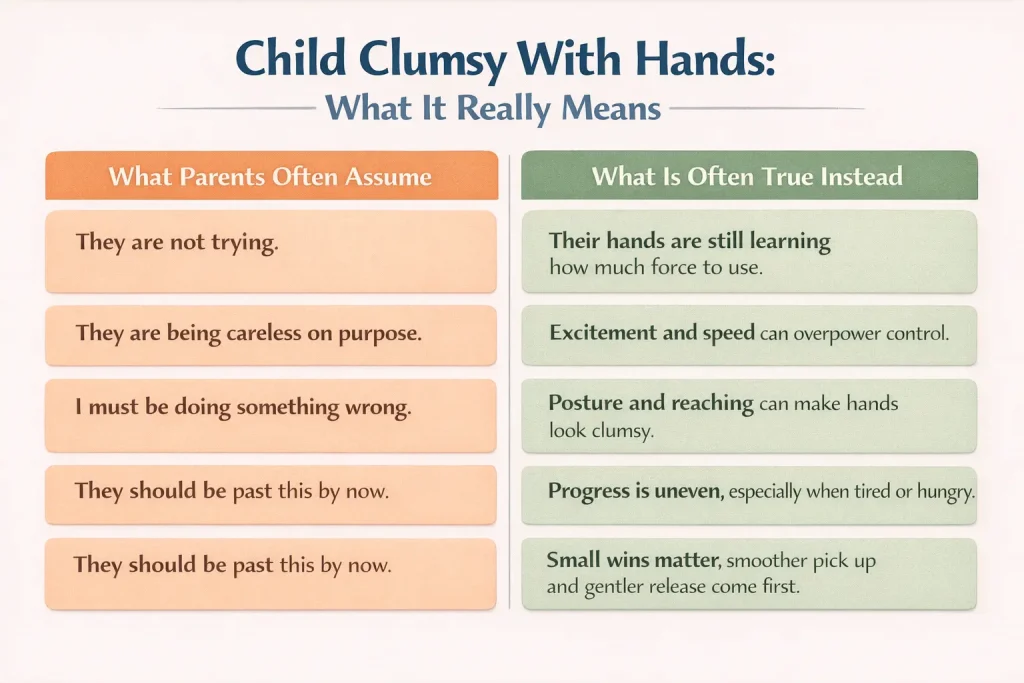
The Hidden Pressure Parents Feel, and Why It Makes Everything Harder
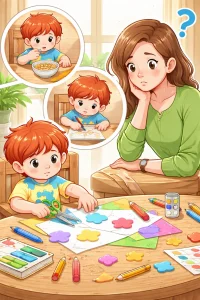
When a child is clumsy, the cleanup is real. The extra time is real. The comments from relatives can sting. Even a well meaning “They are so rough!” can land like criticism of your home, your boundaries, your teaching.
Many parents start hovering. They preemptively grab the cup. They hold the toy “the right way.” They stop messy play because it feels like too much. This is an understandable response, especially if you are already stretched thin.
The hard part is that hovering can accidentally send the message, “I do not trust your hands.” Kids pick up on that quickly. Some respond by giving up. Others respond by pushing harder, moving faster, or turning it into a power struggle.
A calmer middle ground is possible. You can protect your space and your sanity while still giving your child room to practice. It does not require perfect patience. It just requires noticing when guilt is driving the moment, and gently stepping back from that.
If you find yourself thinking, “Other kids are careful, mine is not,” it may help to remember this: you are seeing your child’s hardest moments up close. You are also seeing them at the end of long days, when control is naturally lower. That is not the full picture of what they are capable of becoming.
Learn More: You Are Not Doing Anything Wrong If Your Toddler Not Responding to Name
What Helps a Child Feel Steadier Over Time, Without Turning Life Into Practice
Most improvement in hand control comes from regular life, not special setups. Children learn through repetition, variety, and low pressure chances to try again.
Variety matters because hands need to learn different “gears.” Some experiences teach gentle touch. Others teach firm push. Some teach slow, careful placing. Others teach squeeze and release. When a child only gets one type of hand experience, like only building or only coloring, their control can look uneven in other situations.
Pace matters too. Many kids do better when the moment feels unhurried. When a child senses they are being watched closely or rushed, they often grip tighter and move faster. When they feel safe to take their time, you may see softer hands and better aim.
Tools and objects also make a difference. Some toys require tiny finger movements before a child is ready. Others are more forgiving and let a child succeed while they are still learning. Success builds willingness, and willingness leads to more practice. That is the loop you want.
You do not need to correct every crash. In fact, constant correction can make a child tense. A more supportive approach is to notice effort and control when it shows up, even briefly. “You put that down gently.” “You tried again.” “Your hands were calm right then.” Those small reflections help children become aware of what “controlled” feels like.
Signs You Are Already Seeing Progress, Even if the Mess Is Still Happening
Progress rarely looks like “no more spills.” It usually looks like slightly fewer spills, or a quicker recovery after one.
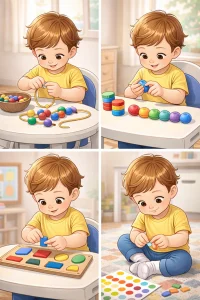
You might notice your child starts to place objects instead of dropping them. Or they still squeeze too hard, but they can adjust after you model “gentle.” Or they can stack two blocks with control, even if five is still too hard. These are meaningful changes.
Another common sign is endurance. Hand tasks can be tiring when control is still developing. If your child can stay with a hand based activity a little longer before melting down or walking away, that is growth.
Watch for smoother starts and stops. A child who used to slam a toy down might begin setting it down with a softer landing. A child who used to rip paper might begin tearing with more intention. A child who used to crush snacks might begin carrying them carefully, at least some of the time.
Also notice what happens when they are calm. Many parents only see clumsy moments during busy transitions. If you catch a quiet moment where their hands look steadier, that is a clue that the skill is there, just not consistent yet.
If you want a simple way to frame it, think “more often, in more places, with less effort.” That is what improving control tends to look like.
Read More: Why Does My Toddler Not Respond to Their Name When They Are Busy Playing?
A gentle closing note if you have a child clumsy with hands
If you have a child clumsy with hands, you are not failing them. You are living with a very normal part of development that can be loud and messy and sometimes exhausting.
Your child’s hands are learning timing, pressure, and coordination through thousands of small attempts. Some attempts will look rough. Some will surprise you with how careful they can be. Over time, those careful moments usually become more frequent, especially when kids feel unhurried and supported rather than judged.
If you ever feel stuck, or daily routines are turning into constant battles around spills, tearing, or frustration, it can help to get a bit of outside guidance. Some families like a parent guided tool like the BASICS App for ideas that fit real life. Others prefer a more personalized plan through an occupational therapy provider. Support is not a sign you did something wrong. It is simply another way to understand what your child’s hands need next.
For now, you can let go of the guilt. Clumsy hands are not a reflection of your love, your effort, or your parenting. They are a skill that grows, little by little, and your steady presence helps more than you think.
Book your Free Consultation Today
Parent/Caregiver Info:
Client’s Details:
* Error Message