Best Autism App for Android | BASICS Learning & Communication
By Wellness Hub
Last Updated: December 11, 2025
Finding the right autism app for your child can feel overwhelming—especially when you want something simple, effective, and available right on your Android phone. Whether your child is nonverbal, a late talker, or already building early words, the right tool can make communication easier and learning more joyful.
That’s where the BASICS Autism App for Android stands out. Designed for young children with autism and speech delays, BASICS brings together AAC-style communication, first-words learning, visual supports, and everyday social-skills routines—all in one parent-friendly app.
Why Parents Need Autism Learning & Communication Apps on Android
Parenting a child with autism or speech delay often means searching for tools that make daily communication easier, clearer, and less frustrating—for both your child and you. Today, more families are turning to autism learning apps on Android because they offer simple, accessible support right at home. With most parents already using Android phones, these apps become an easy way to bring therapy-inspired learning into everyday routines.
Growing demand for Android apps for autistic children
Android devices are widely available, affordable, and familiar to parents. This makes them the perfect platform for autism apps designed for toddlers, preschoolers, and early learners. Many families prefer Android-based tools because they allow consistent practice across home, therapy sessions, and daily routines without needing expensive equipment.
As awareness grows around early intervention and speech development, parents are actively searching for the best autism app for Android to help their children build foundational skills—communication, vocabulary, social skills, emotional understanding, and daily routines.
How autism learning apps support early intervention at home
Early intervention is most effective when it happens every day—not only during therapy hours. This is where autism learning apps play a powerful role. They turn everyday moments into learning opportunities:
- Naming objects during play or mealtime
- Practicing gestures, sounds, and early words
- Learning simple routines like brushing teeth or getting dressed
- Building attention, imitation, and communication attempts
Apps like BASICS are designed to be parent-led, which means you can use them even if you don’t have a therapy background. They provide structured activities, visuals, and repetition—the same strategies used by speech therapists and early childhood educators.
Why tools like BASICS, AAC apps, and visual supports matter
Children with autism often learn best when information is presented visually. This is why AAC apps, communication boards, and picture-based learning tools are so effective—especially for nonverbal or minimally verbal children.
The BASICS app combines these strengths by offering:
- Clear picture-based communication
- First words and vocabulary learning
- Visual teaching for everyday routines
- Simple gestures + sounds + language modeling
These supports help children express their needs, build confidence, and reduce frustration—especially during high-demand moments.
Benefits for nonverbal and late-talking children
For many families, the biggest challenge is communication. When a child struggles to speak or use words consistently, it affects their ability to connect, ask, and participate. Autism app on Android help bridge this gap by offering:
- AAC-style communication for pointing and choosing
- Early word learning through repetition and visuals
- Social and emotional learning through simple scenes
- Reduced communication frustration
- More intentional interaction with parents
Apps like BASICS give nonverbal and late-talking children a way to say something—even before they speak. This early success makes a huge difference in confidence, bonding, and language development.
Also read: Understanding and Supporting Nonverbal Children with Autism
What Makes an App the “Best Autism App for Android”?
Choosing the right autism app can feel overwhelming, especially when every child has unique strengths and communication needs. The best autism apps—like BASICS—are designed to support early learning, speech development, and social communication in a way that feels natural and enjoyable for young children. For parents, the ideal Android autism app should be simple, evidence-based, and built around how autistic children learn best: through visuals, repetition, structure, and hands-on interaction.
Below are the key features every parent should look for when choosing the best autism app for Android.
Must-Have Features Parents Should Look For
AAC communication tools (picture-based boards, simple icons)
For children who are nonverbal or minimally verbal, AAC-style communication tools are essential. The best autism apps include simple picture-based boards that allow a child to express needs like eat, play, or help with a single tap. Clear visuals and large icons make communication less frustrating, helping your child feel understood while reducing meltdowns and guesswork at home.
Speech therapy support for early words & vocabulary
A powerful autism app should support first words, vocabulary building, and sound imitation. Apps like BASICS use child-friendly images, simple voice models, and meaningful categories (foods, animals, actions) to help kids learn and use early words. This mirrors the strategies used by speech therapists—repetition, modeling, and visual cues—making it easier for parents to support learning at home.
Visual schedules & routine helpers
Many autistic children thrive on predictability. Autism-friendly apps that include visual schedules for morning routines, self-care, transitions, or bedtime can greatly reduce anxiety. These visuals help children understand “what comes next,” making everyday routines smoother and more independent.
Social skills & behavior modeling activities
The best autism learning apps also support social understanding—such as taking turns, sharing, understanding emotions, or asking for help. Story-based activities, simple scenarios, and modeling videos help children practice behaviors they’ll use in the real world. This is especially helpful for preschoolers and early learners who need repetition and concrete examples.
Why Android Apps Are Ideal for Autism Learning
Affordability & device availability
Most families already use Android phones or tablets, making it the most accessible platform for autism learning tools. You don’t need expensive devices to get high-quality support for speech and communication.
Larger screen options (tablets)
Autistic children often benefit from bigger visuals and clearer icons. Android tablets offer larger screens at affordable prices, making AAC boards, learning cards, and visual schedules easier for small hands to navigate.
Easy accessibility for PECS-style learning
Android apps work beautifully for PECS-style learning, where children point, choose, or match pictures. The open system, customizable settings, and simple interface make Android the most parent-friendly platform for supporting early communication.
BASICS: The Best Autism App for Android for Learning & Communication
Parents often ask, “What is the best autism app for Android that actually helps my child learn to communicate?” The answer many families are turning to is BASICS—a simple, research-aligned, early learning app designed specifically for young children with autism, speech delay, or social communication challenges. Built with therapist-guided methods and parent-friendly design, BASICS helps children learn first words, express needs, understand emotions, and build early social skills—all through clear visuals and easy interactions.
Overview of BASICS Autism App (Android)
The BASICS Autism App is thoughtfully created to support speech, vocabulary, AAC-style communication, and early language development. Every feature is designed with young children in mind, making it ideal for:
- Toddlers and preschoolers beginning their communication journey
- Nonverbal or minimally verbal children who need visual tools to express needs
- Parents who want a structured, therapy-inspired support system at home
The interface is clean, calm, and distraction-free, allowing children to focus on learning without overwhelming visuals or complicated menus. Parents appreciate its safe and simple design—no confusing settings, no unnecessary games, just meaningful communication and learning.
BASICS is more than an app; it’s a reliable companion for early intervention, helping your child practice skills throughout the day in a natural, stress-free way.
Key Features That Make BASICS Stand Out
Speech therapy tools for first words & expressive language
BASICS includes therapist-inspired modules that help children learn first words, gestures, sounds, and simple phrases. Each word is supported by a clear image and audio model, making it easier for children to imitate and understand. This builds the foundation for expressive language as they progress.
Know more about Top 7 Best Autism Apps for Android (Parents & Kids)
AAC-style communication cards for nonverbal kids
For children who struggle to use spoken words consistently, BASICS provides AAC-style picture cards to help them communicate wants and needs. These visuals reduce frustration, support independence, and give children a meaningful way to express themselves before speech develops.
Learning modules for vocabulary, social skills, and daily routines
The app covers essential early-learning topics such as:
- Object vocabulary (animals, foods, home items)
- Actions and everyday routines
- Simple social scenarios
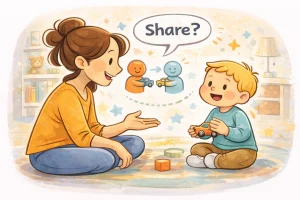
- Turn-taking, sharing, and basic problem-solving
These modules give your child repeated practice in skills they use at home, school, and play.
Emotion & gesture learning
Children with autism often need support in understanding emotions and using gestures. BASICS includes child-friendly visuals and simple modeling to help your child learn expressions like happy, sad, tired, or excited, as well as gestures like pointing, waving, or requesting help.
High-quality visuals & simple navigation
The app uses clean, realistic images on uncluttered screens, making it easier for children to focus. The layout is intentionally simple—no extra animations or bright distractions—ensuring a calm and predictable learning experience.
Who Should Use the BASICS App?
The BASICS app is designed for young children who need support in communication and early learning, including:
Autism, speech delay, and social communication delay
Children on the autism spectrum and those with expressive or receptive language delay benefit from structured, visual learning. BASICS aligns perfectly with these needs.
Late talkers (1–5 years)
If your child has not started speaking yet, speaks only a few words, or mixes gestures and sounds, BASICS provides the right blend of visual, auditory, and repetitive learning to support progress.
Parents needing a structured home-therapy tool
BASICS is built for parents who want guidance at home—especially those waiting for therapy, needing support between sessions, or wanting to follow a daily communication routine.
How to Use BASICS Autism App for the Best Results
Parents often download an autism app and wonder, “How do I actually use this every day to help my child communicate better?” The BASICS Autism App is designed to make this simple. With a calm interface, therapist-guided structure, and visual learning approach, BASICS helps toddlers, preschoolers, and nonverbal children build meaningful communication skills right at home. The best results come from using the app consistently, in small, everyday moments—just like early intervention recommends.
Below is a clear, parent-friendly guide to help you get the most out of BASICS.
Step-by-Step Usage Routine
1. Start with 5–10 minutes a day
Begin with short, focused sessions. Young children learn best in small bursts, and BASICS is designed to fit into quick routines like morning play, snack time, or bedtime.
2. Explore the AAC-style picture cards
Let your child tap and choose pictures to express simple needs—eat, drink, play, help. Repeat the word each time they select it. This builds understanding and reduces communication frustration.
3. Move to First Words & Vocabulary modules
Show your child clear images and encourage them to imitate sounds, gestures, or actions. Repeat the words naturally throughout the day to help them generalize the learning.
4. Practice social skills and routines
Use BASICS’ visuals during daily activities like brushing teeth, putting on shoes, or mealtime. Visual routines help children understand what comes next and stay calm during transitions.
5. Reinforce gestures and emotions
Select emotion cards or gesture prompts and mirror them together. These activities help your child develop social awareness and early emotional understanding.
6. Repeat the same modules for consistency
Children with autism learn through repetition. Practicing the same words or routines daily helps strengthen connections and improve confidence.
Structured Learning Path for Toddlers and Preschoolers
The BASICS App is built to follow a natural, developmental learning sequence that aligns with early childhood speech and communication milestones:
Phase 1: Gestures & Early Sounds
Pointing, waving, tapping icons, imitating sounds.
Phase 2: First Words & Simple Vocabulary
Learning common nouns (animals, foods, toys), familiar routines, and basic actions.
Phase 3: AAC Communication Support
Using picture cards to express needs consistently—ideal for nonverbal or minimally verbal children.
Phase 4: Social Skills & Emotional Learning
Understanding simple feelings, daily social interactions, turn-taking, and behavior modeling.
Phase 5: Expanding Communication
Combining words + gestures, increasing vocabulary, and using AAC support as needed.
This structured path helps parents know exactly what to do and when—without guessing or feeling overwhelmed.
Tips for Parents During Early Intervention
Use the app during real-life routines
Open BASICS while eating, getting dressed, bathing, or playing. Learning is stronger when tied to real experiences.
Model language naturally
When your child taps a picture of banana, say “banana!” with excitement and show them the real object if possible.
Follow your child’s interests
If your child loves animals, spend more time in the animal vocabulary module. Motivation boosts learning.
Celebrate small wins
A gesture, a sound, a new word, or pointing to the right picture—each step matters. Praise helps build confidence.
Stay consistent
Daily short sessions—5 to 15 minutes—produce better results than long, irregular practice.
Use AAC even if your child speaks a little
AAC doesn’t replace speech; it supports it. Many children start talking more once they can express themselves visually.
Conclusion
BASICS is one of the best autism apps for Android because it combines learning and communication in one easy tool. Children can use picture cards to express needs, learn first words, understand emotions, and practice social skills—all in a calm, simple design made for young autistic kids. Parents love that BASICS works as a daily early-intervention helper, supporting toddlers, preschoolers, and nonverbal children at home. If you want an app that is safe, child-friendly, and truly helps with communication and learning, BASICS is the perfect choice for your child’s early development.
Frequently Asked Questions:
1. What is the best autism app for Android for young children?
BASICS is one of the best autism apps for Android because it helps with speech, communication, vocabulary, and early learning using simple, child-friendly visuals.
2. Can the BASICS app help my nonverbal or minimally verbal child?
Yes. BASICS includes AAC-style picture cards that help nonverbal children express their needs, make choices, and communicate more confidently.
3. Is BASICS good for toddlers with speech delay?
Absolutely. The app teaches first words, sounds, gestures, and simple vocabulary—perfect for toddlers who are late talkers or need extra speech support.
4. Does the BASICS app work for autistic preschoolers?
Yes. BASICS is designed for toddlers and preschoolers with autism. It builds early communication, social skills, routines, and emotional understanding.
5. How does BASICS help with communication at home?
The app uses clear pictures, simple language, and AAC tools so children can request items, say what they want, and communicate during daily routines.
6. Is BASICS better than other autism apps on Android?
Many parents prefer BASICS because it offers both learning + communication, not just games or words. It supports speech, AAC, routines, and social skills in one app.
7. Can I use BASICS as part of early intervention?
Yes. BASICS follows early-intervention methods used by speech therapists and works well for daily practice at home.
8. Does the app teach social and emotional skills?
Yes. BASICS includes simple lessons on emotions, gestures, routines, and basic social interactions like sharing and taking turns.
9. Is the BASICS app easy for parents to use?
Very easy. The design is clean, calm, and simple. Parents can guide their child even without any therapy experience.
10. How much time should my child spend on BASICS each day?
Short sessions work best—5 to 10 minutes at a time. You can use the app during play, meals, or daily routines for better results.
About Wellness Hub
Wellness Hub is a trusted digital platform that empowers parents, caregivers, and professionals with science-backed tools for childhood development. From online speech therapy to home therapy resources, we offer a holistic ecosystem for children facing speech delays, autism, ADHD, and other developmental challenges.
Rooted in evidence-based practices and delivered by certified experts, Wellness Hub bridges the gap between accessibility and quality care. Whether you need at-home speech strategies, developmental checklists, or interactive mobile apps like BASICS, we make early intervention affordable and family-friendly.
Start your journey today with expert guidance tailored to your child’s unique communication and learning needs—anytime, anywhere.
Book your Free Consultation Today
Parent/Caregiver Info:
Client’s Details:
* Error Message