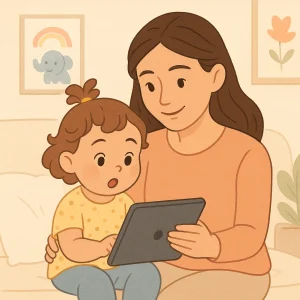
BASICS: The Parent-Trusted Speech Therapy and Autism App for Kids
By Wellness Hub
Last Updated: July 29, 2026
When your child needs extra support with communication, everyday skills, or social-emotional development, the hardest part at home is often knowing what to do next. BASICS gives parents a clearer starting point: a goal-based plan, three guided activities each day, demonstration videos, parent prompts, learning games, and simple progress tracking.
Developed by Wellness Hub’s multidisciplinary team, BASICS brings speech and language, occupational therapy activities, social-emotional learning, oral motor and articulation practice, daily living skills, toilet training, and early literacy into one parent-guided app. It supports practice at home and between professional sessions; it does not diagnose a child or replace individualized therapy.

Speech and Autism Learning App for Kids Ages 2–8


What Makes BASICS Different From a Typical Kids’ Learning App?
Goals Come Before Activities
Many children’s apps begin with a library of games. BASICS begins with the skill a family wants to support. Parents choose a developmental area, answer simple questions about what they currently observe, and use those answers to build a more relevant set of goals and activities. The questions help organize the plan; they are not diagnostic tests.
Three Guided Activities Each Day
BASICS keeps the daily plan small: three guided activities. This gives families a practical place to start without turning home practice into a long lesson. An activity can be repeated, adapted, or carried into play and routines instead of being rushed through just to mark it complete.
Parents Can See What to Do
Activities include demonstration videos, steps, prompts, and therapist tips. Parents can watch the example, understand the target, and then practice it with their child.
Practice Continues Beyond the Screen
A word practiced on screen can come back at snack time. A dressing sequence can be practiced while getting ready. A turn-taking activity can continue with blocks or a ball. BASICS works best when the app starts an interaction rather than replacing one.
How BASICS Works for Parents
Choose the Area You Want to Support
BASICS includes communication and speech, occupational therapy activities, oral motor skills, social-emotional learning, toileting, and reading and writing. Families can begin with the area most relevant to their current priorities.
Answer Questions About Your Child’s Current Skills
Parents answer observation-based questions about what their child currently does. These responses help suggest a starting point. They should not be interpreted as a developmental screening, diagnosis, or clinical assessment.
Receive Goals and Start Daily Practice
After the initial questions, parents can work with suggested developmental goals and receive activities connected to those goals. Each day’s small plan gives the family something concrete to practice rather than a long list of possibilities.
Track Practice Goal by Goal
Parents can rate activities and review progress within the app. This helps show what has been introduced and practiced over time. An in-app progress rating is not a standardized clinical measure.
Speech and Language Support at Home
First Words, Vocabulary, and Phrases
For children beginning to communicate, practice can focus on useful words connected to people, objects, actions, and routines. As language grows, activities can move toward word combinations, phrases, and sentences. Parents can model the same words again when they naturally fit into the child’s day.
Questions and Conversation
BASICS includes practice with WH questions and conversational skills. Rather than repeatedly testing a child, parents can model answers, use visual support, and practice during meaningful situations.
Speech Sounds and Articulation
BASICS includes articulation-related practice, but unclear speech can have different causes. When a child is consistently difficult to understand or speech concerns affect daily communication, a speech-language professional can assess which skills are appropriate to target.
Different Ways of Communicating Count
Communication does not have to begin with spoken words. Children may use gestures, signs, pictures, vocalizations, or AAC. Parents can acknowledge these meaningful attempts while continuing to model language.
How BASICS Supports Autistic Children at Home
Communication and Social Interaction
Autistic children differ widely in communication, sensory preferences, play, interests, and support needs. BASICS provides structured opportunities to practice requesting, responding, turn-taking, greetings, and simple interactions. The goal is useful communication and participation, not forcing a child to hide autistic traits.
Feelings and Regulation
Social-emotional activities help parents put simple language around feelings, calming strategies, and everyday situations. These are opportunities to build understanding, not tests a child has to pass.
Daily Routines and Independence
Predictable steps can make everyday routines easier to teach. BASICS includes activities related to self-care and participation so parents can practice a sequence where the child actually uses it.
More Than Speech: Motor and Everyday Skills
Fine Motor, Gross Motor, and Motor Planning
BASICS includes occupational therapy activities involving hand skills, body movement, coordination, and motor planning. These provide guided practice at home but do not replace an occupational therapy evaluation when individualized assessment is needed.
Sensory Activities
Children respond to sensory experiences differently. Parents should follow their child’s cues rather than assuming a particular activity will calm or help every child in the same way.
Dressing, Brushing Teeth, and Eating
Daily living skills can be easier to teach when routines are broken into manageable steps. BASICS provides guided practice so parents can model and repeat these skills in real routines.
Toilet Training, Oral Motor, and Early Learning
Step-by-Step Toilet Training
BASICS provides structured toilet-training support for autistic children and other children who benefit from additional time, repetition, and predictability. Pain, constipation, urinary concerns, or other medical issues should be discussed with an appropriate healthcare professional.
Oral Motor and Articulation Practice
Oral motor and speech-sound work should be kept distinct. Movements of the lips, tongue, and jaw are not automatically the same as practicing speech sounds. When speech clarity is the concern, activities should match the child’s actual speech needs.
Reading, Writing, and Early Academics
BASICS includes early literacy and academic learning such as letters, letter sounds, numbers, counting, and spelling. These broaden opportunities for practice while the app’s central role remains parent-guided developmental support.
250+ Learning Games for Extra Practice
BASICS includes more than 250 learning games across speech and language, early academics, and feelings and friendships. The games give children another way to revisit skills without making games the entire learning plan.
A vocabulary game can lead to naming or requesting during a meal. A feelings game can lead to talking about a character in a story. A counting activity can continue while putting toys away. The screen becomes a starting point for practice rather than the destination.
Watch First, Then Practice Together
Video modeling is used throughout BASICS to show a clear example before practice. Videos can model communication, self-care, social interactions, and movement—for example, using a first word, brushing teeth, getting dressed, using a spoon, greeting someone, joining play, or trying an animal walk.
Parents can watch the relevant part with their child, point out the key action, and then try it in the real situation. A child does not need to copy a model perfectly for the activity to be useful.
BASICS Can Work Alongside Your Child’s Therapist
BASICS is designed to support what happens between professional sessions, not compete with it. When a child is already seeing a speech-language professional, occupational therapist, or another developmental professional, home practice can provide additional opportunities to use appropriate skills in familiar settings.
Families waiting for services can also use BASICS for structured developmental activities at home. They should still pursue recommended assessment or intervention rather than treating an app as a replacement for care.
What BASICS Does—and Does Not—Do
| BASICS can | BASICS cannot |
| Organize parent-guided home practice | Diagnose autism or another developmental condition |
| Suggest goals based on information entered in the app | Replace a developmental or clinical assessment |
| Provide guided activities, videos, prompts, and games | Replace individualized therapy |
| Help families practice between professional sessions | Guarantee how quickly a child will progress |
| Record activity practice goal by goal | Provide a complete clinical picture of a child |
Is BASICS Right for Your Child?
BASICS may be useful when you want a clearer home routine, need ideas connected to specific developmental goals, or want to continue appropriate practice between therapy sessions. A diagnosis is not required simply to use developmental activities in the app.
Professional guidance is especially important when you are trying to understand why your child is having difficulty, when a skill has been lost, when communication or daily functioning is significantly affected, or when there are hearing, feeding, swallowing, pain, or other medical concerns.
BASICS at a Glance
| Inside BASICS | What parents get |
|---|---|
| Goal-based plan | A clearer starting point based on the developmental area being supported |
| Daily practice | Three guided activities |
| Activity guidance | Demonstration videos, steps, parent prompts, and therapist tips |
| Communication | First words through phrases, questions, conversation, and speech-sound practice |
| OT and daily living | Motor, sensory, and everyday self-care activities |
| Social-emotional learning | Feelings, regulation, turn-taking, and social situations |
| Toileting | Structured toilet-training support |
| Learning games | 250+ games for additional practice |
| Progress | Goal-by-goal activity tracking |
What Parents Often Want to Know
Is BASICS only for children with autism?
No. BASICS supports developmental practice across areas including communication, motor skills, social-emotional learning, and daily living. Families can begin with the skills they want to support rather than a diagnosis.
Can BASICS replace speech or occupational therapy?
No. BASICS provides structured home practice. A qualified professional can assess a child, identify the reasons behind a difficulty, individualize goals, and adjust intervention based on clinical findings.
Can my child use BASICS without a diagnosis?
Yes. A diagnosis is not required to use developmental activities. Using an app, however, should not delay an assessment when a parent or professional has concerns about a child’s development.
Does BASICS support children who do not speak yet?
Early communication activities can recognize gestures, signs, pictures, AAC, and other meaningful communication. Spoken words should not be treated as the only valid way for a child to participate.
How long should we use BASICS each day?
The app provides three daily activities, but there is no need to turn them into a long session. Short practice that leads to useful interaction during play or routines can be more practical than staying on screen simply to complete more content.
Start With Three Activities Today
BASICS is built around a simple idea: parents should know what they are practicing, see how to do it, and have a manageable way to continue the skill at home. Choose the area that matters most right now, answer the initial questions, review the suggested goals, and begin with the three activities in your daily plan.
Use the app as a guide, then bring the practice into conversations, play, meals, movement, and everyday routines. That is where a digital activity becomes something your child can use beyond the screen.
About BASICS
BASICS is an early intervention and home support app developed by Wellness Hub for parents of children with autism, speech delay, and other developmental needs. Its activities and learning resources are developed with input from a multidisciplinary team that includes speech therapists, occupational therapists, behavioral therapists, special educators, and child-development professionals.
Content by: Wellness Hub BASICS Team
Last updated: July 2026
Editorial disclosure: This guide is published by Wellness Hub, the developer of the BASICS app. Product information reflects BASICS features available at the time of publication. Developmental and therapy-related information is educational and does not replace individualized assessment, diagnosis, or therapy from a qualified professional.
Related Reading
These are the strongest internal links for this page because they move parents from the broad BASICS overview into specific use cases:
- How to Use a Speech Therapy App for Home Practice
https://www.mywellnesshub.in/blog/speech-therapy-app-home-practice/ - BASICS App to Teach First Words: Where to Start
https://www.mywellnesshub.in/blog/basics-app-to-teach-first-words-where-to-start/ - An App to Teach WH Questions: How BASICS Supports Practice
https://www.mywellnesshub.in/blog/app-to-teach-wh-questions-for-kids-basics/ - My Child Is Hard to Understand: How to Support Clearer Speech
https://www.mywellnesshub.in/blog/my-child-is-hard-to-understand-how-to-support-clearer-speech/ - BASICS App: Speech, Autism and Learning Support for Every Child
https://www.mywellnesshub.in/blog/basics-app-early-childhood-development-speech-autism/
References & Further Reading
- CDC — Developmental Monitoring and Screening
https://www.cdc.gov/act-early/about/developmental-monitoring-and-screening.html - CDC — Early Intervention
https://www.cdc.gov/act-early/early-intervention/index.html - CDC — Why Act Early if You’re Concerned About Development?
https://www.cdc.gov/act-early/families/why-act-early.html - ASHA — Augmentative and Alternative Communication (AAC)
https://www.asha.org/practice-portal/professional-issues/augmentative-and-alternative-communication/ - BASICS — Google Play listing
https://play.google.com/store/apps/details?id=in.mywellnesshub.basicsai - BASICS — Apple App Store listing
https://apps.apple.com/in/app/basics-child-development-plan/id6760702144
Book your Free Consultation Today
Parent/Caregiver Info:
Client’s Details:
* Error Message