BASICS Fine Motor Skills App: Guided Hand Practice for Kids at Home
By Wellness Hub
Last Updated: August 5, 2026
See how therapist-created plans turn fine-motor goals into short, hands-on activities for grasping, using tools, dressing, drawing and pre-writing.
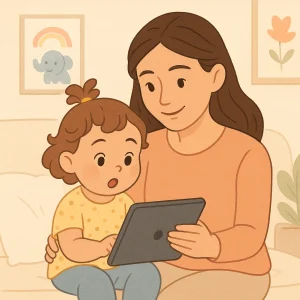
If your child tires quickly when colouring, uses a whole-hand crayon grasp, avoids scissors or finds buttons and zips difficult, you may be looking for a fine motor skills app for kids that gives you more than screen-based tracing. BASICS uses the app to guide real-world practice. It helps parents identify developmental goals, watch a demonstration, follow simple activity steps and record how practice went. The child builds the skill by handling real objects and tools, not by tapping a screen alone.
This article explains how the BASICS app can support fine-motor practice at home, what a functional pencil grasp actually means and when an occupational therapist may be useful. BASICS supports practice between sessions, but it does not diagnose the reason for a difficulty or replace an individual assessment.
Quick answer: How can an app support fine-motor skills?
A fine-motor app is useful only if it leads to purposeful, hands-on activity. BASICS App describes a parent workflow: answer questions, receive goals, complete three guided activities, watch demonstration videos and rate progress. For a fine-motor goal, the phone is the guide; your child practises away from the screen with objects, tools and everyday routines.
Fine-motor skills develop over time and expectations change with age, experience and the task. A whole-hand grasp in a younger child is not automatically a problem, and one “perfect” pencil position is not the goal. Comfort, control, endurance and participation matter more than how a grasp looks.
Fine-motor skills are more than hand strength
Fine-motor skills are the small, coordinated movements children use for play, self-care and learning. They include picking up food, turning pages, using a spoon, fastening clothes, drawing and cutting. Cleveland Clinic explains that these skills involve the hands, fingers and wrists, often working with visual information and larger body movements.
Strength can help, but it is only one part of the picture. Dexterity, sensation, two-hand coordination, visual-motor integration, motor planning, joint stability, attention and the design of the object all affect performance. A child may have enough strength yet still press too hard, lose control, struggle to organise both hands or tire during a long task.
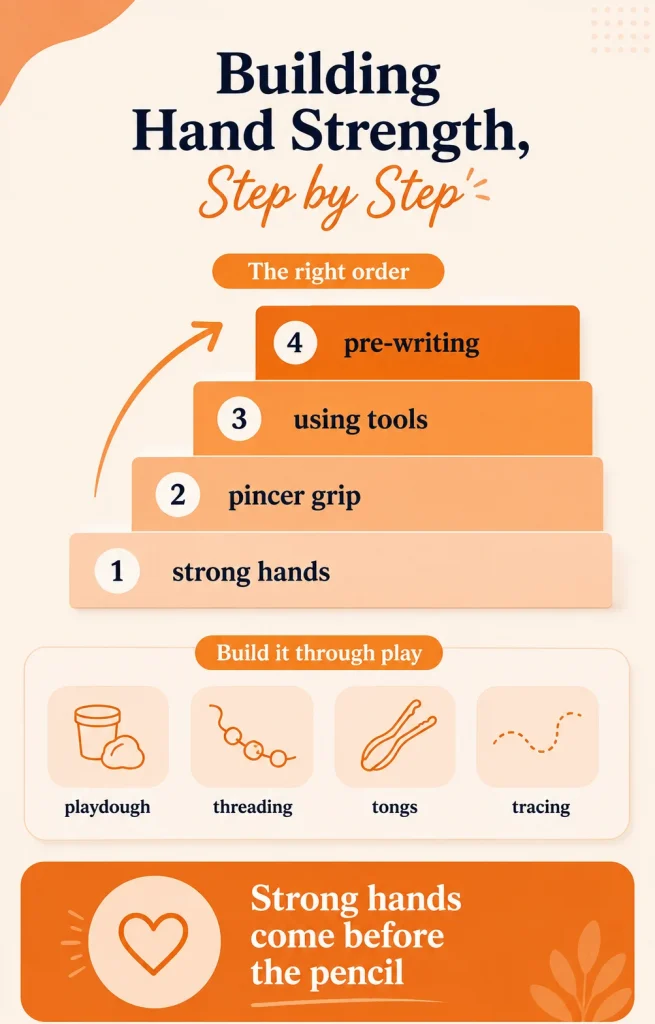
These abilities do not need to develop in a fixed staircase. Children can squeeze playdough, use a spoon, make marks and practise fasteners during the same period. BASICS should therefore be used to choose a manageable goal and practise it in context, not to hold back drawing until every “foundation” is complete.
How BASICS guides fine-motor practice at home
BASICS includes occupational-therapy goals for fine-motor skills, coordination, motor planning, sensory processing and daily living activities. After a parent completes the profiling questions, the app recommends goals and gives three small activities for the day. Each activity includes a demonstration video, simple steps, parent prompts and therapist tips. Parents can then rate the activity to follow progress goal by goal.
That structure matters because it answers the questions that make home practice difficult: What should we work on? What do I do? What materials do I need? How can I tell whether the task is too easy or too hard? The examples below describe areas that may be practised together. The specific activities in a child’s plan can vary by goal and app version.
Hand strength, pressure and control
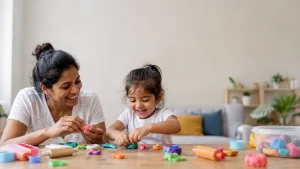
Squeezing, rolling, tearing, spraying and pressing can provide useful resistance for the hands. A BASICS-guided activity might use playdough, paper or a clean water-only spray bottle while the parent watches for more than force: Can the child use just enough pressure? Can they release without dropping the object? Can they continue without pain or marked fatigue?
Make the task easier by using softer materials, larger handles or shorter turns. Make it harder by asking for more precise placement or slightly firmer resistance. Stop if the child reports pain, repeatedly shakes or rubs the hand, or becomes distressed. More squeezing is not automatically better.
Fingertip precision and two-hand coordination
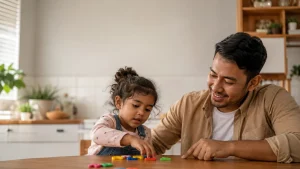
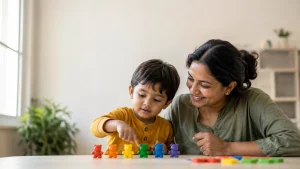
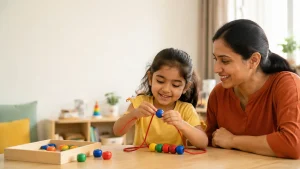
Picking up larger counters, moving pom-poms with tongs or threading large pieces can practise fingertip precision. These activities may support the small adjustments used in dressing, feeding and play, but a pincer grasp does not automatically create a pencil grasp. Pencil control uses the thumb, fingers, wrist and supporting hand together.
Notice what both hands are doing. One hand may hold a container while the other places an object, or one hand may steady a card while the other threads. If the child mouths objects, use large pieces that cannot be swallowed and stay within arm’s reach. The US Consumer Product Safety Commission warns that small parts can present a choking hazard for children under three; older children who mouth objects may also need larger alternatives.
Tool use for everyday tasks
Tools give fine-motor practice a clear purpose. Depending on the child’s goal, practice may involve a spoon, child-safe scissors, short crayons, tongs or dressing fasteners. Start with a tool that fits the child’s hand and a task that gives quick feedback. Snipping playdough or card strips, for example, may be easier than following a narrow line.
An adult should supervise scissors, small parts and any activity involving water. Use non-toxic materials, child-safe scissors and clean containers that have never held chemicals. Do not offer loose fine-motor materials in a moving vehicle. If a tool is uncomfortable, try a larger handle, a stabilised surface or a shorter task before assuming the child is refusing.
Drawing and pre-writing can develop alongside other skills
Children do not need to “finish” hand strengthening before scribbling or drawing. Large marks on paper, lines in sand, finger trails in foam and simple shape copying can be explored alongside strength, coordination and tool use. The purpose is controlled, meaningful mark-making, not neat letters before the child is ready.
Use age-aware expectations. The CDC four-year milestones include holding a crayon or pencil between the fingers and thumb rather than in a fist, but milestones are broad monitoring guides, not a test or diagnosis. Look at the child’s comfort, opportunity to practise and participation across activities, not one isolated drawing.
Support a functional grip; do not force one position
A functional pencil grasp lets a child control the tool, make the marks they intend and continue without excessive effort or pain. Several mature grasp patterns can work well. In one study of Grade 4 children, four common pencil grasps performed similarly for handwriting speed and quality; the dynamic tripod grasp was not superior. See the PubMed record for the pencil-grasp study.
Offer an appropriate crayon or pencil, model how you hold it and let the child experiment. Correcting every finger can increase tension and avoidance. Seek occupational-therapy guidance if the grasp causes pain, marked fatigue or difficulty completing age-relevant tasks.
Use printables as one practice option, not the whole plan
Tracing, cutting, colouring and dot-to-dot pages can provide structured practice when they match the child’s goal. They should not replace play, self-care and real tool use. A child who dislikes paper tasks may show the same underlying skills while pouring, opening containers, dressing a toy or helping with food preparation.
When a BASICS activity includes a printable or your therapist recommends one, choose a page with enough space, use a comfortable tool and stop before quality drops because of fatigue. Printable availability and difficulty can vary, so treat the page as one option rather than the measure of a child’s fine-motor ability.
Fit fine-motor practice into everyday routines
Fine-motor practice does not need a separate therapy hour. It can happen while the child opens a lunch box, stirs batter, turns book pages, pulls up a zip, peels a sticker or makes marks during play. BASICS can help a parent choose one goal and carry the activity into a routine that already happens.
Keep the task short enough that the child can participate without pain or escalating frustration. Offer a clear beginning and end, demonstrate once and give time to try. If the child turns away, simplify the materials, offer a choice or return later. There is no evidence-based rule that a fixed number of daily minutes suits every child.
What BASICS adds to home fine-motor practice
Many parents can find activity ideas online. The harder part is choosing a relevant goal, understanding what to do and noticing progress without turning play into a test. Based on the current public app listings, BASICS adds five practical supports:
- A goal-based plan: Parents answer profiling questions and receive recommended developmental goals rather than a random activity list.
- Three guided activities: The plan breaks practice into a small daily set that can fit into play, meals and self-care.
- Demonstration and coaching: Each activity includes a video, simple steps, parent prompts and therapist tips so the adult knows how to support the task.
- Progress ratings without comparison: Parents rate each activity and follow the child’s own goals. The app states that it does not use streaks, leaderboards or comparisons.
- Broader occupational-therapy context: Fine-motor practice sits alongside coordination, sensory processing, motor planning and daily living goals instead of being reduced to pencil grip.
These are product features, not proof that the app will improve a particular child’s hand function. Progress depends on the goal, the child’s needs, the activity fit, opportunities to practise and the support available.
Explore guided fine-motor activities in BASICS
Download BASICS to explore therapist-created occupational-therapy goals, demonstration videos and guided home activities.

Know What to Practise With Your Child Today


BASICS Premium is currently described on the Apple App Store as an auto-renewing monthly or yearly subscription with a seven-day free trial. It renews unless cancelled at least 24 hours before the current period ends. Pricing, eligibility and cancellation terms can differ by platform or region, so check the terms shown at checkout before subscribing.
Who BASICS may help – and when to ask an OT
BASICS may be useful for parents who want clearer guidance for practising everyday hand skills at home, including grasping, drawing, cutting, dressing and feeding tasks. It may also support families who are practising between occupational-therapy sessions or waiting for services. No single pathway or activity will suit every child or every age.
Consider discussing your concerns with a paediatrician or qualified occupational therapist when fine-motor difficulties cause pain or marked fatigue, consistently limit eating, dressing, play or school participation, affect one side much more than the other, or involve loss of a skill the child previously used. An OT can assess the task, the environment and the child’s movement, sensory and coordination needs, then recommend adaptations that an app cannot individualise on its own.
What to remember about fine-motor progress
Fine-motor development is not a race toward one pencil grasp. Useful progress may look like opening a container with less help, using both hands together, pressing with less force, staying comfortable for longer or choosing to return to a task. Strength, precision, tool use and pre-writing can develop together.
BASICS can make home practice easier to organise by showing parents what to try and how to support it. The app is the guide; the learning happens through real activity, responsive support and repeated opportunities that fit the individual child.
Clinically Reviewed By
Reviewed by Anuradha Karanam, BASLP, Speech-Language Pathologist at Wellness Hub.
Anuradha supports children with speech, language, communication, and developmental needs, including speech-language assessments, parent guidance, and home training support. This article was reviewed for clinical accuracy, parent-friendly language, and safe guidance around helping children move from single words to phrases.
This content is for educational purposes only and does not replace professional assessment, diagnosis, or therapy.
View Anuradha Karanam’s Profile
Related Reading and References
- What Fine Motor Control Really Means
- My Child Uses a Whole-Hand Grip – Is That Normal?
- Easy OT Activities for Kids You Can Do at Home
- Pincer Grasp at Home: 15 OT Activities for Stronger Fingers
- How Occupational Therapy Helps Kids Build Life Skills
References and further reading
- Cleveland Clinic: Fine Motor Skills – What They Are, Development and Examples
- CDC: Milestones by 4 Years
- US Consumer Product Safety Commission: Small Parts and Choking Hazards
- PubMed: Effect of Pencil Grasp on Handwriting Speed and Legibility
- PubMed: Effectiveness of a Handwriting Readiness Program in Head Start
Book your Free Consultation Today
Parent/Caregiver Info:
Client’s Details:
* Error Message