My Child Won’t Copy Clapping or Waving – Is That Normal?
By Wellness Hub
Last Updated: March 7, 2026
If you’re worried about your child not copying gestures like clapping or waving, you’re not alone. You clap when a song ends and your child looks at you quietly. You wave goodbye to a neighbor and your child watches… but doesn’t wave back. Maybe you offer a high-five after a happy moment, and they smile, yet their hand stays by their side.
This is a surprisingly common concern for parents, because clapping and waving feel like such “simple” actions. When they don’t appear, unexpected questions can surface: Are they not interested in me? Do they understand what I’m showing them? Should they be doing this by now?
For many families, the answer is reassuring: yes, this can be completely normal. Imitation often develops slowly, in spurts, and in ways that don’t always match neat milestone charts. Copying simple actions and gestures is a skill your child builds over time—often after plenty of watching and observing first.
Also read: The Best Times of Day to Try Playful Noises Bath, Meals, Diaper Changes, and More
Why Some Children Watch but Don’t Join In Yet
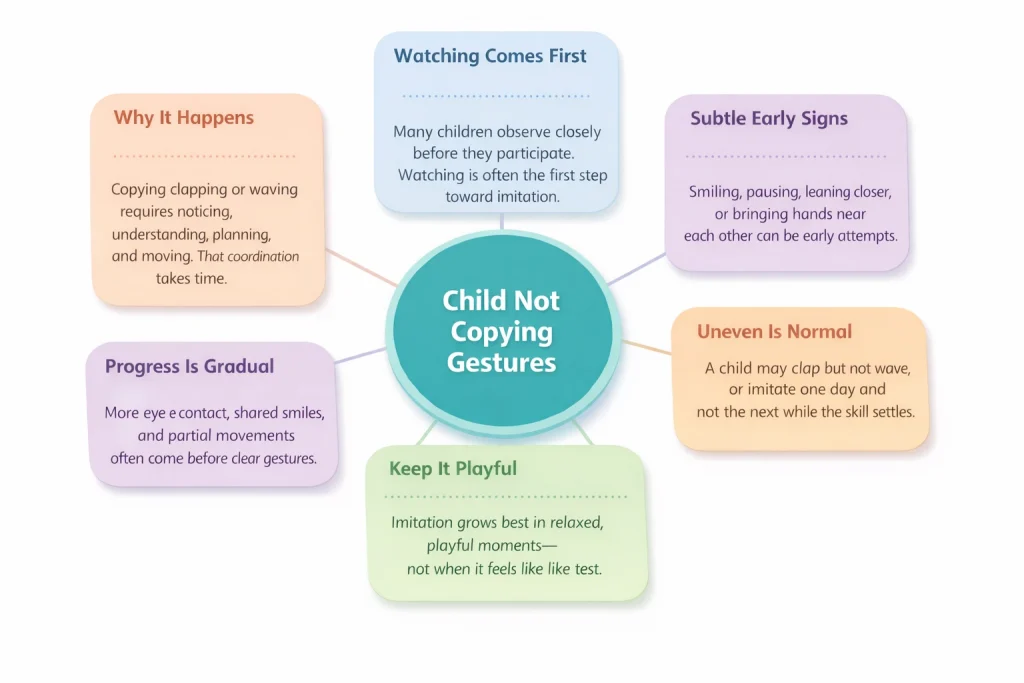
Imitation is not just about “doing what I do.” For a child, copying a gesture like clapping or waving involves several steps at once. They must notice your movement, understand that it is meant to be shared, plan their own body response, and then carry it out. That is a lot of coordination for something adults do automatically.
Some children also prefer to observe before participating. They may be absorbing everything—the sound of your voice, your facial expression, the rhythm of the moment—without yet feeling ready to move their own body. This is especially common during busy situations such as greetings, group songs, or family gatherings, where there is a lot happening all at once.
Sometimes, children simply follow their own developmental timeline. They may be focusing their energy on other skills first—exploring objects, learning new movements, or becoming deeply engaged in play. This does not replace imitation; it often means that imitation will emerge later or look different at first.
What Imitation Really Means in Early Development
When we think about imitation, we often picture a clear mirror image: you clap, they clap; you wave, they wave. In early development, however, imitation can be much more subtle.
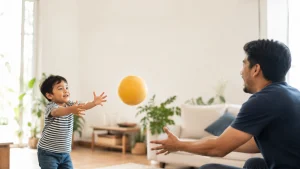
At its core, imitating gestures is about connection. It is your child gradually learning that they can share an action with you and that this back-and-forth has meaning. This is why early imitation includes gestures such as clapping, waving, high-fives, and even short sequences like clap followed by wave.
In the beginning, your child may not copy the exact movement. Instead, they may participate in early, indirect ways. A smile, a pause to look at you, or leaning closer when you offer a high-five can all be part of the path toward true imitation.
Signs Your Child May Be Getting Ready to Imitate
Many parents feel relieved to learn that there are “readiness signs” that often come before the first clear clap or wave. These signs can be easy to overlook because they appear as ordinary moments rather than obvious milestones.
You might notice your child watching your hands closely when you clap, or looking at your face right after you wave. You may see them hesitate, as though they are considering whether to try, or bring their hands together briefly without fully clapping. Some children imitate only in specific situations—during a favorite song, with one familiar person, or when they feel calm and comfortable.
Another early sign is that your child begins to look to you for cues. For instance, they may glance at you when something exciting happens, as if checking what you will do next. This “checking in” is an important foundation for imitation because it shows they are noticing you as part of the shared experience.
Why Clapping and Waving Can Show Up Unevenly
It is also very common for children to imitate one gesture but not another. A child might enjoy high-fives but avoid waving. Or they may clap during music but not clap to celebrate a success. This does not mean they are unable to imitate—it often means the situation itself plays a role.
Clapping has rhythm and sound, which some children find motivating. Waving is quieter and more social, and it often happens quickly, such as in a doorway or across a room. High-fives involve touch and clear turn-taking, which can make their purpose easier to understand.
Even within the same child, imitation may appear and disappear. You might see a wave one day and not again for several days. While this can feel frustrating, it is a common pattern when a skill is still developing and settling in.
Keeping It Playful Without Turning It Into a Test
When parents feel concerned about a child not copying gestures, it is natural to try harder: “Can you wave? Wave bye-bye! Show Grandma!” The intention is loving, but children can sense the pressure in these moments, even when the tone is cheerful. Imitation tends to grow best in relaxed, playful interactions where your child does not feel singled out or evaluated.
Pausing can also be powerful. When you clap or wave and then leave a small space afterward, you give your child time to think and decide whether to join in. Some children truly need that extra moment. If they do not copy, the interaction can still remain warm and connected.
And when your child makes even a small attempt—hands moving toward each other, a slight lift of the arm, or a gentle touch to your hand—those “almost” moments are worth recognizing. They are often the steps that lead to clearer imitation later on.
What Progress Can Look Like Over Time
Parents often imagine a sudden change: one day their child does not wave, and the next day they wave perfectly. While this can happen, progress more often looks gradual and uneven.
You may first notice more eye contact or shared smiles. Your child may seem more engaged during familiar action songs or stay close when you offer a high-five. Over time, they may begin to copy small parts of your actions, then perform them more clearly, and eventually do so more consistently.
As imitation develops, some children also begin to enjoy simple action sequences, such as clapping and then waving—especially when these actions are tied to something meaningful, like celebrating a tower of blocks, greeting someone they love, or sharing a playful moment in the mirror.
When It Might Help to Get Extra Support
Sometimes parents want more than reassurance—they want guidance and a plan that still feels gentle. It can be helpful to seek support if imitation rarely appears in everyday moments, if progress feels stalled, or if you are unsure how to encourage the skill without creating stress.
Support does not have to feel overwhelming. Many families benefit from having simple goals and examples that fit naturally into daily routines, so they are not constantly wondering, Am I doing enough? Am I doing this right?
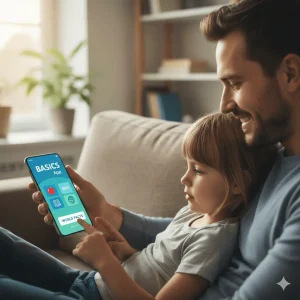
Tools like BASICS can be useful in this way. It is designed to support goals such as imitating simple gestures through everyday play and routines, with parent-friendly guidance that keeps the process calm and manageable. The focus is not on drilling skills, but on making connection easier to find in moments that already exist.
A Gentle Note to Carry With You
If your child is not clapping or waving yet, it does not mean they are not learning. Many children begin by watching, then trying in small ways, and slowly building confidence. When a child is not copying gestures, it is often part of a gradual developmental path rather than a fixed problem.
Imitation is both a social skill and a movement skill, rooted in connection—and it often grows best when it is surrounded by warmth rather than pressure.
Keep noticing the small signs: the looks, the pauses, the near-copies, the shared smiles. These moments matter. They are often the quiet beginning of the claps, waves, and high-fives you have been waiting to see.
About the Author:
Shravanaveena Gajula
M.Sc ., Speech and Language Pathology (5+ years of experience)
Shravanaveena Gajula is a dedicated Speech-Language Pathologist with a BASLP and an M.Sc in Speech and Language Pathology. With experience spanning multiple settings, including Wellness Hub , Veena specializes in a wide range of disorders from developmental issues in children to speech and language assessments in adults. Her expertise includes parent counseling, managing speech sound and fluency disorders, and creating individualized therapy programs. Veena is also PROMPT certified and an author of several insightful blogs on speech and language pathology, aiming to educate and assist caregivers in supporting their loved ones.
Book your Free Consultation Today
Parent/Caregiver Info:
Client’s Details:
* Error Message