How to Tell If a Sound Is Meaningful Communication Or Just Noise
Last Updated: February 28, 2026
Some days your child makes a sound and you just know what it means. It fits the moment, it feels directed at you, and you respond without even thinking. These moments often involve meaningful communication sounds even before clear words appear.
Other days, that very same sound pops out of nowhere. Or it changes. Or it keeps going while you’re trying to cook dinner and you’re left wondering, “Was that for me… or just noise?” If you’ve ever thought, “Was that a real message?” you’re definitely not alone. Early communication can feel messy and unpredictable. And it isn’t always clear when a sound is meant to communicate versus when it’s simply part of your child exploring their voice.
Here’s the reassuring part: meaningful communication doesn’t have to sound like a word. Long before speech becomes clear, many children use sounds to show needs and feelings. Those sounds can mean “help,” “more,” “look,” “no,” or “this is exciting.” Your job isn’t to decode every sound perfectly. It’s to notice the signs that say, “This one is meant for me.”
Why it can feel so confusing even when you’re paying close attention
We often expect communication to be consistent. The same sound for the same need, every time. But early vocal communication doesn’t work that neatly.
Children experiment. They play with volume, pitch, rhythm, and timing. They also sound different when they’re hungry, tired, excited, or deeply focused. A sound that meant “again!” yesterday might show up today simply because it feels fun to make. That doesn’t mean your child is being random or that you’re missing something important. It just means their communication system is still being built, and you’re watching it take shape in real time.
Also read: 10+ Simple Home Activities That Encourage Purposeful Sounds for Needs and Feelings
What “purposeful” sounds often have in common
A meaningful sound usually carries a small social spark. It’s not only the noise itself. It’s how it shows up in the moment and what your child does around it.
Here are a few gentle clues that a sound is likely meant as communication.
Does it happen at a meaningful moment?
Timing tells you a lot.
A sound is more likely to be purposeful when it happens right when a need or feeling makes sense. For example, when a snack won’t open, when a favorite toy is out of reach, or when you stop a game your child loves.
You might hear a sound as you hold the bubbles, as you stand near the door to go outside, or when you pause pushing the swing. That sound may be your child’s way of saying, “Keep going,” “Help,” “I want that,” or “I’m not done.”
Even if you can’t name the exact message, the timing shows that it belongs to the situation.
Do they look toward you, lean in, or check your face?
Many purposeful sounds come with a quiet “are you with me?” moment.
Your child might glance at you after vocalizing, turn their head toward you, or lean their body closer. For some children, it’s very subtle, a quick look, a tiny pause, a small shift in posture. This is one of the strongest signs of communication because it shows your child isn’t just making noise into the air. They are including you.
And it still counts even if the look is brief. Early communication is often quick and quiet before it becomes more obvious.
Is there repetition that seems intentional?
Repetition can mean different things, but when it shows up with a situation, it often signals purpose.
If your child repeats the same sound while reaching for something, standing at the fridge, or holding out a cup, they may be using a sound that has worked before or trying hard to be understood. Repetition can also appear during play. A child might squeal every time a car goes down a ramp, almost like they’re commenting on how fun it is. That is communication too. Sharing excitement is a real message.
Do they pause as if they’re waiting for your response?
This one is easy to miss, but it’s powerful.
A child who is communicating often leaves a small space afterward. They make a sound, then wait. Or they vocalize, look at you, and stay still for a moment.
That pause can be their way of handing you the turn. “Now you.” Sounds that are more self-directed, like humming while playing alone, often keep flowing without that expectant pause.
Does the sound change when the situation changes?
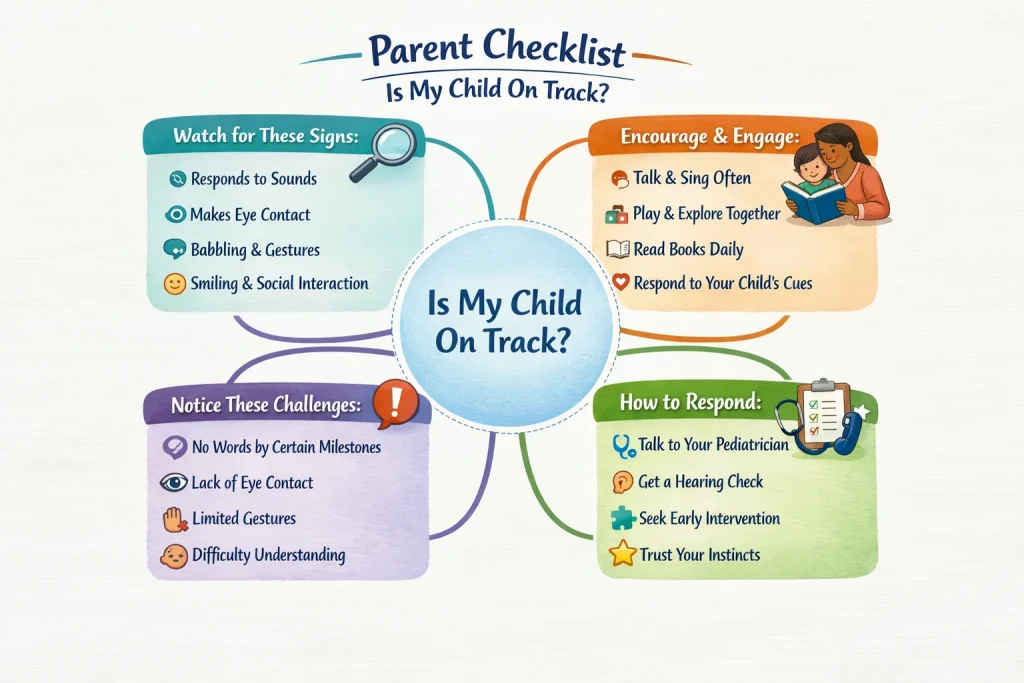
Purposeful communication usually becomes more flexible over time. You may notice different sounds for different feelings, one sound when excited, another when frustrated, another when they want your attention.
Even if the sounds aren’t exactly the same every day, the pattern may be there. Louder or sharper when upset. Lighter or higher when happy. More insistent when they really want something.
This is your child practicing how to express needs and feelings with the tools they have right now.
What “just noise” can look like and why it’s still okay
Sometimes a sound really is just a sound, and that’s perfectly fine.
Children make noise to explore their voice, to entertain themselves, to release energy, or to fill quiet moments. They might vocalize while running, stacking blocks, or flipping through a book alone. They may enjoy the echo in a hallway or the way a certain sound feels in their mouth.
This kind of vocal play is normal and useful. It helps children learn what their voice can do. And it can still lead to more meaningful communication later, especially when they discover that sounds can connect them to you. So if you think, “I’m not sure that one was meant for me,” you don’t need to fix it or worry about it. You can simply stay open to the next moment.
Read more: My Child Only Makes Sounds When Playing Alone How Can I Encourage Sounds With Me?
What to do when you’re not sure what the sound means
Not knowing is part of the journey. You’re not expected to interpret every sound correctly.
In daily life, many parents find it helpful to respond to the feeling behind the sound rather than the exact meaning. If it looks like a request, respond as if it’s a request. If it feels like frustration, respond to the frustration. If it sounds like excitement, share that excitement back.
When you respond warmly to a sound that seems purposeful, you send a strong message: “I hear you. Your voice matters.” That’s how children learn that sounds can express feelings, get attention, and create connection.
And if your response isn’t what your child meant, you’ll usually see it. They may try again, use their body more clearly, or change the sound. That isn’t a mistake. That’s communication becoming clearer.
The small signs of progress parents often notice
Using meaningful communication sounds to share needs and feelings grows in tiny but meaningful steps.
Over time, you may notice your child vocalizes more during play and routines, especially when they want something, need help, or want you to notice what they’re doing. You might hear more variety in sounds or see more looking, leaning, and pausing as if they’re inviting you in.
Often the biggest change isn’t the sound itself. It’s the connection around it. More back-and-forth. More shared moments. More of that feeling of “you and me” in communication.
When it might help to get extra support without making it a big deal
Some parents simply want a clearer way to understand what they’re seeing and to respond with confidence. If you feel unsure, stuck, or like you’re questioning yourself all day, a little guidance can feel comforting.
Speech and Autism therapy apps like BASICS can help by breaking communication goals into everyday moments, so you’re not trying to teach all day, just noticing chances and responding in ways that feel natural. It’s optional support, not a test.
A calm reminder to end on
If you’re paying close enough attention to wonder whether a sound is meaningful, you’re already doing something important. You’re treating your child’s voice as something worth listening to.
Purposeful communication doesn’t appear all at once. It shows up in timing, repetition, pauses, and those quick little glances that say, “Did you hear that?”
You don’t have to get it right every time. Stay connected. Respond warmly when it feels like your child is reaching for you. Trust that these early sounds, whether they’re requests, protests, bids for attention, or bursts of joy, are building something real.
About the Author:
Rajini Darugupally
M.Sc., Speech-Language Pathologist (9+ years of experience)
Rajini is a passionate and dedicated Speech-Language Pathologist with over 9+ years of experience, specializing in both developmental speech and language disorders in children and rehabilitation in adults. Driven by a desire to empower each individual to find their voice, Rajini brings a wealth of experience and a warm, genuine approach to therapy. Currently, at Wellness Hub, she thrives in a team environment that values innovation, compassion, and achieving results for their clients. Connect with Rajini to learn more about how she can help you or your loved one find their voice.
Book your Free Consultation Today
Parent/Caregiver Info:
Client’s Details:
* Error Message