How Mental Imagery Therapy Helps Your Child’s Language
Last Updated: December 5, 2025
Parents often wonder why their child struggles to understand instructions, follow simple directions, or connect words with what they see around them. For many children—especially those with autism or language delays—the foundation of language begins long before the first words appear. It starts with understanding pictures, processing visual cues, and making sense of the world around them.
This is exactly where Mental Imagery Therapy (MITA) plays an important role.
Mental Imagery Therapy is a structured, visual-based approach that uses picture puzzles, comparisons, and reasoning tasks to strengthen the cognitive skills needed for language development. It’s simple, child-friendly, and useful for a wide range of learners.
What is Mental Imagery Therapy? (A Simple Explanation for Parents)
Mental Imagery Therapy is a type of early-intervention technique that helps children learn to understand visual information and convert it into language and meaning. It uses picture-based tasks to train the brain to:
- Observe
- Compare
- Match
- Sequence
- Process multiple details at once
Children with autism or receptive language delay often focus on just one cue (usually color or shape). MITA helps them learn to use multiple cues—such as size, shape, pattern, and position—at the same time. This ability is directly linked to language understanding.
Why kids enjoy it
Most MITA tasks feel like puzzles or games, so children engage naturally. The activities are predictable, visually appealing, and simple enough to avoid overwhelming the child.
Why it’s helpful in early intervention
Young children, especially those on the autism spectrum, benefit from visual structure. Mental imagery tasks give them clarity and help strengthen early cognitive pathways needed for communication.
How Mental Imagery Therapy Improves Your Child’s Language Skills
Language is not only about “speaking.” Before a child can talk, they must understand—this is called receptive language.
Mental Imagery Therapy directly supports receptive language by training the child’s brain to connect what they see with what they hear.
Here’s how:
1. Mental Imagery Therapy Builds Receptive Language Skills
Receptive language includes a child’s ability to:
- Understand simple directions
- Recognize vocabulary
- Follow verbal instructions
- Match words to objects or actions
MITA activities train these skills by presenting tasks where the child must make sense of visual cues and follow specific directions to find the correct answer.
Children learn to:
- Look at multiple details
- Understand what the task is asking
- Choose correctly based on meaning
- Use logic to solve a puzzle
This step-by-step thinking is crucial to building language comprehension.
2. It Helps Children Combine Multiple Cues
Many children with autism struggle with “tunnel vision”—they rely on just one detail. For example, they may choose an item only by color, ignoring shape or size.
Mental Imagery Therapy teaches children to look at the whole picture:
- Color
- Size
- Shape
- Orientation
- Pattern
- Object relationship
When children learn to integrate multiple cues, they develop stronger cognitive flexibility, a skill important for both understanding and expressing language.
3. It Strengthens Early Cognitive-Linguistic Skills
MITA is not just a visual game—it builds cognitive systems essential for language growth, such as:
- Categorization: grouping objects
- Sequencing: understanding order
- Comparison: noticing similarities and differences
- Working memory: holding information long enough to act on it
- Problem-solving: using logic to find answers
These skills create the foundation speech-language therapists rely on for teaching new words, grammar, and comprehension.
How Mental Imagery Therapy Supports Speech Therapy Goals
Speech therapy doesn’t begin with speaking—it begins with understanding, thinking, and processing.
This is why Mental Imagery Therapy is closely related to speech therapy. Many SLPs (speech-language pathologists) incorporate similar visual-based tasks into their sessions.
Ways MITA supports speech therapy:
1. Builds Strong Receptive Language (Understanding Words and Instructions)
Speech therapists often say, “Understanding comes before talking.” Mental imagery tasks strengthen receptive language by teaching children to:
- Follow simple and complex directions
- Understand vocabulary through visuals
- Respond based on meaning
2. Encourages Vocabulary Growth
As children understand pictures better, they learn words faster. MITA indirectly boosts vocabulary because many tasks involve:
- Matching items
- Naming objects
- Learning features
- Understanding categories
3. Improves Comprehension and Attention
Kids must look carefully, compare details, and choose correctly. This process builds the cognitive pathways required for comprehension during speech therapy sessions.
4. Helps Nonverbal or Minimally Verbal Children
Because MITA uses visuals, it can be helpful even for children who are:
- Nonverbal
- Just beginning to imitate sounds
- Not yet ready for expressive language
It trains the brain’s internal “visual-language engine,” which is essential for later speech.
Who Benefits the Most From Mental Imagery Therapy?
Mental Imagery Therapy is widely used in early intervention and can benefit children with:
1. Autism (ASD)
Children on the autism spectrum often struggle with multi-cue attention, visual processing, and receptive language. MITA helps strengthen exactly these areas.
2. Speech Delay / Late Talker
Kids with speech delay often understand less than expected. Improving receptive skills accelerates expressive language development.
3. Developmental Language Disorder (DLD
MITA helps children who struggle with understanding concepts or following instructions.
4. Kids With Attention or Processing Difficulties
Visual-based tasks help improve focus, problem-solving, and auditory-visual integration.
Research on Mental Imagery Therapy: What Parents Should Know
Multiple studies show that children using Mental Imagery Therapy consistently show improvements in:
- Language comprehension
- Multi-cue attention
- Visual processing
- Cognitive flexibility
One of the largest studies included over 6,000 children with autism and found significant gains in language development in kids who regularly practiced MITA-style activities.
While MITA is not a replacement for speech therapy, it is a complementary tool that strengthens the brain systems needed for communication.
Parent-Friendly Mental Imagery Activities You Can Try at Home
You don’t need special apps or tools—many tasks can be done at home.
Here are easy, practical activities:
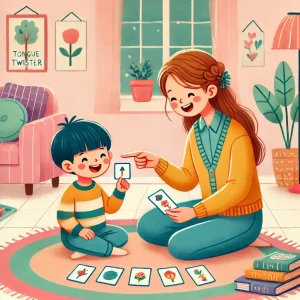
1. Picture Matching Games
Use cards or objects. Ask your child to match identical items.
2. “Find the Right One” Tasks
Show three pictures but ask for one with a specific feature (“Which one is big?”, “Find the red ball.”).
3. Categorization Games
Sort toys by size, type, or color.
4. Sequencing
Use 2–3 pictures showing an event (first, next, last).
5. Odd-One-Out Games
Show three items and ask which one doesn’t belong.
These activities build visual cognition and receptive language in a fun, stress-free way.
Signs Your Child May Benefit From Mental Imagery Therapy
Your child may benefit from MITA if you notice:
- Difficulty understanding instructions
- Trouble comparing or matching items
- Over-focus on color while ignoring other details
- Slow response to visual information
- Struggles with categories or sequencing
- Delayed speech or comprehension
If these sound familiar, MITA may be a supportive addition to your child’s learning routine.
Conclusion
Mental Imagery Therapy helps build the core skills children need for language—attention, understanding, visual thinking, and problem-solving. It is especially helpful for kids with autism, speech delay, or receptive language challenges. The best part is that it feels like play, not therapy, which keeps children engaged and happy.
By strengthening the brain’s ability to notice details, compare pictures, and connect visuals with meaning, Mental Imagery Therapy supports better communication and stronger comprehension. Over time, children become more confident, more attentive, and more prepared for everyday learning and language growth.
Frequently Asked Questions:
1. What is Mental Imagery Therapy for autism?
Mental Imagery Therapy is a visual-based learning method that uses picture puzzles and simple thinking tasks to help children with autism build attention, understanding, and language skills.
2. How does Mental Imagery Therapy help with speech and language?
It improves receptive language by helping children understand pictures, follow instructions, and connect visual ideas with words. This supports better speech and communication.
3. Is Mental Imagery Therapy the same as speech therapy?
No. It is not speech therapy, but it supports speech therapy by building the early skills children need before they start talking or using sentences.
4. Can Mental Imagery Therapy help my child who is nonverbal?
Yes. Because it uses pictures and visual tasks, it can help nonverbal children learn to understand instructions and build early language thinking.
5. Is Mental Imagery Therapy good for a child with speech delay?
Yes. It can help children with speech delay improve understanding, attention, and problem-solving, which are important building blocks for talking.
6. What age is best to start Mental Imagery Therapy?
Most children can start between 2 to 3 years, but older kids with autism or language delay can also benefit. Early intervention is always helpful.
7. How long does it take to see progress with Mental Imagery Therapy?
Every child is different, but many parents notice better attention, understanding, and response to instructions within a few weeks of regular practice.
8. Can I use Mental Imagery Therapy at home?
Yes. Many activities can be done at home using picture cards, matching games, and simple visual tasks — no special tools needed.
9. Is Mental Imagery Therapy safe for children with autism?
Yes. It is gentle, visual, and child-friendly. It feels like play and does not involve pressure, stress, or overwhelming tasks.
10. Does my child still need speech therapy if we use Mental Imagery Therapy?
Yes, most children benefit from both. Mental Imagery Therapy builds early cognitive skills, while speech therapy focuses on communication, vocabulary, and language use.
About the Author:
Shravanaveena Gajula
M.Sc ., Speech and Language Pathology (5+ years of experience)
Shravanaveena Gajula is a dedicated Speech-Language Pathologist with a BASLP and an M.Sc in Speech and Language Pathology. With experience spanning multiple settings, including Wellness Hub , Veena specializes in a wide range of disorders from developmental issues in children to speech and language assessments in adults. Her expertise includes parent counseling, managing speech sound and fluency disorders, and creating individualized therapy programs. Veena is also PROMPT certified and an author of several insightful blogs on speech and language pathology, aiming to educate and assist caregivers in supporting their loved ones.
Book your Free Consultation Today
Parent/Caregiver Info:
Client’s Details:
* Error Message