


Transitioning Between Activities at Home – Social Story PDF
₹80
₹160
50% off
0 (0 ratings)
Grade Levels
Pre-K - Grade 3 (Ages 4-9)
Content Overview
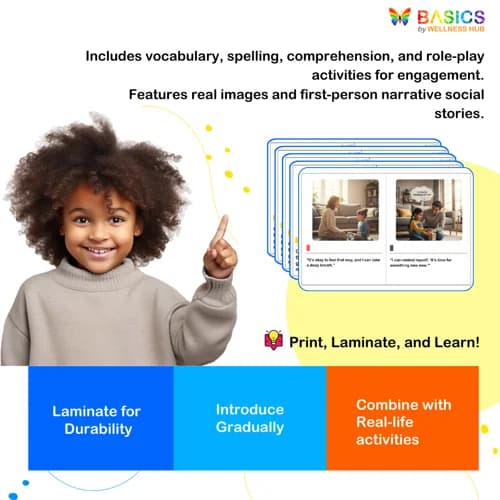
Format: Printable PDF, Total Pages: 11, Features: 16 segments with real images, vocabulary, spelling, comprehension, role-play activities
Categories
Share


About the Product
Introduction
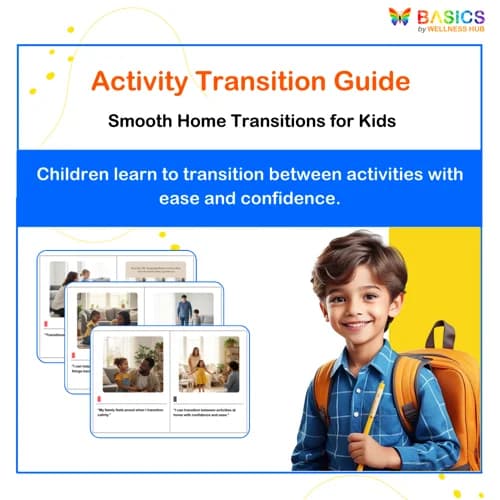
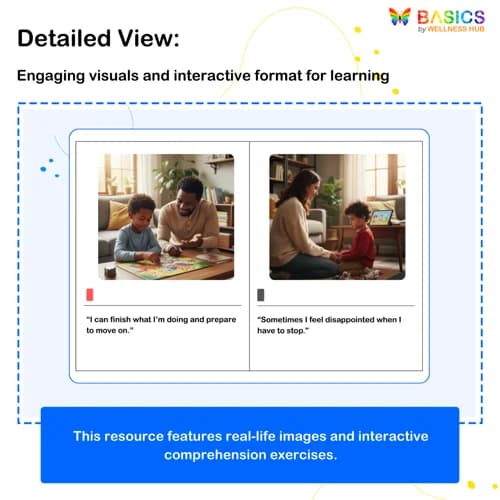
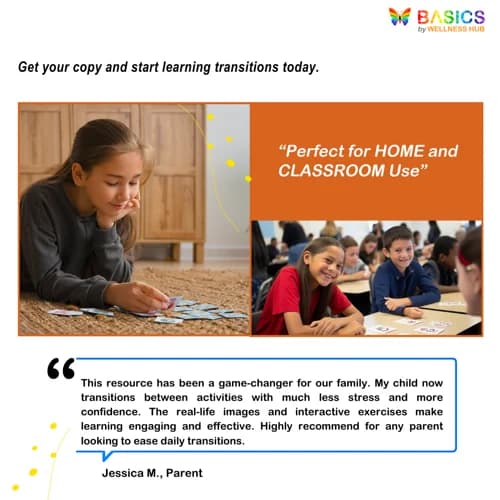
Helping children transition smoothly between activities at home can be a challenging task, but with the right tools, it becomes an opportunity for growth and learning. This Social Story PDF on Transitioning Between Activities at Home is designed to support children in understanding and managing changes in their daily routines. Using real-life images and first-person narratives, this resource helps children relate to and internalize the process of transitioning, making it easier for them to adapt to new activities. Perfect for use in home settings, therapy sessions, and educational environments, this social story encourages independence and confidence in young learners.
Product Details
- Format: Printable PDF
- Total Pages: 11
- Social Story: 8 pages, 16 segments with real-life images and first-person sentences
- Vocabulary and Spelling: Page 9 includes 5 vocabulary words with multiple-choice definitions and 5 spelling words with multiple-choice spelling options
- Comprehension and Open-Ended Questions: Page 10 features questions to enhance understanding and encourage discussion
- Role-Play Activities: Page 11 offers practical role-play scenarios to reinforce learning and application of the social story
- Ideal For: Parents, teachers, speech therapists, and occupational therapists working with children on routine transitions and social skills development
Educational Benefits
1. Facilitates Smooth Transitions
- Helps children understand and anticipate changes in their daily routines.
- Reduces anxiety and resistance associated with moving from one activity to another.
2. Enhances Comprehension and Vocabulary
- Improves language skills through vocabulary exercises and comprehension questions.
- Encourages children to learn new words in context, aiding retention and understanding.
3. Develops Social and Emotional Skills
- Teaches children how to manage emotions during transitions, promoting emotional regulation.
- Encourages independence and confidence by providing strategies for adapting to new activities.
4. Supports Special Needs
- Provides structured guidance for children with autism, ADHD, or other developmental challenges.
- Uses real-life images to help children connect and relate to the scenarios.
5. Encourages Interactive Learning
- Includes role-play activities to reinforce concepts and practice real-life application.
- Promotes active participation and engagement, making learning enjoyable and effective.
Instructions for Use
Step 1: Read the Social Story Together
- Begin by reading through the social story with the child, focusing on each segment.
- Discuss the images and sentences, ensuring the child understands the transition process.
- Ask questions like, "What do you do when it's time to switch from playing to eating?"
Step 2: Vocabulary and Spelling Practice
- Use page 9 to explore vocabulary words and their meanings.
- Encourage the child to select the correct definition and spelling for each word.
- Discuss how these words relate to transitioning between activities.
Step 3: Comprehension and Discussion
- Utilize page 10 to ask comprehension and open-ended questions.
- Encourage the child to think about their own experiences with transitions.
- Discuss strategies they can use to make transitions smoother.
Step 4: Role-Play Scenarios
- Engage in role-play activities from page 11 to practice transitioning between activities.
- Use props or real-life situations to make the scenarios relatable.
- Encourage the child to express feelings and use strategies learned from the social story.
Step 5: Reinforce Learning in Daily Routines
- Apply the strategies from the social story in real-life transitions at home.
- Provide positive reinforcement when the child successfully transitions between activities.
- Review the social story regularly to reinforce concepts and encourage ongoing learning.
Activities Using the Resource
1. Picture and Sentence Matching
Objective: Enhance understanding of transitions through visual and textual connection.
How to Play:
- Print each segment separately with its real-life image and sentence.
- Mix them up and ask the child to match the correct picture with its corresponding sentence.
- Discuss each match, focusing on the transition depicted.
Skill Development:
- Visual literacy
- Reading comprehension
- Attention to detail
2. Vocabulary Exploration
Objective: Deepen vocabulary knowledge related to transitions.
How to Play:
- Use page 9 to explore each vocabulary word.
- Create flashcards with the word on one side and its definition on the other.
- Play a matching game or use in sentences to reinforce understanding.
Skill Development:
- Word recognition
- Contextual learning
- Memory retention
3. Spelling Bee Challenge
Objective: Improve spelling skills and word recognition.
How to Play:
- Present the spelling words from page 9.
- Conduct a spelling bee where the child spells each word aloud.
- Offer hints or use the words in sentences if needed.
Skill Development:
- Spelling accuracy
- Phonetic awareness
- Confidence in language
4. Comprehension Conversation
Objective: Foster critical thinking and personal connection to the story.
How to Play:
- Use page 10 to ask comprehension questions.
- Encourage open-ended responses and relate questions to the child's experiences.
- Discuss different strategies for managing transitions.
Skill Development:
- Critical thinking
- Expressive language
- Personal reflection
5. Transition Role-Play
Objective: Practice real-life application of transition strategies.
How to Play:
- Select scenarios from page 11 and set up a simple role-play environment.
- Use props to simulate transitions (e.g., from playtime to dinnertime).
- Encourage the child to verbalize feelings and strategies during the role-play.
Skill Development:
- Social skills
- Emotional regulation
- Practical application
6. Transition Tracker
Objective: Monitor and celebrate successful transitions in daily life.
How to Play:
- Create a chart to track daily transitions (e.g., morning routine, bedtime).
- Use stickers or stamps to mark successful transitions.
- Review the chart weekly to discuss progress and areas for improvement.
Skill Development:
- Self-monitoring
- Goal setting
- Positive reinforcement
Frequently Asked Questions
Q1: How can the "Transitioning Between Activities at Home" social story be used effectively?
A1: Begin by reading the social story with your child, focusing on the images and sentences. Discuss each segment to ensure understanding. Use the vocabulary and spelling exercises to reinforce language skills, and engage in role-play activities to practice transitions in real-life scenarios.
Q2: What makes this social story suitable for children with special needs?
A2: The use of real-life images and first-person narratives helps children with autism, ADHD, or other developmental challenges relate to the scenarios. The structured guidance and role-play activities support emotional regulation and social skills development, making transitions smoother and less stressful.
Q3: Can this resource be integrated into therapy sessions?
A3: Yes, it is ideal for speech therapists, occupational therapists, and educators. The resource supports therapy goals by enhancing comprehension, vocabulary, and social skills. Therapists can use it to model transition strategies and reinforce learning through interactive activities.
Q4: How often should the social story be reviewed?
A4: Regular review is recommended to reinforce concepts and encourage ongoing learning. Consistent application of strategies in daily routines helps children internalize the process, making transitions more manageable over time.
Q5: What is Wellness Hub's policy on resource delivery and access?
A5: Wellness Hub provides resources in a printable PDF format, ensuring easy access and convenience. Once purchased, resources are available for immediate download, allowing caregivers and therapists to integrate them into their routines without delay.
Q6: Are there any licensing restrictions for using Wellness Hub's resources?
A6: Resources are intended for personal and professional use within therapy and educational settings. Redistribution or commercial use is not permitted. This ensures the quality and integrity of the materials are maintained.
Q7: What support does Wellness Hub offer for using their resources?
A7: Wellness Hub offers guidance through detailed instructions included with each resource. Additionally, their team is available for support through email or phone to assist with any questions or concerns regarding the use of materials.
Q8: Can I request a refund if I'm not satisfied with a resource?
A8: Wellness Hub strives for customer satisfaction. If you encounter any issues with a resource, please contact their support team to discuss your concerns. They will work with you to resolve the issue, which may include a refund or exchange.
Q9: How does Wellness Hub ensure the quality of their therapy services?
A9: Wellness Hub employs qualified professionals who provide expert-led therapy sessions. Their approach includes a free consultation, assessments, and regular progress tracking to ensure effective and personalized care. They prioritize caregiver involvement and privacy throughout the therapy process.
Q10: What makes Wellness Hub's approach to therapy unique?
A10: Wellness Hub combines professional expertise with innovative digital tools like the Tele-BASICS platform and BASICS Apps. These tools make therapy interactive and engaging through video sessions, games, and structured resources, ensuring therapy is both effective and enjoyable for children and families.
Usage Rights and Restrictions
Allowed Usage:
- Personal use by parents, teachers, and therapists.
- Printable for classroom, home, or therapy settings.
- Can be used in group or one-on-one learning sessions.
Not Allowed:
- Reselling, redistributing, or modifying the resource for commercial use.
- Sharing publicly (e.g., on blogs, social media, or websites) without permission.
- Uploading the file to public sharing platforms.
If you need a bulk license for schools or therapy centers, please contact us.
Conclusion
The Social Story PDF on Transitioning Between Activities at Home is a comprehensive tool designed to ease the challenges children face during routine transitions. By using real-life images and first-person narratives, this resource helps children connect with and internalize the process of transitioning, promoting smoother changes in their daily activities. Ideal for parents, teachers, and therapists, it supports language development, emotional regulation, and social skills, making it particularly beneficial for children with special needs. With engaging activities like vocabulary exercises, comprehension questions, and role-play scenarios, this resource fosters interactive learning and practical application, ensuring children gain confidence and independence in managing their routines.