Why Does My Child Look at My Mouth but Not My Eyes?
By Wellness Hub
Last Updated: March 28, 2026
If you have noticed your child looks at mouth not eyes, it can feel confusing. Many parents tell me it feels like their child is avoiding them, or not connecting, especially during play or everyday routines. The reassuring part is this: watching your mouth can be a real form of attention. It often means your child is working hard to understand you, your sounds, and what is about to happen next.
Eye contact is only one way kids connect. Some children connect through listening, leaning in, smiling, bringing you toys, or watching the most “useful” part of your face in that moment. For many little ones, that useful spot is your mouth.
Also read: When Should a Child Respond to Their Name With Eye Contact
Why would a child focus on my mouth instead of my eyes?
Mouth watching is common, especially when children are learning how communication works. Your mouth moves, changes shape, and gives clear clues about speech. Eyes are expressive too, but they can be more subtle and sometimes more intense to look at.
Here are a few everyday reasons a child might choose your mouth:
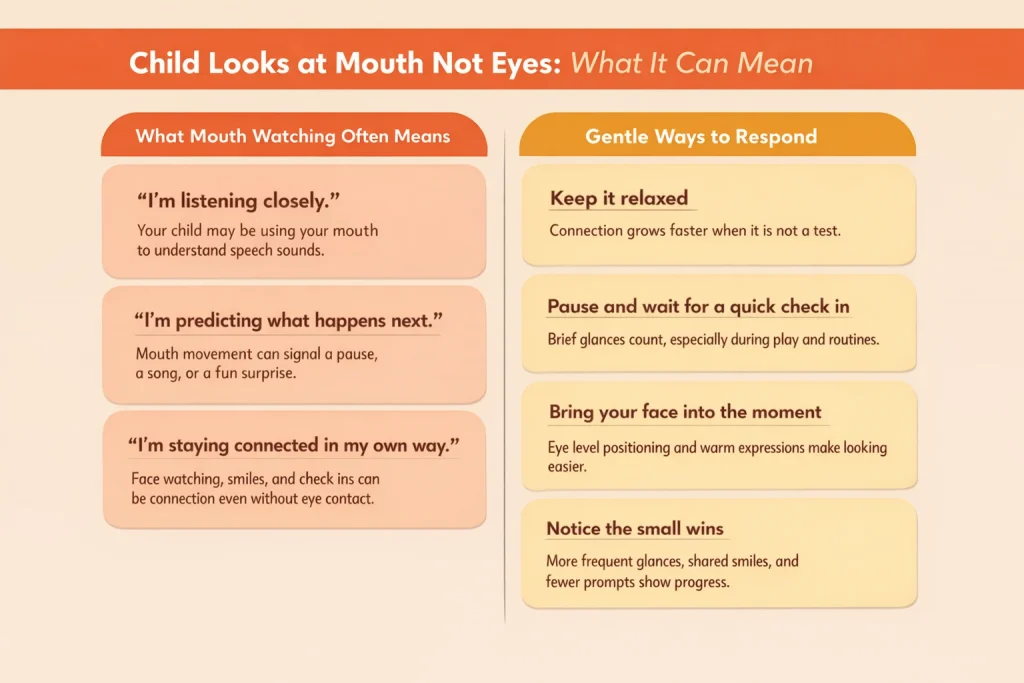
Your child is trying to “read” speech
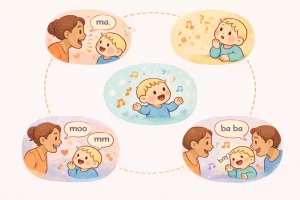
Even before a child talks a lot, they often study how words are made. They may be matching what they hear to what they see. This is especially true when you are singing, using new words, or speaking in a lively way.
Your child is tracking emotion and meaning in a different way
Some kids pick up feelings from tone of voice and mouth shape first. A smile, an open mouth “wow,” or a surprised “oh” can be easier to interpret than eye cues.
Your child is concentrating
When a child is working hard to understand, they often narrow their focus. Looking at your mouth can be a sign of effort, not disinterest.
Your child is sensitive to direct gaze
Some children find direct eye contact a little intense, especially when they are tired, overstimulated, or unsure. Looking at your mouth lets them stay close and connected without feeling overwhelmed.
Your child is in a busy visual phase
Toddlers are constantly scanning. They might glance at your mouth, then the toy, then your hands, then back again. That shifting attention is part of learning how interactions work.
If you are seeing mouth watching most during talking moments, that is a helpful clue. It often points to “I am listening and trying to figure you out,” not “I am ignoring you.”
Does mouth watching still count as connection during play?
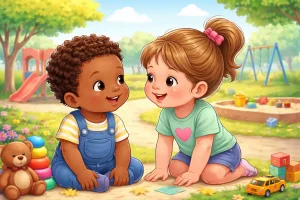
Yes, it can. Connection during play is not measured by long, steady eye contact. In real life, kids look away, look back, move their bodies, and keep playing. Many children show shared attention through quick check ins, small smiles, or pausing as if to say, “Did you see that?”
When your child watches your mouth during play, they may be doing a few important things:
- Checking that you are still part of the moment
- Waiting for your reaction before they do something again
- Listening for a cue that the game will continue
- Learning the rhythm of back and forth interaction
This fits closely with the bigger goal many families work on, which is **eye contact during play** in a natural, pressure free way. The early building blocks are often brief glances and shared moments, not perfect eye contact on demand.
Sometimes parents worry that mouth watching means their child is “tuning them out.” I usually see the opposite. A child who is truly tuned out tends to drift away from the interaction entirely. A child who is watching your mouth is still oriented to you.
Learn More: Eye Contact Milestones by Age, What’s Typical in Toddlers and Preschoolers
When is my child most likely to look at my mouth not eyes?
Patterns matter more than single moments. If your **child looks at mouth not eyes** in certain situations, it can help you understand what their brain is prioritizing.
You might notice it more when:
You are using lots of language
Story time, singing, explaining, or chatting at the table can pull attention to your mouth.
The environment is noisy
In a loud room, children often rely more on visual speech cues. Watching your mouth can help them “fill in the gaps.”
Your child is learning new words
New vocabulary can increase concentration. Some kids watch your mouth closely when they are trying to copy a sound later.
Your child is excited or anticipating something
If you tend to say “Ready, set…” before a fun moment, your child may lock onto your mouth because it predicts what comes next.
Your child is tired or dysregulated
When kids are worn out, eye contact can drop. Mouth watching can be a lower effort way to stay connected.
If you see more face watching during warm, playful moments, that is a good sign. It suggests your child is comfortable being close to you, even if their gaze lands lower on your face.
What can I do if I want more eye contact, without making it stressful?
Most parents do not actually want “more eye contact” for its own sake. They want that feeling of being together. The good news is you can support that shared feeling without asking for eye contact directly.
A few gentle shifts often help:
Make your face easy to find
Being at your child’s level can make a big difference. When your face is in their line of sight, looking up does not take extra effort.
Use warm, simple expressions
A soft smile or an interested look gives your child a reason to glance up. Big, intense expressions can be fun too, but some kids do better with calm first.
Build in tiny pauses
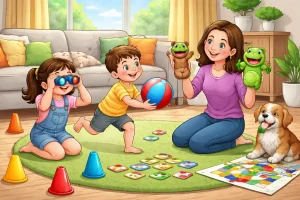
Many children look up during a pause, especially if something fun is about to continue. This works naturally during turn taking games, songs, bubbles, rolling a ball, or even during snack routines.
Respond to any glance right away
If your child flicks their eyes up for half a second, treat it like it matters. A quick smile, continuing the game, or a gentle comment like “You did it!” can reinforce that looking at you is rewarding.
Try not to “quiz” with your eyes
Repeated “Look at me” requests can make a child feel pressured, even when said kindly. It can also pull them out of play, which is usually where the best connection happens.
If you want ideas that fit into real life, think of “face friendly” moments rather than formal practice. Peekaboo style games, funny faces, singing face to face, mirror moments, and little pauses during feeding or dressing can all invite quick check ins. You do not need to run an activity. You are just making space for connection.
Read More: What games help with eye contact during play when my child keeps moving?
What progress looks like when a child starts shifting from mouth to eyes
Progress is often subtle. It rarely looks like a child suddenly holding eye contact for long stretches. More often, it looks like a child adding quick glances to what they already do.
You might notice:
More frequent “check ins” during play
Your child may look at your mouth, then briefly up toward your eyes, then back to the toy. That back and forth is a meaningful step.
Eye contact shows up around excitement
Some children glance up right after they do something funny, or right before you repeat a favorite part of a game.
Shared smiles increase
A child might keep watching your mouth but start smiling more when you smile. That emotional matching is connection.
Less effort from you
You may find you are pausing less, or working less hard to get your child’s attention. The interaction starts to feel easier.
More looking during routines
Many kids show more face looking during predictable moments like meals, bath, dressing, or greeting rituals. Routines are often where confidence grows first.
If your child is already watching your mouth, you have a strong starting point. They are oriented to your face. The next step is usually helping them feel comfortable glancing a little higher, in their own timing.
When should I get extra support, and what kind is helpful?
It is reasonable to want reassurance, especially if you have been worrying about eye contact. Support can be useful when you feel stuck, when interactions feel one sided, or when stress starts creeping into play and routines.
You might consider extra help if:
- Your child rarely checks in with you during play, even briefly
- It is hard to get shared moments across most daily routines
- You are unsure how to encourage connection without pressure
- You would like a professional to watch a few everyday interactions and offer simple, relationship based coaching
In the final third of this conversation, I also want to name something gently: if concerns persist, some families consider developmental screening to better understand communication delays or possible autism-related differences. That is not a conclusion, and it is not something you have to jump to. It is simply one supportive option when questions keep coming up.
The most helpful support usually feels practical. It should fit your family, your child’s temperament, and your daily rhythm.
A gentle closing thought if your child looks at my mouth not my eyes
If your **child looks at mouth not eyes**, try to hold onto the bigger picture. Your child may be connecting through listening, anticipation, and face watching in a way that makes sense for them right now. Mouth watching can be a bridge toward more comfortable eye contact, especially during playful moments and familiar routines.
Keep it light. Notice the quick glances. Enjoy the shared smiles when they come. Connection is built in tiny pieces, and those pieces add up.
About the Author:
Shravanaveena Gajula
M.Sc ., Speech and Language Pathology (5+ years of experience)
Shravanaveena Gajula is a dedicated Speech-Language Pathologist with a BASLP and an M.Sc in Speech and Language Pathology. With experience spanning multiple settings, including Wellness Hub , Veena specializes in a wide range of disorders from developmental issues in children to speech and language assessments in adults. Her expertise includes parent counseling, managing speech sound and fluency disorders, and creating individualized therapy programs. Veena is also PROMPT certified and an author of several insightful blogs on speech and language pathology, aiming to educate and assist caregivers in supporting their loved ones.
Book your Free Consultation Today
Parent/Caregiver Info:
Client’s Details:
* Error Message