Occupational Therapy in Hyderabad: A Parent’s Guide for Children
By Wellness Hub
Last Updated: January 7, 2026
As a parent, it can be worrying when everyday activities feel harder than they should for your child. Simple tasks like holding a pencil, sitting for a meal, getting dressed, or coping with noisy environments may become daily struggles. When these challenges begin to affect a child’s confidence, learning, or independence, many families start exploring occupational therapy in Hyderabad to understand how they can support their child better.
Occupational therapy for children focuses on helping them develop the skills needed for daily life. This includes fine and gross motor skills, sensory regulation, attention, emotional control, and self-care activities such as dressing, feeding, and school readiness. Rather than treating a diagnosis alone, occupational therapy looks at how a child functions in real-life situations—at home, in school, and during play.
What is Occupational Therapy for Children?
Occupational therapy for children helps them learn and practice the everyday skills they need to take part in daily life. These are the small but important activities children do every day—playing with toys, getting dressed, holding a pencil, sitting for a meal, or following simple routines. When these tasks feel difficult or overwhelming, occupational therapy provides gentle, structured support to help children manage them more easily.
Many parents ask, what is occupational therapy for kids, and the simplest way to understand it is this: it focuses on how a child uses their body, senses, and attention to function in real-life situations. Rather than concentrating only on a medical condition or diagnosis, occupational therapy looks at how a child moves, plays, learns, and takes care of themselves at home and in school.
Occupational therapy supports everyday areas such as:
- Play skills, including using toys, exploring new activities, and interacting with others
- Learning skills, like sitting for tasks, following instructions, and getting ready for school activities
- Self-care skills, such as dressing, feeding, grooming, and managing daily routines
The goal of occupational therapy is not to change who a child is, but to help them build confidence and independence in daily life. Over time, the occupational therapy benefits for children often include better coordination, improved attention, easier transitions between activities, and greater comfort with everyday tasks. For parents, this often means daily routines feel smoother and less stressful for both the child and the family.
Why Do Children Need Occupational Therapy?
Children may need occupational therapy when everyday activities feel harder than expected for their age. These challenges are often not about intelligence or effort, but about how a child’s body, senses, and attention work together during daily routines. When small tasks become stressful or tiring, children may avoid them, which can affect confidence and participation over time.
Some common functional challenges children may experience include:
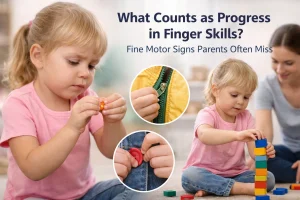
- Difficulty using hands for tasks like holding crayons, cutting with scissors, or buttoning clothes
- Trouble sitting still, focusing on an activity, or following simple routines
- Sensitivity to sounds, textures, movement, or crowded spaces
- Struggles with balance, coordination, or body awareness during play
- Delays in self-care activities such as dressing, feeding, or grooming
Occupational therapy focuses on helping children manage these challenges in practical, everyday ways. Instead of isolated exercises, therapy supports real-life skills that children use at home, in school, and during play. This is how occupational therapy helps child development—by strengthening the foundations needed for learning, social participation, and independence.
A key focus of occupational therapy is building occupational therapy for daily living skills, such as:
- Taking part in age-appropriate play
- Managing self-care routines with less support
- Staying regulated and attentive during activities
- Participating more comfortably in classroom and social settings
By supporting these daily skills step by step, occupational therapy helps children feel more capable and confident in their routines, while also making everyday life easier for parents and caregivers.
Occupational Therapy for Children in Hyderabad – Who Can Benefit?
Occupational therapy supports children who find everyday activities challenging for their age. In Hyderabad, parents often look for occupational therapy when they notice their child struggling with skills needed for play, learning, or daily routines. These challenges can look different for each child, and occupational therapy focuses on understanding how a child functions in real-life situations rather than focusing only on labels or diagnoses.
Below are some common situations where occupational therapy may be helpful.
Occupational Therapy for Developmental Delay
Children with developmental delay may take longer to develop motor skills, coordination, or independence in daily activities. This can include difficulties with sitting posture, balance, using hands effectively, or keeping up with age-appropriate milestones.
Occupational therapy for developmental delay focuses on:
- Improving fine and gross motor skills
- Building coordination and body awareness
- Supporting independence in daily routines such as play and self-care
Therapy is tailored to the child’s current abilities and helps them practice skills in a supportive, step-by-step manner.
Read more: Toddler Development: Occupational Therapy Strategies
Occupational Therapy for Autism
Children with autism may experience challenges with sensory regulation, daily routines, and functional independence. These difficulties can affect how they participate at home, in school, or in social settings.
Occupational therapy for autism in Hyderabad often supports:
- Sensory regulation to help children feel more comfortable in everyday environments
- Building predictable routines for daily activities
- Developing independence in self-care and functional tasks
The focus is on helping children manage daily demands in ways that suit their individual needs.
Also read: Occupational Therapy for ADHD: Build Focus and Calm
Occupational Therapy for Sensory Processing Challenges
Some children are highly sensitive to sensory input, while others may seek strong sensory experiences. This may show up as discomfort with certain sounds or textures, constant movement, or difficulty staying calm and organized.
Occupational therapy for sensory issues and sensory processing disorder may help children:
- Understand and manage sensory responses
- Improve comfort during everyday activities like dressing, eating, or classroom participation
- Develop strategies to stay regulated during play and routines
Therapy supports children in responding to sensory input in more balanced ways.
Occupational Therapy for ADHD and Attention Difficulties
Children with ADHD or attention difficulties may struggle with focus, impulse control, or completing tasks. These challenges can affect learning, routines, and social participation.
Occupational therapy for ADHD children focuses on:
- Improving attention and task engagement
- Supporting self-regulation and emotional control
- Helping children follow routines and complete daily activities
Therapy emphasizes practical strategies that children can use during schoolwork, play, and self-care.
Occupational Therapy for Fine Motor and Handwriting Difficulties
Some children find it hard to use their hands for precise tasks such as writing, drawing, cutting, or buttoning. These challenges can affect school readiness and classroom participation.
Occupational therapy for fine motor skills and handwriting difficulties supports:
- Hand strength and finger coordination
- Pencil control and writing posture
- Skills needed for classroom tasks and early learning
By addressing these foundational skills, occupational therapy helps children participate more comfortably in school and everyday activities.
6. Signs a Child May Need Occupational Therapy
Many parents wonder whether their child’s challenges are part of normal development or if extra support may help. There is no single sign that confirms a need for therapy, but noticing patterns in everyday activities can provide useful clues. Understanding the signs a child needs occupational therapy can help parents decide when to seek guidance and support.
Below are some common signs that may indicate a child could benefit from occupational therapy.
1. Difficulty With Fine Motor Skills
A child may struggle with using their hands for small, precise tasks. This can include trouble holding a pencil, using scissors, buttoning clothes, or handling small toys. These challenges may lead to frustration during play or school activities and can affect confidence over time.
2. Sensory Sensitivities
Some children are very sensitive to sounds, textures, lights, or movement, while others may constantly seek sensory input through jumping, spinning, or touching objects. Sensory sensitivities can make daily routines like dressing, eating, or attending school more challenging and overwhelming.
3. Poor Attention and Task Completion
If a child finds it hard to sit for an activity, follow simple instructions, or complete age-appropriate tasks, daily routines can feel stressful. This may show up during playtime, homework, or self-care activities and can affect learning and participation.
4. Delays in Daily Living Skills
Children may have difficulty with self-care tasks such as dressing, feeding, grooming, or toileting compared to peers of the same age. These delays can make children more dependent on adults and may affect independence at home and in social settings.
5. Balance and Coordination Issues
Frequent falls, clumsiness, or difficulty with activities like climbing, jumping, or running may indicate challenges with balance and coordination. These issues can affect a child’s ability to participate confidently in play and physical activities.
6. Emotional Regulation Challenges
Some children have trouble managing emotions, handling transitions, or coping with frustration. This may appear as frequent meltdowns, difficulty calming down, or strong reactions to everyday changes. Emotional regulation challenges can impact family routines and social interactions.
What Happens During Occupational Therapy Sessions?
Occupational therapy sessions for kids are designed to support everyday skills in a calm, structured, and child-friendly way. Sessions are tailored to each child’s needs and usually take place one-on-one with an occupational therapist. The focus is not on pushing a child to perform, but on helping them practice skills at a comfortable pace.
One-on-One, Child-Focused Sessions
During occupational therapy sessions, the therapist works individually with the child. This allows the therapist to adjust activities based on the child’s attention level, energy, and comfort. Children are encouraged to participate in a supportive environment where they can explore, try, and learn without pressure.
Play-Based, Goal-Oriented Activities
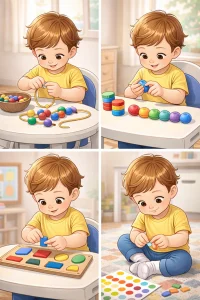
Many occupational therapy activities for kids look like play, but each activity has a clear purpose. For example, building with blocks may support hand strength and coordination, while climbing or balancing activities can help with body awareness and control. Games, puzzles, drawing, and everyday tasks are often used to help children practice skills that matter in daily life.
Guidance and Support for Parents
Parent involvement is an important part of occupational therapy. Therapists often explain what the child is working on and why certain activities are helpful. Parents may be shown simple strategies or activities that can be practiced at home to support progress during daily routines.
By combining one-on-one support, purposeful play, and parent guidance, occupational therapy sessions aim to help children feel more confident and capable in their everyday activities.
How Occupational Therapy Helps Child Development
Occupational therapy supports children by strengthening the everyday skills they need to take part in daily life. Rather than focusing on isolated abilities, therapy looks at how different skills work together during play, learning, and routines. This approach explains how occupational therapy helps child development in practical and meaningful ways.
Supporting Motor Skills
Occupational therapy helps children improve both fine and gross motor skills. This includes hand strength for tasks like drawing or buttoning, as well as coordination and balance for activities such as climbing, running, or sitting with good posture. As motor skills improve, children often feel more confident during play and classroom tasks.
Improving Sensory Regulation
Some children find it hard to manage sensory input from sounds, textures, movement, or visual environments. Occupational therapy helps children understand and respond to sensory information more comfortably. Over time, this can make everyday situations like dressing, eating, or being in a classroom feel less overwhelming.
Building Attention and Focus
Occupational therapy supports attention by helping children stay engaged with tasks for longer periods. Therapists use structured activities that encourage children to follow routines, complete tasks, and shift attention more smoothly. These skills are important for learning, play, and social participation.
Encouraging Independence at Home and School
A key goal of occupational therapy is helping children become more independent in daily activities. This includes self-care tasks such as dressing, feeding, and organizing belongings, as well as participating more confidently in classroom routines. Early intervention occupational therapy can be especially helpful in building these foundations during the early years, when children are developing essential life skills.
By supporting motor skills, sensory regulation, attention, and independence together, occupational therapy helps children participate more fully in everyday life and grow at their own pace.
Occupational Therapy vs Speech Therapy – What’s the Difference?
| Aspect | Occupational Therapy | Speech Therapy |
|---|---|---|
| Main Focus | Helps children manage daily life activities using their body, senses, and attention | Helps children understand and use language and speech clearly |
| Skills Supported | Fine and gross motor skills, sensory regulation, attention, and self-care | Language understanding, speech clarity, and communication skills |
| Everyday Examples | Holding a pencil, dressing, feeding, sitting for tasks, classroom routines | Speaking clearly, forming words, understanding instructions, social interaction |
| Motor Skills | Supports hand strength, coordination, balance, and posture | Not the primary focus |
| Sensory Regulation | Helps children manage sensory sensitivities or sensory-seeking behaviors | May support indirectly during communication tasks |
| Attention & Self-Regulation | Supports focus, task completion, and emotional regulation | Supports attention related to communication and interaction |
| Communication Skills | Not the main focus | Core focus, including speech sounds and language use |
| Feeding Support | Focuses on self-feeding skills and independence | May support oral-motor and feeding skills in some cases |
| Goal of Therapy | Improve independence at home, school, and during play | Help children express needs, thoughts, and feelings effectively |
| When a Child May Need It | Difficulty with daily activities, motor skills, routines, or sensory processing | Difficulty speaking, understanding language, or social communication |
| When Both Are Helpful | Children with developmental delays, autism, or attention challenges may benefit from both working together | Therapies often complement each other for overall development |
Is Occupational Therapy Helpful for Toddlers and Preschoolers?
Parents often wonder if therapy is really needed at such a young age. In many cases, occupational therapy for toddlers and preschoolers focuses on supporting everyday skills during a time when children are learning rapidly through movement and play. Therapy at this stage is gentle, age-appropriate, and built around activities children naturally enjoy.
Benefits of Early Occupational Therapy
The early years are an important period for developing motor skills, sensory responses, attention, and self-care. When children receive support early, they can practice these skills before everyday challenges become more frustrating.
Early occupational therapy may help children:
- Develop stronger coordination and movement skills
- Feel more comfortable with sounds, textures, and movement
- Improve attention during play and simple learning activities
- Build early independence in routines like dressing and feeding
Why Starting Early Matters
Starting support early does not mean labeling or rushing a child. Instead, it helps build a strong foundation for future learning and participation. Many parents ask, is occupational therapy helpful for children at this age. For toddlers and preschoolers, early therapy often blends naturally into play and daily routines, making it easier for children to practice skills in a relaxed and supportive environment.
By addressing small challenges early, occupational therapy can support smoother transitions into preschool and school routines, while respecting each child’s individual pace of development.
Occupational Therapy in Hyderabad – Offline vs Online
Parents in Hyderabad often have questions about the best way for their child to receive occupational therapy. Today, families can choose between in-clinic sessions and online options, depending on their child’s needs and daily routines. Both approaches are part of the growing range of occupational therapy services in Hyderabad, and each has its own advantages.
When Offline Occupational Therapy Works Well
In-clinic occupational therapy may be helpful when a child benefits from a structured therapy environment and access to specialized equipment. Being in a clinic can also support children who respond well to clear routines and dedicated therapy spaces.
In-clinic sessions may be suitable when:
- A child needs hands-on support for motor skills or coordination
- Access to therapy equipment helps with movement and sensory activities
- The child responds positively to a separate therapy setting
- Families prefer face-to-face interaction with the therapist
When Online Occupational Therapy Helps Families
Online occupational therapy Hyderabad services allow children to receive therapy support from home. This option can be especially helpful for families looking for flexibility or those who find travel challenging.
Online therapy may work well when:
- The child feels more comfortable in familiar home surroundings
- Parents want guidance on supporting daily routines at home
- Travel time or scheduling makes clinic visits difficult
- Therapy goals focus on everyday activities using household items
Online sessions often involve parent participation, making it easier to practice skills during daily routines. For many families, both in-clinic and online occupational therapy can play a supportive role at different stages, depending on the child’s needs and the family’s situation.
How Parents in Hyderabad Can Get Started
When parents begin noticing challenges in their child’s daily activities, the first step is often simply seeking information. Learning more about pediatric occupational therapy Hyderabad services can help parents understand what support is available and whether it may be useful for their child. Getting started does not mean committing to long-term therapy right away—it is about gaining clarity and guidance.
Many families begin by speaking with a child occupational therapist Hyderabad to discuss everyday concerns. This conversation usually focuses on how the child manages daily routines such as play, learning, self-care, and social participation. Sharing observations from home or school helps therapists understand the child’s strengths as well as areas that may need support.
Parents can take these initial steps:
- Observe and note challenges that affect daily life
- Ask questions about development, routines, and skill-building
- Seek a professional opinion to understand next steps
- Learn simple strategies that may support the child at home
Starting with information and professional guidance allows parents to make thoughtful decisions at their own pace. The goal is not to rush or label a child, but to understand how to support their development in a way that feels right for the family.
Conclusion
Choosing the right support for a child can feel overwhelming, especially when you are unsure what is typical development and what may need extra attention. Occupational therapy is not about rushing decisions or placing labels on children. It is about understanding how a child manages everyday activities and finding ways to support their growth in a thoughtful, practical manner.
For parents exploring occupational therapy in Hyderabad, having clear and reliable information helps with informed decision-making. Observing your child’s daily routines, learning about available support options, and seeking professional guidance when needed can bring clarity and confidence. Every child develops at their own pace, and support looks different for every family.
Frequently Asked Questions:
1. What is occupational therapy for children?
Occupational therapy helps children develop everyday skills such as play, learning, self-care, and attention. It supports motor skills, sensory regulation, and independence needed for daily life at home and school.
2. When does a child need occupational therapy?
A child may need occupational therapy if they struggle with fine motor skills, sensory sensitivities, attention, coordination, or daily activities like dressing and feeding. If these challenges affect daily routines, it may help to seek guidance.
3. Is occupational therapy helpful for children with developmental delays?
Yes, occupational therapy for developmental delay focuses on improving motor skills, coordination, and daily living skills. It supports children step by step, based on their current abilities.
4. Can toddlers benefit from occupational therapy?
Yes, occupational therapy for toddlers is often play-based and gentle. It supports early skills like movement, sensory responses, attention, and self-care during an important stage of development.
5. How does occupational therapy help child development?
Occupational therapy helps child development by supporting motor skills, sensory regulation, attention, and independence. These skills help children take part more comfortably in play, learning, and daily routines.
6. What happens during an occupational therapy session?
During occupational therapy sessions for kids, the therapist works one-on-one with the child using play-based activities. Sessions focus on specific goals and often include guidance for parents to support progress at home.
7. Is occupational therapy useful for autism and ADHD?
Yes, occupational therapy for autism and occupational therapy for ADHD children can support sensory regulation, attention, routines, and daily living skills. Therapy is tailored to each child’s needs.
8. Can occupational therapy help with handwriting problems?
Yes, occupational therapy for fine motor skills helps children improve hand strength, pencil control, and coordination. This can support handwriting and school readiness.
9. What is the difference between occupational therapy and speech therapy?
Occupational therapy focuses on daily living skills, motor skills, and sensory regulation. Speech therapy focuses on communication and language. Some children may benefit from both therapies together.
10. Is online occupational therapy available in Hyderabad?
Yes, online occupational therapy in Hyderabad is available for families who prefer home-based support. It can be helpful for working on daily routines, sensory regulation, and parent-guided activities.
About Wellness Hub
Wellness Hub is a child development and therapy platform that supports speech, language, social skills, and early learning in young children. We help parents use simple, expert-designed tools to support their child’s development at home.
Our programs are created by speech therapists, child psychologists, occupational therapists, and educators, ensuring they are safe, practical, and developmentally appropriate.
Our award-winning BASICS app is trusted by 7 lakh+ families and offers 1,000+ guided activities and 200+ therapy resources to support children from first words to early conversations.
Wellness Hub combines professional expertise with easy-to-use technology to help children communicate with confidence and to support parents every day.
Book your Free Consultation Today
Parent/Caregiver Info:
Client’s Details:
* Error Message