10+ Simple Home Activities to Encourage Clapping, Waving, and High-Fives
By Wellness Hub
Last Updated: March 3, 2026
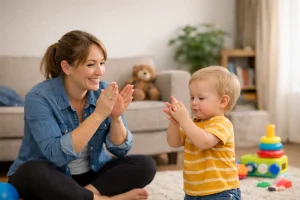
There is something quietly special about the first time your child claps along, waves back, or leans in for a high-five. These small gestures often feel like big milestones, because they are more than just “cute tricks.” They are early ways children connect with you during play and everyday moments.
If you have been hoping your child will copy gestures more often (or with more confidence), these gesture imitation activities can gently support that growth at home. One thing helps to remember: imitation usually grows in small, uneven steps. Some days your child may wave happily, and the next day they may ignore the same gesture completely. This back-and-forth is very common. The goal is not perfect performance, but shared enjoyment, gentle invitations to interact, and many natural chances for your child to join in.
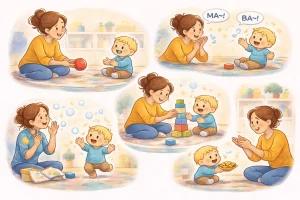
Below is an idea bank of simple, at-home activities that tend to invite clapping, waving, high-fives, and other easy gestures (such as shaking the head “no” or copying a short clap + wave sequence). None of these need to feel like practice. Think of them as playful moments you can weave into your day whenever it feels right.
Also read: What Counts as Imitation Even If It Doesn’t Look Perfect Yet
What this skill really is and why it matters
Imitating simple actions and gestures is one of the earliest ways children learn the rhythm of interaction: you do something, I notice, I try, and you respond. That back-and-forth is the foundation of connection.
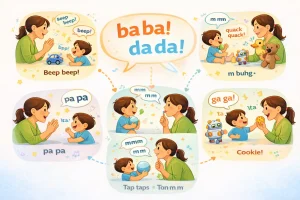
Over time, these small exchanges also support communication more broadly. Your child learns that their actions can match yours, receive a response, and create a shared experience. A clap can mean celebration. A wave can mean greeting. A high-five can mean, “We did this together.”
What progress can look like in real life
Progress does not have to look like a perfect wave on cue. It often begins in quieter ways. You might notice your child watching your hands more closely, pausing as if thinking about it, or looking to you for guidance before trying.
Sometimes they will do their own version of a gesture, bringing their hands together near their chest instead of clapping fully, or lifting a hand briefly instead of waving. These attempts still count. They are signs that your child is tuning in and beginning to participate.
10+ Gesture Imitation Activities at Home
1. Action songs you already know
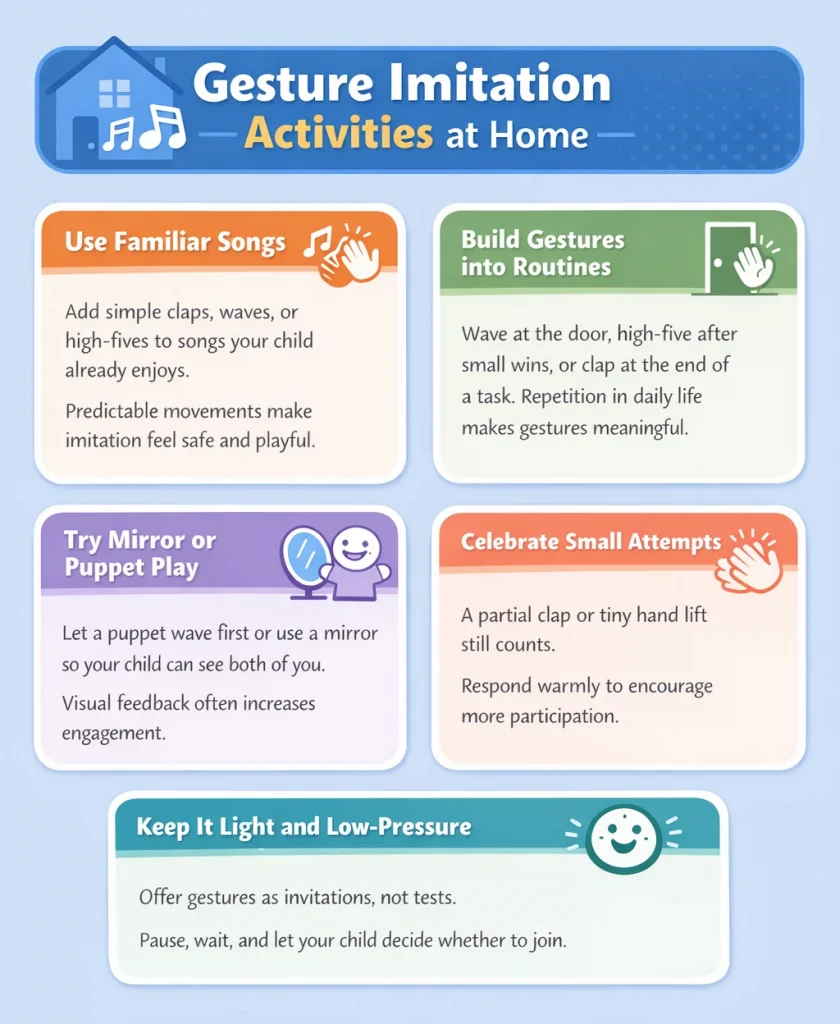
Songs with built-in movements are popular for a reason: they make gestures predictable and fun. Even if your child does not copy right away, many children enjoy watching your hands and face. That attention is part of learning. Some families notice their child joins in most during the exciting parts of the song—the big finish, the pause, or the silly sound.
2. Face-to-face mirror play
Mirrors can turn imitation into a game instead of a request. When your child can see both of you at once, gestures like clapping, waving, and “hands up!” become visually clear. Some children also enjoy making faces in the mirror, which can naturally lead to copying head shakes or nods.
3. Greeting routines with high-fives and waves
Gestures are often learned fastest when they are part of familiar routines. Hellos, goodbyes, and “nice job” moments happen throughout the day. A wave at the door, a high-five after putting on shoes, or a clap when the dog comes over can turn gestures into part of your family’s rhythm—without needing special playtime.
4. Puppet or stuffed animal “hello”
A puppet, doll, or favorite stuffed animal can be a helpful middle step for children who feel shy copying an adult directly. The toy can wave, clap, or offer a high-five first. Many children are happy to high-five a toy before they want to high-five a person—and that still builds imitation and connection.
5. Peekaboo with a gesture twist
Peekaboo already includes anticipation and delight, which makes it a natural place for gestures to appear. Some families add a wave after the “peek,” a clap at the reveal, or a high-five when the game ends. Peekaboo also includes built-in pauses—small spaces where your child has time to notice and decide whether to join in.
6. Follow-the-leader around the house
Imitation games do not need to be formal. As you move through the house—toward the kitchen, bath, or bedroom—you can add simple gestures such as waving to the mirror, clapping once at the doorway, or offering a high-five at the couch. Many children imitate more easily when their body is already in motion.
7. Building toys with celebration gestures
Blocks, cups, Duplos, and train tracks all create natural “ta-da” moments. When a tower stands or a bridge is finished, clapping or offering a high-five becomes part of the story. Even if your child does not copy, they may begin to look to you for the celebration, which shows shared engagement.
8. Object-based action copying with simple toys
Some children imitate more easily when an action is tied to an object. Toy drums (clap becomes “tap-tap”), toy phones (wave becomes “hi”), or cars (a “stop” hand, then go) can make gestures feel more meaningful. When gestures connect to what your child already enjoys, imitation often comes more naturally.
9. “Yes” and “no” with playful head movements
Head nods and shakes often emerge through real reactions—liking something, refusing something, or being playful. During everyday choices (snacks, books, toys), you may see your child experiment with head movements. If they are not interested, it is fine to keep this light and occasional—more like a shared joke than a test.
10 Emotion gestures during pretend play
Pretend play gives gestures emotional meaning. A stuffed animal can be “excited” and clap. A doll can be “shy” and wave softly. A toy can be “proud” and offer a high-five. When gestures match feelings, they often stick better because they belong to a story your child understands.
11. Simple action sequences like clap plus wave
Once single gestures feel familiar, some children enjoy tiny combinations, especially when they are part of routines. A clap after finishing an activity followed by a wave goodbye can become a predictable pattern. If your child only does one part, that still counts. Sequences usually build slowly.
12. Daily-task gestures that fit your real life
Gestures do not need special playtime. You can include them in what is already happening: clapping after wiping the table, waving to bath toys, high-fiving after pajamas, waving at the garbage truck, or clapping when the timer beeps. These moments often feel easiest because they are already part of your day.
How to keep it fun without turning it into practice
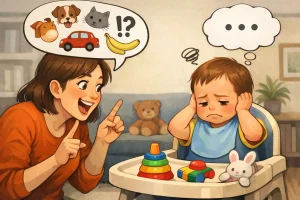
Many parents find it helpful to rotate ideas rather than repeating one activity until everyone is tired of it. A song one day, a puppet the next, a bedtime high-five routine another day, small changes keep gestures playful and fresh. Pauses are also powerful. When you clap or wave and then simply wait for a moment, you give your child time to notice and decide. If they do not copy, it does not mean the moment failed, it means you offered an invitation.
When your child does make an attempt, even a small one, your warm response matters more than how accurate the gesture is. Smiling, responding, and sharing the moment teaches your child that imitation leads to connection.
Also read: My Child Won’t Copy Clapping or Waving — Is That Normal?
When you want a little extra support
If you would like more ideas that match your child’s interests, or if you are unsure what to try next, speech therapy app like BASICS App can be a helpful option. Some parents appreciate having a simple way to choose a goal and see everyday activity ideas that support connection without making play feel like a lesson.
A calm reminder to end on
Clapping, waving, and high-fives may seem small, but they carry an important message: “I see you, and I’m with you.” If your child is not copying consistently yet, it does not mean they are not learning or connecting. These skills often grow through relaxed repetition, playful routines, and many low-pressure chances to join in.
The most important part is that you do not have to force it. You are already doing what matters most, showing up, sharing moments, and making space for your child to meet you there.
About the Author:
Shravanaveena Gajula
M.Sc ., Speech and Language Pathology (5+ years of experience)
Shravanaveena Gajula is a dedicated Speech-Language Pathologist with a BASLP and an M.Sc in Speech and Language Pathology. With experience spanning multiple settings, including Wellness Hub , Veena specializes in a wide range of disorders from developmental issues in children to speech and language assessments in adults. Her expertise includes parent counseling, managing speech sound and fluency disorders, and creating individualized therapy programs. Veena is also PROMPT certified and an author of several insightful blogs on speech and language pathology, aiming to educate and assist caregivers in supporting their loved ones.
Book your Free Consultation Today
Parent/Caregiver Info:
Client’s Details:
* Error Message