Everyday Routines That Naturally Bring Out More Babbling – Bath, Meals, Diaper Changes
By Wellness Hub
Last Updated: February 5, 2026
If you’ve ever caught your baby making a sweet little “ba-ba-ba” while you’re wiping hands after lunch or filling the tub, you’ve already seen something important: babbling often shows up when life is simple, familiar, and shared.
A lot of parents assume they need extra “practice time” to encourage more sounds. But for many babies, the most natural moments for babbling happen in everyday routines, especially the ones that are predictable, face-to-face, and full of tiny pauses. These are the moments where your child can experiment with sounds (like “ba-ba” or “da-da”), mix syllables, and invite you into a back-and-forth without anyone trying to “teach” anything.
This article isn’t about adding more to your day. It’s about noticing what’s already there and feeling more confident about how to respond when babbling pops up.
Why routines often bring out more babbling
Babbling is one of the earliest ways babies explore communication. It’s playful, low-pressure sound-making that helps them learn, “My voice does something,” and “When I make a sound, you react.”
Routines are especially supportive because they’re familiar. Your baby can predict what’s coming next, which frees up their attention to experiment watching your face, listening to your voice, and trying out sounds of their own. And because routines tend to include repeated words and repeated actions, they naturally create little “sound patterns” that babies love to join.
It also helps that many routines put you close together. When your baby can see your mouth, your expression, and your reaction right away, it’s easier for them to stay engaged and keep the vocal play going.
What “babbling success” can look like in real life
Babbling doesn’t have to sound like clear words to “count.” In fact, early progress often looks small and sweet.
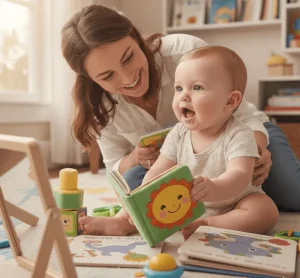
You might notice your child repeating sounds like “ba-ba” or “da-da,” mixing syllables like “ba-da,” or making longer strings of sounds when they’re excited. You may also see them glance at you while they babble, almost like they’re checking to see if you’re listening. Sometimes the biggest sign of growth is simply that babbling shows up more often during play, during routines, and during those in-between moments when you’re just together.
And if your baby is quieter some days than others, that can be part of normal ups and downs too. Babies have tired days, busy-brain days, and “I’m focused on chewing this cracker” days. You need to remember that communication skills build over time, not on a perfect schedule.
Bath time: warm, close, and full of natural pauses
Bath time is one of those routines that often invites babbling because it’s cozy, repetitive, and usually one-on-one. The water, the splashing, the towel, the lotion, so many little moments that naturally slow you down and bring you face-to-face.
You might notice your baby gets especially vocal when something feels funny or surprising, like water trickling down their belly or bubbles on their hands. Those tiny bursts of excitement often come with sounds. Some babies babble most when they’re relaxed; others get chatty when they’re playful. Bath time can hold both.
What tends to help most here isn’t doing more, it’s simply being responsive. When your baby makes a sound, your warm attention (a smile, a look, a playful response) teaches them that their voice matters. Over time, that can turn into one little “ba!” into a longer back-and-forth that feels like a conversation, even before words arrive.
Meals and snacks: built-in repetition and “turn-taking”
Mealtimes are full of built-in communication moments, even when they’re messy and chaotic. There’s a natural rhythm: offer, wait, watch, respond. Babies often have extra motivation to communicate during meals because they want something else: a bite, a sip, a different food, a break. This is also where you may hear more varied babbling. Some babies make sounds while they reach, point, or open their mouth for the next spoonful. Others babble after they swallow, as if they’re commenting on the experience. And sometimes they’ll look right at you and vocalize, clearly inviting a response.
Meals can also bring out those repeated syllables (“ma-ma-ma,” “ba-ba-ba”) because routines are repetitive by nature. The same chair, the same bib, the same “all done” moment. Repetition is comforting for babies and comfort often leads to more vocal play.
If mealtimes are stressful in your home right now, you’re not alone. When parents are managing choking worries, picky phases, or just the sheer exhaustion of feeding a tiny human, it can be hard to feel present. The reassuring truth is that even small moments of connection count. A brief shared look and a gentle response to a sound can be enough to support communication without adding pressure to an already loaded part of the day.
Diaper changes: the underrated “face-to-face” routine
Diaper changes don’t sound like a magical communication moment until you notice how often they put you and your baby in the perfect setup for interaction. You’re close. Your baby can see your face. The routine is predictable. And there are natural pauses where you’re waiting for a wipe, fastening tabs, or reaching for a clean onesie.
Many babies babble most during diaper changes because they’re not distracted by toys or movement. They’re simply with you. Some will kick and squeal; others will make soft strings of sounds while watching your expression. If your baby tends to babble here, it’s not random; this routine is basically a built-in “social moment.” And if diaper changes are currently a wrestling match, that’s real life too. Even then, you may still catch tiny windows, one second of eye contact, one little sound, one shared smile. Those moments still support your baby’s growing confidence in communication.
Getting dressed and transitions: small moments, big opportunities
Transitions like getting dressed, buckling into the car seat, washing hands, wiping a face can often create little pockets of connection. They’re short, but they happen many times a day. And because they’re repetitive, babies start to anticipate what comes next.
Anticipation is powerful. When your baby knows what’s about to happen, they may vocalize in that “I know this part!” way—especially if there’s a familiar phrase, a playful sound, or a moment they enjoy (like the shirt going over their head or socks being pulled on).
These moments also tend to include natural “waiting,” which is where many babies decide to fill the space with sound. Not because they’re being prompted, but because they’re participating.
What to do when babbling happens without turning it into a lesson
When parents ask how to encourage babbling, they often imagine they’re supposed to get their baby to copy specific sounds on cue. But in everyday life, the most supportive response is usually simple: notice it, enjoy it, and respond like it matters.
That might look like smiling when your baby babbles, answering back with your own playful sound, or pausing as if you’re giving them a turn in the conversation. When your baby looks at you while babbling, it’s a strong sign they’re inviting interaction. Your warm response helps them learn that communication is shared—back and forth, not one-sided. It also helps to remember that babbling can be quiet, loud, silly, or brief. Some babies are bold sound explorers. Others are more observant and save their babbling for calm, comfortable moments. There’s room for all of it.
If your baby isn’t babbling much during routines
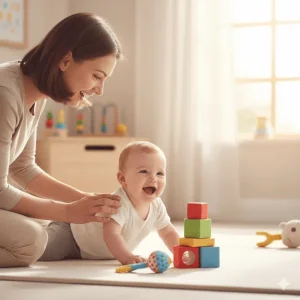
Some babies are more vocal during play on the floor. Others save their sounds for the bath. Some are quiet in the morning and chatty at bedtime. And some go through phases where they’re focused on movement—rolling, crawling, grabbing—and the babbling dips for a bit.
If you’re not hearing much babbling yet, it doesn’t mean you’re doing anything wrong. It may simply mean your baby is still warming up to vocal play, or they’re exploring communication in other ways right now (looking, reaching, smiling, watching closely). The goal isn’t to “get” babbling in every routine. It’s to keep routines warm and responsive so your baby feels safe experimenting when they’re ready.
A gentle way to feel more confident day to day
Many parents don’t need more time, they need clarity. If you’d like a little extra support noticing communication moments and knowing what to focus on, tools like BASICS can be a helpful guide. It’s designed to fit into real routines and show parents what supportive interaction can look like without turning your day into a therapy schedule.
The takeaway: routines are already doing more than you think
Baths, meals, diaper changes, and all the tiny transitions in between may feel ordinary but for your baby, they’re rich social moments. They’re predictable, close, and full of opportunities for your child to experiment with sounds like “ba-ba,” mix syllables, and invite you into connection.
You don’t have to create perfect conditions or add extra practice. When you notice babbling and respond with warmth, you’re reinforcing something powerful: “Your voice matters here.” And that simple message, repeated across everyday life, is one of the strongest foundations for communication there is.
Book your Free Consultation Today
Parent/Caregiver Info:
Client’s Details:
* Error Message