Is It Okay If My Child Uses Sounds Instead of Words to Ask for Things?
Last Updated: February 27, 2026
If your child using sounds instead of words asks for things using sounds like “mm,” “ah,” squeals, or little grunts, it can bring up a very specific kind of worry.
You might catch yourself thinking, Are we stuck here?
Or, If I respond to sounds, am I making it harder for them to use words?
Or even, other kids are saying words… should I be doing more?
These questions come from care, not from overthinking. When you’re trying to understand what your child needs, it’s natural to want communication to feel clearer and easier for both of you. Here’s the comforting truth: purposeful sounds are not “nothing.” They are a real and meaningful step in communication. For many children, sounds are one of the first dependable ways they learn to request, protest, get your attention, or share excitement.
Are sounds a real form of communication?
Yes. If your child uses a sound on purpose, especially if it happens in a familiar or consistent way, it truly counts as communication.
Think about what’s happening in those moments. Your child wants something, feels something, or notices something, and they reach out to you with the tools they have right now. That might be a squeal when they want a game to start again, a frustrated “ah!” when something won’t open, or a soft “mm” while pointing toward a snack.
Even when the sound isn’t a word, the message often is:
“I want that.” “Help.” “More.” “No.” “Look.” “I’m excited.”
That’s not being stuck. That’s your child learning that their voice can change what happens and that you will respond.
Why do some children use sounds instead of words?
There are many ordinary, non-alarming reasons children rely on sounds for a while.
Sometimes sounds are simply easier. Words take more planning, more coordination, and more practice. Sounds can come out quickly and still get the job done.
Sometimes children care more about the result than the form. If a squeal reliably brings you over to help, your child learns, “This works.” That’s not manipulation. It’s learning cause and effect. And sometimes children are still getting comfortable with back-and-forth interaction. Sounds can act as a bridge, a way to join in without needing the “right” word yet.
None of this means your child won’t use words. It usually means they are building the foundation that words grow from.
Also read: 10+ Simple Home Activities That Encourage Purposeful Sounds for Needs and Feelings
What purposeful sounds can tell you about your child’s growth
When a child using sounds instead of words communicates needs and feelings, it often shows several encouraging things happening at once.
It can mean your child is noticing you as a partner. They’re not just having an experience, they’re trying to share it with someone.
It can mean they’re learning how to get attention in a social way. Instead of only pulling you or melting down, they are using their voice to connect.
It can mean they’re experimenting with their voice. Over time, you may hear more variety, different pitches, different lengths of sound, and different “types” of sounds for different situations.
This is what early progress often looks like: more vocalizing during play and routines, more attempts to pull you into what they’re doing, and more of those moments where you think, They’re telling me something.
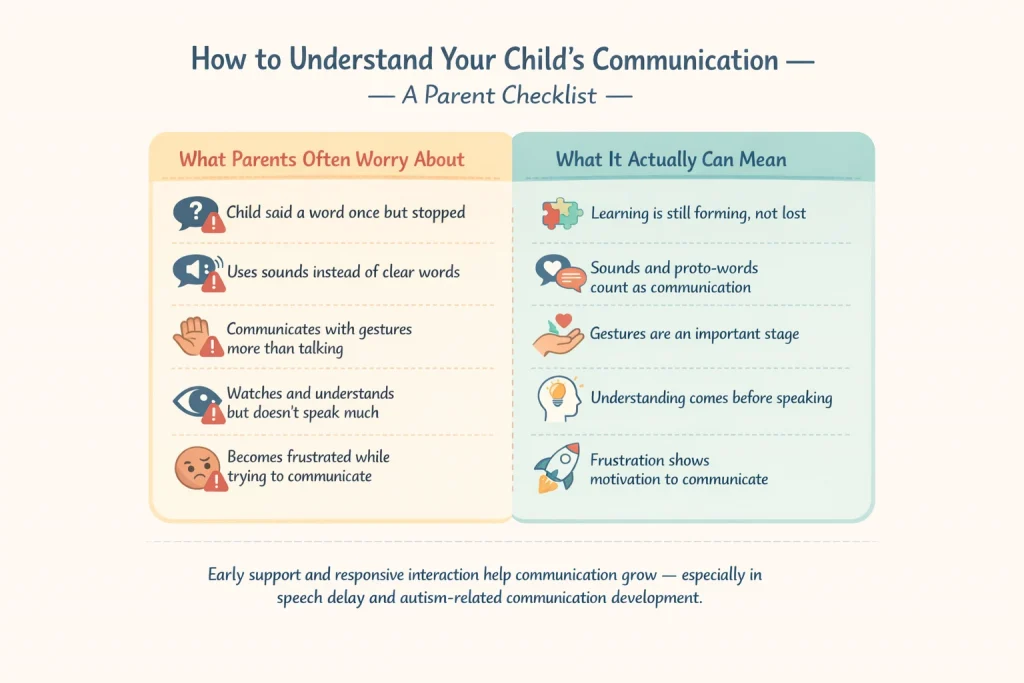
Should I respond when my child uses sounds?
Many parents worry that responding to sounds will teach their child not to use words. But in early communication, warm responses usually help communication grow.
When your child makes a sound to request or protest and you respond with calm attention, you are teaching something powerful: Your voice matters. I understand you. Communication works.
That feeling of being understood builds confidence. And confidence is often what helps children try again and eventually try more. The goal is not to ignore sounds until words appear. The goal is to treat sounds as meaningful while also letting your child hear clear language alongside their attempts.
What does supportive responding look like in real life?
Support often looks less like teaching and more like being a steady, present partner in everyday moments.
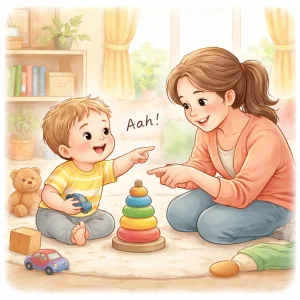
For example, your child might stand near the pantry and make a little “mm!” sound. You might naturally respond, “You’re telling me you want a snack,” and then pause for a moment to see what else they do. Maybe they point. Maybe they repeat the sound. Maybe they look at you for confirmation.
Or your child might squeal and bounce during a game. You might smile and say, “You want more. That’s so fun,” and pause briefly before continuing, giving them a chance to use that sound again to keep the game going. Or your child might make a frustrated sound when a toy won’t work. You might respond, “That’s hard. You want help,” and step in while staying connected to what they were trying to express.
In these moments, your child is learning that sounds can show requests, emotions, and attention and that you are listening.
Read more: My Child Only Makes Sounds When Playing Alone How Can I Encourage Sounds With Me?
What “success” can look like before words arrive
It’s easy to picture success as a clear spoken word. But before that, there are many signs that communication is strengthening.
You may notice your child uses their voice more often during play. You may hear different sounds for different situations, one for excitement, another for protest, another for “come here.” You may see more intentional attempts to get your attention instead of only grabbing or crying. You may also notice more shared moments. Your child looks at you after making a sound, waits for your reaction, or repeats the sound because they want the interaction to continue.
Those are real gains. They show your child is building the habit of communicating, and that habit is one of the strongest foundations for growth over time.
When parents feel unsure, it’s okay to want a little guidance
Even with reassurance, it can still feel tiring to guess all day. Many parents say the hardest part isn’t the sounds themselves, it’s the uncertainty. Am I responding the right way? Am I missing chances to help?
If you’d like support that fits into real life, tools like BASICS can help parents focus on communication goals, such as supporting a child using sounds instead of words to express needs and feelings, through everyday routines. It’s not about pressure or perfection. It’s about noticing opportunities and feeling more confident in how you respond.
And sometimes, simply talking with a supportive professional can help you feel less alone with these questions.
A gentle note to carry with you
If your child using sounds instead of words asks for things, it doesn’t mean they aren’t communicating. It means they are communicating in the way that’s available to them right now.
Those “mm” and “ah” moments are not dead ends. They are early building blocks, requests, feelings, attention, and excitement reaching toward connection. When you respond with warmth and understanding, you’re doing something deeply important. You’re teaching your child that their voice is worth using.
And that message is where communication grows.
About the Author:
Rajini Darugupally
M.Sc., Speech-Language Pathologist (9+ years of experience)
Rajini is a passionate and dedicated Speech-Language Pathologist with over 9+ years of experience, specializing in both developmental speech and language disorders in children and rehabilitation in adults. Driven by a desire to empower each individual to find their voice, Rajini brings a wealth of experience and a warm, genuine approach to therapy. Currently, at Wellness Hub, she thrives in a team environment that values innovation, compassion, and achieving results for their clients. Connect with Rajini to learn more about how she can help you or your loved one find their voice.
Book your Free Consultation Today
Parent/Caregiver Info:
Client’s Details:
* Error Message