What Not to Do When Encouraging Sound Imitation Common Mistakes Parents Make
By Rajini D
Last Updated: March 2, 2026
You make a silly “buh-buh!” sound. Or a raspberry. Or a playful animal noise.
Your child looks at you and says nothing.
So you try again. Louder. Closer. Maybe with a hopeful, “Can you say it?” And when that still does not work, it is easy to slip into a familiar loop: repeat, prompt, repeat, prompt, until the whole moment starts to feel tense.
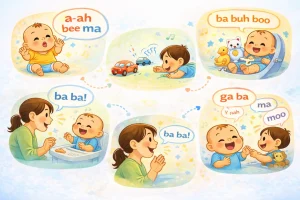
If this sounds like you, you are not doing anything wrong. You are doing what caring parents naturally do when they want to help while encouraging sound imitation. Sound imitation, including coos, squeals, raspberries, animal-like noises, and echoing your playful vocalizations, can be a joyful way for children to connect and explore their voice. But it is also a skill that usually grows best in a light, low-pressure atmosphere.
This article gently highlights a few common habits that can accidentally make sound play harder, and offers calmer, more supportive alternatives that keep the mood warm and playful.
Encouraging sound imitation starts with connection
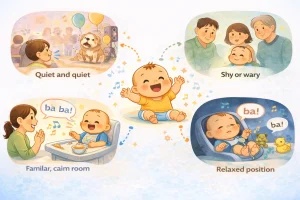
Sound imitation is not about getting your child to prove they can do it. It is more like an invitation to join you. Many children need time to warm up, watch, listen, and feel safe before they jump in. Sometimes they participate quietly at first through eye contact, a smile, a wiggle, or a small pause that says, “I’m with you.”
Those moments count. They are part of the rhythm and flow of early conversation, even before your child echoes the sound back.
Common mistake 1: Repeating the sound louder and louder
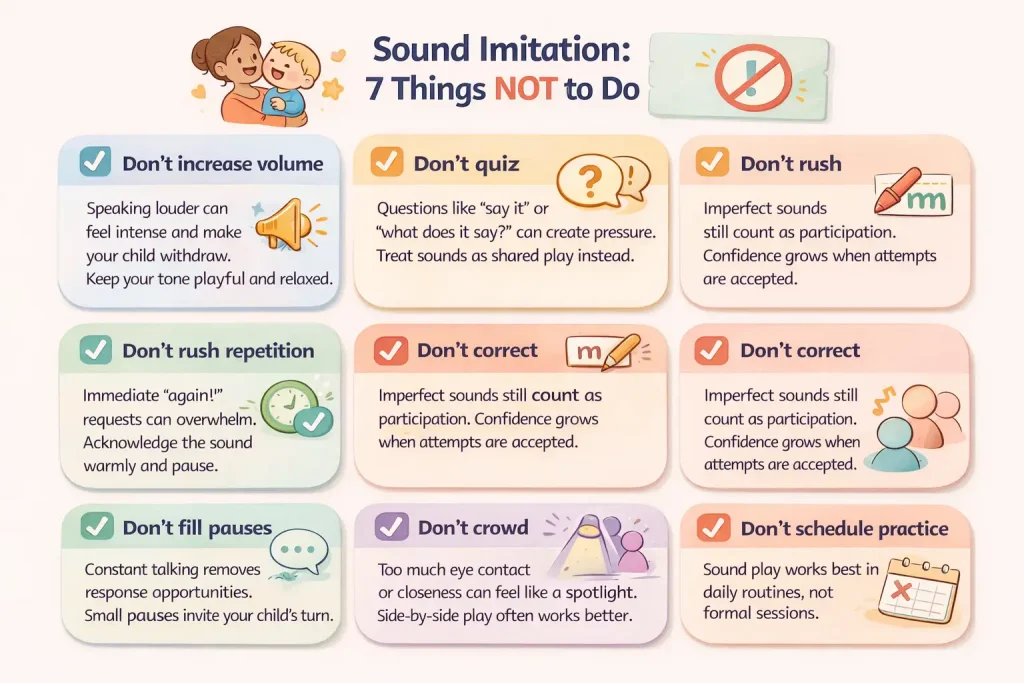
When your child does not imitate, it is natural to think, “Maybe they did not hear me,” and increase the volume. But louder does not usually feel more inviting, it can feel more intense.
Sound play works best when it feels like a shared joke, not a demand. If your child senses urgency, they may pull back, look away, or move on to something else, not because they cannot do it, but because the moment stopped feeling fun.
A more supportive alternative is to keep your voice warm and easy, almost like you are narrating a play rather than trying to get a response. Many children are more likely to join in when the energy stays relaxed.
Common mistake 2: Turning it into a quiz
It is easy for sound imitation to become a mini test: “What does the cow say?” “Can you do ‘ba’?” “Say it again.” Even with a smile, the structure can feel like there is a right answer.
When children feel quizzed, they often freeze or avoid. Play shuts down and connection is replaced with pressure.
A gentler alternative is to treat sounds as something you are exploring together, not something your child is being evaluated on. Instead of waiting with expectation, simply enjoy making the sound as part of the moment, as if it belongs to the game rather than a question.
Common mistake 3: Asking for “say it again” too quickly
Sometimes a child does make a sound, maybe a tiny “mm,” a squeal, or a breathy attempt, and excitement kicks in: “Yes! Do it again! Again!”
Your enthusiasm is lovely. But quick requests can change the feeling from “I did something fun” to “Now I have to keep doing it.” Some children enjoy the encore. Others feel put on the spot and stop altogether.
A supportive alternative is to respond with warmth without immediately raising the bar. Let their sound land. When children feel their small attempts are received with smiles and shared attention, they often feel safer trying again later.
Common mistake 4: Correcting the sound
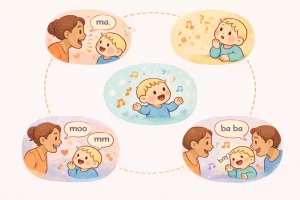
Sound imitation at this stage is meant to be messy. A “moo” might come out as “mm.” A raspberry might sound more like a lip smush. A squeal might be a quiet breath.
When we correct, “No, like this… moo,” we are usually trying to help. But correction can make a child feel their attempt did not count, which can reduce their willingness to experiment.
A more supportive alternative is to treat approximations as real participation. If your child offers anything close to the sound, it is a win. These playful exchanges build confidence with their voice, and confidence leads to more experimenting over time.
Common mistake 5: Filling every pause with more talking
Many parents are wonderful at keeping interaction going. But with imitation, constant input can crowd out your child’s chance to respond.
If you are making sound after sound with commentary in between, your child may stay in watching mode because there is no natural space to jump in.
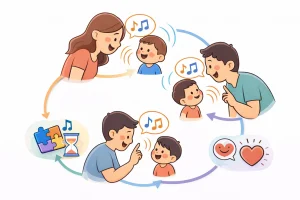
A gentler alternative is to allow small, comfortable pauses. Not a long silence, just a little breathing room. Those tiny gaps are often when a child tries something, looks at you for a response, or adds their own sound.
Common mistake 6: Holding eye contact too intensely or getting too close
Face-to-face play can support sound imitation, but sometimes it turns into a spotlight moment. If you are very close and waiting expectantly, your child may look away simply to manage the intensity.
This is especially common when you are excited and eager. Your child may prefer to participate side by side, while moving, or while playing with an object, where the social pressure feels lower.
A supportive alternative is to follow your child’s comfort with closeness. Some children imitate more when you are nearby but not directly in their face, or when the sound is part of what you are doing together instead of a direct request.
Common mistake 7: Saving sound play only for “practice time”
When encouraging sound imitation becomes scheduled, it can start to feel like work for both you and your child. If your child resists, it can create a pattern where you brace yourself and they brace themselves.
Sound imitation often grows best in everyday life: little coos during diaper changes, silly raspberries while washing hands, animal noises with toys, or a playful squeal during a run to the bath. These moments feel natural because they come from shared joy.
A supportive alternative is to think of sound play as part of your relationship, not a separate task. The goal is not to get a certain number of imitations, it is to create more moments where your child feels comfortable experimenting with their voice.
What progress can look like even before clear imitation
Parents often think success means a perfect echo every time. In reality, progress usually appears in small, gentle ways first.
You may notice your child watching your mouth, smiling when you make a sound, making a noise right after you even if it is not the same one, or looking at you as if to say, “Did you hear that?” Over time, these moments may happen more often, with more laughter and more back-and-forth.
These are meaningful signs that your child is learning the rhythm of interaction, the early foundation for conversation.
If you want a little extra support, keep it simple
Some parents feel relieved just knowing what not to do. Others want gentle guidance on how to keep sound play light and natural in everyday life.
Tools like BASICS can offer optional support by helping you choose a goal, such as encouraging sound imitation, and showing simple ways to encourage it without turning your home into a therapy room. It is not about doing more, it is about feeling more confident in the moments you already have.
A calm note to end on
If your child is not imitating sounds yet, it does not mean you are not connecting, and it does not mean your child is not learning. Many children need time, comfort, and the right kind of playful invitation.
The biggest shift is often surprisingly small: less pressure, fewer tests, and more shared enjoyment. When sound play feels safe and fun, children are more likely to explore their voice and invite you into that exploration.
And that is the real goal, not perfect sounds, but warm, joyful back-and-forth that helps your child feel confident being heard.
About the Author:
Rajini Darugupally
M.Sc., Speech-Language Pathologist (9+ years of experience)
Rajini is a passionate and dedicated Speech-Language Pathologist with over 9+ years of experience, specializing in both developmental speech and language disorders in children and rehabilitation in adults. Driven by a desire to empower each individual to find their voice, Rajini brings a wealth of experience and a warm, genuine approach to therapy. Currently, at Wellness Hub, she thrives in a team environment that values innovation, compassion, and achieving results for their clients. Connect with Rajini to learn more about how she can help you or your loved one find their voice.
Book your Free Consultation Today
Parent/Caregiver Info:
Client’s Details:
* Error Message