Why Does My Toddler Grip Everything So Tight, Even Soft Toys and Snacks?
By Wellness Hub
Last Updated: April 6, 2026
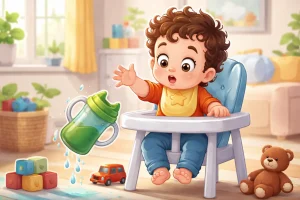
If your toddler grips too tight, it can make everyday moments feel surprisingly stressful. Snacks get crushed, soft toys get squeezed like they are made of stone, and your child may look completely unbothered while you are quietly thinking, “Why is everything so intense?” You are not doing anything wrong, and your child is not being “bad” or trying to ruin things. Tight gripping is a common phase for many toddlers as they figure out how their hands work.
A lot of parents notice it most during snack time, art, or when a child is excited to show you something. The good news is that this kind of squeezing usually has a simple explanation. And there are gentle ways to respond that protect your child’s confidence while still protecting the banana.
When your toddler squeezes everything, what are they trying to do?
Toddlers use their hands like a learning tool. A tight grip is often their way of saying, “I am not sure how much force to use yet, so I am going to use a lot.” It can look rough, but it is often a sign of effort, not carelessness.
Here are a few common “why” reasons that come up in real life:
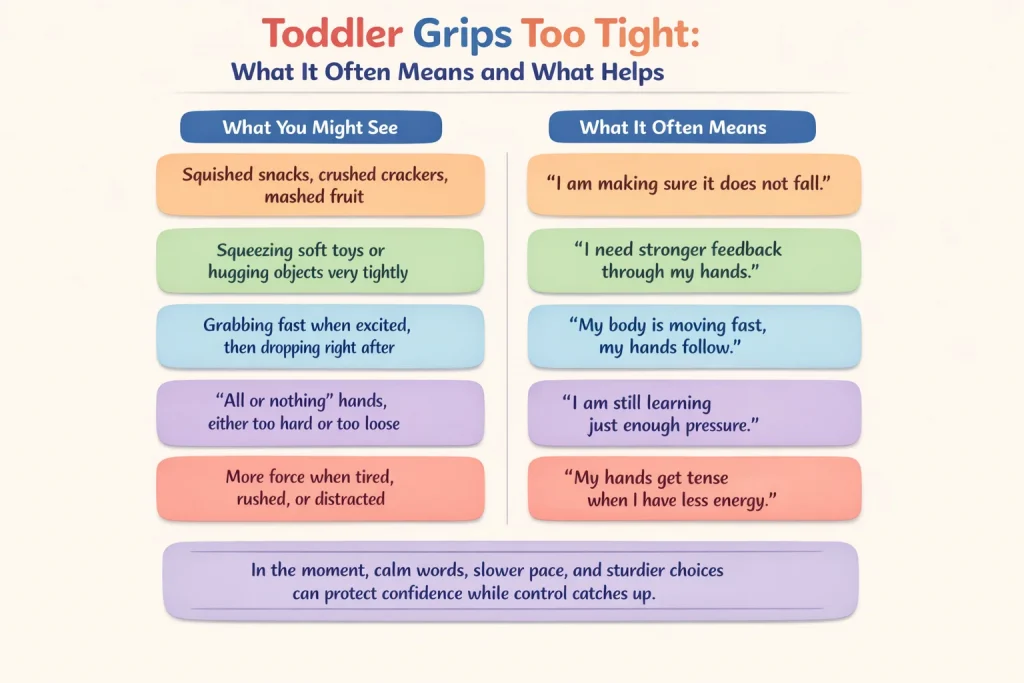
- Some toddlers grip hard because they want to feel secure. If an object feels slippery, small, or unpredictable, squeezing can be their way of making sure it does not fall. This is especially true with foods that change shape, like berries, bread, or peeled fruit.
- Other toddlers squeeze because they are seeking strong feedback through their hands. Firm pressure gives clear information to the brain. Soft toys and squishy snacks do not give the same clear “edges” that a block or a spoon does, so your child may press harder to get that feedback.
- Excitement plays a role too. When toddlers are happy, rushed, or eager to do something “by myself,” their whole body can speed up. Hands often follow the body. A fast body tends to come with fast, forceful hands.
- And sometimes it is simply practice. Toddlers are still building toddler fine motor control, which includes the ability to grade pressure. “Just enough” force is a surprisingly advanced skill. It takes time, repetition, and lots of everyday experiences.
Is it normal if my toddler grips too tight, even with soft toys and snacks?
For many toddlers, yes, it can be very normal. Early hand skills often show up as “all or nothing.” A child may hold on too tightly, then suddenly drop the same object a moment later. Both can happen in the same day, sometimes in the same minute.
It also helps to remember that toddlers are still learning to coordinate several things at once. Holding a snack gently while also walking, talking, looking around, or responding to you is a lot. When attention is split, the hand often defaults to a stronger grip.
You might notice patterns like these:
- A tighter grip when your child is tired, hungry, or overstimulated
- More squeezing with new foods or unfamiliar textures
- Better control with heavier, more solid objects
- Rougher hands when your child is trying to be quick
If the squeezing comes and goes, or improves when your child slows down and focuses, that is often a reassuring sign that this is part of learning. Progress can look like tiny moments of gentleness that pop up first in calm, motivated play.
Learn More: Your Toddler is Not Behind If Fine Motor Control Looks Rough Some Days
What too tight can mean for toddler fine motor control, without overthinking it
When parents see constant squeezing, they often worry it means something is “off” with strength. Most of the time, the issue is not strength. It is control.
Controlled hand use is a mix of a few skills working together:
- Pressure grading: using light pressure for delicate items and firmer pressure for sturdy items
- Coordination: fingers working together instead of the whole hand clamping down
- Timing: starting and stopping smoothly, not crashing into the task
- Endurance: staying engaged without the hand getting tired and tense
A toddler who grips hard may be using their whole hand as one unit. That is a normal early strategy. Over time, children learn to separate finger movements, adjust force, and slow down when something needs care.
If you are also noticing other things like frequent breaking of crayons, ripping pages, or pushing buttons with a lot of force, it can still fit the same theme. Your child may be learning how to match their power to the job.
What to say and do in the moment, without turning it into a lesson
When a toddler is squeezing hard, most parents instinctively say, “Gentle!” over and over. It is a reasonable instinct, but it often does not work because “gentle” is an idea, not a feeling. Toddlers learn best when the message is simple, calm, and connected to what their hands are doing.
A few approaches that tend to keep things positive:
- Name the problem like it is neutral. “That banana is soft.” “That toy is squishy.” This helps your child link the object with the kind of hands it needs.
- Give your child a slower pace without scolding. You can model a slower movement with your own hands nearby. Many toddlers match your speed when you are close and calm.
- Offer a quick reset instead of repeated corrections. If the snack is already crushed, you can matter-of-factly swap it for a sturdier piece, or offer it in a way that is easier to manage, while keeping your tone warm. The goal is to keep your child engaged, not to “win” the moment.
- Notice effort, not perfection. If your child loosens their grip even a little, that is worth acknowledging. “You held it softer that time.” This kind of feedback helps the brain repeat the successful attempt.
- If you feel yourself getting tense, it is okay to take a breath and zoom out. Tight gripping is often a skill-in-progress moment, not a behavior problem.
Gentle ways to build just enough pressure during everyday play and routines
You do not need special tools to support better control. The most helpful practice often happens naturally when your child uses their hands across different textures and resistance levels.
In daily life, toddlers get great hand feedback from things that squeeze and release, press and pull, or require a careful pick up and place. You might already have moments like these built into your day, even if you do not think of them as “fine motor.”
Some families notice that their child uses a calmer grip when:
- Objects are slightly bigger and easier to hold
- Items have a bit of weight or firmness, so the hand can “feel” them better
- The child is sitting and supported, instead of moving around
- The activity is short and satisfying, rather than long and demanding
It can also help to balance two types of hand experiences. One is strong work, like squeezing, pulling, or pushing things that give resistance. The other is careful work, like handling delicate foods, turning pages, or placing small items gently. Both matter. Strength without control can look rough. Control without enough strength can look hesitant. Over time, the mix supports smoother, more purposeful hands.
If you are looking for ideas that fit this goal, you might recognize themes like squeeze and shape play, sponge squeeze release in the bath, spray bottle play, dropper squeezing, or simple press and turn toys. None of these need to be “perfect.” They are just different ways for your child to feel what their hands are doing.
When tight gripping is hardest, and how to make those moments easier
Parents often tell me the toughest times are snacks on the go, excitement at the park, or transitions when a child is already dysregulated. That makes sense. When the body is revved up, hands tend to clamp.
A few small shifts can make a big difference without making your child feel managed:
- Snack time: Softer foods are harder to handle gently. If your child is hungry and rushing, they may squeeze more. Offering foods that hold their shape better sometimes reduces the “death grip” feeling for everyone.
- Play with soft toys: Some toddlers squeeze plush toys when they are seeking comfort or sensory input. If it seems soothing, you may not need to stop it. You can protect the toy by choosing sturdier plush items for everyday use and saving delicate ones for calmer times.
- Art and tools: If you notice tight gripping with crayons or markers, it often helps to focus on comfort and control rather than the final picture. A tense hand is a tired hand. Short, pleasant moments usually go better than long sessions.
- Getting dressed: When toddlers are trying hard, they often use too much force. If a zipper or sock is tricky, the hand may clamp and pull. Slowing the pace and giving “just enough help” can keep your child in the driver’s seat without tipping into frustration.
- If you have ever wondered, “why is my toddler so rough with toys,” tight gripping is often part of the same story. Your child may be using extra force because their hands are still learning how to be precise.
A gentle closing thought if your toddler grips too tight
If your toddler grips too tight, it is easy to feel like you are constantly managing mess, broken snacks, and rough handling. Try to hold onto this: tight hands are often learning hands. Your child is building the ability to use “just enough” pressure, and that skill grows through everyday experiences, not through perfect behavior.
Watch for small signs of progress. A softer hold for one second longer. A careful placement when they are calm. Less squeezing when they are seated. Those little moments add up.
If you feel stuck, or if tight gripping is making daily routines feel harder than they need to be, it can help to get a bit of guidance that fits your child’s style. Some families like using a parent guided tool like the BASICS App to explore supportive ideas at their own pace, without pressure.
Most importantly, you are not alone in this. And your child can absolutely learn more comfortable, controlled hands over time, even if today’s cracker did not survive.
Book your Free Consultation Today
Parent/Caregiver Info:
Client’s Details:
* Error Message