10+ Expressing Feelings Activities for Kids to Learn Emotions
By Wellness Hub
Last Updated: December 23, 2025
Helping young children express their feelings is an important part of early development. When children learn how to name and talk about emotions, they build strong communication skills, better self-control, and healthier relationships.
This guide explains why expressing feelings matters, common challenges parents notice, and simple expressing feelings activities for kids that work well at home, school, or therapy sessions.
Why Expressing Feelings Is Important for Kids
Young children feel many emotions every day, but they often do not have the words to explain them. This can lead to tantrums, withdrawal, or behavior that feels confusing to adults.
Expressing feelings activities for kids help children:
- Learn emotion words like happy, sad, angry, and scared
- Share feelings instead of acting them out
- Build empathy and social skills
- Improve speech and language development
- Feel understood and supported
For toddlers and preschoolers, emotional expression is a skill that grows with practice and guidance.
Signs a Child May Struggle to Express Feelings
Some children need extra support with emotional expression. Common signs include:
- Frequent meltdowns or frustration
- Hitting, biting, or throwing objects when upset
- Trouble explaining what is wrong
- Avoiding eye contact or shutting down emotionally
- Using very few emotion words
Expressing feelings activities for kids give them safe and simple ways to communicate what they feel.
Expressing Feelings Activities for Toddlers and Preschoolers
1. Emotion Matching Games
Show pictures of faces with different emotions. Ask your child to match the same feelings together. Start with basic emotions like happy, sad, angry, and scared.
This activity builds emotion recognition and early vocabulary.
2. Feelings Sorting Activity
Place emotion cards or pictures into groups. For example, group happy faces together and sad faces together. Talk about how each feeling looks.
Sorting activities help children notice emotional differences and patterns.
3. Emotion Flashcards
Use simple emotion cards and name the feeling out loud. Ask questions like:
- “Which one shows happy?”
- “How does this face feel?”
Keep sessions short and playful.
4. Mirror Feelings Game
Stand in front of a mirror with your child. Make a face that shows an emotion and ask your child to copy it. Then name the feeling together.
This supports emotional awareness and facial expression understanding.
Expressing Feelings Through Play and Daily Routines
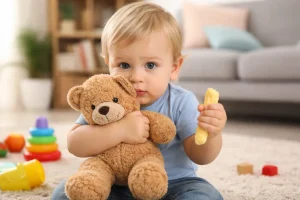
5. Pretend Play with Toys
Use dolls, animals, or action figures to act out simple situations. For example, “The teddy is sad because he lost his toy.”
Ask your child how the toy feels and what might help.
6. Role Play Everyday Situations
Act out common moments like sharing toys or waiting for a turn. Pause and ask:
- “How does the child feel?”
- “What can we say when we feel this way?”
Role play builds real-life emotional communication.
7. Storytime Feelings Talk
While reading a story, stop and ask questions about the characters:
- “How does she feel right now?”
- “Why do you think he is upset?”
Stories are a natural way to talk about emotions without pressure.
Art and Movement Activities for Expressing Feelings
9. Feelings Through Movement
Ask your child to move like different emotions:
- Jump like you feel happy
- Walk slowly like you feel sad
- Stomp like you feel angry
Movement helps children release emotions safely and understand body cues.
Tips for Parents and Caregivers
- Name feelings during daily life
- Use simple and clear emotion words
- Validate your child’s feelings before correcting behavior
- Model healthy emotional expression yourself
- Repeat activities often for consistency
Expressing feelings activities for kids work best when adults stay calm, patient, and supportive.
When to Seek Extra Support
If a child continues to struggle with expressing emotions or communication despite regular practice, professional guidance can help. Speech therapists and early childhood specialists can support emotional language and social skills development.
Early support makes emotional learning easier and more effective.
Conclusion
Expressing feelings activities for kids give children the tools they need to understand themselves and connect with others. Through play, stories, movement, and everyday conversations, children learn that all feelings are okay and that words are a powerful way to share them.
Simple, consistent activities can make a lasting difference in a child’s emotional and communication growth.
Frequently Asked Questions:
1. What are expressing feelings activities for kids?
Expressing feelings activities for kids are simple games, play ideas, and routines that help children talk about emotions like happy, sad, angry, or scared using words, pictures, or actions.
2. Why are expressing feelings activities important for young children?
These activities help children understand their emotions, reduce tantrums, and improve communication. They also support speech, social skills, and emotional growth.
3. At what age can kids start expressing feelings activities?
Children can start expressing feelings activities as early as 18 months. Toddlers and preschoolers benefit the most from simple, repeated emotional learning.
4. How do expressing feelings activities help with behavior problems?
When kids learn to name their feelings, they are less likely to hit, cry, or shout. Expressing feelings activities give children a better way to share what they feel.
5. What are easy expressing feelings activities to do at home?
Easy activities include emotion cards, talking about feelings during storytime, pretending with toys, drawing emotions, and using mirrors to copy facial expressions.
6. Can expressing feelings activities help speech-delayed children?
Yes. Expressing feelings activities for kids help speech-delayed children learn emotion words, improve sentence use, and communicate needs more clearly.
7. How often should parents do expressing feelings activities?
Parents can do these activities daily for a few minutes. Short and regular practice works better than long sessions.
8. What if my child refuses to talk about feelings?
Some children need more time. Start with play, pictures, or role play instead of direct questions. Keep the activity calm and pressure-free.
9. Are expressing feelings activities helpful for preschool and school readiness?
Yes. Children who can express feelings show better listening, sharing, and problem-solving skills, which helps them adjust to preschool and classroom settings.
10. When should parents seek professional help for emotional expression?
If a child rarely uses emotion words, has frequent meltdowns, or struggles to communicate feelings even after practice, a speech therapist or child specialist can help.
Book your Free Consultation Today
Parent/Caregiver Info:
Client’s Details:
* Error Message