


Telling Others How I Feel – Social Story with Activities
₹80
₹160
50% off
0 (0 ratings)
Grade Levels
Pre-K - Grade 3 (Ages 4-9)
Content Overview
Format: Printable PDF, Total Pages: 11, Features: 16 segments with real images, vocabulary, spelling, comprehension, and role-play activities
Categories
Share


About the Product
Introduction
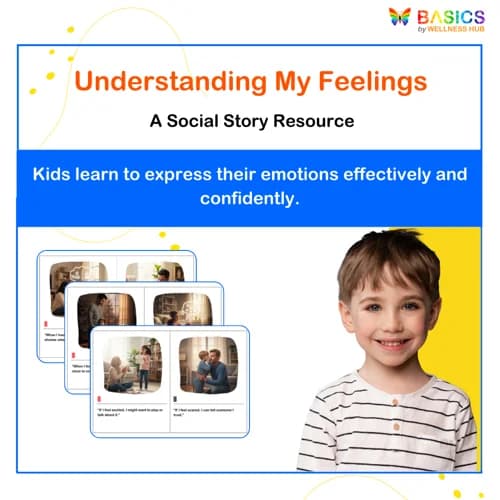
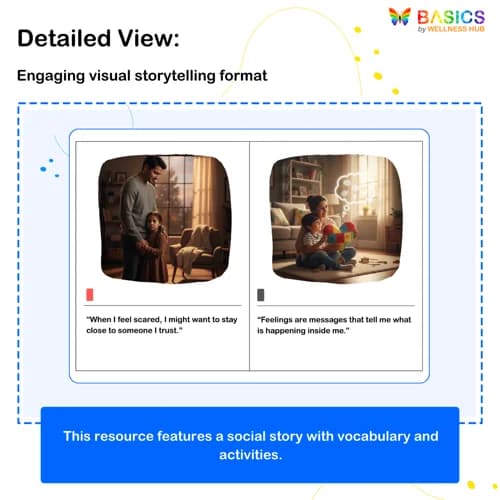
Helping children express their emotions is crucial for their social and emotional development. "Telling Others How I Feel" is a social story designed to assist children in understanding and communicating their feelings in a constructive manner. This PDF resource uses real-life images and relatable scenarios to make the learning experience more engaging and effective. Ideal for use in speech therapy, special education, and at home, this social story empowers children to articulate their emotions, enhancing their interpersonal skills and emotional intelligence.
Product Details
- Format: Printable PDF
- Total Pages: 11
- Target Audience: Suitable for children in early elementary grades, especially those in need of social-emotional learning support.
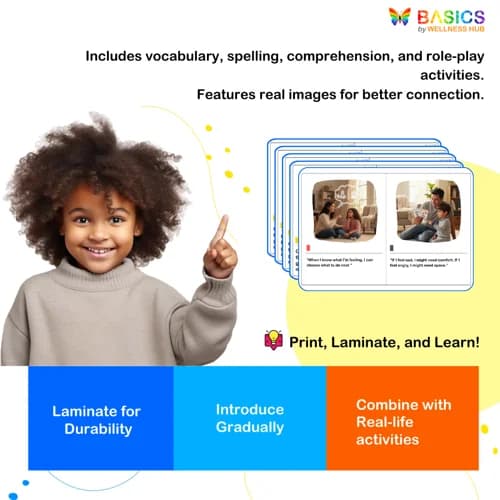
Social Story: 8 pages with 16 segments, each featuring a real-life image and a first-person narrative sentence Vocabulary and Spelling: Page 9 includes 5 vocabulary words with multiple-choice definitions and 5 spelling words with multiple-choice spellings Comprehension and Questions: Page 10 offers comprehension questions and open-ended questions based on the social story Role-Play Activities: Page 11 provides role-play scenarios to practice expressing feelings in real-life situations
Educational Benefits
1. Enhances Emotional Intelligence
- Helps children identify and articulate their emotions, fostering self-awareness.
- Encourages empathy by understanding how expressing feelings can affect others.
2. Develops Communication Skills
- Teaches children how to express emotions clearly and respectfully.
- Improves vocabulary related to emotions, aiding in more precise communication.
3. Supports Social-Emotional Learning (SEL)
- Promotes healthy emotional expression, reducing frustration and misunderstandings.
- Encourages positive interactions and relationship-building with peers and adults.
4. Assists Children with Special Needs
- Provides structured, visual learning for children with autism, ADHD, or speech delays.
- Offers relatable scenarios that help children navigate social situations effectively.
5. Reinforces Real-Life Application
- Covers everyday situations such as:
- Telling a friend when feeling upset
- Expressing excitement about a fun activity
- Communicating disappointment in a constructive way
- Sharing feelings of nervousness or anxiety
Instructions for Use
Step 1: Read the Social Story Together
- Sit with the child and read through the social story.
- Discuss each segment and image, ensuring they understand the emotions being expressed.
- Ask guiding questions such as:
- "How do you feel when you're upset? How can you tell someone?"
- "What words can you use to express happiness or excitement?"
Step 2: Engage with Vocabulary and Spelling
- Review the vocabulary and spelling section on page 9.
- Encourage the child to choose the correct meaning and spelling for each word.
- Discuss how these words relate to expressing emotions.
Step 3: Answer Comprehension Questions
- Work through the comprehension and open-ended questions on page 10.
- Encourage the child to think critically about the scenarios in the story.
- Ask them to relate the questions to their own experiences.
Step 4: Practice with Role-Play Activities
- Use the role-play scenarios on page 11 to practice expressing feelings.
- Act out different situations, encouraging the child to use appropriate words and body language.
- Provide feedback and praise for effective communication.
Step 5: Reinforce Learning in Daily Life
- Encourage the child to express their feelings in everyday situations.
- Provide gentle reminders and support when they struggle to articulate emotions.
- Praise progress and successful communication, reinforcing positive behavior.
Step 6: Revisit the Story Regularly
- Read the social story regularly to reinforce learning.
- Encourage teachers, caregivers, and peers to model good emotional expression behaviors.
- Celebrate improvements in the child's ability to express their feelings constructively.
Activities Using the Resource
1. Emotion Photo Match
Objective: Connect emotions with real-life expressions.
How to Play:
- Print out the segments from the social story.
- Cut out the images and sentences separately.
- Ask the child to match each sentence with the correct image.
- Discuss why each image represents the emotion described.
Skill Development:
- Emotion recognition
- Visual literacy
- Critical thinking
2. Vocabulary and Spelling Challenge
Objective: Strengthen understanding and spelling of emotion-related words.
How to Play:
- Use the vocabulary and spelling section on page 9.
- Create flashcards with words and definitions.
- Have the child pick the correct definition or spelling for each word.
- Discuss how these words can be used in expressing feelings.
Skill Development:
- Vocabulary building
- Spelling accuracy
- Language comprehension
3. Emotion Charades
Objective: Practice non-verbal expression of emotions.
How to Play:
- Write different emotions from the story on slips of paper.
- Take turns acting out the emotions without speaking.
- The other players guess the emotion being portrayed.
- Discuss how body language can help in expressing feelings.
Skill Development:
- Non-verbal communication
- Empathy and perspective-taking
- Social interaction
4. Comprehension Question Discussion
Objective: Enhance understanding of emotional scenarios.
How to Play:
- Refer to the comprehension questions on page 10.
- Read each question aloud and discuss possible answers.
- Encourage the child to relate the scenarios to their own experiences.
- Use open-ended questions to deepen the discussion.
Skill Development:
- Critical thinking
- Self-reflection
- Analytical skills
5. Role-Play Scenarios
Objective: Apply emotional expression in real-life contexts.
How to Play:
- Use the role-play activities on page 11.
- Set up simple scenarios (e.g., telling a friend you're upset).
- Encourage the child to express their feelings using appropriate words and gestures.
- Provide feedback and praise for effective communication.
Skill Development:
- Practical application of skills
- Confidence in social settings
- Problem-solving
6. Emotion Journal
Objective: Encourage regular reflection on feelings.
How to Play:
- Provide a notebook for the child to use as an emotion journal.
- After reading the story, ask them to write or draw about their feelings each day.
- Discuss their entries, encouraging them to use vocabulary from the story.
- Praise their efforts in expressing emotions constructively.
Skill Development:
- Self-awareness
- Writing and reflection
- Emotional regulation
Frequently Asked Questions
Q1: How can I access the "Telling Others How I Feel" social story PDF?
A1: The PDF can be downloaded directly from the Wellness Hub website after purchase. Simply add the resource to your cart, complete the checkout process, and you'll receive a link to download the file immediately.
Q2: What is the licensing policy for this resource?
A2: The resource is intended for personal or classroom use only. Redistribution, commercial use, or sharing of the PDF is not permitted. For additional licenses or bulk purchases, please contact Wellness Hub directly.
Q3: Can I get a refund if I'm not satisfied with my purchase?
A3: Wellness Hub offers a satisfaction guarantee. If you are not satisfied with the resource, please contact our support team within 14 days of purchase for assistance or to request a refund.
Q4: How can I get support if I have questions about using the resource?
A4: Our support team is available to help with any questions or issues. You can reach out via the contact form on our website or email us directly. We aim to respond within 24 hours to ensure you have the best experience possible.
Q5: How does this resource support children with special needs?
A5: The social story uses real-life images and simple, first-person narratives to help children with autism, ADHD, or speech delays understand and express their emotions. The structured format and relatable scenarios make it an effective tool for therapy and home use.
Q6: Can this resource be integrated into speech therapy sessions?
A6: Yes, it is ideal for speech therapy. Therapists can use the story to model emotional expression, engage in role-play activities, and reinforce vocabulary related to feelings. It complements other therapeutic interventions by promoting emotional intelligence and communication skills.
Q7: What are some practical ways to use the role-play activities?
A7: Role-play scenarios on page 11 can be used in therapy or at home to practice expressing emotions. Set up simple situations like telling a friend you're upset, and encourage the child to use appropriate words and gestures. Provide feedback and praise to reinforce learning.
Q8: How can I incorporate the vocabulary and spelling section into learning?
A8: Use page 9 to review and reinforce emotion-related vocabulary and spelling. Create flashcards for practice, and discuss how these words apply to the child's own experiences. This helps build language skills and enhances emotional expression.
Q9: What benefits does the comprehension section offer?
A9: The comprehension questions on page 10 encourage critical thinking and self-reflection. Discussing these questions helps children relate the story to their own lives, deepening their understanding of emotions and how to express them constructively.
Q10: How often should I revisit the social story with my child?
A10: Regular revisiting of the social story is recommended to reinforce learning. Encourage consistent practice and application in daily life, and celebrate improvements in the child's ability to express their feelings constructively.
Usage Rights and Restrictions
Allowed Usage:
- Personal use by parents, teachers, and therapists.
- Printable for classroom, home, or therapy settings.
- Can be used in group or one-on-one learning sessions.
Not Allowed:
- Reselling, redistributing, or modifying the resource for commercial use.
- Sharing publicly (e.g., on blogs, social media, or websites) without permission.
- Uploading the file to public sharing platforms.
If you need a bulk license for schools or therapy centers, please contact us.
Conclusion
The "Telling Others How I Feel" social story PDF is a comprehensive resource designed to support children's social and emotional development. By using real-life images and relatable scenarios, it effectively teaches children how to express their emotions constructively. This resource is particularly beneficial for children in early elementary grades, including those with special needs, as it enhances emotional intelligence, communication skills, and social-emotional learning. Whether used at home, in classrooms, or in therapy sessions, this social story empowers children to articulate their feelings, fostering healthier interactions and relationships.