


Understanding My Feelings: Social Story with Activities for Kids
₹80
₹160
50% off
0 (0 ratings)
Grade Levels
Kindergarten - Grade 3 (Ages 5-9)
Content Overview
Format: Printable PDF, Total Pages: 11, Features: 16 segments with real images, vocabulary, spelling, comprehension, role-play activities
Categories
Share


About the Product
Introduction
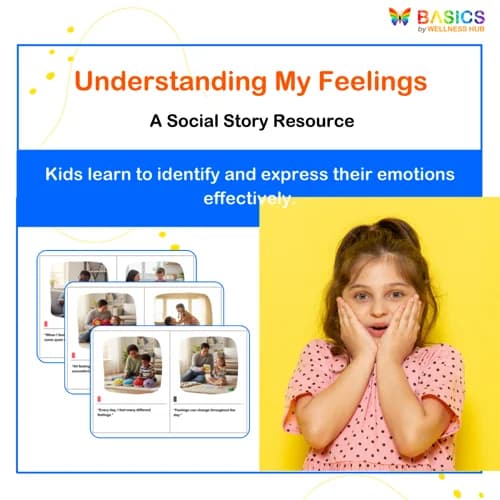
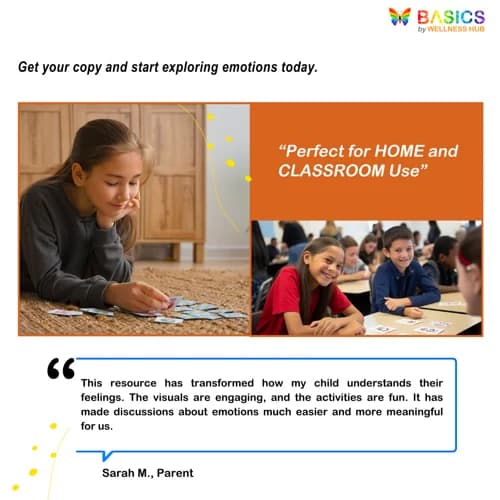
Helping children understand and express their emotions is crucial for their social and emotional development. The Understanding My Feelings and What They Mean: Social Story PDF is designed to guide children through recognizing and interpreting their emotions in a relatable and supportive manner. This resource uses real-life images and first-person narratives to create a personal connection, making it easier for children to grasp complex emotional concepts. Ideal for use in therapy sessions, classrooms, or at home, this social story encourages emotional literacy and self-awareness, providing a foundation for healthy emotional expression and communication.
Product Details
- Format: Printable PDF
- Total Pages: 11
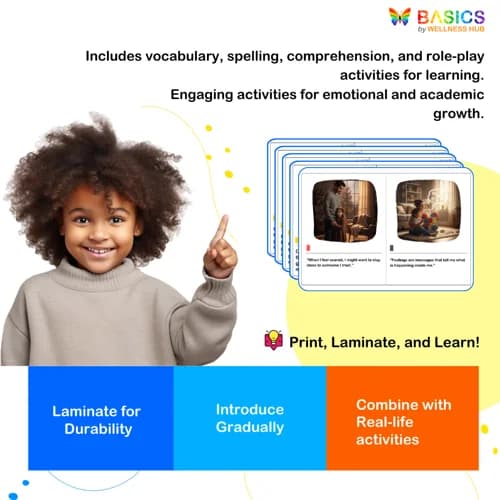
- Page 9: Vocabulary and Spelling
- Page 10: Comprehension and Open-Ended Questions
- Page 11: Role-Play Activities
- Purpose: Designed to enhance emotional understanding, vocabulary, spelling, and comprehension skills
- Suitable For: Children in early learning settings, special education, and therapy environments
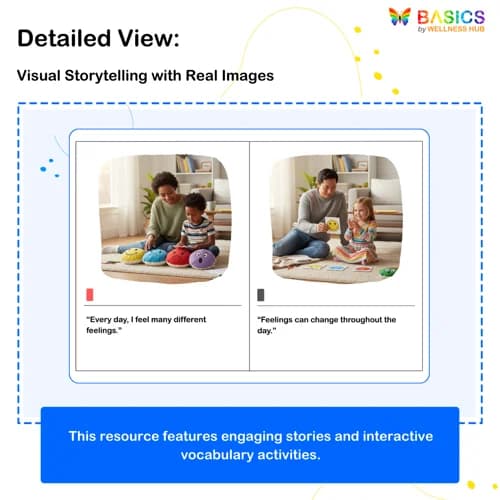
Social Story Content: 8 pages of social story content, divided into 16 segments Each segment includes a real image and a simple, relatable sentence Additional Activities: 5 vocabulary words with two definition options each 5 spelling words with two spelling options each
Educational Benefits
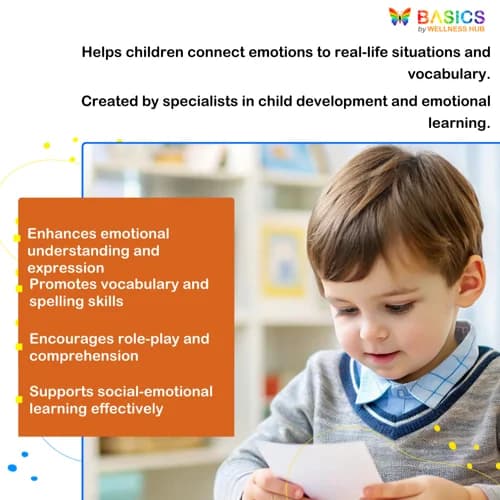
1. Enhances Emotional Literacy
- Helps children identify and label their emotions accurately.
- Encourages understanding of how different emotions feel and what they signify.
2. Supports Social-Emotional Development
- Promotes self-awareness and empathy by helping children recognize emotions in themselves and others.
- Facilitates discussions about feelings, leading to improved emotional regulation and social interactions.
3. Builds Vocabulary and Language Skills
- Expands emotional vocabulary through targeted words from the story.
- Improves spelling and comprehension skills with interactive exercises.
4. Encourages Critical Thinking and Reflection
- Engages children in comprehension and open-ended questions to deepen understanding.
- Promotes reflective thinking about personal experiences and emotions.
5. Provides Practical Application through Role-Play
- Offers role-play activities to practice expressing and managing emotions in real-life scenarios.
- Helps children apply learned concepts in a safe and supportive environment.
Instructions for Use
Step 1: Read the Social Story
- Begin by reading the social story with the child, focusing on each segment.
- Discuss the real images and sentences, ensuring the child relates to the emotions depicted.
- Ask questions like, "How do you feel when you see this picture?" to encourage engagement.
Step 2: Vocabulary and Spelling Activities
- Turn to page 9 and review the vocabulary words with the child.
- Encourage them to choose the correct meaning for each word, discussing why it fits.
- Practice spelling by selecting the correct spelling option for each word.
Step 3: Comprehension and Open-Ended Questions
- Use page 10 to discuss comprehension questions, prompting the child to think about the story.
- Encourage them to answer open-ended questions with personal examples or experiences.
- Facilitate a discussion on how they might handle similar emotional situations.
Step 4: Role-Play Activities
- On page 11, guide the child through role-play scenarios based on the social story.
- Encourage them to express emotions and reactions as they would in real life.
- Use props or real-life situations to make the role-play more relatable and engaging.
Step 5: Reinforce Learning
- Revisit the social story regularly to reinforce emotional understanding.
- Encourage the child to use new vocabulary and emotional insights in daily interactions.
- Provide positive feedback and support as they apply these skills in real-world settings.
Activities Using the Resource
1. Emotion Matching Game
Objective: Help children identify and connect emotions with real-life scenarios.
How to Play:
- Print and cut out segments from the social story.
- Mix them up and ask the child to match the image with the correct sentence.
- Discuss why the image and sentence go together, exploring the emotion depicted.
Skill Development:
- Emotional recognition
- Visual literacy
- Critical thinking
2. Vocabulary and Spelling Relay
Objective: Reinforce vocabulary and spelling skills through active engagement.
How to Play:
- Write vocabulary words on cards and place them around the room.
- Call out a word, and the child must find the card and choose the correct meaning or spelling.
- Discuss the word's meaning and use it in a sentence related to the social story.
Skill Development:
- Word recognition
- Spelling accuracy
- Active learning
3. Emotion Charades
Objective: Encourage expressive language and understanding of emotions.
How to Play:
- Choose an emotion from the social story.
- Act out the emotion without speaking, using facial expressions and body language.
- Have the child guess the emotion and discuss when they might feel this way.
Skill Development:
- Non-verbal communication
- Empathy
- Expressive skills
4. Personal Emotion Journal
Objective: Foster self-reflection and personal connection to emotions.
How to Play:
- Provide a journal for the child to draw or write about their daily emotions.
- Encourage them to relate their feelings to segments from the social story.
- Discuss their entries regularly, reinforcing emotional vocabulary and understanding.
Skill Development:
- Self-awareness
- Reflective thinking
- Emotional expression
5. Real-Life Role-Play Scenarios
Objective: Practice managing emotions in everyday situations.
How to Play:
- Use scenarios from the social story to create role-play activities.
- Act out situations where the child might feel similar emotions, using props for realism.
- Discuss different ways to handle these emotions, encouraging problem-solving and empathy.
Skill Development:
- Problem-solving
- Emotional regulation
- Social interaction
6. Comprehension Discussion Circle
Objective: Deepen understanding through group discussion.
How to Play:
- Gather a small group of children and read a segment from the social story.
- Ask comprehension questions and encourage each child to share their thoughts.
- Facilitate a discussion on how they might handle similar emotions in their lives.
Skill Development:
- Listening skills
- Group communication
- Critical thinking
Frequently Asked Questions
Q1: How can I use the "Understanding My Feelings" social story effectively?
A1: Start by reading the story with the child, focusing on each segment's image and sentence. Discuss the emotions depicted, ask questions to engage the child, and encourage them to relate the feelings to their own experiences. This approach helps children connect with the material and enhances emotional understanding.
Q2: What activities are included in the PDF to reinforce learning?
A2: The PDF includes vocabulary and spelling exercises, comprehension and open-ended questions, and role-play activities. These activities are designed to deepen understanding, expand vocabulary, and provide practical application of emotional concepts through interactive learning.
Q3: Can this resource be used for children with special needs?
A3: Yes, the social story is suitable for children in special education and therapy environments. The use of real images and first-person narratives makes it relatable and supportive, helping children with autism, ADHD, or other learning differences to understand and express their emotions.
Q4: How often should I revisit the social story with my child?
A4: Regular revisits are recommended to reinforce emotional understanding and vocabulary. Consistent engagement with the story helps children apply learned skills in daily interactions, promoting long-term emotional literacy and self-awareness.
Q5: What is Wellness Hub's approach to therapy and support?
A5: Wellness Hub combines professional expertise with innovative digital tools to provide accessible therapy and developmental support. Their services include speech and language therapy, occupational therapy, and mental health counselling, all delivered through interactive platforms like Tele-BASICS and BASICS Apps.
Q6: How does Wellness Hub ensure the quality of its therapy sessions?
A6: Wellness Hub focuses on therapist qualifications, privacy, and caregiver involvement to ensure effective therapy. Sessions are one-on-one, typically lasting 45 minutes, and include a free consultation, assessments, therapy planning, and regular progress tracking to maintain high-quality care.
Q7: What resources does Wellness Hub offer for home therapy?
A7: Wellness Hub provides a library of home therapy resources, including flashcards, worksheets, and visual schedules. These materials support parents and caregivers in continuing progress at home, making therapy more effective and consistent.
Q8: Can I access Wellness Hub's services outside of India?
A8: Yes, Wellness Hub's digital platforms and resources are accessible beyond India, making high-quality therapy and support available to a wider audience. Their mission is to provide affordable and effective care to families globally.
Q9: What is the process for starting therapy with Wellness Hub?
A9: Begin with a free consultation to discuss your child's needs. This is followed by assessments to tailor a therapy plan. Therapy sessions are conducted one-on-one, with regular progress tracking to ensure goals are met and adjustments are made as needed.
Q10: How does Wellness Hub support caregiver involvement in therapy?
A10: Wellness Hub emphasizes caregiver involvement by providing resources and guidance for home therapy. They encourage active participation in the therapy process, offering tools and strategies to support children's progress and reinforce skills learned during sessions.
Usage Rights and Restrictions
Allowed Usage:
- Personal use by parents, teachers, and therapists.
- Printable for classroom, home, or therapy settings.
- Can be used in group or one-on-one learning sessions.
Not Allowed:
- Reselling, redistributing, or modifying the resource for commercial use.
- Sharing publicly (e.g., on blogs, social media, or websites) without permission.
- Uploading the file to public sharing platforms.
If you need a bulk license for schools or therapy centers, please contact us.
Conclusion
The Understanding My Feelings and What They Mean: Social Story PDF is an invaluable resource for helping children navigate their emotions with confidence and clarity. By using real-life images and first-person narratives, this social story fosters a personal connection that enhances emotional literacy and self-awareness. With additional activities like vocabulary exercises, comprehension questions, and role-play scenarios, children are encouraged to engage deeply with the material, promoting critical thinking and practical application of emotional concepts. This resource is ideal for educators, therapists, and parents seeking to support children's social-emotional development in a structured and interactive way.