


What to Do If I Feel Left Out – Social Story for Kids
₹80
₹160
50% off
0 (0 ratings)
Grade Levels
Kindergarten - Grade 3 (Ages 5-9)
Content Overview
Format: Printable PDF, Total Pages: 11, Features: 16 segments with real images, vocabulary, spelling, comprehension, role-play activities
Categories
Share


About the Product
Introduction
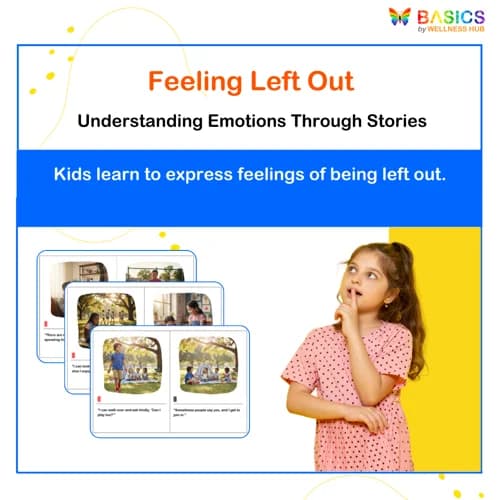
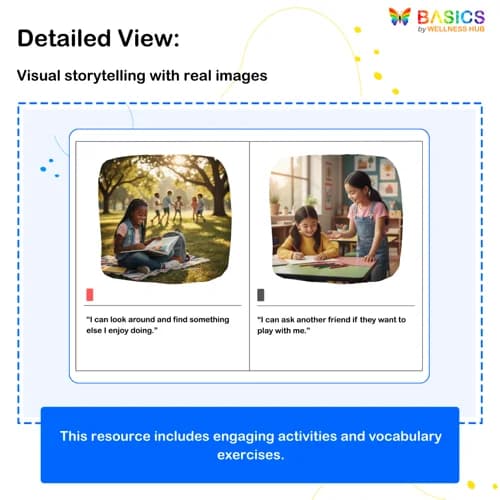
Navigating feelings of exclusion can be challenging for children, and understanding how to manage these emotions is crucial for their social and emotional development. The "What to Do If I Feel Left Out" Social Story PDF is designed to help children recognize and cope with feelings of being left out through relatable scenarios and practical strategies. Using real-life images and first-person narratives, this resource fosters empathy, emotional intelligence, and problem-solving skills. Perfect for use in classrooms, therapy sessions, or at home, this social story provides children with the tools they need to express themselves and build positive relationships.
Product Details
- Format: Printable PDF
- Total Pages: 11
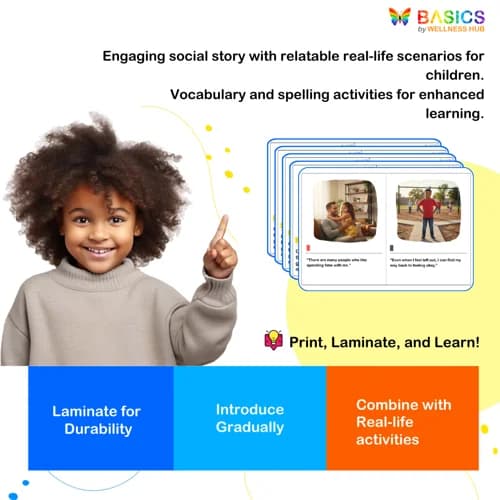
- Social Story: 8 pages, divided into 16 segments, each featuring a real image and a supportive sentence
- Vocabulary and Spelling: Page 9 includes 5 vocabulary words with two definition options each and 5 spelling words with two spelling options each, encouraging language development
- Comprehension: Page 10 features comprehension and open-ended questions to reinforce understanding and encourage discussion
- Role-Play Activities: Page 11 includes role-play scenarios to practice social skills and apply strategies from the story
- Designed For: Children who may experience feelings of exclusion, suitable for use in speech therapy, social skills training, and emotional learning environments
Educational Benefits
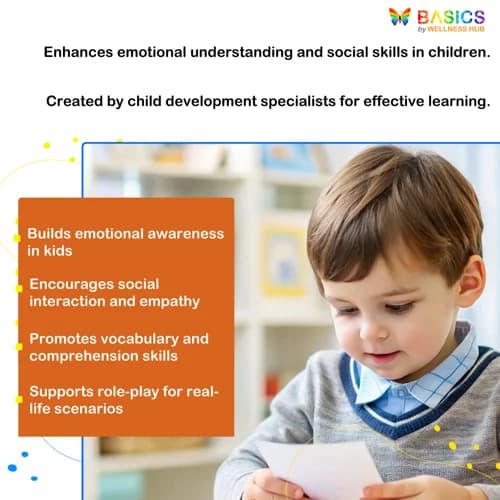
1. Emotional Intelligence Development
- Helps children identify and articulate their feelings of exclusion.
- Encourages self-awareness and empathy by exploring different perspectives.
2. Problem-Solving and Coping Strategies
- Provides practical steps for children to manage feelings of being left out.
- Teaches children how to seek inclusion and build friendships proactively.
3. Language and Literacy Skills
- Enhances vocabulary and spelling through interactive exercises.
- Improves comprehension and critical thinking with open-ended questions.
4. Social Skills Enhancement
- Reinforces positive social interactions and communication skills.
- Encourages children to practice role-playing scenarios to build confidence in social settings.
5. Support for Diverse Learners
- Uses real images and first-person narratives to aid understanding, especially for visual learners and children with special needs.
- Provides a structured approach to learning social-emotional skills in a supportive environment.
Instructions for Use
Step 1: Reading the Social Story
- Read through the 8-page social story with the child, discussing each segment.
- Encourage the child to relate to the scenarios and express their feelings.
- Ask questions like, "Have you ever felt left out? What did you do?"
Step 2: Vocabulary and Spelling Activities
- Use page 9 to reinforce language skills by selecting the correct definitions and spellings.
- Discuss each vocabulary word's meaning and usage in the context of the story.
- Encourage the child to use new vocabulary in sentences.
Step 3: Comprehension and Discussion
- On page 10, work through the comprehension questions together.
- Encourage open-ended discussions to deepen understanding and personal connection.
- Prompt the child to think about how they might handle similar situations.
Step 4: Role-Play Activities
- Use page 11 to engage in role-play scenarios that reflect the social story.
- Encourage the child to practice different responses and strategies for inclusion.
- Provide feedback and support to build confidence and social skills.
Step 5: Reinforcement and Application
- Revisit the social story regularly to reinforce learning and understanding.
- Encourage the child to apply strategies from the story in real-life situations.
- Provide positive reinforcement when the child successfully uses coping strategies and social skills.
Activities Using the Resource
1. Picture and Sentence Matching
Objective: Enhance comprehension and personal connection to the story.
How to Play:
- Print the segments separately, with pictures and sentences on different cards.
- Ask the child to match each picture with its corresponding sentence.
- Discuss how each scenario might feel and relate it to personal experiences.
Skill Development:
- Visual literacy
- Emotional connection
- Contextual understanding
2. Vocabulary and Spelling Quiz
Objective: Reinforce language skills through interactive learning.
How to Play:
- Use page 9 to quiz the child on vocabulary meanings and correct spellings.
- Create a simple game where the child earns points for each correct answer.
- Encourage the use of new words in sentences related to the story.
Skill Development:
- Vocabulary enhancement
- Spelling accuracy
- Sentence construction
3. Comprehension Role-Play
Objective: Deepen understanding through active participation.
How to Play:
- Read a comprehension question from page 10 and discuss possible answers.
- Role-play the scenario with the child, exploring different outcomes.
- Encourage the child to express how they would feel and react.
Skill Development:
- Critical thinking
- Empathy building
- Expressive language
4. Scenario-Based Role-Playing
Objective: Practice social skills and strategies for inclusion.
How to Play:
- Use scenarios from page 11 to role-play with the child.
- Act out different responses to feeling left out, focusing on positive strategies.
- Provide supportive feedback and encourage trying new approaches.
Skill Development:
- Social interaction
- Problem-solving
- Confidence in social settings
5. Personal Reflection Journal
Objective: Encourage self-reflection and application of strategies.
How to Play:
- After reading the story, have the child write or draw about a time they felt left out.
- Discuss how they handled it and what strategies from the story they could use.
- Review entries regularly to track progress and reinforce learning.
Skill Development:
- Self-awareness
- Reflective thinking
- Emotional expression
6. Real-Life Application
Objective: Apply learned strategies to everyday situations.
How to Play:
- Encourage the child to identify real-life situations where they can use the strategies.
- Set small goals, like inviting a peer to play or joining a group activity.
- Celebrate successes and discuss any challenges faced.
Skill Development:
- Practical application
- Social confidence
- Adaptive coping skills
Frequently Asked Questions
Q1: How can I use the "What to Do If I Feel Left Out" social story effectively with my child?
A1: Begin by reading the social story together, discussing each segment. Encourage your child to relate to the scenarios and express their feelings. Use the vocabulary and spelling activities to reinforce language skills, and engage in role-play to practice social strategies.
Q2: Can this resource be used in a classroom setting?
A2: Yes, it is ideal for classroom use. Teachers can incorporate it into social-emotional learning lessons, group discussions, and role-playing activities to help students develop empathy and problem-solving skills.
Q3: Is this resource suitable for children with special needs?
A3: Absolutely. The use of real images and first-person narratives makes it accessible for visual learners and children with special needs, supporting their understanding of social-emotional concepts in a structured manner.
Q4: How can I reinforce the concepts from the social story at home?
A4: Encourage your child to apply the strategies from the story in real-life situations. Set small goals for social interactions, celebrate successes, and discuss any challenges to reinforce learning and build confidence.
Q5: What is Wellness Hub's policy on resource licensing and usage?
A5: Resources from Wellness Hub are intended for personal or educational use only. Redistribution or commercial use is not permitted. This ensures the integrity and quality of our materials.
Q6: How can I access support if I have questions about using the resource?
A6: Wellness Hub offers support through our website. You can contact our customer service team for assistance with any questions or issues related to our resources or services.
Q7: What is Wellness Hub's refund policy for digital resources?
A7: Due to the nature of digital products, Wellness Hub typically does not offer refunds on digital resources. However, if you encounter any issues, please reach out to our support team for assistance.
Q8: How does Wellness Hub ensure the privacy of its users?
A8: Wellness Hub is committed to maintaining user privacy and confidentiality. We use secure platforms for all digital interactions and adhere to strict privacy policies to protect personal information.
Q9: Can I integrate this social story with other therapy services offered by Wellness Hub?
A9: Yes, the social story can complement other therapy services such as speech and language therapy or behavioral therapy. Discuss with your therapist how to integrate it into your child's therapy plan.
Q10: How do I get started with Wellness Hub's therapy services?
A10: Begin with a free consultation to assess your child's needs. From there, our team will develop a personalized therapy plan, including sessions and resources like the social story, to support your child's development.
Usage Rights and Restrictions
Allowed Usage:
- Personal use by parents, teachers, and therapists.
- Printable for classroom, home, or therapy settings.
- Can be used in group or one-on-one learning sessions.
Not Allowed:
- Reselling, redistributing, or modifying the resource for commercial use.
- Sharing publicly (e.g., on blogs, social media, or websites) without permission.
- Uploading the file to public sharing platforms.
If you need a bulk license for schools or therapy centers, please contact us.
Conclusion
The "What to Do If I Feel Left Out" Social Story PDF is a comprehensive resource designed to empower children with the skills to navigate feelings of exclusion. Through its engaging format of real-life images and first-person narratives, it effectively fosters emotional intelligence, problem-solving, and social skills. This resource is particularly beneficial for children who may experience feelings of being left out, making it ideal for use in classrooms, therapy sessions, or at home. By encouraging children to express themselves and apply learned strategies in real-life situations, this social story supports their journey toward building positive relationships and gaining confidence in social settings.