




Social Story: When Someone Visits and My Routine Changes
₹80
₹160
50% off
0 (0 ratings)
Grade Levels
Pre-K - Grade 3 (Ages 4-9)
Content Overview
Format: Printable PDF, Total Pages: 11, Features: 16 segments with real images, vocabulary, spelling, comprehension, role-play activities
Categories
Share


About the Product
Introduction
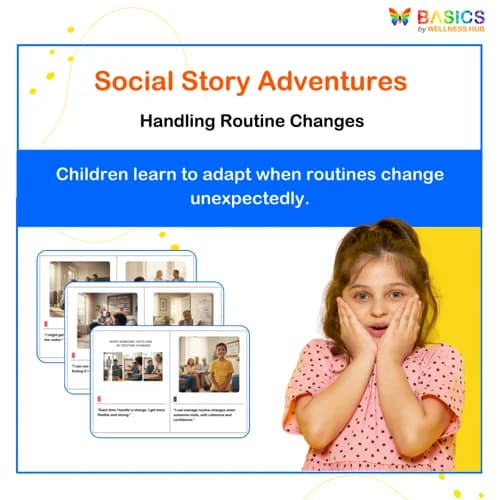
Navigating changes in routine can be challenging for children, especially when someone visits and disrupts their usual schedule. The "When Someone Visits and My Routine Changes" social story PDF is designed to support children in understanding and adapting to these changes through relatable scenarios and engaging activities. This resource uses real-life images and first-person narratives to help children connect with the story and develop coping strategies. Ideal for use in speech therapy, special education, and at home, this social story fosters emotional resilience and adaptability in young learners.
Product Details
- Format: Printable PDF
- Total Pages: 11
- Social Story: 8 pages, divided into 16 segments, each with a real picture and a sentence in first-person narrative
- Page 9: Vocabulary and Spelling
- Vocabulary: 5 words from the story with two meaning options; select the correct meaning
- Spelling: 5 words from the story with two spelling options; select the correct spelling
- Page 10: Comprehension and Open-Ended Questions
- Page 11: Role-Play Activities
- Purpose: Helps children understand routine changes, improve vocabulary, spelling, and comprehension skills, and practice social interactions through role-play
- Suitable For: Children in early education, special education, and those receiving speech therapy support
Additional Activities:
Educational Benefits
1. Enhances Adaptability and Coping Skills
- Helps children understand and manage changes in their routine when someone visits.
- Encourages flexibility by illustrating how to handle unexpected situations calmly.
2. Develops Social and Emotional Skills
- Promotes empathy and understanding of others' perspectives during routine changes.
- Encourages children to express their feelings and communicate effectively.
3. Improves Language and Literacy Skills
- Expands vocabulary through targeted words from the story, enhancing language comprehension.
- Strengthens spelling skills by identifying correct spellings of key words.
4. Supports Comprehension and Critical Thinking
- Enhances reading comprehension through open-ended questions that encourage thoughtful responses.
- Develops critical thinking by asking children to consider different scenarios and outcomes.
5. Encourages Interactive Learning and Role-Playing
- Provides role-play activities that allow children to practice social interactions and responses in a safe environment.
- Supports children with special needs by using real images and first-person narratives for better connection and understanding.
Instructions for Use
Step 1: Reading the Social Story
- Begin by reading the social story with the child, focusing on each segment with its accompanying real image.
- Discuss each scenario, asking the child how they might feel and react in similar situations.
- Encourage the child to relate the story to their own experiences with routine changes.
Step 2: Vocabulary and Spelling Activities
- Use the vocabulary section on page 9 to introduce new words from the story.
- Ask the child to choose the correct meaning from the two options provided for each word.
- Practice spelling by selecting the correct spelling from the options given, reinforcing language skills.
Step 3: Comprehension and Open-Ended Questions
- Engage the child with the comprehension questions on page 10 to assess understanding of the story.
- Encourage open-ended discussions by asking questions that prompt the child to think about their own experiences and feelings.
Step 4: Role-Play Activities
- Use the role-play activities on page 11 to practice social interactions and responses.
- Encourage the child to act out different scenarios from the story, using appropriate language and behavior.
- Provide feedback and guidance to help the child improve their social skills and adaptability.
Step 5: Reinforcement and Review
- Revisit the social story and activities regularly to reinforce learning and understanding.
- Encourage the child to apply the strategies learned in real-life situations when their routine changes.
- Provide positive reinforcement and praise for successful application of skills and strategies.
Activities Using the Resource
1. Picture and Sentence Matching
Objective: Enhance comprehension and personal connection to the story.
How to Play:
- Print each segment's picture and sentence separately.
- Ask the child to match the correct sentence to its picture.
- Discuss the scenario depicted and relate it to the child's experiences.
Skill Development:
- Image-text association
- Personal reflection
- Comprehension skills
2. Vocabulary Exploration
Objective: Deepen understanding of key words from the story.
How to Play:
- Use the vocabulary section on page 9.
- Discuss each word and its meanings, choosing the correct one.
- Create simple sentences using the new vocabulary.
Skill Development:
- Word comprehension
- Sentence creation
- Language expansion
3. Spelling Bee Game
Objective: Reinforce correct spelling of key words.
How to Play:
- Use the spelling section on page 9.
- Conduct a mini spelling bee, asking the child to spell each word.
- Offer hints or use the words in a sentence if needed.
Skill Development:
- Spelling accuracy
- Listening skills
- Confidence in language
4. Comprehension Dialogue
Objective: Foster critical thinking and personal expression.
How to Play:
- Use comprehension questions on page 10.
- Discuss each question, encouraging detailed responses.
- Relate questions to the child's own routine changes.
Skill Development:
- Critical thinking
- Expressive language
- Empathy and understanding
5. Role-Play Scenarios
Objective: Practice social skills and adaptability.
How to Play:
- Select a role-play activity from page 11.
- Act out scenarios where a routine change occurs.
- Encourage the child to use appropriate language and problem-solving strategies.
Skill Development:
- Social interaction
- Adaptability
- Emotional regulation
6. Routine Change Journal
Objective: Apply learning to real-life changes.
How to Play:
- Encourage the child to keep a journal of routine changes.
- Write or draw how they felt and what strategies they used.
- Review entries together to celebrate adaptability and growth.
Skill Development:
- Self-reflection
- Writing/drawing expression
- Real-world application
Frequently Asked Questions
Q1: How can I access the "When Someone Visits and My Routine Changes" social story PDF?
A1: You can access the PDF by visiting the Wellness Hub's online platform. Once purchased, the resource is available for immediate download, allowing you to print and use it at your convenience.
Q2: Are there any licensing restrictions for using the PDF?
A2: Yes, the PDF is intended for personal or educational use only. Redistribution, commercial use, or sharing outside of your immediate educational setting is not permitted. This ensures the resource remains exclusive to those who have purchased it.
Q3: What should I do if I encounter issues downloading the PDF?
A3: If you experience any technical difficulties, please contact Wellness Hub's customer support. They offer assistance via email or live chat to resolve any issues promptly and ensure you can access your resources without delay.
Q4: What is the refund policy for digital resources like this PDF?
A4: Due to the nature of digital products, refunds are typically not available once the resource has been downloaded. However, if there are any issues with the file itself, Wellness Hub will work with you to provide a satisfactory solution.
Q5: How does this social story support children in adapting to routine changes?
A5: The social story uses real-life images and first-person narratives to help children understand and relate to changes in their routine. By illustrating relatable scenarios, it encourages children to develop coping strategies and emotional resilience.
Q6: Can this resource be used in speech therapy sessions?
A6: Yes, it is ideal for speech therapy as it enhances language skills, vocabulary, and comprehension through interactive activities. Therapists can integrate it into sessions to support children in understanding routine changes and expressing their feelings.
Q7: How can I use the vocabulary and spelling sections effectively?
A7: Use the vocabulary section to introduce new words, discussing their meanings and using them in sentences. The spelling section reinforces correct spelling through practice and games, enhancing language comprehension and literacy skills.
Q8: What role-play activities are included, and how do they benefit children?
A8: The role-play activities on page 11 allow children to practice social interactions and responses in a safe environment. By acting out scenarios, children improve their social skills, adaptability, and emotional regulation.
Q9: How often should I revisit the social story and activities with my child?
A9: Regular revisits are encouraged to reinforce learning and understanding. Consistent practice helps children apply strategies in real-life situations, improving their adaptability to routine changes over time.
Q10: Can this resource be used at home as well as in educational settings?
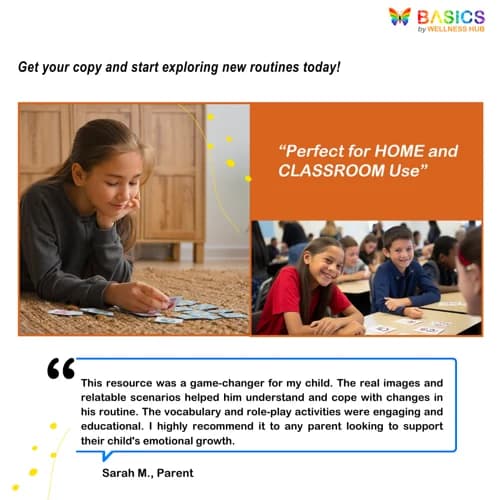
A10: Absolutely. The resource is designed for flexible use, making it suitable for both home and educational environments. Parents and educators can work together to support children in developing the skills needed to handle routine changes effectively.
Usage Rights and Restrictions
Allowed Usage:
- Personal use by parents, teachers, and therapists.
- Printable for classroom, home, or therapy settings.
- Can be used in group or one-on-one learning sessions.
Not Allowed:
- Reselling, redistributing, or modifying the resource for commercial use.
- Sharing publicly (e.g., on blogs, social media, or websites) without permission.
- Uploading the file to public sharing platforms.
If you need a bulk license for schools or therapy centers, please contact us.
Conclusion
The "When Someone Visits and My Routine Changes" social story PDF is a comprehensive resource designed to help children navigate the challenges of routine changes with confidence and ease. By using real-life images and first-person narratives, this resource fosters a deep connection and understanding, making it ideal for children in early education, special education, and speech therapy settings. With engaging activities that enhance language, social, and emotional skills, this PDF empowers children to develop adaptability and resilience. Whether used at home or in educational environments, it provides a supportive framework for children to learn and grow, ensuring they are well-equipped to handle changes in their daily routines.