


Social Story: When Someone Makes Fun of Me – Coping Strategies for Kids
₹80
₹160
50% off
0 (0 ratings)
Grade Levels
Grade 1 - Grade 3 (Ages 6-9)
Content Overview
Format: Printable PDF, Total Pages: 11, Features: 16-segment social story, vocabulary, spelling, comprehension, role-play activities
Categories
Share


About the Product
Introduction
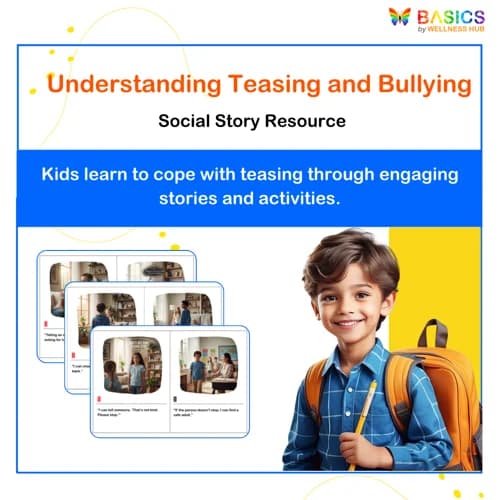
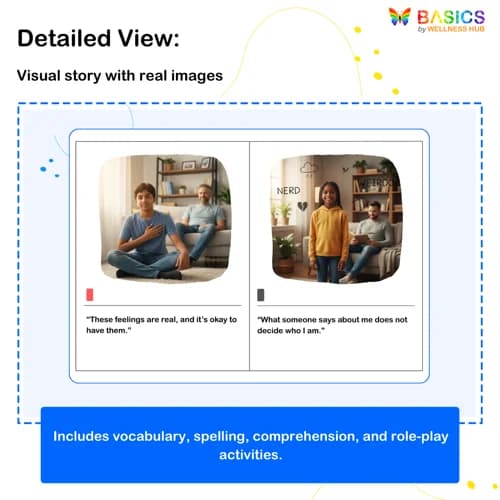
Navigating social situations can be challenging for children, especially when dealing with teasing or being made fun of. The "When Someone Makes Fun of Me" Social Story PDF is a supportive resource designed to help children understand and manage these difficult experiences. Through relatable scenarios and real-life images, this social story empowers children to recognize their feelings, respond appropriately, and build resilience. Ideal for use in therapy sessions, classrooms, or at home, this resource aids in developing social-emotional skills and enhancing self-esteem.
Product Details
- Format: Printable PDF
- Total Pages: 11
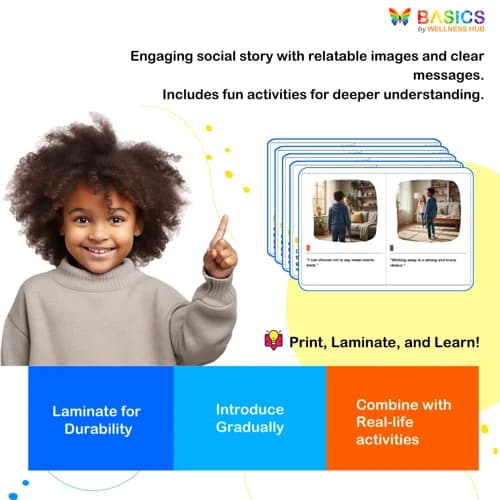
- Social Story: 8 pages, featuring 16 segments with real-life images and first-person narrative sentences
- Vocabulary and Spelling (Page 9): Includes 5 vocabulary words with multiple-choice definitions and 5 spelling exercises with correct and incorrect options
- Comprehension and Open-Ended Questions (Page 10): Designed to deepen understanding and encourage personal reflection
- Role-Play Activities (Page 11): Practical exercises to practice responses and build confidence in handling teasing situations
- Target Audience: Suitable for children who benefit from social-emotional learning, including those in special education, speech therapy, or general early childhood education settings.
Additional Learning Activities:
Educational Benefits
1. Enhances Emotional Intelligence
- Helps children identify and articulate their feelings when faced with teasing.
- Encourages empathy by helping them understand the emotions of others involved.
2. Builds Resilience and Coping Skills
- Teaches children how to respond calmly and assertively to teasing.
- Provides strategies for managing emotions and maintaining self-esteem.
3. Supports Language and Literacy Development
- Expands vocabulary through targeted exercises, enhancing language comprehension.
- Improves spelling skills with engaging activities that reinforce correct word usage.
4. Promotes Critical Thinking and Reflection
- Encourages children to think critically about social interactions and their responses.
- Facilitates personal reflection through comprehension and open-ended questions.
5. Fosters Social-Emotional Learning (SEL)
- Strengthens social skills by providing practical scenarios for role-playing.
- Helps children practice appropriate responses in a safe and supportive environment.
Instructions for Use
Step 1: : Read the Social Story Together
- Sit with the child and read through the social story, discussing each segment and image.
- Encourage the child to express their thoughts and feelings about the scenarios.
- Ask questions like:
- "How would you feel if someone made fun of you?"
- "What could you do in that situation?"
Step 2: : Vocabulary and Spelling Activities
- Review the vocabulary words and their meanings on Page 9.
- Encourage the child to choose the correct definition for each word.
- Practice spelling by selecting the correct spelling option for each word.
Step 3: : Comprehension and Open-Ended Questions
- Use the questions on Page 10 to check understanding and encourage deeper reflection.
- Discuss the child's personal experiences with teasing and how they handled it.
- Ask open-ended questions to promote discussion (e.g., "What would you do differently next time?").
Step 4: : Role-Play Activities
- Engage in role-play exercises from Page 11 to practice responses to teasing.
- Use real-life scenarios to make the practice more relatable and effective.
- Encourage the child to use assertive language and positive body language.
Step 5: : Reinforce Learning in Real-Life Situations
- Encourage the child to apply the strategies learned in everyday interactions.
- Provide positive reinforcement when they handle teasing situations effectively.
- Regularly revisit the social story and activities to reinforce skills and build confidence.
Activities Using the Resource
1. Picture and Sentence Matching
Objective: Strengthen comprehension by connecting images to narrative.
How to Play:
- Review each segment of the social story, focusing on the image and corresponding sentence.
- Ask the child to describe what they see in the picture and relate it to the sentence.
- Encourage them to express how the scenario might make them feel.
Skill Development:
- Visual literacy
- Emotional articulation
- Sentence comprehension
2. Vocabulary and Spelling Game
Objective: Enhance language skills through interactive learning.
How to Play:
- Use Page 9 to explore vocabulary words from the story.
- Create a matching game with word cards and their definitions.
- For spelling, have the child choose the correct spelling from two options.
Skill Development:
- Vocabulary expansion
- Spelling accuracy
- Word recognition
3. Comprehension Discussion
Objective: Deepen understanding and personal connection to the story.
How to Play:
- Discuss the comprehension and open-ended questions on Page 10.
- Encourage the child to relate the story to their own experiences.
- Ask questions like, "What did you learn from this story?" or "How would you handle a similar situation?"
Skill Development:
- Critical thinking
- Personal reflection
- Communication skills
4. Role-Play Scenarios
Objective: Practice real-life application of social skills.
How to Play:
- Use the role-play activities on Page 11 to simulate teasing situations.
- Act out scenarios, alternating roles between the teaser and the person being teased.
- Focus on using assertive language and positive body language.
Skill Development:
- Social interaction
- Assertiveness training
- Empathy building
5. Emotion Identification and Coping Strategies
Objective: Recognize emotions and develop coping mechanisms.
How to Play:
- After reading the story, discuss different emotions experienced by characters.
- Create a chart with emotions and corresponding coping strategies (e.g., deep breathing, seeking help).
- Encourage the child to choose a strategy they would use in real life.
Skill Development:
- Emotional intelligence
- Coping skills
- Self-regulation
6. Real-Life Application and Reflection
Objective: Reinforce skills through everyday practice.
How to Play:
- Encourage the child to apply learned strategies in real-life teasing situations.
- After an incident, reflect on how they handled it and what they could do differently.
- Provide positive reinforcement for effective handling of situations.
Skill Development:
- Practical application
- Self-assessment
- Confidence building
Frequently Asked Questions
Q1: How can the "When Someone Makes Fun of Me" social story be used effectively in therapy sessions?
A1: This social story can be integrated into therapy by reading it with the child and discussing each segment. Therapists can use the real-life images to help children connect emotionally and cognitively with the scenarios, facilitating discussions about feelings and appropriate responses to teasing.
Q2: Can this resource be adapted for use at home?
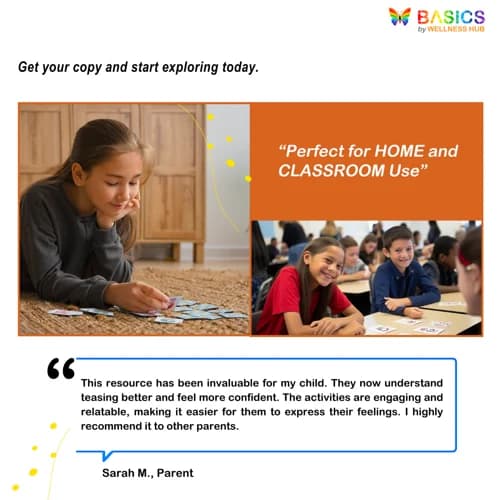
A2: Yes, parents can use this resource at home by reading the story with their child and engaging in the vocabulary, spelling, and role-play activities. This helps reinforce social-emotional skills in a familiar environment, making it easier for children to apply what they learn in real-life situations.
Q3: What is the best way to use the vocabulary and spelling activities?
A3: Review the vocabulary and spelling exercises on Page 9 together. Encourage your child to select the correct definitions and spellings, reinforcing language comprehension and spelling skills. Turn it into a game by matching words with definitions or practicing spelling in a fun, interactive way.
Q4: How do role-play activities enhance learning?
A4: Role-play activities on Page 11 allow children to practice handling teasing situations in a controlled, supportive environment. By acting out scenarios, children can develop assertive communication skills and empathy, which are crucial for real-life interactions.
Q5: What is Wellness Hub's approach to therapy and support?
A5: Wellness Hub combines professional expertise with digital tools to make therapy interactive and effective. They offer services like speech therapy, behavioral therapy, and mental health counseling, ensuring personalized care through video sessions, games, and structured resources.
Q6: How does Wellness Hub ensure the quality and accessibility of its services?
A6: Wellness Hub focuses on caregiver involvement, therapist qualifications, and privacy to deliver high-quality therapy. They offer affordable services across India and beyond, starting with a free consultation and regular progress tracking to ensure effective outcomes.
Q7: What is the delivery format for resources like the social story PDF?
A7: Resources are provided in a printable PDF format, allowing easy access and use in various settings such as homes, classrooms, and therapy sessions. This format ensures that the materials are convenient and versatile for different learning environments.
Q8: What is Wellness Hub's policy on refunds or returns for digital products?
A8: As digital products are instantly accessible upon purchase, Wellness Hub typically does not offer refunds or returns. However, they are committed to customer satisfaction and encourage users to reach out with any issues or concerns for support and resolution.
Q9: Can parents and caregivers access additional support or resources from Wellness Hub?
A9: Yes, Wellness Hub offers a vast library of home therapy resources, including flashcards, worksheets, and visual schedules. These tools are designed to support ongoing progress at home, empowering parents and caregivers to actively participate in their child's development.
Q10: How can I contact Wellness Hub for further assistance or inquiries?
A10: For support or inquiries, you can contact Wellness Hub through their website's contact form or customer service email. They are dedicated to providing prompt and helpful responses to ensure a positive experience for all users.
Usage Rights and Restrictions
Allowed Usage:
- Personal use by parents, teachers, and therapists.
- Printable for classroom, home, or therapy settings.
- Can be used in group or one-on-one learning sessions.
Not Allowed:
- Reselling, redistributing, or modifying the resource for commercial use.
- Sharing publicly (e.g., on blogs, social media, or websites) without permission.
- Uploading the file to public sharing platforms.
If you need a bulk license for schools or therapy centers, please contact us.
Conclusion
The "When Someone Makes Fun of Me" Social Story PDF is a comprehensive resource designed to support children in navigating the challenging experience of being teased. By using real-life images and first-person narratives, this social story helps children connect emotionally and cognitively with the scenarios, fostering empathy and understanding. With additional activities focused on vocabulary, spelling, comprehension, and role-playing, this resource not only enhances language and literacy skills but also builds resilience and social-emotional competence. Ideal for use in therapy sessions, classrooms, or at home, it is particularly beneficial for children in special education or those needing support in social-emotional learning. Empower your child with the skills to handle teasing confidently and positively.