



Dealing with Negative Thoughts – Social Story for Kids
₹80
₹160
50% off
0 (0 ratings)
Grade Levels
Grade 1 - Grade 3 (Ages 6-9)
Content Overview
Format: Printable PDF, Total Pages: 11, Features: 16 segments with real images, vocabulary, spelling, comprehension, role-play activities
Categories
Share


About the Product
Introduction
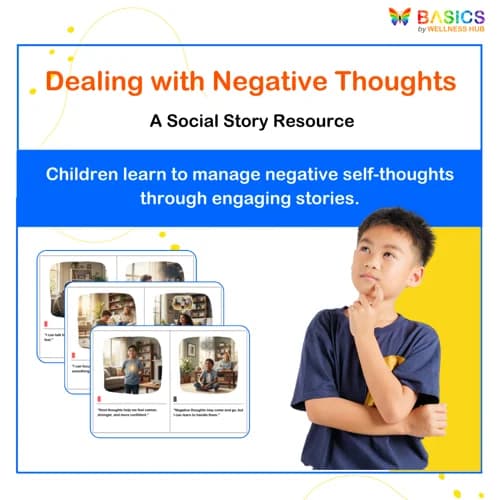
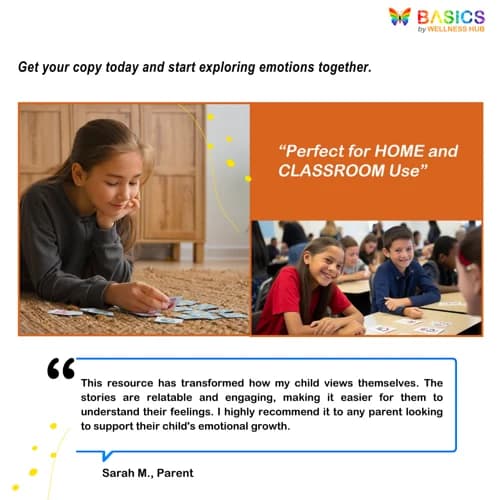
Helping children navigate their emotions and develop a positive self-image is crucial for their emotional well-being and confidence. The "Dealing with Negative Thoughts About Myself" social story PDF is a supportive resource designed to guide children through understanding and managing negative thoughts. Using real-life images and relatable scenarios, this social story empowers children to recognize and reframe their thoughts in a constructive way. Ideal for use in therapy settings, classrooms, or at home, this resource fosters emotional resilience and self-awareness in a gentle, engaging manner.
Product Details
- Format: Printable PDF
- Total Pages: 11
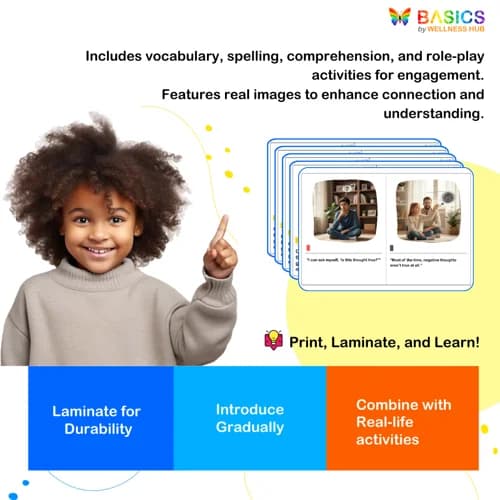
- Social Story: 8 pages, divided into 16 segments with real-life images and first-person narratives
- Vocabulary and Spelling (Page 9): Features 5 key words from the story with multiple-choice definitions and spelling options to enhance language skills.
- Comprehension and Open-Ended Questions (Page 10): Encourages critical thinking and personal reflection based on the story content.
- Role-Play Activities (Page 11): Provides practical scenarios for children to practice positive thinking and self-expression.
- Designed For: Emotional development, speech therapy, special education, and social-emotional learning.
- Suitable Age Range: Elementary school children (Ages 6-10)
Additional Activities:
Educational Benefits
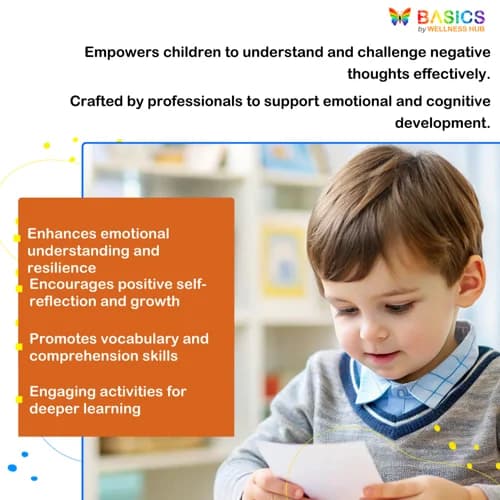
1. Promotes Emotional Awareness and Self-Reflection
- Helps children identify and understand their negative thoughts.
- Encourages self-reflection and the ability to articulate feelings.
2. Builds Positive Self-Image and Confidence
- Guides children in reframing negative thoughts into positive affirmations.
- Supports the development of a healthy self-esteem and self-worth.
3. Enhances Language and Vocabulary Skills
- Incorporates vocabulary and spelling exercises to improve language proficiency.
- Encourages children to express their thoughts and feelings clearly.
4. Develops Critical Thinking and Problem-Solving
- Uses comprehension questions to foster critical thinking and personal insight.
- Encourages children to think about solutions to manage negative thoughts.
5. Supports Social-Emotional Learning (SEL)
- Teaches children coping strategies to handle emotions constructively.
- Provides tools for emotional resilience and self-regulation.
6. Engages Visual and Kinesthetic Learners
- Utilizes real-life images to enhance understanding and engagement.
- Incorporates role-play activities to practice real-world application.
Instructions for Use
Step 1: Begin with the Social Story
- Read the social story together with the child, focusing on each of the 16 segments.
- Discuss the real-life images and relate them to the child's personal experiences.
- Encourage the child to share their thoughts and feelings as you progress through the story.
Step 2: Vocabulary and Spelling Activities (Page 9)
- Review the vocabulary words from the story with the child.
- Ask them to choose the correct meaning for each word from the given options.
- Practice spelling by selecting the correct spelling from the two options provided.
Step 3: Comprehension and Open-Ended Questions (Page 10)
- Discuss the comprehension questions with the child to deepen their understanding of the story.
- Encourage open-ended responses to promote personal reflection and critical thinking.
- Use questions to guide discussions about managing negative thoughts and emotions.
Step 4: Role-Play Activities (Page 11)
- Engage the child in role-play scenarios based on the story.
- Encourage them to practice positive self-talk and reframing negative thoughts.
- Use props or real-life situations to make the role-play more relatable and effective.
Step 5: Reinforcement and Real-Life Application
- Encourage the child to apply the strategies learned in the story to real-life situations.
- Provide positive reinforcement when the child successfully manages negative thoughts.
- Revisit the story and activities regularly to reinforce learning and build emotional resilience.
Activities Using the Resource
1. Segment-by-Segment Discussion
Objective: Foster emotional connection and personal insight.
How to Play:
- Read each segment aloud and discuss the image and sentence.
- Ask the child how they relate to the scenario and what they might feel in a similar situation.
- Encourage them to share any personal experiences that resonate with the segment.
Skill Development:
- Emotional articulation
- Empathy building
- Personal reflection
2. Vocabulary Match-Up
Objective: Enhance vocabulary comprehension and usage.
How to Play:
- Present the vocabulary words from page 9.
- Have the child match each word to its correct meaning using the options provided.
- Use the words in sentences related to the story to reinforce understanding.
Skill Development:
- Word recognition
- Contextual language use
- Cognitive association
3. Spelling Bee Challenge
Objective: Improve spelling accuracy and confidence.
How to Play:
- Show each word from the spelling section on page 9.
- Ask the child to identify the correct spelling from the two options.
- Practice writing the correctly spelled words in sentences or on flashcards.
Skill Development:
- Spelling proficiency
- Attention to detail
- Memory retention
4. Comprehension Question Time
Objective: Develop critical thinking and deeper understanding.
How to Play:
- Read the comprehension questions on page 10.
- Discuss each question, encouraging the child to think critically about the story's themes.
- Allow open-ended answers to promote thoughtful responses and personal connections.
Skill Development:
- Analytical thinking
- Verbal expression
- Reflective reasoning
5. Positive Thought Role-Play
Objective: Practice reframing negative thoughts into positive affirmations.
How to Play:
- Use scenarios from the story to role-play situations where negative thoughts might arise.
- Guide the child in expressing positive self-talk and constructive responses.
- Incorporate props or real-life examples to make the role-play engaging and relatable.
Skill Development:
- Positive thinking
- Self-regulation
- Social interaction
6. Emotional Journal Creation
Objective: Encourage ongoing reflection and emotional growth.
How to Play:
- Create a journal where the child can write or draw about their feelings and thoughts.
- Encourage them to document times they successfully reframed negative thoughts.
- Review the journal periodically to celebrate progress and reinforce positive habits.
Skill Development:
- Self-awareness
- Emotional literacy
- Creative expression
Frequently Asked Questions
Q1: How can the "Dealing with Negative Thoughts About Myself" social story be used effectively in therapy sessions?
A1: Therapists can use the social story to guide discussions about emotions and self-image. Reading each segment aloud and relating it to the child's experiences helps build emotional awareness. Role-play activities from the story can be integrated into sessions to practice positive self-talk and coping strategies.
Q2: Can this resource be used at home by parents?
A2: Absolutely. Parents can read the story with their child, discuss the images, and encourage sharing of personal thoughts. The vocabulary and spelling activities are great for language development, while role-play scenarios can be practiced in everyday situations to reinforce learning.
Q3: Is this social story suitable for classroom use?
A3: Yes, it's ideal for classroom settings. Teachers can use it during social-emotional learning (SEL) lessons to promote emotional resilience and self-awareness. Group discussions, vocabulary exercises, and role-play activities can be adapted for small groups or the whole class.
Q4: How does this resource support children with special needs?
A4: The use of real-life images and first-person narratives makes it accessible for children with autism, ADHD, or language delays. The structured format and engaging activities support diverse learning needs, helping children understand and manage their emotions effectively.
Q5: What is the delivery format for the resource?
A5: The "Dealing with Negative Thoughts About Myself" social story is available as a printable PDF. Once purchased, it can be downloaded and printed for immediate use in various settings, such as therapy sessions, classrooms, or at home.
Q6: Are there any licensing restrictions for this resource?
A6: Yes, the resource is intended for personal or single-classroom use only. Redistribution or commercial use is not permitted. For multiple users or larger institutions, please contact Wellness Hub for licensing options.
Q7: What is Wellness Hub's policy on refunds for digital resources?
A7: Due to the nature of digital products, Wellness Hub typically does not offer refunds once a resource has been downloaded. However, if you encounter any issues with your purchase, please contact our support team for assistance.
Q8: How can I get support if I have questions about using the resource?
A8: Wellness Hub provides customer support via email and phone. Our team is available to assist with any questions or technical issues you might have. We also offer guidance on how to integrate our resources into your therapy or educational practice effectively.
Q9: What other resources does Wellness Hub offer for emotional development?
A9: Wellness Hub offers a wide range of resources, including flashcards, worksheets, and visual schedules, designed to support emotional and social development. These resources complement our therapy services and are available for purchase on our platform.
Q10: How does Wellness Hub ensure the quality of its therapy services?
A10: Wellness Hub prioritizes therapist qualifications, privacy, and caregiver involvement. Our services are led by experienced professionals and include comprehensive assessments, personalized therapy plans, and regular progress tracking to ensure effective and affordable care.
Usage Rights and Restrictions
Allowed Usage:
- Personal use by parents, teachers, and therapists.
- Printable for classroom, home, or therapy settings.
- Can be used in group or one-on-one learning sessions.
Not Allowed:
- Reselling, redistributing, or modifying the resource for commercial use.
- Sharing publicly (e.g., on blogs, social media, or websites) without permission.
- Uploading the file to public sharing platforms.
If you need a bulk license for schools or therapy centers, please contact us.
Conclusion
The "Dealing with Negative Thoughts About Myself" social story PDF is a versatile and impactful resource designed to support children's emotional development and self-awareness. With its engaging real-life images and first-person narratives, this resource effectively helps children understand and manage their emotions, fostering a positive self-image and emotional resilience. Ideal for use in therapy settings, classrooms, or at home, it offers a comprehensive approach to teaching children how to reframe negative thoughts and build confidence. This resource is particularly beneficial for educators, therapists, and parents seeking to enhance children's social-emotional learning and language skills.