


Recognizing and Stopping Negative Self-Talk – Social Story for Kids
₹80
₹160
50% off
0 (0 ratings)
Grade Levels
Grade 1 - Grade 3 (Ages 6-9)
Content Overview
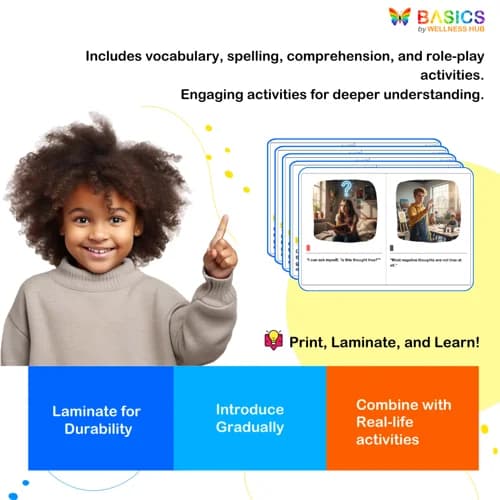
Format: Printable PDF, Total Pages: 11, Features: 16 segments with real images, vocabulary, spelling, comprehension, role-play activities
Categories
Share


About the Product
Introduction
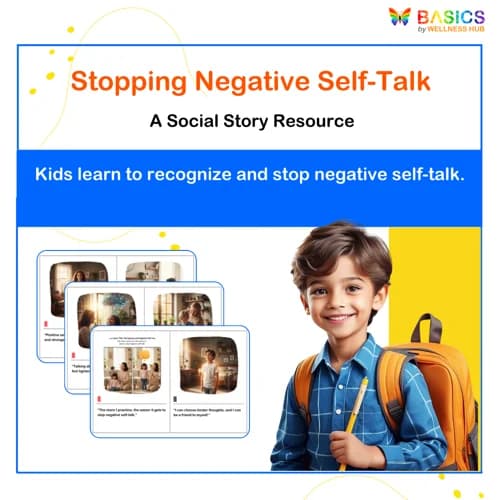
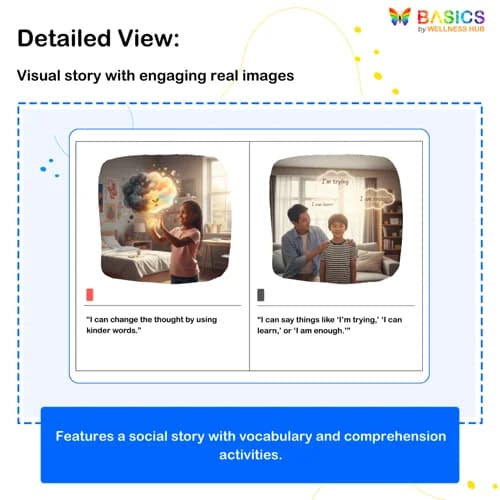
Helping children recognize and manage negative self-talk is crucial for building self-esteem and emotional resilience. This social story PDF, "Recognizing and Stopping Negative Self-Talk," is designed to guide children through understanding and addressing negative thoughts in a supportive and relatable way. Using real-life images and first-person narratives, this resource helps children connect with the material and see themselves in the story. Ideal for use in therapy sessions, classrooms, or at home, this PDF provides practical tools for fostering positive self-talk and emotional well-being.
Product Details
- Format: Printable PDF
- Total Pages: 11
- Social Story: 8 pages, divided into 16 segments, each featuring a real photo and a sentence in the first person
- Vocabulary and Spelling (Page 9): Includes 5 vocabulary words with multiple-choice meanings and 5 spelling words with correct and incorrect options
- Comprehension and Open-Ended Questions (Page 10): Designed to deepen understanding and encourage personal reflection
- Role-Play Activities (Page 11): Engaging exercises to practice applying the concepts from the social story in real-life scenarios
- Designed For: Children needing support with emotional regulation, self-esteem, and positive thinking strategies
- Usage: Suitable for speech therapy, occupational therapy, special education, and home learning environments.
Additional Activities:
Educational Benefits
1. Enhances Emotional Awareness
- Helps children identify and understand their own negative self-talk patterns.
- Encourages self-reflection and emotional regulation by recognizing how thoughts affect feelings and behaviors.
2. Builds Self-Esteem and Confidence
- Promotes positive self-talk, which is essential for boosting self-esteem and confidence.
- Teaches children to replace negative thoughts with constructive and affirming statements.
3. Develops Critical Thinking and Problem-Solving Skills
- Encourages children to analyze situations and think critically about their internal dialogue.
- Provides strategies for challenging and changing negative thoughts into positive ones.
4. Supports Language and Literacy Skills
- Improves vocabulary and spelling through targeted activities that reinforce key concepts.
- Enhances comprehension skills with open-ended questions that prompt discussion and deeper understanding.
5. Practical Application in Real-Life Scenarios
- Role-play activities allow children to practice and apply the concepts of positive self-talk in everyday situations.
- Helps children develop resilience and coping strategies for handling challenges and setbacks.
Instructions for Use
Step 1: Read the Social Story Together
- Sit with the child and read through the social story, focusing on each segment.
- Discuss the real-life images and sentences, ensuring the child understands the concept of negative self-talk.
Step 2: Vocabulary and Spelling Activities
- Use Page 9 to reinforce language skills:
- Encourage the child to choose the correct meaning for each vocabulary word.
- Practice spelling by selecting the correct spelling option for each word.
Step 3: Comprehension and Open-Ended Questions
- Engage with Page 10 to deepen understanding:
- Discuss the comprehension questions to ensure the child grasps the story's key messages.
- Use open-ended questions to encourage personal reflection and connection to the material.
Step 4: Role-Play Activities
- Implement Page 11 for practical application:
- Set up role-play scenarios based on the social story to practice stopping negative self-talk.
- Encourage the child to use positive self-talk strategies in these scenarios.
Step 5: Reinforce Learning in Daily Life
- Encourage the child to apply what they've learned in real-life situations.
- Provide positive reinforcement and praise when they use positive self-talk.
- Revisit the social story regularly to reinforce concepts and support ongoing emotional growth.
Activities Using the Resource
1. Picture and Sentence Matching
Objective: Reinforce the connection between visual cues and narrative understanding.
How to Play:
- Print and cut out the segments from the social story.
- Mix them up and ask the child to match each real-life image with its corresponding sentence.
- Discuss how each image relates to the concept of negative self-talk.
Skill Development:
- Visual literacy
- Reading comprehension
- Emotional connection
2. Vocabulary Exploration
Objective: Enhance understanding of key terms related to self-talk.
How to Play:
- Use Page 9 to explore vocabulary words.
- Have the child pick the correct meaning from the options and discuss why it fits.
- Create sentences using each word to reinforce understanding.
Skill Development:
- Vocabulary expansion
- Contextual learning
- Language expression
3. Spelling Bee Challenge
Objective: Improve spelling skills through engaging activities.
How to Play:
- Present the spelling options from Page 9.
- Conduct a mini spelling bee where the child spells out the correct option.
- Use the correctly spelled words in a sentence related to the social story.
Skill Development:
- Spelling accuracy
- Word recognition
- Confidence in language
4. Comprehension Discussion
Objective: Deepen understanding of the social story's themes.
How to Play:
- Go through the comprehension questions on Page 10.
- Encourage the child to answer and discuss each question, focusing on personal reflections.
- Relate their answers to real-life experiences to make connections.
Skill Development:
- Critical thinking
- Personal reflection
- Narrative understanding
5. Open-Ended Reflection
Objective: Foster personal connection and self-awareness.
How to Play:
- Use open-ended questions from Page 10 to prompt deeper thinking.
- Encourage the child to share personal experiences related to the story.
- Discuss how they can apply the story's lessons to their own life.
Skill Development:
- Self-awareness
- Emotional articulation
- Reflective thinking
6. Role-Play Scenarios
Objective: Practice applying positive self-talk in realistic situations.
How to Play:
- Set up role-play activities from Page 11.
- Act out scenarios where negative self-talk might occur and practice replacing it with positive self-talk.
- Provide feedback and encouragement to reinforce learning.
Skill Development:
- Practical application
- Social interaction
- Resilience building
7. Daily Affirmations
Objective: Integrate positive self-talk into daily routines.
How to Play:
- Create a list of positive affirmations inspired by the social story.
- Encourage the child to choose an affirmation each day to say aloud.
- Discuss how these affirmations make them feel and how they can use them in challenging situations.
Skill Development:
- Positive thinking
- Emotional resilience
- Routine establishment
Frequently Asked Questions
Q1: How can I access the "Recognizing and Stopping Negative Self-Talk" PDF?
A1: You can download the PDF directly from the Wellness Hub website after purchase. It is available in a printable format, allowing you to use it in various settings such as therapy sessions, classrooms, or at home.
Q2: What is the refund policy for digital resources?
A2: Due to the nature of digital products, Wellness Hub typically does not offer refunds once a PDF has been downloaded. However, if you encounter any issues with your purchase, please contact our support team for assistance.
Q3: Can I use this resource for multiple children or clients?
A3: Yes, you can use the resource with multiple children or clients within your practice or classroom. However, redistribution or sharing of the PDF outside your immediate educational or therapeutic setting is not permitted.
Q4: What support is available if I have questions about using the resource?
A4: Wellness Hub offers customer support through email and phone. Our team can assist with questions about the resource's content, usage tips, or technical issues. We aim to provide prompt and helpful responses to ensure you get the most out of our materials.
Q5: How does this resource help in therapy sessions?
A5: The social story and accompanying activities are designed to support emotional regulation and self-esteem. Therapists can use the real-life images and first-person narratives to help children identify and manage negative self-talk, fostering positive thinking strategies.
Q6: Can this PDF be integrated with other therapy tools?
A6: Yes, it complements other therapy tools such as visual schedules, flashcards, and interactive apps. It can be part of a broader therapeutic approach, reinforcing concepts through various modalities and supporting consistent learning.
Q7: How should I introduce this resource to a child?
A7: Begin by reading the social story together, discussing each segment and image. Encourage the child to relate the story to their own experiences, and gradually introduce the vocabulary, comprehension, and role-play activities to deepen understanding.
Q8: What are the benefits of using real images in the social story?
A8: Real images help children connect more personally with the story, making it easier for them to see themselves in similar situations. This connection enhances engagement and supports the internalization of positive self-talk strategies.
Q9: How often should the role-play activities be practiced?
A9: Regular practice is beneficial. Incorporate role-play activities into weekly sessions to reinforce learning and build confidence in using positive self-talk in real-life scenarios. Adjust frequency based on the child's progress and comfort level.
Q10: Are there any prerequisites for using this resource effectively?
A10: No specific prerequisites are required. However, familiarity with basic emotional vocabulary and an understanding of simple sentence structures can enhance the child's ability to engage with the material and benefit from the activities.
Usage Rights and Restrictions
Allowed Usage:
- Personal use by parents, teachers, and therapists.
- Printable for classroom, home, or therapy settings.
- Can be used in group or one-on-one learning sessions.
Not Allowed:
- Reselling, redistributing, or modifying the resource for commercial use.
- Sharing publicly (e.g., on blogs, social media, or websites) without permission.
- Uploading the file to public sharing platforms.
If you need a bulk license for schools or therapy centers, please contact us.
Conclusion
The "Recognizing and Stopping Negative Self-Talk" social story PDF is a comprehensive resource designed to help children develop emotional awareness, build self-esteem, and foster positive self-talk. Through engaging narratives, real-life images, and interactive activities, this resource offers practical strategies for managing negative thoughts and promoting emotional resilience. Ideal for therapists, educators, and parents, it provides a supportive framework for guiding children toward healthier thinking patterns and improved emotional well-being. By integrating this resource into therapy sessions, classrooms, or home learning environments, you can empower children to recognize and transform negative self-talk into constructive and affirming dialogue.