Positive Reinforcement for Parents: Simple Ways to Encourage Good Behavior
Last Updated: May 6, 2026
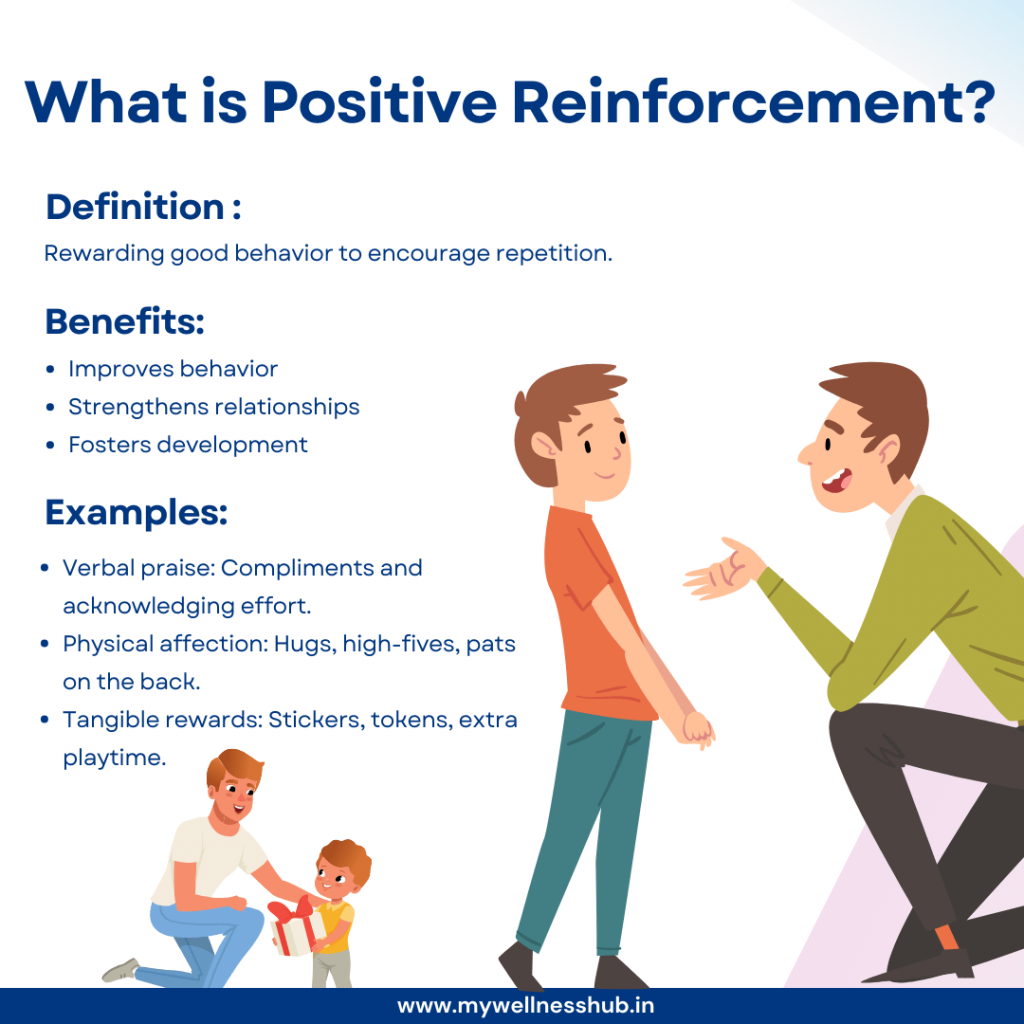
Positive reinforcement helps children repeat good behavior by noticing, praising, or rewarding the actions you want to see more often. For parents, this can mean praising your child for listening, sharing, waiting, using kind words, completing homework, or calming down after frustration.
But positive reinforcement is not just giving rewards. It works best when parents are specific, consistent, and clear about the behavior they want to encourage. Instead of saying only “good job,” tell your child exactly what they did well.
In this guide, you will learn simple positive reinforcement methods, real-life examples, common mistakes, and when to seek professional support if your child’s behavior feels difficult to manage at home.
If your child’s behavior feels difficult to manage at home, structured online behavioral therapy for kids can help parents understand triggers and build better routines.
Benefits of Positive Reinforcement for Children
Positive reinforcement works because children are more likely to repeat behaviors that receive warm, clear, and consistent attention. When parents notice positive behavior early, children learn what is expected and feel encouraged to try again.
Positive reinforcement can help with:
- Listening and following instructions
- Sharing and turn-taking
- Completing routines
- Reducing attention-seeking behavior
- Building confidence
- Strengthening the parent-child bond
- Supporting emotional regulation
The key is to praise the behavior, not just the child. Instead of only saying “You are a good boy,” say, “I liked how you put your toys back after playing.”
7 Positive Reinforcement Methods Parents Can Use at Home
Implementing positive reinforcement methods effectively can transform your parenting approach, making it more rewarding for both you and your child. Here are some top methods to consider:
1. Use Specific Verbal Praise
Best for:
Listening, sharing, waiting, trying again, completing tasks, and using kind words.
What to say:
Instead of saying, “Good job,” say exactly what your child did well.
Examples:
“You listened the first time I asked.”
“I like how you shared your toy with your sister.”
“You stayed calm even though you were upset.”
“You put your shoes near the door without being reminded.”
“You tried again even when it felt hard.”
Common parent mistake:
Using vague praise like “good boy” or “nice girl.” This may feel warm, but it does not teach the child which behavior to repeat.
Better rule:
Praise the action, not just the child.
Parent script:
“I noticed you waited for your turn. That was patient and kind.”
If your child struggles to calm down after frustration, this guide on emotional regulation in children can help you understand what support may be needed.
2. Pair Praise with Warm Gestures
Best for:
Younger children, emotional connection, cooperation, and moments when your child needs reassurance.
Examples:
High-five
Hug
Thumbs-up
Smile
Gentle pat on the back
Sitting close while praising
How to use it:
Pair the gesture with specific praise. For example, say, “You cleaned up the blocks when I asked,” and give a high-five.
Common parent mistake:
Using affection only after big achievements. Small positive behaviors also deserve warm attention.
Important note:
Respect your child’s comfort. Some children may not like hugs or touch when they are upset, tired, or overstimulated. A smile, thumbs-up, or calm voice can also work.
3. Use Small Rewards Carefully
Best for:
Starting a new habit, toilet training, homework routines, bedtime routines, or chores.
- Examples:
- Sticker
- Token
- Extra story
- Choosing a game
- Special parent-child activity
- Extra outdoor play
- Picking a weekend activity
How to use it:
Connect the reward to one clear behavior. For example: “When you brush your teeth before bedtime for five nights, you can choose our Saturday game.”
Common parent mistake:
Rewarding everything. If every small action gets a prize, your child may start doing things only for rewards.
Better rule:
Use rewards to start a behavior, then slowly reduce them and shift toward praise, responsibility, and natural satisfaction.
4. Use Privileges as Rewards
Best for:
Older children, routine completion, homework, chores, and cooperative behavior.
- Examples:
- Choosing dinner music
- Picking a family game
- Extra bedtime story
- Choosing clothes
- Choosing the park route
- Extra playtime
- Helping with a special task
How to use it:
Make the connection clear: “When your school bag is ready before dinner, you can choose tonight’s story.”
Common parent mistake:
Using only screen time as a reward. Screen time can work sometimes, but it should not become the only thing your child values.
Better rule:
Mix rewards: attention, choices, activities, and privileges.
5. Use Behavior Charts for One Behavior at a Time
Best for:
Routines, chores, bedtime, morning tasks, homework, brushing teeth, or toilet training.
How to use it:
Choose one behavior to track. Keep it simple. For example:
| Goal | When | Reward |
|---|---|---|
| Brush teeth | Before bedtime | Sticker |
| Put toys away | After playtime | High-five + sticker |
| Finish homework | Before dinner | Choose a story |
| Use kind words | During play | Token |
Common parent mistake:
Tracking too many behaviors at once. This overwhelms the child and the parent.
Better rule:
Start with one behavior for one week. Once it improves, add another.
Positive reinforcement works better when paired with predictable daily routines for children.
6. Give Positive Attention Before Problems Start
Best for:
Whining, attention-seeking behavior, sibling conflict, and tantrum prevention.
Children often repeat behaviors that get attention. If they only get attention when they cry, shout, or refuse, those behaviors may increase. Positive attention helps you notice good behavior before things go wrong.
- What to say:
- “I like how you are playing quietly.”
- “Thank you for waiting while I finished this call.”
- “You are using a calm voice. That helps me understand you.”
- “You are sitting safely on the chair.”
Common parent mistake:
Only reacting when the child misbehaves.
Better rule:
Catch the good behavior early.
7. Reinforce Effort, Not Only Results
Best for:
Homework, learning new skills, speech practice, emotional regulation, and confidence.
Children need praise for effort, patience, and trying again—not only for perfect results.
- Examples:
- “You kept trying even though the puzzle was hard.”
- “You used your words instead of screaming.”
- “You made a good effort to finish your homework.”
- “You calmed your body after feeling angry.”
Common parent mistake:
Praising only success. This can make children afraid of mistakes.
Better rule:
Praise effort, progress, and self-control.
Positive Reinforcement Examples for Parents
| Method | Best For | Example |
|---|---|---|
| Specific praise | Listening, sharing, routines | “You put your toys away when I asked.” |
| Physical affection | Connection and reassurance | High-five after completing a task |
| Small rewards | Starting a new habit | Sticker for brushing teeth |
| Privileges | Older children and routines | Choosing a bedtime story |
| Behavior chart | Tracking one habit | Sticker chart for bedtime routine |
| Positive attention | Preventing attention-seeking behavior | Praising calm play before whining starts |
| Effort praise | Confidence and persistence | “You tried again even when it was hard.” |
How to Implement Positive Reinforcement Effectively
Implementing positive reinforcement effectively can make a significant difference in your child’s behavior and overall development. Here are some key strategies to ensure you’re getting the most out of this approach:
Consistency is Key
Consistency is crucial when it comes to positive reinforcement. Children need to know that good behavior will always be recognized and rewarded. If rewards are given sporadically, it can be confusing and may undermine the effectiveness of the reinforcement.
Why it matters: Consistent rewards help children understand the connection between their actions and the positive outcomes. This clear link reinforces the behavior you want to see more of.
How to be consistent: Set a schedule or a system for rewards. For example, if you’re using a sticker chart, make sure you add a sticker every time your child exhibits the desired behavior, without fail. Consistency builds trust and reliability in the reinforcement process.
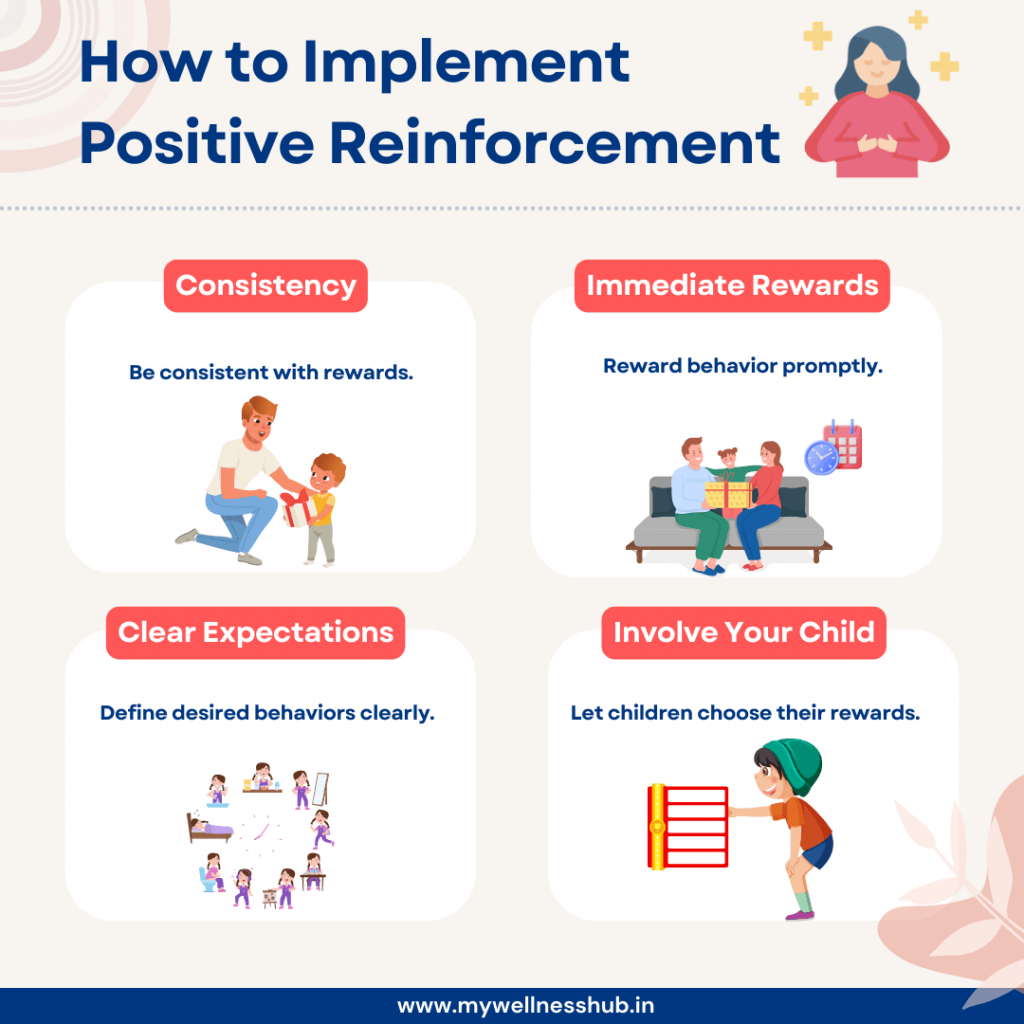
Immediate Reinforcement
For positive reinforcement to be most effective, it should be given as soon as possible after the desired behavior occurs. Immediate rewards help solidify the connection between the action and the positive outcome in your child’s mind.
Why it matters: The quicker the reward follows the behavior, the stronger the association. This immediate feedback encourages your child to repeat the behavior.
How to do it: Keep rewards simple and accessible. Verbal praise, a high-five, or a sticker can be given right away. For more substantial rewards, such as extra playtime or a special activity, acknowledge the good behavior immediately and explain the reward will follow.
Also Read: How Behavioral Therapy Helps Kids with ADHD
Setting Clear Expectations
Clearly defining the behaviors you want to reinforce is essential. Your child needs to understand what is expected of them to meet those expectations and receive rewards.
Why it matters: Clear expectations eliminate confusion and ensure that your child knows exactly what behaviors will be rewarded. This clarity helps them focus on meeting those specific goals.
How to set expectations: Use simple, concise language to explain what you want. For example, instead of saying, “Be good,” specify, “Please put your toys away after playing.” Consistently remind and reinforce these expectations.
Involving the Child
Allowing your child to have a say in choosing their rewards can increase their motivation and engagement. When children feel involved in the process, they are more likely to be excited about working towards their goals.
Why it matters: Involvement gives children a sense of control and ownership over their behavior and the rewards they earn. This empowerment can boost their motivation and enthusiasm.
How to involve your child: Discuss potential rewards with your child and let them choose from a list of acceptable options. For example, you could ask, “Would you prefer extra screen time or a trip to the park?” This choice makes the reward more meaningful to them.
When Positive Reinforcement May Not Be Enough
Positive reinforcement can help with many everyday behavior challenges, but it may not be enough on its own when a child is struggling deeply with emotions, communication, attention, sensory needs, anxiety, trauma, or developmental differences.
Consider speaking with a pediatrician, psychologist, behavioral therapist, occupational therapist, or speech therapist if your child:
- Has frequent aggressive behavior
- Hurts themselves or others
- Has intense tantrums that are hard to calm
- Shows sudden behavior changes
- Struggles to communicate basic needs
- Has major sleep, eating, or school difficulties
- Shows strong sensory distress
- Has behavior concerns along with speech delay, autism signs, ADHD signs, or emotional regulation difficulties
Positive reinforcement is most helpful when it matches the child’s age, needs, communication level, and emotional capacity. If behavior feels unsafe, severe, or overwhelming, professional guidance can help parents understand what is really driving the behavior.
Common Positive Reinforcement Mistakes Parents Should Avoid
Positive reinforcement works best when it is clear, consistent, and connected to a specific behavior. These common mistakes can make rewards less effective or even accidentally increase difficult behavior.
Overusing Rewards
Balancing tangible rewards with intrinsic motivation is crucial. While it’s tempting to offer rewards frequently to encourage good behavior, over-reliance on them can reduce their effectiveness over time. More importantly, it can overshadow the development of intrinsic motivation, where your child learns to appreciate the inherent satisfaction of their actions.
How to avoid it: Use tangible rewards sparingly and focus more on verbal praise and physical affection. Gradually decrease the frequency of tangible rewards as your child begins to exhibit the desired behavior more consistently. Encourage your child to reflect on how good it feels to accomplish something, emphasizing the internal satisfaction they get from doing well.
Example: If your child finishes their homework on time, you can say, “I’m really proud of you for managing your time so well. How do you feel about getting your homework done early?”
Inconsistent Application
Consistency is key in positive reinforcement. Inconsistent application of rewards can confuse your child and weaken the association between their good behavior and the positive outcomes they receive.
How to avoid it: Set clear guidelines for what behaviors will be rewarded and stick to them. If you decide that helping with chores earns a reward, make sure to acknowledge it every time it happens. Consistency helps reinforce the behavior you want to see.
Example: If you’ve agreed that your child earns a sticker for each completed chore, make sure they get a sticker every time they complete a chore without being reminded.
Accidentally Rewarding Negative Behavior
Sometimes parents unintentionally reward the behavior they want to reduce. For example, if a child screams for a phone and immediately gets the phone, the child learns that screaming works.
What to do instead:
Stay calm, keep the boundary, and praise the replacement behavior.
Example:
Instead of giving the phone during screaming, wait for a calmer moment and say, “I like how you used a calmer voice. Now I can listen.”
Important:
Do not ignore unsafe behavior. If your child may hurt themselves or someone else, safety comes first.
Long-Term Positive Reinforcement Strategies
Positive reinforcement is not just about immediate rewards; it’s also about fostering long-term positive behaviors and attitudes in your child. Here are some strategies to ensure that the benefits of positive reinforcement are sustained over time.
Gradual Reduction of Tangible Rewards
While tangible rewards like stickers or toys can be effective in the short term, it’s important to gradually reduce their use. Over-reliance on these rewards can diminish their impact and may prevent your child from developing intrinsic motivation.
How to do it: Slowly phase out tangible rewards by extending the intervals between them. For example, if your child is used to receiving a sticker every day for completing their chores, start giving the sticker every other day, then every third day, and so on. This gradual reduction helps your child transition to appreciating the intrinsic satisfaction of a job well done.
Example: “I noticed you’ve been doing a great job with your homework. Instead of a sticker every day, how about we celebrate with a special outing at the end of the week?”
Fostering Intrinsic Motivation
Intrinsic motivation refers to engaging in behavior because it is inherently rewarding, not because of external rewards. Encouraging your child to find joy and satisfaction in their actions can lead to more sustainable positive behaviors.
How to do it: Highlight the natural consequences and internal rewards of good behavior. Praise your child for the effort they put in and help them recognize the satisfaction that comes from achieving their goals.
Example: “You must feel really proud of yourself for finishing that book all by yourself! How do you feel about your accomplishment?”
Encouraging Self-Reinforcement and Self-Regulation
Self-reinforcement involves your child recognizing and rewarding themselves for their positive behaviors, while self-regulation is about managing their own behavior without external prompts. Teaching these skills can empower your child to take ownership of their actions.
How to do it: Encourage your child to set personal goals and celebrate their achievements. Teach them to reflect on their behavior and recognize their own progress. Provide opportunities for them to make decisions and solve problems independently.
Example: “You did a great job organizing your toys today. How about you choose a fun activity for yourself as a reward?”
Conclusion
Positive reinforcement is one of the simplest ways parents can encourage better behavior at home. When you praise specific actions, give attention to positive behavior, use rewards carefully, and stay consistent, children understand what to repeat.
Start small. Choose one behavior, praise it clearly, and repeat the same approach for a few days. Do not try to fix every behavior at once.
If your child’s behavior feels intense, unsafe, or difficult to manage despite consistent support, speak with a behavioral therapist or child development professional. The goal is not to control your child. The goal is to teach skills, build connection, and create calmer daily routines.
Frequently Asked Questions:
1. What is positive reinforcement for parents?
Positive reinforcement means noticing and rewarding the behavior you want your child to repeat. This can include specific praise, attention, affection, small rewards, privileges, or behavior charts.
2. What is an example of positive reinforcement at home?
If your child puts toys away after playing, you can say, “I like how you cleaned up your toys when playtime ended.” This tells your child exactly which behavior you want to see again.
3. Is positive reinforcement the same as bribing?
No. Positive reinforcement rewards a behavior after it happens. Bribing usually happens during misbehavior to stop it quickly. For example, giving candy to stop a tantrum can accidentally teach the child that tantrums work.
4. What type of praise works best for children?
Specific praise works best. Instead of saying “good job,” say, “You waited for your turn,” or “You used kind words with your brother.” This helps children understand exactly what they did well.
5. Are rewards bad for children?
Rewards are not bad when used carefully. They can help start new habits, but parents should slowly reduce tangible rewards and use more praise, responsibility, and natural motivation over time.
6. How often should I praise my child?
Praise your child whenever you notice positive behavior you want repeated. Focus on real effort, cooperation, patience, kindness, and self-control. Avoid fake or exaggerated praise.
7. What if positive reinforcement does not work?
Check whether the behavior is clear, the reward is meaningful, and the reinforcement happens soon after the behavior. If behavior is severe, unsafe, or linked with developmental, emotional, sensory, or communication concerns, speak with a professional.
8. Can positive reinforcement help with tantrums?
Positive reinforcement can help reduce tantrums when parents praise calm communication, waiting, and coping skills. But during intense tantrums, the first step is safety and calm support.
9. How can I avoid accidentally reinforcing bad behavior?
Avoid giving the child what they want immediately after screaming, whining, or aggression. Wait for a safer or calmer behavior, then respond to that behavior.
10. When should I seek help for my child’s behavior?
Seek help if your child’s behavior is aggressive, unsafe, sudden, extreme, affecting school or family life, or linked with speech delay, autism signs, ADHD signs, anxiety, or sensory difficulties.
About Author:
Lasya Vooturi
Clinical Psychologist and Behavioral Therapist
Lasya holds a Professional Diploma in Clinical Psychology from Amity University, where she deepened her understanding of psychological principles from March 2023 to March 2024. With over a year of dedicated experience as a Behavioral Therapist, Lasya has honed her skills in applying effective therapy techniques tailored to individual needs. Fluent in Telugu, Hindi, and English, she is adept at connecting with a diverse range of clients, ensuring comprehensive communication and understanding. Lasya’s approach is grounded in empathy and scientific rigor, making her a trusted ally in navigating mental health challenges.
Book your Free Consultation Today
Parent/Caregiver Info:
Client’s Details:
* Error Message