Teaching High-Fives and Waves Without Turning It Into a Power Struggle
Last Updated: March 5, 2026
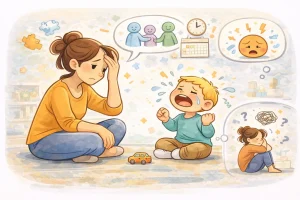
You hold up your hand for a high-five and your child turns away. You wave goodbye and they hide their face, push your hand down, or look annoyed. Maybe they even say “no” or stiffen when someone prompts them.
In moments like these, it’s easy to wonder if you’re supposed to make them do it so they’ll learn. It can also feel awkward or embarrassing, especially when it happens in front of family members or well-meaning strangers who keep asking for “just one wave.”
If this sounds familiar, pause for a breath. You’re not doing anything wrong. And your child isn’t being difficult. Gestures like clapping, waving, and high-fives are social actions; small moments of connection. When teaching high-fives and waves, these moments tend to grow best when they feel safe, playful, and genuinely optional.
Also read: Why Your Child Imitates Sometimes but Not Other Times
Why gestures can become a hot spot so quickly
High-fives and waves may look simple, but they carry a lot of social meaning. They often happen during transitions, arriving, leaving, or meeting someone new: when children are already managing big feelings and lots of stimulation. They can also turn into “performance moments,” where adults watch closely and repeat the request.
Many children pull away for very understandable reasons. They may be tired, shy, overwhelmed, focused on something else, or simply not in the mood to interact. Some children also dislike being touched unexpectedly, even by people they love. And sometimes the resistance is less about the gesture itself and more about the feeling of being pushed.
When a child senses that a high-five has become a test, it can quickly turn into a power struggle; not because they want control, but because they are trying to protect their comfort and choice.
The real goal: connection, not compliance
The developmental skill underneath high-fives and waves is imitation; your child noticing what you do and choosing to join in. This includes clapping, waving, giving a high-five, shaking the head, or copying a simple sequence such as clap then wave.
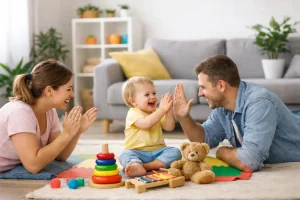
What matters most is that your child experiences these gestures as shared joy, not as something done to them. Early imitation teaches the rhythm of interaction: you act, I respond, we share a moment. That is the foundation.
So if your child does not wave on cue, it does not mean they are “behind” or that you missed your chance. It usually means the social part; doing it on someone else’s timeline: is still developing.
Also read: How to Encourage Imitation by Pausing Instead of Repeating the Gesture
What progress can look like even when it’s not a perfect wave
Many parents imagine success as a confident wave every time. In real life, progress is often quieter and less predictable.
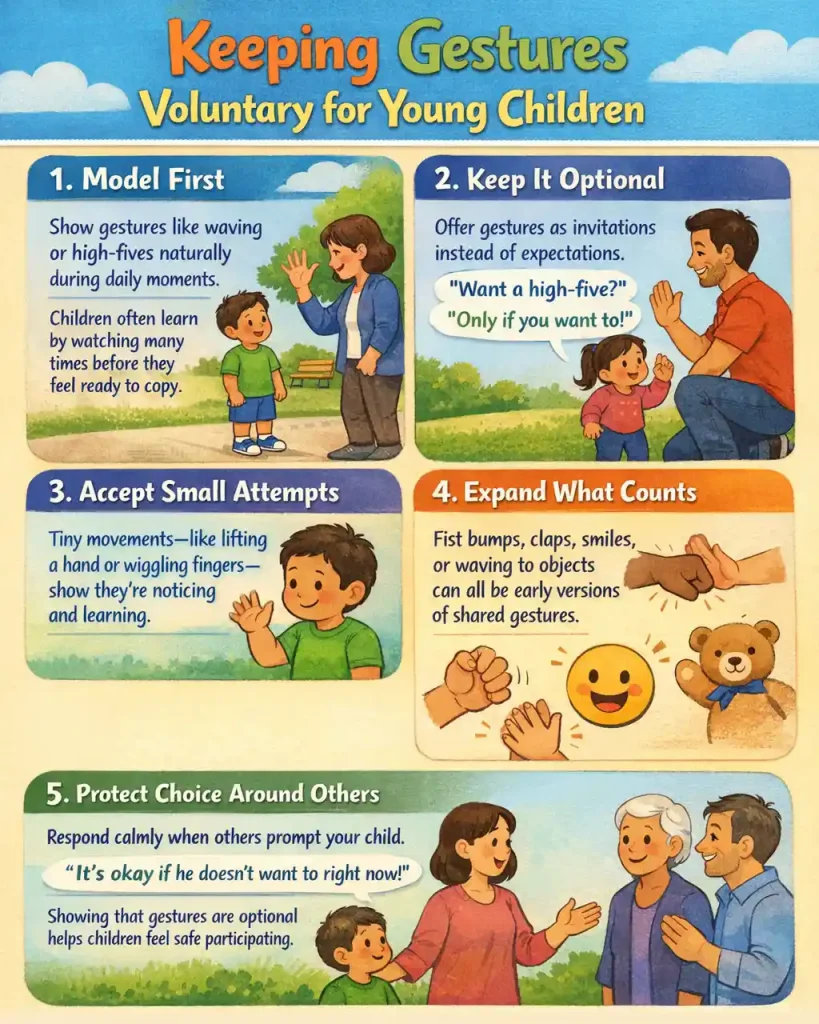
You might notice your child watching your hand when you wave, even if they do not copy it. They may lift their hand slightly, wiggle their fingers for a moment, or wave at home but not in public, or might offer a high-five during play but refuse when a relative asks. They may smile, lean in, or look to you for cues before trying.
All of this counts. These are signs that your child is noticing, learning, and becoming more comfortable with shared gestures.
How to keep gestures voluntary and light
One of the best ways to protect your relationship around gestures is to remove the sense of “must.” Children are far more likely to imitate when they feel in control of their own body and timing.
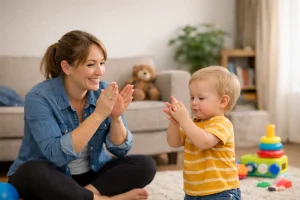
This can mean offering a high-five as an invitation rather than a request. You might hold up your hand and continue talking naturally instead of waiting in a way that feels pressuring. Sometimes you wave and move on, even if your child does not join. The message becomes: This is available if you want it.
It also helps to give your child an easy exit. If they do not respond, you can accept it warmly and without comment. When adults stay relaxed, children learn that gestures are safe and not loaded with expectations.
Why just do it can backfire even when you mean well
Many parents have tried gently taking their child’s hand to help them wave or complete a high-five. It comes from a caring place: you are trying to show them what to do.
But for many children, having their hand moved can feel sudden or uncomfortable. Even when done kindly, it can shift the moment from playful imitation to something that feels controlling. Once that happens, a child may resist sooner and more strongly the next time because they expect their choice to be taken away.
If this has happened before, there is no need for guilt. Most parents have done it. The key takeaway is that modeling works better than making, especially when teaching high-fives and waves.
Making room for different versions of the same idea
Another way to reduce pressure is to widen what “counts.” A high-five is only one way to share a celebratory moment. A wave is only one way to say hello or goodbye.
Some children prefer alternatives that feel less intense or less touch-based. They might enjoy a fist bump, a small clap, a smile, peeking from behind your leg, or holding up a hand without contact. Some children wave at objects, like buses or dogs, long before they wave at people.
When you accept these variations warmly, you are still supporting the same underlying goal: helping your child take part in shared social moments in a way that feels comfortable to them.
Also read: 10+ Simple Home Activities to Encourage Clapping, Waving, and High-Fives
Handling the Say bye! pressure from others
One of the hardest parts can be when other adults keep prompting your child. Many parents feel torn between being polite and protecting their child from pressure.
It can help to have a simple, friendly response ready, something that does not invite discussion. For example:
“She’s not into waving right now, but she can smile.”
“We’re keeping it low-pressure.”
Or simply, “It’s okay, bye!” while you wave for your child.
This does two things at once: it keeps the interaction warm, and it shows your child that their body is their own. Over time, children are often more willing to join in when they trust that you will not insist.
Bringing gestures into everyday joy without turning it into practice
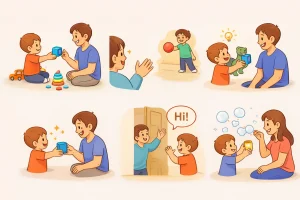
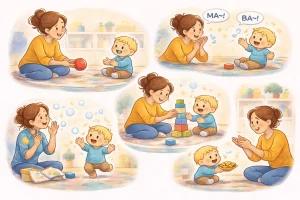
Gestures appear most naturally when they are tied to real feelings: excitement, pride, surprise, and silliness. That is why clapping when a tower falls, waving to a passing truck, or offering a high-five after a shared laugh often works better than asking for a high-five “to practice.”
In daily routines, gestures can be part of the moment rather than the focus of the moment. A wave becomes a casual goodbye as you leave the room. A clap becomes a celebration when something works. A head shake becomes a playful “nooo!” during a game. When gestures live inside connection, children have more reason to copy them.
And when your child does attempt something. no matter how small, your response matters more than perfect form. A tiny finger wiggle can be met with genuine delight. That is how children learn. This is fun. This brings connection. I want to try again.
If it keeps turning into a struggle, what then?
If high-fives and waves have become a repeated battleground, it is okay to take a break. You are not giving up, you are protecting the relationship so the skill can grow later in a calmer way.
Often, when parents stop prompting for a while and return to simple modeling, children approach the gesture again on their own terms. The tension fades, and imitation returns because it feels safe.
If you would like extra support in encouraging imitation without pressure, speech therapy app like BASICS can be a gentle option. Some parents appreciate having simple guidance for choosing goals and noticing progress during everyday routines, without turning interactions into drills.
If you have concerns about your child’s communication or imitation skills, speaking with a speech-language pathologist or your pediatrician can be a helpful next step.
A calm reminder to take with you
High-fives and waves are not measures of your child’s manners or your parenting. They are small social gestures that develop over time and are closely tied to comfort, timing, and trust.
When teaching high-fives and waves, keeping gestures voluntary helps children learn something even bigger than a wave: that connection is safe, playful, and respectful. And that lesson lasts far longer than any single high-five on command.
About the Author:
Shravanaveena Gajula
M.Sc ., Speech and Language Pathology (5+ years of experience)
Shravanaveena Gajula is a dedicated Speech-Language Pathologist with a BASLP and an M.Sc in Speech and Language Pathology. With experience spanning multiple settings, including Wellness Hub , Veena specializes in a wide range of disorders from developmental issues in children to speech and language assessments in adults. Her expertise includes parent counseling, managing speech sound and fluency disorders, and creating individualized therapy programs. Veena is also PROMPT certified and an author of several insightful blogs on speech and language pathology, aiming to educate and assist caregivers in supporting their loved ones.
Book your Free Consultation Today
Parent/Caregiver Info:
Client’s Details:
* Error Message