Progress You Can Feel: Signs Your Child Is Starting to Initiate
Last Updated: March 5, 2026
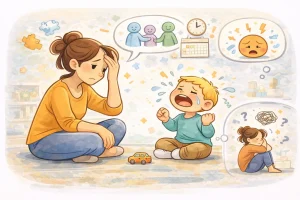
If you’ve ever found yourself thinking, “Are we actually making progress with initiating interaction?” you’re in very good company.
When your child is working on initiating interaction, starting play, calling out to begin a routine, smiling to get you to join in, or bringing something over to share, it can be hard to see change. Initiation often grows quietly. It doesn’t always show up as a big new skill overnight. More often, it looks like tiny shifts that are easy to miss when you’re in the middle of busy days, sibling noise, and the mental load of parenting.
This article is here to help you notice the kinds of progress that count, even before they become obvious. Because when you can recognize those early signs, it’s easier to feel steadier, less stuck, and more able to celebrate what’s already unfolding.
What initiating interaction really means in real life
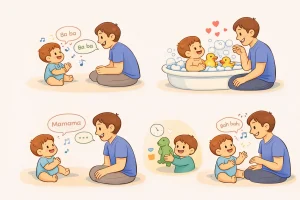
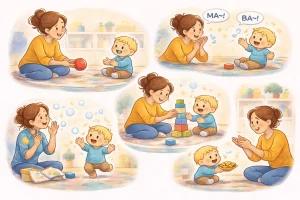
Initiating interaction with a caregiver is simply your child starting a connection with you. That might be a sound, a smile, a look, a gesture, or bringing you an object anything that says, “You. Me. Together.”
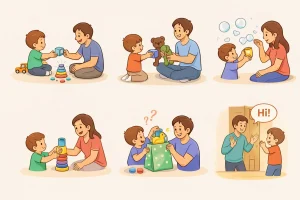
It can show up during play (“Watch this!”), during routines (a grin before a familiar game), or in everyday moments (handing you a toy, tugging your sleeve, calling out from the next room). The heart of it is the same: your child is reaching out first. And that matters. Each time your child initiates, they’re learning that communication is a two-way street, one where their efforts are noticed and valued. Over time, these moments build confidence, connection, and a sense of belonging.
Why progress can feel hard to track
Initiation isn’t usually consistent at first, and initiating interaction can show up more in some moments than others. Many children initiate more in certain moments and less in others. You might see it at home but not at the park. You might see it when your child is calm, but not when they’re tired or hungry. You might get three sweet “come play!” moments one day and then wonder where they went the next.
That up-and-down pattern can make parents feel like nothing is changing. But often, progress is happening in the background showing up as small, meaningful shifts in “frequency, ease, and confidence”.
Also read: 10+ Simple Home Activities That Encourage Your Child to Initiate Interaction With You
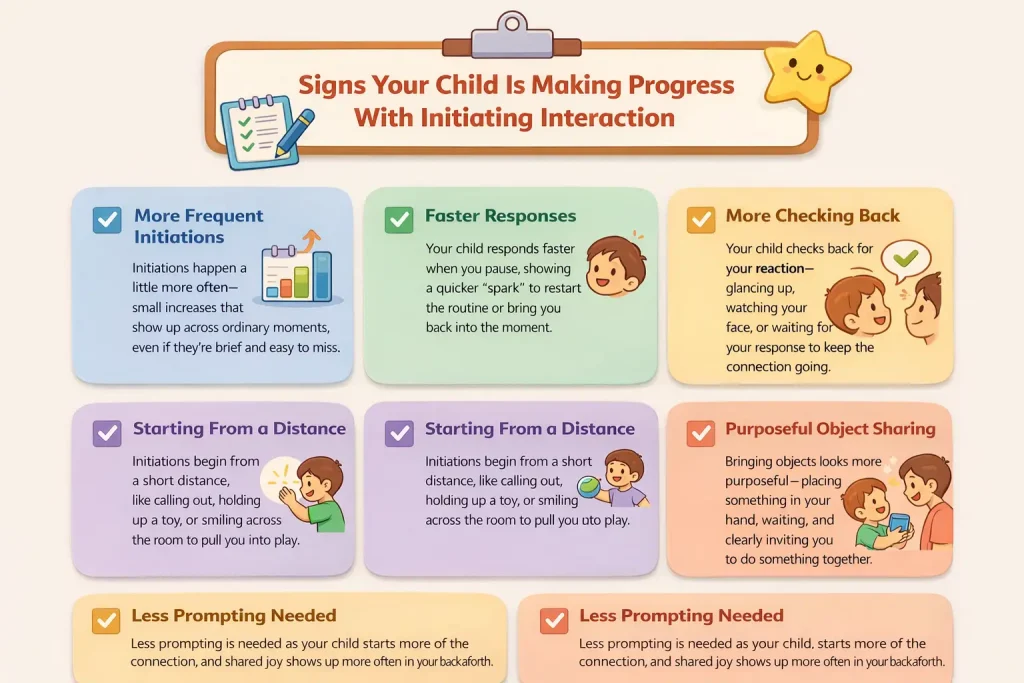
It happens a little more frequently
One of the earliest signs is simply “more of it.” Not constant. Not all day. Just a gradual increase.
Maybe your child used to bring you a toy once in a while, and now it’s a few times a day. Maybe they used to smile to start a familiar routine only when you prompted it, and now you catch them doing it on their own. Frequency is a big deal, even if the initiations are quick and easy to overlook.
The initiation is faster
Sometimes the change isn’t “more,” it’s “sooner.”
For example, you pause during a familiar routine and your child responds more quickly than they used to, smiling right away, making a sound, or reaching toward you without needing extra time. That quicker “spark” often means your child is starting to understand the pattern: “I can start this. I can get you to join me.”
Your child checks back for your reaction
This one can be easy to miss, but it’s powerful: your child does something, then looks at you to see what you’ll do. They might roll a ball and glance up. They might hand you something and watch your face. They might make a silly noise and wait for your response. That “checking back” is a form of initiation because it shows your child is not just doing an activity, they’re inviting shared attention and shared emotion.
Initiations happen from a short distance
At first, many children initiate only when they’re right next to you. Progress can look like initiating from a little farther away.
Maybe your child calls out from the hallway. Maybe they hold up a toy across the room. Maybe they look toward you and smile to start a game without needing to be in your lap. These small distance changes often reflect growing confidence: “I can reach you, even from here.”
Your child brings you things with a “purpose”
Bringing objects is one of the clearest early ways children initiate. Over time, you may notice the “bring” becomes more intentional.
Instead of dropping something near you and moving on, your child might place it in your hand, wait, or look at you as if to say, “Do something with this.” It can feel like a tiny moment, but it’s a big communication step, your child is inviting you into their world.
Less prompting is needed
Another sign of progress is that you’re doing a little less “work” to get the interaction going, especially around initiating interaction.
You might notice you don’t have to ask as often, “Do you want to play?” or “Show me!” Your child starts to take the lead more naturally. Even if you’re still creating the space, pausing, being available, noticing, your child is increasingly the one who starts the connection.
The joy shows up more often
Sometimes the most meaningful progress isn’t about the exact behavior, it’s about the feeling.
You may notice more shared laughter, more little “games” that your child tries to start, more moments where the two of you fall into an easy back-and-forth. Initiation is about connection, and connection often comes with warmth and delight. If those moments are increasing, that’s real progress.
What counts as progress if it’s not consistent yet?
It can be reassuring to know that “more initiation” doesn’t have to mean “all the time.” Progress can be:
- A few more initiations per day than last month
- A quicker smile when you pause
- A new way of getting your attention (a sound, a look, a bring)
- Initiating in one routine that used to feel flat
- Initiating with one parent first, then gradually with others
Consistency tends to come later. Early growth is often about emergence, the skill appearing, disappearing, and reappearing as your child practices it in real life.
A gentle way to notice change without turning life into data
Many parents want to track progress, but they don’t want to feel like they’re “testing” their child all day. That’s a wise instinct. Connection grows best when home still feels like home.
If it helps, try holding a softer question in your mind at the end of the day: “Did I notice any moments where my child reached for me today?” Not how many. Not whether it was perfect. Just whether it happened and what it looked like. Some families also find it helpful to remember one small moment from the day and share it with a partner or write it down. Over time, those tiny memories create a clearer picture: “Oh wow, this is happening more than it used to.”
How to celebrate small wins without pressure
When your child initiates, whether it’s a smile, a sound, a bring, or a look, your warm response is meaningful. It tells them, “That worked. I’m here. I like connecting with you.”
Celebrating doesn’t have to be big or performative. Often it’s as simple as meeting their moment with your attention: a smile back, joining the play, responding with interest, or sharing the routine they’re inviting you into. The message is comfortingly clear: their reaching out matters.
And just as important: it’s okay if you miss some moments. Parents are human. You’re cooking, answering a text, helping a sibling, trying to breathe. Progress doesn’t depend on perfect responses—it grows through many ordinary interactions over time.
When you want a little more support or clarity
Sometimes what parents want most is reassurance that they’re noticing the right things, or ideas for how to make space for more initiation during everyday life without turning it into a project.
That’s where a Speech and Autism therapy like BASICS can be a helpful option. It’s designed to support parent-led goals through simple daily activities and short guidance, so you can feel more confident about what progress looks like and how to encourage it gently, without pressure or guesswork.
A calm reminder to take with you
Initiating interaction is a wonderful sign of connection. It’s your child saying, in their own way, “Be with me.” And that skill often grows in quiet steps: a quicker smile, a new glance, a toy placed in your hand, a call from the next room.
If you’ve been wondering whether anything is changing, consider this: progress with initiating interaction is often felt before it’s obvious. The small moments count. The “almost” moments count. The brief check-ins count. And when you start noticing them, you may realize your child has been building a stronger, more confident way of reaching for you.
About the Author:
Shravanaveena Gajula
M.Sc ., Speech and Language Pathology (5+ years of experience)
Shravanaveena Gajula is a dedicated Speech-Language Pathologist with a BASLP and an M.Sc in Speech and Language Pathology. With experience spanning multiple settings, including Wellness Hub , Veena specializes in a wide range of disorders from developmental issues in children to speech and language assessments in adults. Her expertise includes parent counseling, managing speech sound and fluency disorders, and creating individualized therapy programs. Veena is also PROMPT certified and an author of several insightful blogs on speech and language pathology, aiming to educate and assist caregivers in supporting their loved ones.
Book your Free Consultation Today
Parent/Caregiver Info:
Client’s Details:
* Error Message