What Counts as Progress in Finger Skills? Small Signs Parents Often Miss
By Wellness Hub
Last Updated: February 17, 2026
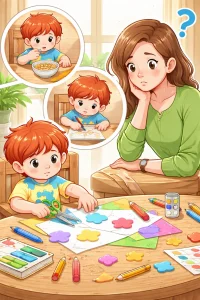
It’s easy to imagine progress as one clear moment. Your child buttons their coat without help. They zip their hoodie in one smooth pull. They hold a crayon with a neat, grown-up grip.
But finger skills almost never grow in one big leap.
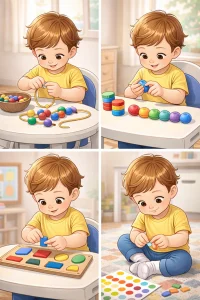
Most of the time, they develop quietly through tiny changes you only notice later. A new way of touching a toy. A short pause to adjust their fingers. A different grip that lasts just a few seconds before switching back. These moments can seem small, but they matter. They are the early building blocks of using fingers independently and together to handle objects with ease, the kind of coordination that supports dressing, tool use, early writing, and everyday confidence.
If you’ve been wondering, “Are we actually making progress?” this is for you.
Why finger progress can be hard to spot
Finger skills are a little sneaky. They grow during real life, while your child is playing, eating, dressing, and creating. Because of that, the changes don’t always show up as a clear “before and after.”
Many daily tasks also involve several skills at once. Take buttoning, for example. It’s not just about finger strength. It also involves using both hands together, placing fingertips carefully, and separating one finger from the others at the right moment. When the final result isn’t there yet, it can feel like nothing is improving.
But progress often appears first in how your child tries, not in whether they finish.
What this goal really includes in parent terms
When we talk about using fingers independently and together, we mean a group of abilities that grow slowly over time.
It includes learning to use one finger on purpose, such as poking, pressing, or pointing. It includes separating fingers during play instead of moving the whole hand as one unit. And it includes coordinating finger groups, like the thumb and index finger working together to pinch, hold, or turn something.
These are the foundations for buttons, zippers, crayons, scissors, and managing small objects during play. They also support confidence, because when hands cooperate, everyday tasks feel less frustrating and more possible.
Also read: How to Help Finger Skills During Dressing Buttons, Zippers, and Fasteners Without a Battle
Small signs of progress that truly count
Parents sometimes dismiss early changes because they don’t look “functional” yet. But these are exactly the signs that finger control is organizing and strengthening.
You notice more one-finger moments
A child who once used a whole fist or the side of their hand may begin using one finger to explore. You might see them pressing a button, poking playdough, tapping a screen, pointing at a picture, or tracing a line in spilled cereal on the table.
That choice to use one finger matters. It shows your child is beginning to isolate a finger and use it on purpose, which is a big step toward more precise movements later.
Fingers start to separate during play
You may notice your child’s fingers opening up more while they play. They might spread their fingers slightly to steady a toy, hold something with two or three fingers instead of the whole palm, or keep one finger out while the others help.
It can look casual and easy to miss. But this is a sign of finger dissociation, fingers learning to do different jobs at the same time. This kind of coordination is what makes fasteners and tool use easier in the future.
Your child adjusts their grip without being told
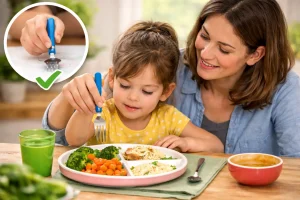
One of the most encouraging signs is when your child makes a tiny correction on their own. They might shift a crayon higher, rotate it, loosen a tight fist, or reposition their fingers on a spoon or toothbrush.
Even if that better grip only lasts a moment, it still counts. It shows your child is noticing what feels effective and experimenting with control. Those small experiments are how skills grow.
They use fingertips more often, not just the whole hand
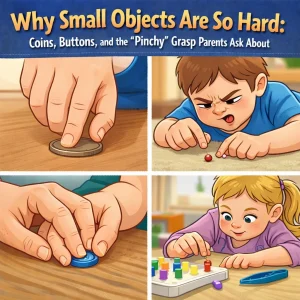
Fingertips are made for precision. If you start seeing more fingertip contact, such as pinching a sticker edge, picking up a crumb, turning a page with one finger, or pushing a coin across a surface, those are meaningful changes.
Many children begin with big, whole-hand movements because they feel stable and efficient. Moving toward fingertip use is a natural next step and supports later skills like buttoning and early writing.
They persist longer before asking for help
Progress is not only about movement. It’s also about confidence.
If your child stays with a tricky task a little longer, tries a second way, or goes back to a toy they used to avoid, that’s real growth. It often means the task feels more manageable than it did before, even if it isn’t mastered yet.
Willingness to try is what keeps development moving forward.
You see smoother coordination between both hands
Finger skills don’t work alone. Many everyday tasks depend on both hands working together.
You might notice your child holding an object steady with one hand while the other hand works, or keeping paper still while coloring. These quiet coordination changes reduce frustration and support more precise movements.
Everyday tasks look a little less effortful
Sometimes the clearest sign of progress is simply that things look easier. Your child may still need help, but their body seems less tense. There’s less all-or-nothing force and more gentle control.
That sense of ease is important. It’s often the bridge between “I can’t” and “I’m getting it.”
Read more: 10+ Simple Home Activities That Build Finger Independence No Fancy Supplies
Why these tiny changes are powerful
These small signs are not random. They are the early layers of the same skill your child will use for buttons, zippers, tools, and early writing.
When a child learns to isolate a finger, separate fingers for different roles, and coordinate finger groups, daily life opens up. They can help more with dressing, manage parts of mealtime, explore art materials, and play with toys that require precision. And with each small success, their feeling of “I can do this” grows.
That confidence is not extra. It is part of the skill itself.
What to say to yourself when progress feels slow
If you catch yourself comparing your child to a sibling, a friend’s child, or the picture of progress you had in mind, that’s very human.
It can help to shift the question from “Can they do it yet?” to “What’s changing in how they try?”
Finger development is often uneven. A child may manage a zipper one day and struggle the next. They might use a more mature grip when calm, then go back to an old pattern when tired or excited. That doesn’t mean progress is gone. It usually means the skill is still becoming steady and reliable.
When it might help to get a little extra support
Sometimes parents want reassurance that they’re noticing the right things, or they want fresh ideas that fit naturally into daily routines. Seeking support can be a calm, thoughtful choice, not a sign that something is wrong.
Speech and Autism therapy Apps like BASICS can help parents understand goals such as coordinated finger use and recognize meaningful progress through everyday moments, with simple guidance that doesn’t turn home life into practice time.
A gentle closing thought
If your child isn’t buttoning perfectly yet, it doesn’t mean they aren’t progressing. Finger skills are built from small, repeated experiences, pressing, poking, pinching, adjusting, and trying again.
So when you notice one finger doing a job it didn’t do before, or a tiny grip shift, or a few extra seconds of persistence, let that count.
Those are real steps toward independence.
And noticing them, without pressure and without testing, may be one of the most supportive things you do.
Book your Free Consultation Today
Parent/Caregiver Info:
Client’s Details:
* Error Message