5 Signs Eye Contact During Play is Improving, Even if It’s Still Brief
Last Updated: March 31, 2026
If you are watching closely and still wondering whether anything is changing, you are not alone. Many parents do all the “small things” and then feel unsure how to measure progress. The good news is that the earliest signs are often subtle. This guide is all about the signs eye contact is improving, especially during play and daily routines, even when your child’s look is quick and easy to miss.
A helpful reframe before we start: progress often shows up as more connection, not longer staring. A half-second glance that happens more often can be a bigger win than one long look that only happens once in a while.
Also read: Should I Ask for Early Intervention if My Toddler Avoids Eye Contact Most of the Time?
What Counts As Progress When Eye Contact is Still Quick?
Most parents picture eye contact as a steady gaze, face-to-face, for several seconds. In real life with toddlers and young children, it is usually more like quick “check-ins.” A glance up. A shared smile. A look that says, “Did you see that?” and then right back to the toy.
During eye contact during play, the goal is not intensity. It is shared attention. Your child is learning that play can be back and forth, and that your face carries information that matters. In routines, it might look like a brief look right before you lift them, hand over the spoon, or turn on the tap.
So if you are thinking, “It is still brief, so it must not count,” I want to gently challenge that. Brief looks are often the exact building blocks you are hoping for.
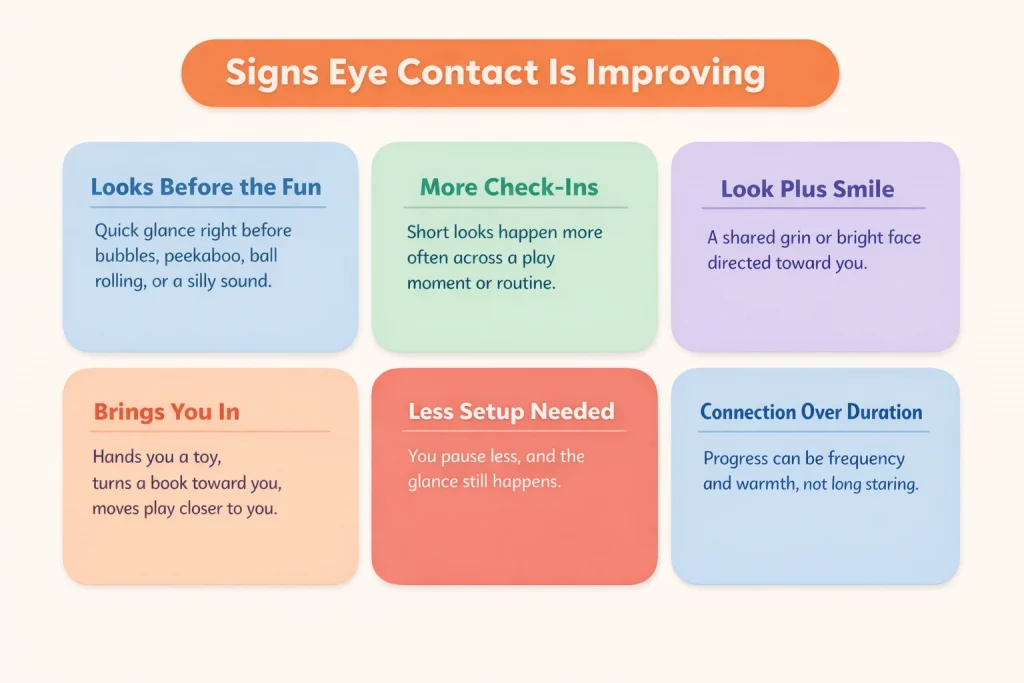
Signs eye contact is improving: 5 small wins that matter
Below are five changes I often hear parents describe right before eye contact becomes more consistent. You might notice one of these first, or a few at the same time.
1) Your child looks up right before something fun happens
This is one of my favourite early signs because it is so meaningful. Your child is starting to connect your face with what comes next. You might see a quick glance right before you blow bubbles, roll the ball, pop out in peekaboo, or do a silly sound. It can be tiny, almost like anticipation.
Sometimes parents miss it because they are focused on the activity itself. If you notice that “look right before,” it usually means your child is learning the rhythm of interaction.
2) The “check-in” happens more often, even if it is still short
Frequency often improves before duration. A child might go from looking up once in a whole play session to looking up three or four times, each for a split second. That is real growth.
You may also notice that the check-ins happen in specific moments, like when something changes, when a toy gets stuck, or when your child wants you to do something again. Those moments are social. Your child is using your face as part of the experience.
3) Your child shares a smile, not just a look
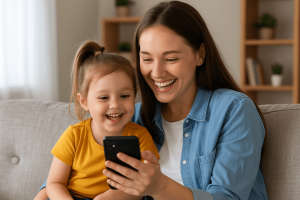
A look plus a soft smile is a big step because it shows emotional connection, not just visual attention. Some children are more serious-faced when they concentrate, so this is not a requirement. Still, if you start seeing little grins that seem directed at you, it often means your child is feeling the “togetherness” of the moment.
This can show up during silly songs, funny faces, or when you pause and your child seems to enjoy the suspense. It can also show up in routines, like a grin during dressing when you do something playful with a sock or a towel.
4) Your child starts bringing you into the play without you prompting it
This might look like handing you a toy, turning a book toward you, or moving an object closer to your body. Sometimes the eye contact comes right before or right after that gesture. Sometimes it does not, and it is still a positive sign.
Why? Because it shows your child is beginning to understand that play is shared. They are not just playing near you. They are including you. For many children, that “include you” stage comes right before more consistent face looks.
5) You need fewer pauses to get the look
In the beginning, parents often create a gentle pause to give a child time to look up. Over time, you may notice your child glances up even when you forget to pause, or they look sooner than they used to.
This is a quiet kind of progress. It can feel like, “Wait, did you just look at me?” and then it is gone. If it is happening more naturally, it usually means the skill is becoming part of your child’s pattern, not something that only happens when you set it up.
Why These Signs Show Up Before Steady Eye Contact
Eye contact develops best when it is tied to something your child enjoys and understands. That is why anticipation looks and quick check-ins often appear first. Your child is learning, “Your face helps me predict what happens,” and “You are part of this.”
It also helps to remember that many young children focus hard on what their hands are doing. Looking away does not always mean disinterest. It can mean concentration. When a child is building a new skill, even a short glance can take effort.
If your child’s looks are happening most with you, that is also common. Familiar people feel safe. Safety supports connection. Over time, those skills can spread to other caregivers and settings.
Read More: When To See a Speech Therapist About Eye Contact and Connection During Play
Common Reasons Progress Feels Invisible (Even When It Is Happening)
A lot of parents tell me, “I think it is better, but I cannot prove it.” That feeling makes sense, because early progress is inconsistent.
Here are a few reasons it can feel hard to spot:
Your child’s looks are faster than you expect
Some children glance so quickly that you only catch it out of the corner of your eye. You might notice it more if you are at their level, or if the room is calmer, but even then it can be fleeting.
You are doing a lot of the work
When you are the one pausing, waiting, and staying playful, it can feel like you are carrying the interaction. The shift you are looking for is when your child starts meeting you halfway, even briefly. That shift can be gradual.
Different settings bring different results
A child might look more at home than at the park, or more during snack than during free play. That does not cancel out progress. It usually means your child is still learning how to use the skill in busy environments.
You are comparing to an “ideal” version of eye contact
Many of us grew up hearing “Look at me” as a sign of listening. But connection does not require constant eye contact. For many children, natural eye contact is a quick glance that comes and goes.
How To Support More of These Wins Without Turning It Into a Test
You do not need a big plan to support this. The most helpful approach is often the simplest: create little moments where your child has a reason to look, and then respond warmly when it happens.
A few gentle principles to keep in mind:
Keep your face easy to find
Being at eye level during play helps. So does positioning yourself where your child naturally turns, like near the toy bin, by the bath, or at the high chair.
Let fun do the talking
Playful routines like peekaboo, bubbles, songs, rolling a ball, or silly sounds naturally invite a glance. Your child learns, “If I look, something good happens.”
Respond quickly and calmly
When your child looks, a warm smile, a simple comment, or continuing the fun is often enough. Big reactions can sometimes distract a child or make them feel watched.
Avoid making eye contact the “job”
If a child senses they are being tested, they may look less. Connection grows best when it feels safe and natural, not demanded.
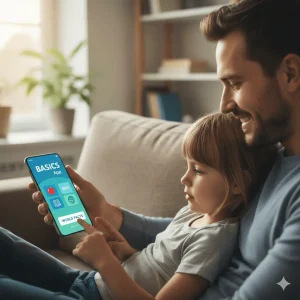
If you want extra support without pressure, the BASICS App can be a nice option. It is parent-guided and self-paced, and it can help you notice what counts as progress in everyday moments.
Learn More: The Truth About Saying Look at Me To Get Eye Contact During Play
A gentle way to track progress week to week
Parents often ask, “Should I write it down?” You can, but you do not have to. If tracking helps you feel calmer, keep it simple and kind.
Try noticing patterns instead of counting seconds. For example:
- Are the check-ins happening in more parts of the day, like play plus meals?
- Is your child looking up sooner than before?
- Are you seeing more “look before the fun” moments?
- Do you feel like you are enjoying play more, because it feels more shared?
Sometimes the biggest sign is your own experience. When interactions feel lighter and more connected, that usually means your child is picking up on the social rhythm, even if the eye contact is still brief.
Closing reassurance: you can celebrate brief looks as real progress
If you came here searching for signs eye contact is improving, I hope you leave with a clearer picture of what to look for. Those quick anticipation glances, tiny check-ins, shared smiles, and moments where your child brings you into play are meaningful. They are not “almost progress.” They are progress.
If you are feeling stuck over time, or if connecting during play and routines continues to feel hard across most settings, some families consider a developmental screening to better understand communication delays or possible autism-related differences. Support can be practical and relationship-focused, and it can still be gentle.
For now, keep your expectations soft. Keep the moments warm. Connection counts more than perfect eye contact, and your child can grow this skill in their own way.
About the Author:
Shravanaveena Gajula
M.Sc ., Speech and Language Pathology (5+ years of experience)
Shravanaveena Gajula is a dedicated Speech-Language Pathologist with a BASLP and an M.Sc in Speech and Language Pathology. With experience spanning multiple settings, including Wellness Hub , Veena specializes in a wide range of disorders from developmental issues in children to speech and language assessments in adults. Her expertise includes parent counseling, managing speech sound and fluency disorders, and creating individualized therapy programs. Veena is also PROMPT certified and an author of several insightful blogs on speech and language pathology, aiming to educate and assist caregivers in supporting their loved ones.
Book your Free Consultation Today
Parent/Caregiver Info:
Client’s Details:
* Error Message