What Counts as an “Early Word”? A Parent-Friendly Guide to Proto-Words and Meaningful Sounds
Last Updated: February 26, 2026
If you’ve ever found yourself thinking, “Does that count?” you’re in very good company.
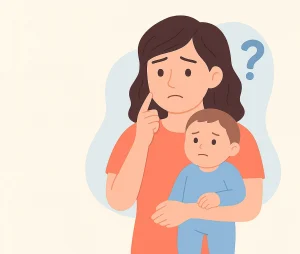
Your child says “ta,” or “uh-oh,” or makes an excited “mmm!” and you pause. Is that a real word? Are they talking? Or is it just a cute noise that happens to come out at the right time?
This uncertainty is incredibly common, especially in the early stages when communication development is just starting to take shape. The good news is that early communication doesn’t begin with perfect, clear words. It begins with meaningful sounds, little attempts that carry a message. And once you know what to look for, you may realize your child is already communicating more than you thought.
Also read: How to Get More “More”: Helping Your Child Use Early Words to Request Without Meltdowns
What is an “early word,” really?
When adults think of words, we usually picture something clearly pronounced and easy to recognize, like “mama,” “ball,” or “up.” But for young children, early words often look more like proto-words.
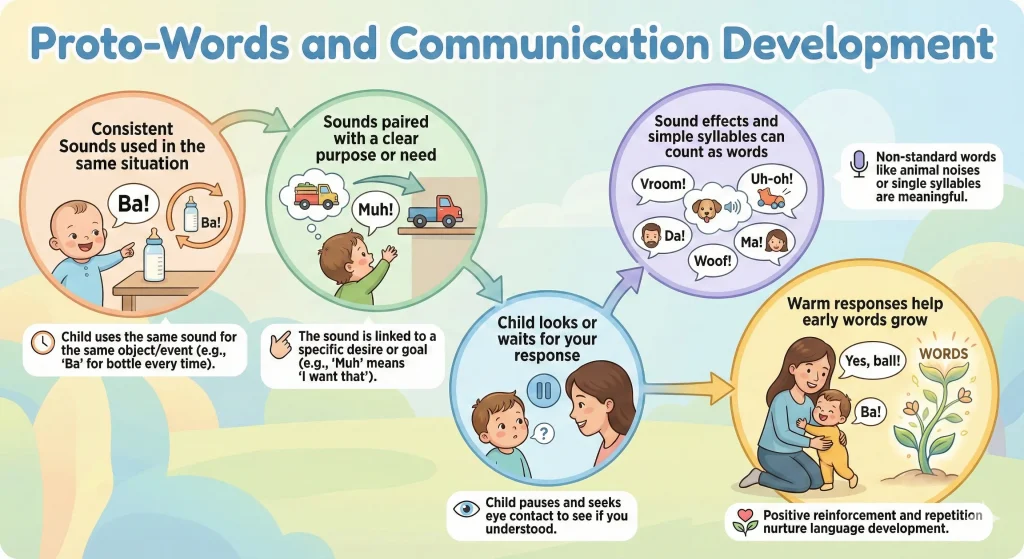
Proto-words are consistent, meaningful sounds your child uses on purpose to communicate. They may not match the adult version of the word yet, but they still count because your child is using them to express an idea, such as asking, protesting, sharing, or commenting. So yes, “ta,” “uh-oh,” “mmm,” “ba,” “up,” “ma,” and even sound effects like “vroom” can be part of early word development when they are used intentionally.
This stage matters because it shows your child practicing a powerful skill: using their voice to connect with you and influence what happens next. That is the heart of early communication.
The three signs a sound is meaningful not just noise
It can help to think less about how the sound should sound and more about what your child is doing with it. Parents often gain clarity by watching for a few simple patterns.
It’s consistent
A meaningful early word tends to show up again and again in the same situation.
For example, maybe your child says “ta” when they want something handed to them, or “mm” when they see a favorite snack, or “uh-oh” when something drops. If you start noticing the same sound in the same moment across different days, that is a strong clue it is not random.
Consistency does not mean perfection. It simply means your child has a go-to sound for a certain message.
It has a purpose
Meaningful sounds usually do something for your child. They help them request, protest, comment, or share.
You might notice your child using a sound to say:
“I want that” (requesting)
“I need help” (asking)
“Look!” (sharing attention)
“That surprised me” (reacting)
“No thanks” (refusing)
Sometimes the purpose is obvious, like “up!” with arms raised. Other times it is subtle, like a little “eh!” paired with a reach toward the bubbles. The key is that the sound is connected to an intention.
They look for your response
One of the clearest signs a sound is communicative is what happens right after.
Does your child glance at you, pause, wait, or repeat the sound as if they are checking whether you understood? That checking in is a big deal. It means your child is learning that communication is shared and goes back and forth between two people.
Even a quick look, a small pause, or repeating the sound can be your child’s way of saying, “Did you get it?”
Common examples that often count as early words
Parents are sometimes surprised by how many early “words” do not sound like adult words at all. Here are a few familiar examples that often qualify as proto-words when they are used consistently and with purpose.
“Uh-oh” can be a real early word because it is often used in a very specific way when something falls, spills, or surprises the child. Many children use it before they have lots of other clear words.
“Ta” is another great example. Some families use “ta” for “take,” “ta-da,” or even “thank you.” If your child uses “ta” repeatedly to request a turn, ask for an item, or participate socially, it is meaningful communication.
“Mmm!” can count too. If your child uses “mmm” when they want more food, when something tastes good, or when they see a favorite snack and want you to notice, that sound is doing the job of a word.
Sound effects like “vroom,” “moo,” “beep,” or “choo-choo” can also be early words. They are often easier for children to produce than the adult word, such as “car,” “cow,” or “train,” and they still carry clear meaning during play.
And of course, early classics like “mama,” “dada,” “up,” “more,” “no,” “hi,” and “bye” all belong to this same goal of using early words or proto-words to communicate intent.
What if my child’s “word” changes from day to day?
This is another very normal part of the early stage. Many children experiment with sounds. A word may come out one way today and a different way tomorrow. That does not cancel the progress. It often means your child is practicing.
You might hear “ba” for a bottle one day and “bo” the next. Or “uh” for up, then “ah.” If the intention stays the same and they use it to mean the same thing, you can still treat it as meaningful.
Early communication is less like flipping a switch and more like tuning an instrument. It gets clearer over time through repetition, connection, and everyday use.
Why these small sounds matter more than you think
It is easy to dismiss early sounds because they are small. But from a child development perspective, these moments are big.
When your child uses an early word or proto-word, they are doing several important things at once. They are practicing expressing a need or feeling. They are learning that their voice has power. They are building a back and forth rhythm with you. And they are laying the groundwork for more words later.
This is why success at this stage often looks like small, everyday wins. Your child uses “up” during play, says “ta” to request, repeats a sound after you, or looks to you for a response when they vocalize. Over time, those moments usually become more frequent and clearer.
How to respond in a way that supports early words without pressure
Most parents do not need more to do. They need reassurance that what they are already doing counts.
In general, early words grow best when they are met with warm, simple responses in real life moments. When your child makes a meaningful sound, responding as if it matters helps communication development because it shows them their message works.
That might look like acknowledging what you think they mean, such as “Oh, uh-oh! It fell,” naturally using the clearer word alongside their attempt, like “Up, yes, up,” and giving them a moment of time to take another turn if they want to. This is not about correcting or drilling. It is about connection. Your child tries a sound, you respond, and the conversation continues in a way that feels safe and enjoyable.
When parents still feel unsure
Sometimes the hardest part is not your child’s communication. It is the uncertainty. If you are constantly wondering whether something counts, it can take the joy out of noticing progress.
It may help to think of proto-words as working words. They work for your child right now. They get a need met, share a feeling, or create a moment with you. And that is exactly what early language is for. If you would like extra clarity, some families consider developmental screening to rule out communication delays or autism, while others find it helpful to use a gentle support Speech and Autism therapy apps like BASICS, which breaks communication goals into simple, everyday moments and helps you recognize what to look for without turning your home into a lesson.
A calm takeaway to hold onto
An early word does not have to be perfect to be real.
If your child uses a sound consistently, with a purpose, and especially if they look to you for a response, you are likely seeing meaningful early communication. Those “ta” and “mmm” moments are not small. They are your child learning how to share their thoughts and feelings with you, one brave little sound at a time a meaningful step in communication development.
About the Author:
Rajini Darugupally
M.Sc., Speech-Language Pathologist (9+ years of experience)
Rajini is a passionate and dedicated Speech-Language Pathologist with over 9+ years of experience, specializing in both developmental speech and language disorders in children and rehabilitation in adults. Driven by a desire to empower each individual to find their voice, Rajini brings a wealth of experience and a warm, genuine approach to therapy. Currently, at Wellness Hub, she thrives in a team environment that values innovation, compassion, and achieving results for their clients. Connect with Rajini to learn more about how she can help you or your loved one find their voice.
Book your Free Consultation Today
Parent/Caregiver Info:
Client’s Details:
* Error Message