10+ Simple Home Activities That Encourage Early Words Like “More,” “Up,” and “Uh-Oh”
Last Updated: February 25, 2026
If you’re hoping to hear those first little words—“more,” “up,” “ta,” “uh-oh,” “hi,” “bye”—you’re in very good company. Many parents find themselves thinking, I know my child understands so much… How do I help words show up, especially if I’m starting to wonder about speech delay?
The encouraging news is that early words usually grow out of ordinary moments, not “lessons.” They tend to appear when a child has a reason to communicate and a warm, familiar person who responds like it matters. These everyday interactions play an important role in communication development and early childhood development.
This article is meant to feel like a calm idea bank you can dip into today. No special toys. No complicated setup. Just simple, everyday activities that naturally create chances for early words or proto-words (those first meaningful sounds that stand in for a word). And if your child isn’t saying these yet, that’s okay too—your steady, responsive presence is already building the foundation.
Also Read: My Child Makes Sounds but Not Words Yet How Can I Encourage First Words Without Pressure?
What early words really look like at home
Early words are often short, useful, and tied to a clear intention. They might sound perfectly crisp (“up!”) or a little approximate (“uh” for “up,” “mo” for “more”). They often come with a gesture, like a reach, a point, or arms lifted to be picked up. All of that counts as communication growing.
You may notice early words showing up most when your child is motivated—when something is exciting, when they want help, when something surprising happens, or when a routine is familiar enough that they can “join in.”
10+ simple home activities that invite words like more, up, ta, and uh-oh
- Snack “more” moments
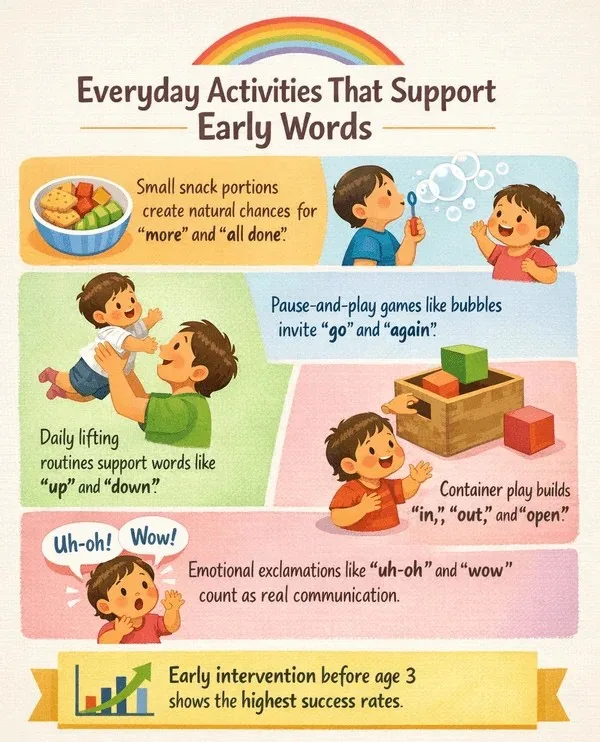
Snack time naturally creates repeated chances for “more,” “ta/thanks,” and even “all done.” When food comes in small portions, one cracker, a few berries, a sip of water, your child gets lots of opportunities to communicate what they want next. Even a look or a reach can be a starting point that you can warmly pair with the word.
- Bubbles, balloons, and anything that “keeps going”
Bubbles are a classic for a reason: they’re joyful, predictable, and easy to pause. Balloons, wind-up toys, spinning tops, or a favorite song work the same way. These activities often invite “more,” “again,” “go,” or an excited “wow!” and help your child discover, My sound makes something happen.
- “Up” and “down” during everyday lifting
“Up” appears in so many daily moments: getting into a high chair, being picked up, climbing onto the couch, stepping up a curb, riding on your hip. “Down” comes right along with it. These words are powerful because they match what your child feels in their body, which makes them easier to remember and use.
- Toy-in-a-container play (open, out, in, uh-oh)
You don’t need a special toy, any safe container works. A small box, basket, zip pouch, or plastic container with a lid can become a language opportunity. Putting toys in and dumping them out creates natural moments for “in,” “out,” “open,” “uh-oh,” and “oops.” When something spills or tumbles, kids often love the drama of it.
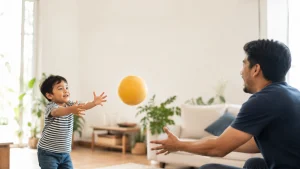
- Rolling a ball or car back and forth
Simple turn-taking games are rich with early words because they’re social and predictable. A ball, a toy car, or even a rolled-up sock can become a “go!” game. Many children also start using sounds or proto-words that mean “my turn” or “again.”
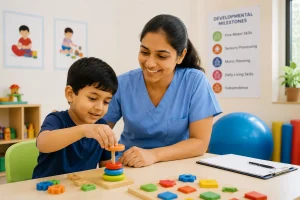
- Building with blocks or household items
Stacking blocks, cups, or pantry containers can invite words like “up,” “big,” “uh-oh,” and “more.” The moment a tower falls is often the perfect time for “uh-oh!” And when your child brings you another block, it naturally opens the door for “more” or “ta.”
- Pretend “help” moments (help, please, open)
Children are highly motivated to communicate when they need assistance. Think about stuck lids, tricky zippers, snack bags that won’t open, or toys that don’t work. These everyday struggles can gently invite words like “help,” “open,” or “please,” especially when your child looks to you with that “I need you face.”
- “Hi” and “bye” in low-pressure social routines
Early social words often come more easily when they’re part of a routine. Waving at the mail carrier, saying bye to the dog, greeting a grandparent on video call, or waving at school drop-off can all create comfortable chances for “hi,” “bye,” and even “no” (which is also communication).
- Animal and vehicle sounds that become proto-words
Some children find sounds easier than words at first—“moo,” “baa,” “vroom,” “beep.” These are not “less than” words. They’re often a bridge into clearer speech because they’re fun, repetitive, and tied to play. Books, toy animals, bath toys, and neighborhood walks can all spark these early sound-words.
- The “surprise bag” or mystery box
A simple bag with a few familiar items creates anticipation. Not knowing what’s next often invites “more,” “again,” “oh!” or “wow.” It also encourages your child to look at you, wait, and share attention, important social skills that support early words.
- Stop-and-go movement games
Many children love motion: pushing a stroller, swinging at the park, dancing in the kitchen, or being pulled on a blanket (safely and gently). These moments naturally invite “go,” “stop,” “more,” and “again.” Even if your child gestures first, you can treat it as meaningful and pair it with the word.
- Emotion words and everyday exclamations
Words like “uh-oh,” “wow,” “yay,” and “oops” are often among the earliest because they match a feeling and a moment. Spilling water, seeing something surprising, finishing a puzzle, or watching a funny pet moment can all bring these out. These words matter—they’re your child commenting on the world, not just requesting something.
What counts as progress even if words are still emerging
Progress doesn’t always sound like a perfect word. In real life, it often looks smaller and sweeter.
You might notice your child pausing and looking at you during a familiar routine, repeating a sound you say, using the same little syllable in the same situation, or waiting expectantly as if it’s their turn in the interaction. Those are meaningful signs that your child is learning communication is shared—and that their voice has power.
If concerns about speech delay continue, some families consider developmental screening to better understand their child’s communication development and to gently rule out broader concerns such as autism, especially when early childhood development milestones feel unclear.
Keeping it calm and pressure-free
Early words grow best when children feel safe, connected, and unhurried. If your child doesn’t copy a word right away, it doesn’t mean you did anything wrong. Some children need time to watch and absorb before they jump in.
The goal isn’t to “get a word” on demand. The goal is to create many gentle chances where words make sense. If you notice yourself slipping into testing mode (“Say more… say more…”), it can help to return to connection. Enjoy the moment. Respond warmly to any attempt. Trust that repetition across daily life adds up.
Also read: When to Get Extra Help With Early Communication: If Gestures and Sounds Aren’t Connecting Yet
If you would like a little extra support
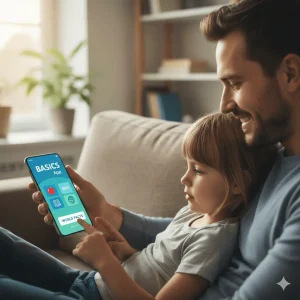
Some parents appreciate having a simple plan for which early words to focus on and how to notice opportunities throughout the day. Tools like BASICS can offer that kind of gentle structure—short, parent-friendly guidance that fits into real routines—without turning your home into a therapy room. For families navigating speech delay, structured support can complement everyday play in a natural way.
A reassuring takeaway
Your child doesn’t need a perfect setup to start using early words. They need you—your attention, your pauses, your warm responses, and the everyday moments you already share.
Over time, those small, repeated experiences are what help “more,” “up,” “ta,” and “uh-oh” feel natural and worth saying. And when those first words do pop out—whether they’re clear, approximate, or paired with a big grin—you’ll know they didn’t come from pressure. They came from connection.
About the Author:
Anuradha Karanam
Speech-language pathologist (7+ years of experience)
Anuradha Karanam is a skilled speech-language pathologist with over 6 years of experience. Fluent in Tamil, Telugu, Hindi, and English, she specializes in parent counseling, speech sound disorders, fluency assessment, and speech-language evaluations. Anuradha excels at working with children with developmental disorders, offering creative and effective therapy programs. Currently, at Wellness Hub, she holds a BASLP degree and is registered with the RCI (CRR No A85500). Her patience, ambition, and dedication make her a trusted expert in her field.
Book your Free Consultation Today
Parent/Caregiver Info:
Client’s Details:
* Error Message