Does My Child Need to Make Eye Contact When I Call Their Name?
By Wellness Hub
Last Updated: January 22, 2026
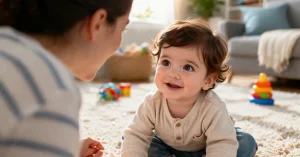
You call your child’s name and wait for that familiar moment: the little face turning toward you, eyes meeting yours, a quick yes? or smile.
But what if it doesn’t happen like that?
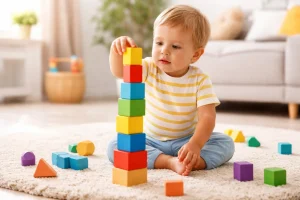
Maybe they keep stacking blocks and only tilt their head, they pause for a second but don’t look up. Maybe they glance so quickly you’re not even sure it counts. You might be wondering, Should my child need to make eye contact now? Should I be expecting more?
If you’ve been holding that question, you’re in very good company. Many parents do. And the reassuring truth is that connection can look different from child to child—especially while this skill is still growing.
Is eye contact required to count as responding?
Not necessarily.
Eye contact is one way children show they heard you, but it’s not the only way. When children are learning to respond consistently when their name is called, their earliest responses are often small and subtle. A quick turn, a pause in what they’re doing, a tiny shift of attention—these can all be meaningful signs that your child noticed you.
In real life, most of us don’t stop what we’re doing and make perfect eye contact every time someone says our name. We might say “mm-hm” while finishing a task, turn our head without fully looking up, or respond with a gesture. Children are learning that same social rhythm: “I heard you, and I’m tuning in.”
So if your child doesn’t lock eyes with you right away, it doesn’t automatically mean they didn’t hear you or that they’re ignoring you. It often means they’re still figuring out how to shift attention from what they’re doing to the person calling them.
What responding to name really includes
This goal goes beyond eye contact. Consistent name response involves several skills that develop over time: noticing a familiar voice, recognizing that the voice is calling them, pausing an activity, turning toward you, making eye contact, and responding across different routines.
Some children begin with the turning. Others begin with the pausing. Some give a quick look and then dive back into what they were doing. All of these patterns belong to the same developing skill. The heart of it is engagement—your child learning that their name invites connection. Eye contact can support that connection, but it doesn’t need to be the first or only sign.
Also read: How to Help Your Child Respond to Their Name in Busy, Noisy Places
If my child turns but doesn’t look at me, is that still a response?
Yes, it can be.
A head turn, a shoulder shift, or even a pause can be your child’s way of saying, “I heard something.” For many children, that’s the first step before they’re able to add a look, a smile, a sound, or movement toward you.
You might notice responses like these:
Your child pauses their hands for a moment while playing, even if their eyes stay on the toy.
- They turn their head toward your voice but keep their gaze low.
- They look up briefly and then look away quickly.
- They move closer to you without looking directly at your face.
- They smile or reach out after you call their name.
These are all forms of engagement. And over time, those small signals often become more consistent and more obvious—especially when the interaction feels warm and safe rather than pressured.
Why some kids avoid eye contact in the moment even when they’re connected
There are many everyday, non-worrisome reasons a child might not look right at you when you call their name.
Sometimes they’re deeply focused. Young children can get completely absorbed in play, and shifting attention is genuinely hard work. Sometimes they need extra time to process what they heard, especially if they’re tired, hungry, or in the middle of something exciting. Sometimes the environment is busy, like siblings talking, a show in the background, a lot happening at once and eye contact is simply not the easiest way for them to respond.
And sometimes, personality plays a role. Some children are naturally more “look-at-me!” and others are more reserved. They can be just as connected while showing it in quieter ways. What matters most is not whether your child performs eye contact on cue, but whether the back-and-forth of connection is growing over time.
What progress can look like without forcing it
Parents often expect progress to look like a clear before-and-after: one day your child doesn’t respond, the next day they turn and make eye contact every time.
In reality, progress is usually gradual and a little messy in the best way. It might show up as more frequent pauses when you call their name. or might look like a brief glance that becomes a slightly longer glance over weeks. It might be that they respond more during calm routines (snack time, bath time) before they can do it during high-energy play.
Some early signs that this skill is strengthening can include your child turning toward you more often, needing fewer repeats, smiling when they notice you, or reaching out after you call. Even if eye contact is brief, those moments are meaningful. The goal, over time, is a more consistent response across everyday routines and those ordinary moments where you call their name and they begin to tune in.
How to think about eye contact without making it a test
It’s understandable to want a clear sign that your child heard you. Eye contact feels like proof. But when eye contact becomes the main requirement, it can accidentally turn a moment of connection into a moment of pressure. Many children respond best when they sense an invitation rather than a demand.
A helpful reframe is to ask: Did my child shift toward me in any way? Did they pause, turn, soften their body, move closer, smile, or respond with a sound? Those are all real signs of engagement, and they’re often the stepping stones that lead to more consistent responding later. When parents focus on connection rather than correctness, children tend to feel safer—and safety is what helps communication grow.
Also read: My Child Responds to My Partner but Not Me – What’s Going On?
When it might be helpful to get extra support
Sometimes parents aren’t just curious—they’re feeling stuck. If you’re noticing that your child rarely responds to their name across many routines, or you’re not seeing the skill become more consistent over time, it can be comforting to talk it through with someone who understands early communication.
Support doesn’t have to be a big, scary step. It can simply be guidance on what to look for, how to notice progress, and how to create more easy moments of connection in daily life. Some families like having a best speech therapy and autism app to lean on at home. BASICS, for example, supports goals like responding when name is called with short videos and everyday routines—so parents can feel more confident without turning life into practice time. It’s there if you want structure, but it’s not something you have to do to be a good parent.
A gentle takeaway for parents
No—your child doesn’t have to make perfect eye contact every time you call their name for it to count.
Responding to names is a developing skill, and it often starts with small, quiet signs: a pause, a turn, a brief look, a move closer. Those moments lead to connections. They’re your child learning, little by little, that communication is shared and that you’re worth tuning into.
If you’re noticing even tiny shifts over time, that’s meaningful progress. And if you’re feeling unsure, it’s okay to seek a bit of support not because something is wrong, but because you care and you want to understand your child well.
The most important thing to remember is this: connection isn’t one specific behavior. It’s a relationship that grows through warm, everyday moments like one name call, one pause, or one glance at a time.
Book your Free Consultation Today
Parent/Caregiver Info:
Client’s Details:
* Error Message