My Child Responds to My Partner but Not Me – What’s Going On?
By Wellness Hub
Last Updated: January 21, 2026
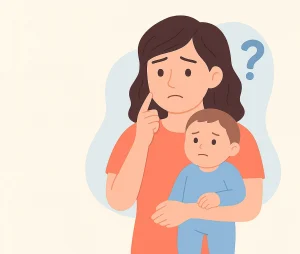
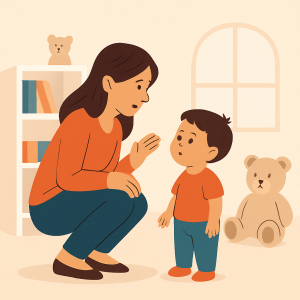
You call your child’s name from the kitchen. No reaction. You try again—still nothing. Then your partner walks in, says your child’s name once, and your child turns right away.
If you’ve felt that sting in your chest, you’re not alone. When a child responds to one caregiver more easily than another, it can feel personal—like you’re being ignored, rejected, or less preferred. Most of the time, though, what’s happening is much more ordinary and much less about love than it feels at the moment.
Responding when their name is called is a skill that grows over time. It’s not an on/off switch, and it’s not a measure of who your child is bonded to. It’s a small, everyday communication moment: pausing, turning, making eye contact, and engaging—across different routines and with different people. And like many early skills, it can look uneven at home.
Why this can happen without it meaning anything is wrong
Children don’t respond to names the same way in every situation or with every adult. Even adults don’t, if we’re honest—if you’re focused on a text or deep in thought, you might not register someone calling you right away. Kids are the same, except their attention is even more all in when they’re playing. When your child responds to your partner but not you, it often comes down to everyday patterns like timing, tone, routines, and roles—not preference or attachment.
It’s not just hearing a name—it’s shifting attention
Responding to a name involves more than noticing sound. Your child has to recognize that the voice is calling *them*, pause what they’re doing, turn toward the person, and engage in some way. That engagement might be a quick glance, a head turn, a pause, a smile, or moving closer. Those small responses count. And because it’s an attention shift, it’s sensitive to what else is happening in the moment, like noise, play intensity, tiredness, hunger, transitions, and even how the name is said.
Common, everyday reasons your child responds more to your partner
1. Your partner’s timing might land better
Sometimes one caregiver tends to call a child’s name during calmer moments—when the child is already between activities, wandering, or looking for the next thing to do. Another caregiver might naturally call during high-focus moments—when the child is building, climbing, watching something, or mid-meltdown.
Neither approach is wrong. It’s just that a child’s ability to pause and turn is much easier when their brain isn’t fully occupied.
2. Tone and rhythm can make a big difference
Many families discover that one adult has a naturally more sing-song, playful, or light tone. Another adult may sound more efficient, more rushed, or more serious—especially when juggling tasks.
Kids often respond best to a warm, inviting tone that feels like connection rather than a demand. That doesn’t mean you’re doing anything wrong. It may simply mean your child is still learning that your voice calling their name is a cue worth turning toward.
3. Your child may associate each adult with different jobs
In many homes, one parent becomes the get-it-done person: shoes, car seat, brushing teeth, leaving the park, turning off the TV. The other parent might be more associated with play, silliness, or downtime.
If you’re the one who often calls their name to move things along, your child may hesitate—not because they don’t want you, but because they’re bracing for what comes next. A name can start to feel like a transition cue: Something is about to change.
This is incredibly common, especially in busy seasons of parenting.
4. Your child may be used to responding to one voice in certain routines
Children learn patterns quickly. If your partner usually handles bath time, your child may be more practiced at responding to them in that setting. If you usually handle mornings, your child may be more practiced with you then—while seeming less responsive at other times.
This isn’t about favoritism. It’s about familiarity and repetition in specific routines.
5. Your child might need a little more processing time with you and that’s okay
Sometimes a child registers your voice but needs an extra beat to pause and respond. If you move on too quickly, repeat right away, or talk over the moment (because life is loud and busy), you may miss that small response window.
Many parents feel surprised when a simple pause changes what they notice. The response often exists — it just happens more quietly than expected.
What progress can look like in real life
When this skill is emerging, it often shows up in small, easy-to-miss ways. You might notice that your child pauses for a second when you say their name, even if they don’t turn fully. Or they glance up briefly and then go back to what they’re doing. Or they look at you more reliably during certain routines snack, bedtime, bath than during play.
Over time, those moments tend to become more consistent. The goal isn’t perfection. It’s that your child increasingly recognizes their name as a friendly invitation to connect—across different parts of the day and with different caregivers.
Also read: What Counts as Progress When Your Child Starts Responding to Their Name?
How to create more easy connection moments without turning it into a test
If this has been weighing on you, it can help to think less about getting a response and more about building more low-pressure opportunities for connection.
Many families find it helps when both adults aim for the same general feeling: calling the child’s name in a warm way, during everyday moments, and then leaving a little space for the child to respond. Not as a drill, not as a say it again until they do it, but as a gentle rhythm in the day.
It can also help to notice when your child responds most easily—maybe when they’re already near you, when they’re not deeply focused, or when the environment is quieter. Those are often the moments where connection comes more naturally, and where your child can practice the pause and turn part of the skill without stress.
And if you’ve been stuck in the role of the transition parent, it may feel good (for both of you) to intentionally claim a few small moments that aren’t about moving things along—just a quick shared look, a smile, a tiny moment of I see you. Children often respond more when they feel that calling their name leads to connection, not pressure.
A gentle word about the feelings this brings up
Even when you understand the logic, it can still hurt. Parenting asks so much of you, and it’s natural to want your child to look up when you call, because that look says, We’re connected.
If this is happening in your home, try to hold one steady truth: your child’s name response is not a scoreboard of love. It’s a developing skill, and it can be shaped by the smallest details—who’s calling, when they’re calling, what the day has been like, and what your child is doing at that exact second.
You’re not failing. And your child isn’t rejecting you.
When it might help to get extra support not because you should worry
Some parents simply want more clarity on how to support name response across caregivers and routines—especially if it feels inconsistent or hard to read. Getting support can be about confidence and connection, not concern.
Speech therapy apps like BASICS can be a helpful option if you’d like gentle guidance on goals like responding when their name is called, with simple everyday ideas that fit naturally into family life. Some families like having that structure, especially when they’re trying to get on the same page across two caregivers.
The takeaway
When your child responds to your partner but not you, it usually points to everyday dynamics—timing, tone, routines, and roles—not anything lacking in your relationship.
Responding to their name is a small but meaningful skill: pausing, turning, making eye contact, and engaging. Those moments build trust and connection over time. And the good news is that consistency often grows quietly—through warm, low-pressure interactions woven into the day. If you’ve been feeling overlooked, you deserve kindness too. Your child’s connection with you is built in thousands of small moments—many of which are happening even when they don’t turn right away.
Book your Free Consultation Today
Parent/Caregiver Info:
Client’s Details:
* Error Message