Speech Therapy App for Toddlers (1–3 Years): What Actually Works at Home
By Wellness Hub
Last Updated: December 8, 2025
If your toddler is not talking as expected, you are not alone. Many parents start searching for a speech therapy app for toddlers when they notice fewer words, unclear speech, or slow progress at home. The good news? Today’s speech therapy apps are designed exactly for young children aged 1–3 years, and they make learning to talk fun, simple, and doable — right in your living room.
But with so many apps available, how do you know what actually works at home?
In this guide, we break down the real signs of speech delay, the features that truly help toddlers learn to talk, and how parents can use a speech therapy app every day without stress. Whether your child is a late talker, has autism, or just needs a little boost, this easy-to-follow article will help you choose the right app and use it in the right way — so your toddler can understand more, talk more, and feel more confident.
Why a Speech Therapy App for Toddlers Works Better at Home
Many parents worry when their toddler is slow to talk, uses only a few words, or struggles to express their needs. The good news is that a well-designed speech therapy app for toddlers can make a real difference — especially when it is used at home. In fact, for children between 1–3 years, home is often the most effective and comfortable place for building early speech and language skills.
Here’s why a speech delay app for toddlers works so well at home and why thousands of parents prefer this approach:
1. Home Is Your Toddler’s Safest and Most Comfortable Space
Toddlers learn best when they feel relaxed. At home, your child is surrounded by familiar toys, people, and routines.
This sense of safety reduces pressure and makes children more willing to copy sounds, try new words, and interact. A toddler speech app becomes part of their normal day — not something stressful or new.
When a child feels secure, their brain is more open to learning. This is why parents often notice faster progress with at home speech therapy apps compared to clinic sessions alone.
2. Repetition Builds Stronger Speech Skills
Repetition is the heart of speech therapy. Toddlers need to see, hear, and practice the same skills again and again.
The advantage of a speech therapy app for toddlers is that it allows unlimited practice — anytime, even for a few minutes in between daily activities.
At home, you can repeat:
- First words
- Sounds
- Naming objects
- WH questions
- Matching or sequencing games
This consistent practice helps toddlers store new words, improve clarity, and use language more naturally.
3. Parents Become Active Partners in Learning
Parents play the biggest role in improving a toddler’s speech. A good at home speech therapy app gives simple, guided activities that you can follow even if you are not a therapist.
With an app, you can:
- Sit with your toddler and model words
- Encourage pointing, imitation, and turn-taking
- Reinforce new words during daily routines
- Track progress without guessing
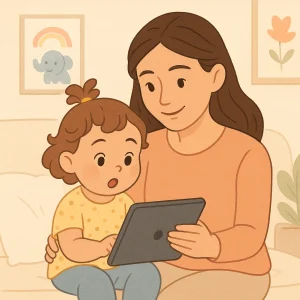
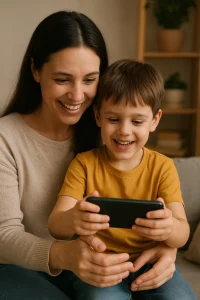
This involvement is powerful. Toddlers learn faster when a parent sits beside them, repeats words, praises them, and turns the screen into a fun back-and-forth activity. A toddler speech app becomes a shared experience — not passive screen time.
4. Easy, Flexible Practice That Fits Your Daily Routine
Busy parents need solutions that actually work in real life. A speech therapy app allows short, effective sessions during moments like:
- After breakfast
- Before nap time
- During play
- In the car or waiting room
These short bursts are perfect for toddlers. Learning stays fun, consistent, and low-pressure.
Signs Your Toddler (1–3 Years) May Need a Speech Therapy App
As a parent, it’s natural to feel concerned when your child isn’t talking as much as expected. Every toddler develops at their own pace, but certain early signs can indicate that your child may benefit from extra support — including a speech therapy app for toddlers.
These apps are designed to gently guide children from sounds to words, and from words to meaningful communication, all through simple, play-based activities.
Below are the most common red flags parents should watch for during the early years.
Common Red Flags in Speech Delay for Toddlers
Many parents first notice that their toddler is “not talking enough,” but speech delay often shows up in more ways than just missing words. If your toddler is between 1–3 years and shows any of these signs, a structured, guided tool like a toddler speech app can provide much-needed support:
1. Late Talking
Most toddlers start using single words around 12–15 months and begin combining two words by age 2.
If your child is still not saying words like “mama,” “ball,” or “bye” by 18–24 months, this can be an early sign of delay.
2. Limited or Very Few Words
Your toddler may say only a handful of words, repeat the same sounds, or stop using words they previously learned. This often indicates difficulty building vocabulary without extra help.
3. No Gestures or Limited Communication Attempts
Gestures such as pointing, waving, reaching, or showing objects are early building blocks of communication.
If your toddler rarely uses gestures or struggles to show what they want, a speech delay app for toddlers can help them learn step-by-step communication skills.
4. Difficulty Understanding Simple Instructions
If your child does not respond to their name, follow simple directions like “Give it to me,” or understand basic routines, it may show receptive language delay — an area where structured app-based activities can be extremely helpful.
5. Poor Eye Contact or Difficulty Engaging in Back-and-Forth Interaction
This often affects speech development because toddlers learn language through social connection.
When a Speech Therapy App Helps Children With Autism or Late Talking
Speech delays are common in children on the autism spectrum, and many parents look for tools that are simple, predictable, and engaging. A speech therapy app for autism can provide a gentle, guided approach that reduces overwhelm and builds communication step by step.
Here’s how it supports autistic or late-talking toddlers:
1. Structured, Visual Learning
Autistic toddlers often learn best through clear visuals and predictable routines.
Apps offer simple pictures, slow animations, and guided repetition that help children stay focused without feeling overloaded.
2. Builds Early Social-Communication Skills
A well-designed nonverbal toddler app helps children practice:
- making sounds
- copying actions
- identifying pictures
- requesting objects
- building first words
These early wins build confidence and motivate younger children who otherwise avoid communication.
3. Helps With Joint Attention and Engagement
Joint attention — the ability to share focus with a parent — is essential for speech development.
App-based activities make it easier for parents and toddlers to interact, point together, and share the learning experience.
4. Reduces Frustration for Nonverbal or Minimal-Talking Toddlers
Clear visual prompts, repetition, and simple tasks allow nonverbal toddlers to participate without stress.
Over time, they begin making sounds, attempting words, and interacting more consistently.
5. Perfect for Daily Home Practice
Consistency matters. For autistic or late-talking toddlers, small daily sessions using a speech therapy app for autism can make a meaningful difference in progress.
What Makes the Best Speech Therapy App for Toddlers? (Features That Matter)
Choosing the right speech therapy app for toddlers can feel overwhelming, especially when your child needs real support—not just entertainment. A high-quality app should help your toddler learn new words, build communication skills, and enjoy the process. It should feel simple, safe, and effective for both the child and the parent using it at home.
Here are the essential features that truly make a difference for toddlers aged 1–3 years, especially those with speech delay, late talking, or early signs of autism.
Simple First Words and Vocabulary Building Activities
A toddler’s speech journey starts with simple words—naming objects, animals, foods, toys, and familiar things around them. The best vocabulary building app for kids introduces words slowly and clearly, using clean visuals and toddler-friendly pictures.
A strong app should:
- Focus on one image = one word to avoid confusion
- Use realistic pictures instead of overstimulating cartoons
- Repeat words multiple times to support memory
- Encourage toddlers to tap, imitate, and practice sounds
This helps children learn first words naturally, even if they are late talkers or have difficulty expressing themselves. It also builds a strong foundation for phrases and small sentences later.
Fun Speech Games for Toddlers (Interactive and Easy)
Toddlers learn best when learning feels like play. The best apps include interactive speech therapy games that make your child want to participate.
Look for features such as:
- Tap-to-talk activities
- Sound imitation games
- Picture identification tasks
- Turn-taking mini-games
- Simple actions like “open,” “close,” “give,” or “push”
A great interactive speech therapy games app for toddlers keeps activities short, predictable, and engaging. This ensures toddlers stay attentive and excited without getting overwhelmed.
WH Questions, Matching, Sequencing and Reasoning Activities
As your toddler grows, they need help developing comprehension, reasoning, and early problem-solving skills. The best apps include structured activities like:
1. WH Questions Practice
A good WH questions app for toddlers teaches “What?”, “Who?”, “Where?”, and “Why?” using clear images and short prompts. This improves understanding, thinking, and conversation skills.
2. Matching Activities
Matching objects, colors, shapes, or animals helps toddlers develop attention, visual reasoning, and early categorization skills.
3. Sequencing Cards
Simple sequencing cards help toddlers understand order and routine (e.g., first → next → last). This skill later supports storytelling, instructions, and sentence building.
These activities help toddlers build both receptive language (understanding) and expressive language (speaking), making communication feel easier.
Parent-Led Speech Practice With Clear Guidance
No app can replace a parent’s voice, encouragement, and presence. That’s why the best tools act as a parent guided speech therapy app, showing you exactly how to teach your toddler in simple steps.
Look for an app that offers:
- Short instructions for parents
- Tips on how to model words
- Prompts like “Say it together,” “Point,” or “Try again”
- Real-life activity suggestions (e.g., use the word during mealtime or play)
A strong speech practice app for toddlers transforms screen time into active speech time, making parents true partners in the learning process.
Progress Tracking for Speech and Language Skills
For many families, early intervention begins at home. A good early intervention speech therapy app should show:
- Words your child learned
- Skills practiced
- Areas that need more support
- Simple milestones and goals
- Visible progress over time
Tracking gives parents reassurance and helps them understand what’s working. It also ensures learning remains consistent and aligned with developmental expectations.
Best Ways to Use a Speech Therapy App for Toddlers at Home
A speech therapy app for toddlers can be extremely effective, but how you use it matters just as much as the app itself. Parents often think they need long therapy sessions to see progress—but toddlers learn best in short, simple, and meaningful moments. When used with the right approach, an app becomes a powerful tool for building your child’s first words, early phrases, and speech confidence.
Here are the best, parent-friendly ways to make the most out of speech therapy apps at home.
Daily 5–10 Minute Speech Practice Routine
Short and consistent practice is far more effective than long, occasional sessions. Toddlers have small attention spans, so a daily speech practice at home routine of 5–10 minutes can create meaningful progress.
Here’s a simple routine parents can follow:
- Choose one or two activities from the app each day
- Let your toddler tap, imitate, or point at pictures
- Repeat words slowly and clearly
- Encourage your child to try—even if the sound is not perfect
- Praise every attempt to build confidence
Small sessions spread throughout the day help toddlers remember new sounds and words better. Over time, these tiny efforts add up and make communication feel easier for your child.
Turn App Time Into Active Speech Time (Not Passive Screen Time)
Many parents worry about screen time—and rightly so. But there’s a big difference between passive screen time (watching videos) and active screen time (learning, talking, engaging).
A speech therapy app turns screen time into an active learning experience when you:
- Sit next to your toddler
- Model words and sounds
- Ask simple questions like “What is this?”
- Encourage tapping, pointing, or showing the picture
- Turn each activity into a small conversation
This is the key difference:
Your toddler is not just watching—they’re responding, interacting, and practicing speech.
This type of active learning supports:
- Imitation
- Vocabulary growth
- Better attention
- Early conversation skills
So instead of worrying about screen time, focus on making it interactive, guided, and meaningful.
Combine App Activities With Real-Life Speech Practice
The most powerful progress happens when parents connect what the toddler learns in the app with real-life moments. This is one of the most effective at home speech therapy techniques, and it builds natural communication in everyday routines.
Here’s how to do it:
1. Use the Words During Daily Activities
If the app teaches “apple,” say it again during snack time.
If it teaches “push,” use it during play with a toy car.
2. Repeat Skills in Natural Play
- Matching shapes → match toys at home
- WH questions → ask simple “What?” and “Where?” questions with objects
- Sequencing cards → talk about daily routines like bathing or dressing
3. Model Simple Language
Instead of long sentences, use toddler-friendly phrases like:
- “More juice?”
- “Car go?”
- “Big ball!”
4. Celebrate Attempts Everywhere
Whether your child points, says a sound, or tries a word—praise it.
Positive attention encourages more communication.
5. Keep It Fun and Stress-Free
When a toddler enjoys interactions, they learn faster.
By combining app-based learning with real-life practice, parents give toddlers many opportunities to understand, imitate, and use new words throughout the day. This creates a natural learning environment and accelerates speech development.
Step-by-Step Guide: How Parents Can Help Toddlers Talk Using an App
Many parents download a speech therapy app for toddlers but still wonder, “How do I actually use this to help my child talk?”
This simple, parent-friendly guide shows exactly how to use a speech therapy app with a 2-year-old or 3-year-old in a way that feels natural, enjoyable, and effective. These steps are based on early intervention principles and real therapist strategies — but written in simple language for families to use at home.
If your goal is to learn how to help toddlers talk at home, follow these 4 structured steps.
Step 1 — Start With Imitation and Sounds
Before toddlers use real words, they first learn to copy actions, sounds, and simple movements. This sets the foundation for speech.
Start with activities that encourage your toddler to imitate:
- animal sounds (moo, baa, meow)
- environmental sounds (vroom, beep, splash)
- simple actions (clap, tap, wave)
- facial expressions (smile, open mouth, blow)
Inside a speech therapy app, choose sound imitation or action-based activities first—they are easier and build confidence.
Tips for parents:
- Sit beside your toddler
- Say sounds slowly and happily
- Celebrate even small attempts
- Keep it fun, not perfect
Imitation builds the listening and motor skills your child needs to move from sounds → to words → to sentences.
Step 2 — Add First Words & Simple Vocabulary
Once your toddler starts imitating sounds, it’s time to introduce real words.
A good app will teach simple and meaningful first words like:
- ball
- milk
- mama
- dog
- more
- open
- car
These words should be clear, slow, and paired with simple images.
How to teach using the app:
- Let your toddler tap the picture
- Repeat the word together
- Pause and wait for your toddler to attempt
- Use that word again during the day
- “Ball!” (during play)
- “Milk?” (during mealtime)
This step helps toddlers connect pictures → sounds → real objects.
It’s one of the most effective ways to help early communicators build vocabulary, especially when learning how to help toddlers talk at home.
Step 3 — Build Phrases and WH Questions
Once your toddler starts using single words, move to short phrases and early WH questions.
Inside a good speech therapy app, look for activities related to:
- “More juice”
- “Big ball”
- “Push car”
- “Mama come”
These help toddlers start combining two simple words, which is a major developmental milestone around age 2.
Next, introduce WH questions:
- What is this?
- Where is the dog?
- Who is eating?
- Why is he sad?
Using these questions inside the app helps your child:
- understand language
- think and respond
- build early reasoning skills
- prepare for conversations
For parents, this is a powerful stage when learning how to use a speech therapy app with a 2-year-old or late talker.
Step 4 — Practice Turn-Taking & Communication Skills
Speech is not just about words—it’s about interaction.
Toddlers need practice with:
- turn-taking
- pointing
- waiting
- responding
- making choices
Choose app activities that involve back-and-forth moments, such as:
- tapping pictures together
- choosing between two items
- simple games with actions
- imitation-based play
As a parent, you can support communication by:
- asking simple questions
- waiting for your toddler to respond
- modeling the correct answer
- encouraging every attempt
- keeping the mood positive and playful
This step builds the foundation for real conversation skills and helps toddlers become more confident communicators.
Speech Therapy App for 2-Year-Old vs 3-Year-Old: What’s Different?
Every toddler grows at their own pace, and so do their communication skills. That’s why the way you use a speech therapy app for toddlers should change depending on your child’s age, stage, and speech goals. A 2-year-old and a 3-year-old learn differently, respond to different activities, and need different kinds of support.
Here’s a clear and parent-friendly explanation of what changes between these two stages—and how the right app can help your child learn to communicate better at home.
Speech Therapy App for 2-Year-Old With Speech Delay
A speech therapy app for a 2-year-old should focus on early speech foundations.
At this age, many toddlers are still learning:
- how to imitate
- how to understand simple words
- how to express basic needs
- how to use gestures along with sounds
- how to move from sounds → to words
For toddlers with speech delay, the right app should offer slow, simple, and repetitive activities that make learning comfortable and stress-free.
What a 2-year-old needs inside an app:
- Sound imitation activities
These build attention and early vocal skills (“moo,” “baa,” “vroom”). - First words & simple vocabulary
Clear pictures and single-word tasks help toddlers learn meaningful words like “ball,” “car,” “eat,” “more.” - Parent-guided modeling
A 2-year-old learns best when a parent repeats words and encourages every attempt. - Simple actions & basic matching games
These improve understanding and early receptive language. - Very short practice sessions
Just 3–5 minutes at a time, a few times a day.
A good speech therapy app for 2 year olds helps build the foundational skills needed for words, phrases, and early communication.
Speech Therapy App for 3-Year-Old Learning Sentences
A speech therapy app for a 3-year-old should support more advanced language skills.
At this age, many children are ready to:
- combine two or more words
- answer simple WH questions
- follow instructions
- express wants and feelings
- describe simple events
- improve clarity of speech (articulation)
A slightly older toddler needs activities that challenge their thinking while still keeping learning fun.
What a 3-year-old needs inside an app:
1. Phrase-building activities
Examples:
- “More juice”
- “Big car”
- “Mama come”
These help children move from words to short sentences.
2. WH questions practice
A strong speech therapy app for 3 year olds should include:
- What?
- Who?
- Where?
- Why?
This improves understanding and reasoning.
3. Matching, sequencing & early problem-solving games
These help with storytelling, comprehension, and following routines.
4. Articulation practice
Clear, slow models help improve speech clarity for sounds like P, B, M, T, K.
5. Vocabulary expansion
At 3, children are ready to learn early concepts (big/small), actions (run, eat, jump), emotions (happy, sad), and categories (animals, foods, toys).
A well-designed app helps a 3-year-old speak more clearly, make longer sentences, and build confidence in daily communication.
Key Differences (Simple Summary for Parents)
| Skill/Need | 2-Year-Old | 3-Year-Old |
|---|---|---|
| Focus | Sounds, first words | Sentences, clarity |
| Activities | Matching, imitation | WH questions, sequencing |
| Parent role | More guidance needed | More back-and-forth conversation |
| App features | Simple visuals, slow pace | More challenge, more variety |
| Goal | Start talking | Talk more clearly & in sentences |
Best Speech Therapy Activities Inside an App (That Actually Work)
A great speech therapy app for toddlers isn’t just colorful—it uses evidence-based activities that help little ones understand, imitate, and use real words in daily life. The best apps focus on clear visuals, simple instructions, and toddler-friendly repetition to build strong speech and language foundations.
Below are the most effective, research-backed activities that genuinely help toddlers aged 1–3 years, especially those with speech delay, late talking, or early signs of autism.
First Words, Actions, Foods, Animals
Toddlers learn fastest when the words are familiar and meaningful to them. That’s why strong apps start with first words and simple vocabulary across common categories such as:
- animals (dog, cat, cow)
- foods (apple, milk, banana)
- actions (eat, run, jump)
- objects (ball, cup, car)
These early vocabulary categories help toddlers link pictures → sounds → real-life objects.
A good vocabulary building app for kids should include:
- one clear picture per screen
- slow, natural pronunciation
- tap-to-hear and tap-to-repeat options
- simple matching or choosing tasks
This builds early expressive language and boosts your toddler’s confidence to say new words at home.
Emotions and Social Skills for Toddlers With Autism
For toddlers on the autism spectrum, communication goes beyond words. They often need extra support to understand emotions, facial expressions, and social interactions.
A strong speech therapy app for autism includes:
- simple pictures of emotions (happy, sad, angry)
- predictable routines and clear visuals
- basic social stories (sharing, waiting, saying hello)
- activities that build joint attention and engagement
These activities help toddlers:
- identify emotions
- respond to simple social cues
- learn early social communication skills
- understand everyday situations
This is especially helpful for children who are nonverbal or minimally verbal, as it teaches communication in a gentle, structured way.
Articulation Practice for Clear Speech
Many toddlers struggle with unclear speech or difficulty producing certain sounds.
An effective speech therapy app for toddlers should include basic articulation activities to help children practice:
- P/B/M sounds
- T/D sounds
- K/G sounds
- simple consonant-vowel patterns (ma, ba, da, go)
The best articulation features include:
- slow mouth models
- simple visuals showing tongue or lip movements
- repeat-after-me tasks
- fun games that reinforce correct sounds
These activities improve speech clarity and help toddlers feel more confident when expressing themselves.
Simple Story-Based Speech Activities for Toddlers
Toddlers love stories, and story-based activities help them connect words to real-life situations. Short, simple stories also teach sequencing, comprehension, and early reasoning skills.
A high-quality app includes:
- 2–3 step stories
- simple characters
- clear scenes with one main action
- WH question practice (What? Who? Where?)
- picture-based storytelling options
Story-based activities help toddlers learn:
- sentence structure
- early grammar
- listening comprehension
- simple conversational skills
They also create a natural bridge between screen learning and real-world communication.
Why These Activities Work So Well
All of these activities support core speech and language skills:
- Repetition → builds vocabulary
- Visuals → improve understanding
- Imitation → supports sound development
- WH questions → strengthen comprehension
- Simple stories → build early conversation skills
- Emotions & social skills → help autistic toddlers connect and communicate
These are the same principles used in professional early intervention, adapted to a child-friendly app format.
Choosing the Best Speech Therapy App for Toddlers (Parent Checklist)
With so many apps available, parents often feel confused about how to choose a speech therapy app that truly supports their toddler’s communication needs. The right app should feel simple, reliable, and backed by expert knowledge—not just entertainment or flashy animations. A well-designed tool can help your toddler learn first words, build sentences, and improve clarity through small, meaningful daily practice.
Here is a clear, parent-friendly checklist to help you choose safe, effective, SLP recommended apps for your child.
Look for Therapist-Designed Activities
The most important factor is whether the app follows real speech therapy methods. An app designed or recommended by Speech-Language Pathologists (SLPs) will include:
- developmental milestones
- evidence-based techniques
- age-appropriate activities
- clear modeling and repetition
- structured learning paths
Why this matters:
SLPs know how toddlers learn to talk—step by step. An app built with therapist input will guide your child through imitation → first words → phrases → WH questions → early conversation skills.
Look for features like:
- sound imitation games
- vocabulary builders
- matching and comprehension tasks
- articulation practice
- WH question prompts
These ensure the app supports real speech development, not just general play.
Prefer Slow, Simple Visuals Over Fast Cartoons
Many toddler apps are overstimulating—flashing colors, quick animations, loud music. These can distract children from what matters: listening, focusing, and speaking.
A good speech therapy app for toddlers should have:
- clean, simple pictures
- one object per screen
- slow transitions
- gentle sounds
- minimal background noise
Why slow visuals are better:
- Toddlers process language slowly
- Simple images support clearer understanding
- Children learn faster when not overstimulated
- Autistic toddlers stay calmer and more focused
This helps your toddler pay attention to the picture, the sound, and the word being taught.
Prefer Apps With Parent Involvement Tools
No app can replace a loving parent’s voice.
The best tools act as a partner for parents, not a babysitter.
Look for an app that supports parents through:
- step-by-step guidance
- modeling tips (how to say, repeat, pause)
- daily practice reminders
- real-life activity suggestions
- progress tracking
- shared parent-child play sections
Why parent involvement matters:
- toddlers learn language through interaction
- your child imitates you, not the screen
- back-and-forth play builds social communication
- parents can connect app learning to real-life moments
A strong app turns screen time into active speech time, giving parents easy ways to help their child talk more every day.
Final Checklist for Parents
Before choosing an app, ask yourself:
- Is it therapist-designed or SLP recommended?
- Are the visuals slow, simple, and toddler-friendly?
- Does it support my child’s home language?
- Does it guide me (the parent) on how to help?
- Is there a mix of imitation, vocabulary, WH questions, and articulation?
- Is my child encouraged to talk, not just watch?
Conclusion
A good at home speech therapy app for toddlers can make speech practice easy, fun, and part of your daily routine. Toddlers learn best through short, simple activities, and the right app helps them build first words, sentences, and confidence. When parents stay involved—sitting beside their child, repeating words, and celebrating small attempts—progress becomes much faster.
With the right speech therapy apps for kids, even 5–10 minutes a day can make a real difference. Your toddler doesn’t need long sessions—just consistency, a supportive parent, and a tool that makes learning feel like play. Your child can grow, learn, and talk more—right at home.
Frequently Asked Questions:
1. What is the best speech therapy app for toddlers?
The best speech therapy app for toddlers is one that is simple, slow, and parent-guided. Look for apps with first words, imitation games, WH questions, and clear visuals designed for ages 1–3.
2. Do speech therapy apps really help toddlers talk?
Yes. A well-designed speech therapy app for kids supports daily practice, builds vocabulary, improves understanding, and encourages toddlers to imitate and speak more at home.
3. When should I use a speech therapy app for my 2-year-old?
Use a speech therapy app for 2 year olds if your toddler is not using many words, struggles to imitate sounds, or shows early signs of speech delay.
4. What features should I look for in a speech therapy app?
Choose an app with slow visuals, clear pictures, first-word activities, WH questions, matching games, and parent tips. These features help toddlers learn better.
5. Can speech therapy apps help toddlers with autism?
Yes. A good speech therapy app for autism includes simple visuals, emotion cards, social stories, and structured routines that support communication for autistic toddlers.
6. How many minutes should my toddler use a speech therapy app daily?
Just 5–10 minutes of daily speech practice at home is enough. Short, fun sessions help toddlers learn faster without feeling overwhelmed.
7. Should I sit with my toddler while using the app?
Yes. Parent involvement is important. Sitting beside your child turns screen time into active speech time, which helps them talk more.
8. What if my toddler is nonverbal—can an app still help?
A nonverbal toddler app can help your child learn sounds, gestures, first words, and basic communication routines. Start with imitation and simple actions.
9. Are speech therapy apps better than YouTube videos?
Yes. Apps offer active learning, not passive watching. They encourage tapping, pointing, choosing, and speaking—skills YouTube videos do not build.
10. Do these apps replace real speech therapy?
No. A speech therapy app for toddlers supports home learning, but it does not replace professional therapy. It works best as a helpful tool between sessions or for early support at home.
About Wellness Hub
Wellness Hub is a trusted digital platform that empowers parents, caregivers, and professionals with science-backed tools for childhood development. From online speech therapy to home therapy resources, we offer a holistic ecosystem for children facing speech delays, autism, ADHD, and other developmental challenges.
Rooted in evidence-based practices and delivered by certified experts, Wellness Hub bridges the gap between accessibility and quality care. Whether you need at-home speech strategies, developmental checklists, or interactive mobile apps like BASICS, we make early intervention affordable and family-friendly.
Start your journey today with expert guidance tailored to your child’s unique communication and learning needs—anytime, anywhere
Book your Free Consultation Today
Parent/Caregiver Info:
Client’s Details:
* Error Message