


CAUCASIAN BOY: Learn “My” with Everyday Objects – Printable PDF
₹80
₹160
50% off
0 (0 ratings)
Grade Levels
Pre-K - Grade 1 (Ages 3-6)
Content Overview
Format: Printable PDF, Total Pages: 8, Features: 32 illustrated pictures with “My” phrases for ownership.
Categories
Share


About the Product
Introduction
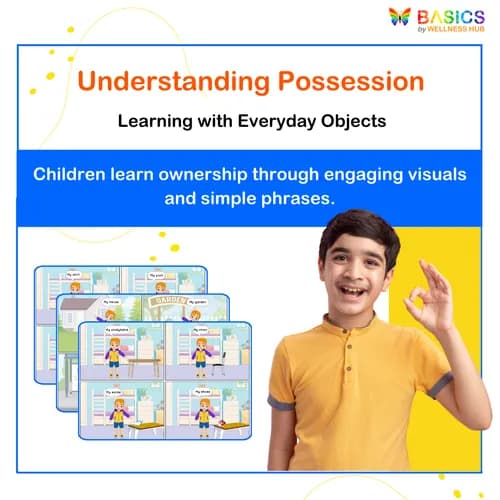
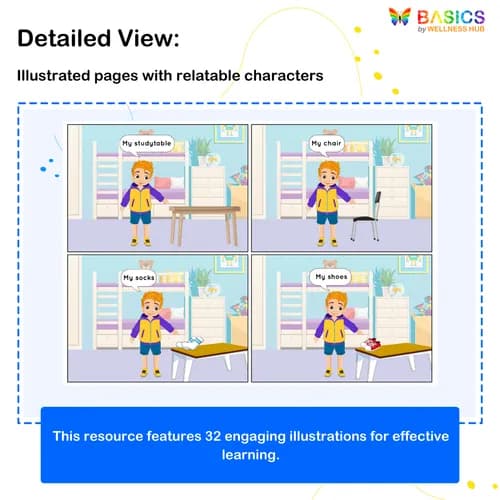
Understanding possession is a fundamental concept in early language development, and the "My" with Everyday Objects printable PDF is designed to help children grasp this idea in a fun and engaging way. Targeted towards young learners aged 3-6, this resource features a Caucasian boy character who introduces the concept of ownership through relatable everyday objects and family members. Each page showcases vibrant illustrations that depict the boy identifying items that belong to him, such as "My shoes," "My book," and "My father."
This resource not only builds vocabulary but also encourages children to express their sense of belonging and ownership through simple phrases. It is ideal for use in homes, classrooms, and therapy settings, making it a versatile tool for parents, teachers, and therapists looking to enhance language skills and foster communication in young children.
Product Details
- Product Name: "My" with Everyday Objects: Printable PDF
- Format: Printable PDF
- Total Pages: 8
- Illustrated Pictures: 32 (4 illustrated pictures per page)
- Content: Each picture features a Caucasian boy with a personal belonging, family member, or familiar object, labeled with a "My ..." phrase.
- Example Phrases: My shoes, My shirt, My toy, My book, My cap, My bag, My father, My bicycle
- Designed For: Early childhood education, language development, and vocabulary building
- Best Suited For: Ages 3-6 (Pre-K to Kindergarten)
- Usage Notes: Ideal for both individual and group activities; can be printed and used for interactive learning.
Educational Benefits
1. Enhances Vocabulary Development
- Introduces children to a range of everyday objects and family members through simple phrases.
- Encourages the use of descriptive language, helping children expand their vocabulary in context.
2. Promotes Understanding of Possession
- Teaches the concept of ownership, helping children articulate what belongs to them.
- Supports language development by reinforcing the use of "My" in everyday conversations.
3. Encourages Expressive Language Skills
- Provides opportunities for children to practice saying phrases aloud, boosting their confidence in speaking.
- Helps children learn to express their feelings of belonging and attachment to objects and people.
4. Supports Visual Learning
- Utilizes colorful illustrations to engage visual learners and enhance comprehension.
- Makes learning interactive and fun, allowing children to connect words with images effectively.
5. Facilitates Social Interaction
- Encourages group activities where children can share their own belongings, fostering social skills and communication.
- Promotes discussions about family and personal items, enhancing peer connections and relationships.
Instructions for Use
Step 1: Print the PDF
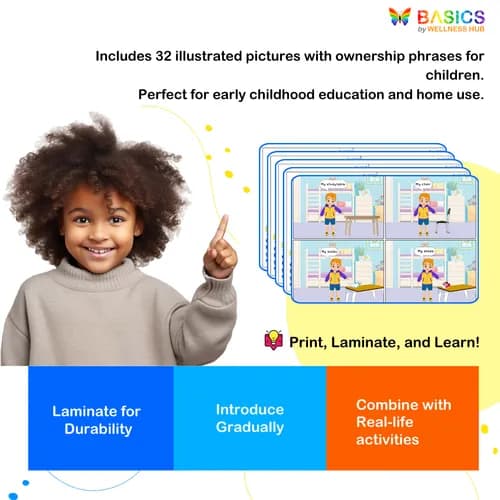
- Download and print the "My" with Everyday Objects PDF on standard A4 or Letter-sized paper.
- Consider laminating the pages for durability, especially for repeated use in group settings.
Step 2: Introduce the Concept
- Begin by explaining the idea of possession to the child using everyday language.
- Show them a few examples from the PDF, emphasizing the "My" phrases and what they mean.
Step 3: Engage with the Illustrations
- Go through each page together, pointing to the illustrations and reading the phrases aloud.
- Encourage the child to repeat the phrases after you to reinforce language skills.
Step 4: Interactive Learning Activities
- Ask the child to identify their own belongings using "My" phrases (e.g., "My toy," "My book").
- Create a scavenger hunt where they find items around the house or classroom that they can claim as "My."
Step 5: Group Activities
- Use the resource in a group setting, allowing children to take turns sharing their own "My" phrases with peers.
- Encourage discussions about family members and personal items, promoting social interaction.
Step 6: Reinforce Learning
- Revisit the PDF regularly to reinforce the concept of possession.
- Use the illustrations as prompts for storytelling, asking children to create stories about their belongings and family members.
Step 7: Monitor Progress
- Observe the child's ability to use "My" phrases in conversation over time.
- Provide positive reinforcement and encouragement as they become more confident in expressing ownership.
Activities Using the Resource
1. My Belongings Scavenger Hunt
Objective: Help children identify and articulate their own possessions.
How to Play:
- Create a list of items from the PDF (e.g., toy, book, shoes).
- Ask the child to find these items around the house or classroom.
- Encourage them to say, "My [item]" as they find each one.
Skill Development:
- Vocabulary reinforcement
- Expressive language skills
- Ownership recognition
2. Picture Story Creation
Objective: Foster creativity and narrative skills using personal belongings.
How to Play:
- Choose 3–4 illustrations from the PDF.
- Ask the child to create a short story about the boy and his items.
- Encourage them to use "My" phrases throughout the story.
Skill Development:
- Narrative development
- Sentence structure
- Imaginative thinking
3. Role-Playing Ownership
Objective: Enhance understanding of possession through interactive play.
How to Play:
- Use the PDF illustrations as prompts for role-playing.
- Take turns acting out scenarios (e.g., the boy sharing his toys).
- Use phrases like "My toy" during the role-play.
Skill Development:
- Social interaction
- Expressive language
- Empathy and sharing
4. My Family Circle
Objective: Connect the concept of ownership to family members.
How to Play:
- Use illustrations of family members from the PDF.
- Ask the child to draw or list their own family members and say "My [family member]."
- Share stories about what they enjoy doing with their family.
Skill Development:
- Family vocabulary
- Personal connection
- Storytelling skills
5. Illustrated Flashcards
Objective: Create a set of flashcards for interactive learning.
How to Play:
- Print and cut out the illustrations from the PDF.
- Show a card and ask the child to say the phrase, "My [item]."
- Mix the cards and play a memory game by matching items to their phrases.
Skill Development:
- Memory skills
- Vocabulary recall
- Visual recognition
6. My Art Gallery
Objective: Encourage self-expression through art and ownership.
How to Play:
- Provide paper and art supplies for the child to draw their favorite belongings.
- Have them label each drawing with "My [item]" and display the artwork.
- Host a mini art show where they present their gallery to family or friends.
Skill Development:
- Creative expression
- Ownership concepts
- Confidence in presentation
Frequently Asked Questions
Q1: What age group is this resource designed for?
A1: This resource is specifically designed for children aged 3 to 6 years old, making it ideal for preschool and kindergarten settings. The simple language and relatable illustrations help young learners grasp the concept of possession in a fun and engaging way. It encourages early language development and helps children express themselves confidently.
Q2: How can I use this resource in a classroom setting?
A2: You can use this resource for both individual and group activities. It is great for interactive learning sessions where children can practice saying "My" phrases aloud. Additionally, you can create group discussions around family and belongings, fostering social interaction among peers. The illustrations can also serve as prompts for storytelling or role-playing activities.
Q3: Can this resource be used for children with special needs?
A3: Absolutely! This resource is designed to be inclusive and can be adapted for children with various learning needs. The visual cues and simple text make it accessible for children who may benefit from additional support. You can modify the activities to suit individual learning styles, ensuring that every child can participate and benefit from the material.
Q4: What is the licensing policy for this resource?
A4: The resource is licensed for personal and educational use only. You may print and use it in your home, classroom, or therapy sessions, but redistribution or commercial use is not permitted. This ensures that the creators are compensated for their work while providing you with valuable educational materials that can enhance learning experiences.
Q5: What kind of support does Wellness Hub offer if I have questions about the resource?
A5: Wellness Hub provides customer support for any inquiries related to their resources. You can reach out through their website for assistance with downloading, printing, or using the materials effectively. They are committed to ensuring that you have a positive experience with their educational tools and will respond promptly to your questions.
Q6: Is this resource available for digital use on tablets or computers?
A6: Yes, this resource is provided as a digital PDF, making it easy to access on tablets or computers. You can display the pages during lessons or therapy sessions, allowing for interactive engagement. This digital format also allows for easy printing if you prefer to use physical copies during activities.
Q7: How will I receive the resource after purchasing it?
A7: After completing your purchase, you will receive an email with a download link to access the PDF resource. The process is straightforward, and you can download it immediately, allowing you to start using it right away. If you encounter any issues, Wellness Hub's support team is available to assist you.
Q8: What is Wellness Hub's refund policy?
A8: Wellness Hub offers a satisfaction guarantee for their resources. If you are not satisfied with your purchase, you can contact their support team within a specified period for a refund or exchange. They strive to ensure that every customer is happy with their resources and will work with you to resolve any issues.
Q9: Does Wellness Hub provide resources for other age groups or topics?
A9: Yes, Wellness Hub offers a wide range of resources for various age groups and topics, including speech therapy, occupational therapy, and behavioral support. Their library includes flashcards, worksheets, and visual schedules that cater to different developmental needs. You can explore their offerings to find additional materials that suit your specific requirements.
Q10: How can I contact Wellness Hub for further assistance?
A10: You can contact Wellness Hub through their website's contact form or by emailing their support team directly. They are dedicated to providing timely assistance and will respond to your inquiries as quickly as possible. Whether you have questions about resources, therapy services, or general support, they are here to help.
Usage Rights and Restrictions
Allowed Usage:
- Personal use by parents, teachers, and therapists.
- Printable for classroom, home, or therapy settings.
- Can be used in group or one-on-one learning sessions.
Not Allowed:
- Reselling, redistributing, or modifying the resource for commercial use.
- Sharing publicly (e.g., on blogs, social media, or websites) without permission.
- Uploading the file to public sharing platforms.
If you need a bulk license for schools or therapy centers, please contact us.
Conclusion
The "My" with Everyday Objects printable PDF is an essential resource for young learners to grasp the concept of possession in a fun and engaging manner. Designed for children aged 3-6, this 8-page PDF features a Caucasian boy character who introduces ownership through relatable everyday items and family members. By using simple phrases like "My shoes" and "My book," children can enhance their vocabulary while expressing their sense of belonging.
This resource is perfect for parents, teachers, and therapists, making it versatile for home, classroom, or therapy settings. It not only supports language development but also encourages social interaction and confidence in communication. Download this engaging tool today and watch as children learn to articulate their ownership and connect with their world!