


AFRICAN BOY: Learn “My” with Everyday Objects – Printable PDF
₹80
₹160
50% off
0 (0 ratings)
Grade Levels
Pre-K - Grade 1 (Ages 3-6)
Content Overview
Format: Printable PDF, Total Pages: 8, Features: 32 illustrated pictures teaching possession with “My” phrases.
Categories
Share


About the Product
Introduction
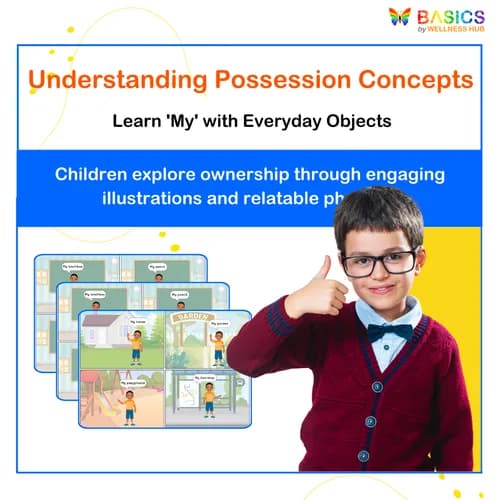
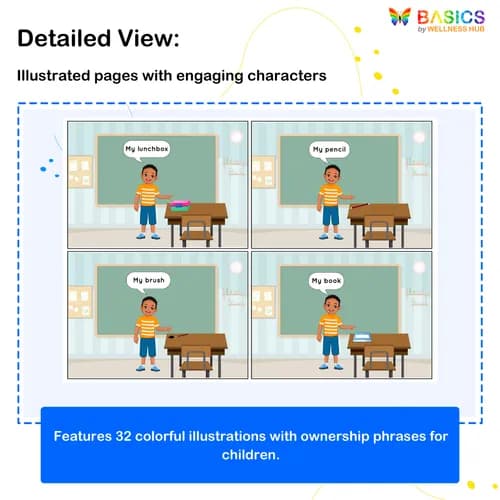
Understanding possession is a fundamental aspect of language development for young children. The AFRICAN BOY: Learn "My" with Everyday Objects printable PDF is designed to help children grasp the concept of ownership through relatable and engaging illustrations. Featuring an African boy character, this resource presents 8 pages filled with colorful images that depict everyday objects, people, and places, each accompanied by simple "My" phrases such as "My shoes" and "My house."
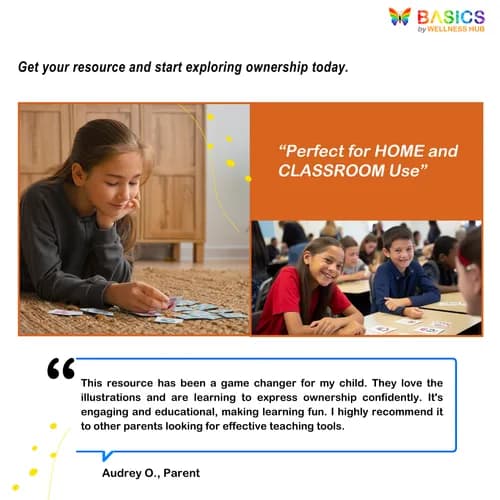
This resource is ideal for children aged 3-6, making it suitable for use at home, in preschool classrooms, or during therapy sessions. By interacting with these visuals, children will not only expand their vocabulary but also learn to use possessive language in context. The diverse representation in this resource fosters inclusivity and helps children connect with the material on a personal level.
Product Details
- Product Name: AFRICAN BOY: Learn "My" with Everyday Objects
- Format: Printable PDF
- Total Pages: 8
- Illustrated Pictures: 32 (4 pictures per page)
- Content: Each page features the boy with familiar objects, people, or places, using "My …" phrases.
- Example Phrases: Includes phrases like "My shoes," "My shirt," "My toy," "My house," and more.
- Designed For: Early childhood education, language development, vocabulary building, and social skills training.
- Best Suited For: Ages 3-6, preschool, kindergarten, and early learners.
Educational Benefits
1. Enhances Vocabulary Development
- Introduces children to a variety of everyday objects, people, and places.
- Encourages the use of possessive language through simple "My" phrases.
2. Supports Language Acquisition
- Helps children understand the concept of ownership in a relatable context.
- Promotes sentence structure and grammar by modeling correct usage of "My."
3. Fosters Cultural Awareness and Inclusivity
- Features a diverse character that children can relate to, promoting representation.
- Encourages discussions about different cultures and backgrounds, enriching social learning.
4. Engages Visual Learning
- Utilizes colorful illustrations to capture children's attention and enhance understanding.
- Supports visual learners by providing concrete examples of ownership through imagery.
5. Builds Social Skills
- Encourages sharing and discussing personal belongings, fostering social interactions.
- Helps children practice language in context, enhancing communication skills with peers.
Instructions for Use
Step 1: Print the PDF
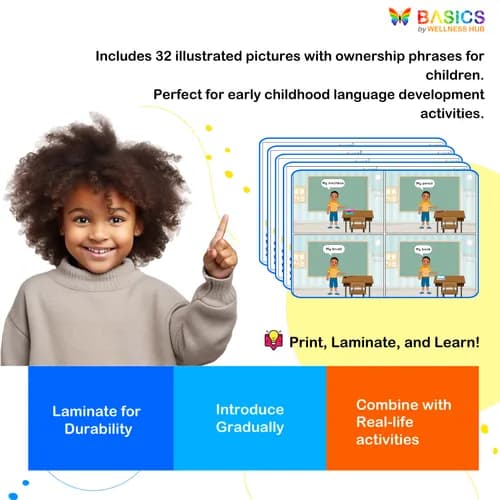
- Download and print the 8-page PDF on standard A4 or Letter-sized paper.
- Consider laminating the pages for durability, especially for repeated use in classrooms or therapy sessions.
Step 2: Read Together
- Sit with the child and go through each page, pointing to the illustrations as you read the phrases together.
- Encourage the child to repeat the phrases to reinforce learning and pronunciation.
Step 3: Interactive Discussion
- Ask the child to identify their own belongings that match the images (e.g., "Do you have shoes like his?").
- Encourage them to create sentences using "My" with their own items (e.g., "My toy is blue.").
Step 4: Role-Playing Activity
- Use the illustrations to role-play scenarios where the child can practice using "My" in conversation.
- For example, ask them to introduce their favorite toy by saying, "This is my toy."
Step 5: Vocabulary Games
- Turn learning into a game by asking the child to find similar items around the house or classroom.
- Play a matching game where they match the phrase "My …" with the corresponding object.
Step 6: Regular Review
- Revisit the PDF regularly to reinforce vocabulary and ownership concepts.
- Encourage the child to use "My" phrases in everyday conversations to build confidence and fluency.
Activities Using the Resource
1. Picture Identification
Objective: Help children recognize and name everyday objects using "My" phrases.
How to Play:
- Show one page of illustrations and read the phrases together.
- Ask the child to point to each object and say, "My [object]."
- Encourage them to find similar items in their environment.
Skill Development:
- Vocabulary expansion
- Object recognition
- Confidence in verbal expression
2. Personal Belongings Show-and-Tell
Objective: Encourage children to relate the concept of ownership to their own items.
How to Play:
- Have the child select 3-5 personal items (e.g., toys, clothes).
- Ask them to introduce each item using "My" (e.g., "This is my toy.").
- Discuss why each item is special to them.
Skill Development:
- Expressive language skills
- Social interaction
- Self-esteem building
3. My Book Creation
Objective: Foster creativity and ownership through personalized storytelling.
How to Play:
- Provide blank paper or a small notebook.
- Ask the child to draw pictures of their belongings and write "My [item]" underneath each.
- Encourage them to share their book with family or friends.
Skill Development:
- Creative expression
- Writing skills
- Ownership understanding
4. Role-Playing Scenarios
Objective: Practice conversational skills using "My" in context.
How to Play:
- Choose a few illustrations and create role-play scenarios (e.g., "The boy is at a friend's house").
- Have the child introduce their items in the context of the scenario (e.g., "This is my toy at my friend's house.").
Skill Development:
- Conversational skills
- Contextual language use
- Imaginative play
5. Matching Game
Objective: Reinforce vocabulary and ownership concepts through play.
How to Play:
- Create cards with the "My" phrases and corresponding pictures.
- Mix them up and have the child match the phrases to the correct images.
- Discuss each match as they play.
Skill Development:
- Memory skills
- Visual discrimination
- Vocabulary reinforcement
6. Daily "My" Phrase Challenge
Objective: Encourage the use of "My" phrases in daily conversations.
How to Play:
- Set a goal for the child to use "My" phrases throughout the day.
- For each item they identify, they must say a sentence (e.g., "My shoes are red.").
- Celebrate their efforts at the end of the day.
Skill Development:
- Practical language use
- Daily vocabulary application
- Confidence in speaking
Frequently Asked Questions
Q1: How can I use this resource with my child?
A1: You can start by printing the PDF and reading through each page together. Point to the illustrations and encourage your child to repeat the phrases. Engage them in discussions about their own belongings that match the images, and consider using role-playing activities to practice using "My" in context. This interactive approach helps reinforce the concept of ownership while making learning fun.
Q2: Is this resource suitable for children with special needs?
A2: Yes, this resource is designed to support language development for all children, including those with special needs. The clear illustrations and simple phrases help children grasp the concept of ownership, making it accessible for various learning styles and abilities. Additionally, the repetitive nature of the phrases can aid in memory retention and language acquisition.
Q3: Can I use this resource in a group setting or therapy session?
A3: Absolutely! This resource is perfect for group activities or therapy sessions. You can print multiple copies for each child, allowing them to participate actively in discussions and exercises. The illustrations can also serve as conversation starters, encouraging peer interaction and collaborative learning.
Q4: How do I access the resource after purchase?
A4: After completing your purchase, you will receive a confirmation email with a download link for the PDF. You can download and print the resource immediately. If you encounter any issues, our customer support team is available to assist you. We strive to make the process as seamless as possible for our customers.
Q5: What is the refund policy if I am not satisfied with the resource?
A5: Wellness Hub offers a satisfaction guarantee. If you are not satisfied with your purchase, you can contact customer support within 14 days for a refund or exchange. Be sure to provide your order details to expedite the process. We want to ensure that you are happy with your purchase and find it valuable for your child's learning.
Q6: Are there any suggestions for differentiating this resource for varying skill levels?
A6: Yes, you can differentiate the use of this resource by adjusting the complexity of the discussions or activities based on your child's skill level. For younger or less experienced learners, focus on basic phrases and simple interactions. For older or more advanced children, encourage them to create sentences using "My" and describe their own belongings in more detail, fostering deeper language skills.
Q7: What types of licensing options do you offer for schools or organizations?
A7: Wellness Hub provides bulk licensing options for schools and organizations looking to use our resources in their programs. This allows multiple users to access the material while ensuring compliance with our usage rights. For more information on bulk licensing, please contact our support team, and we will be happy to assist you.
Q8: How can I contact customer support if I have questions or issues?
A8: You can reach our customer support team through the contact form on our website or by emailing us directly. We aim to respond to inquiries promptly, typically within 24-48 hours. Our team is here to help you with any questions or concerns you may have about your purchase or our resources.
Q9: Is this resource accessible for children with visual impairments?
A9: While this resource primarily relies on illustrations, we are committed to making our materials as accessible as possible. For children with visual impairments, consider using descriptive language to explain the images and engage them in discussions about the content. We are also exploring options for creating alternative formats in the future.
Q10: What other resources does Wellness Hub offer for supporting children's development?
A10: Wellness Hub offers a wide range of resources, including flashcards, worksheets, visual schedules, and interactive tools designed to support various aspects of child development. Our library is continually expanding, and we provide expert-led therapy sessions in areas like speech and language, occupational therapy, and behavioral support. We aim to empower parents and caregivers with the tools they need for effective home therapy.
Usage Rights and Restrictions
Allowed Usage:
- Personal use by parents, teachers, and therapists.
- Printable for classroom, home, or therapy settings.
- Can be used in group or one-on-one learning sessions.
Not Allowed:
- Reselling, redistributing, or modifying the resource for commercial use.
- Sharing publicly (e.g., on blogs, social media, or websites) without permission.
- Uploading the file to public sharing platforms.
If you need a bulk license for schools or therapy centers, please contact us.
Conclusion
The AFRICAN BOY: Learn "My" with Everyday Objects printable PDF is a powerful resource designed to enhance early language development by helping children understand the concept of possession through relatable illustrations. With 8 engaging pages filled with vibrant images and simple phrases, this resource is perfect for children aged 3-6, making it ideal for use at home, in preschool classrooms, or during therapy sessions.
By using this resource, children will not only expand their vocabulary but also learn to use possessive language in context, fostering communication skills and confidence. The diverse representation of the African boy character promotes inclusivity, allowing children to connect with the material on a personal level. Invest in this resource today to support your child's language journey and empower them to express ownership in their everyday lives.