It Can Be Normal If Your Toddler Hears You but Does Not Look Up to Their Name
By Rajini D
Last Updated: April 7, 2026
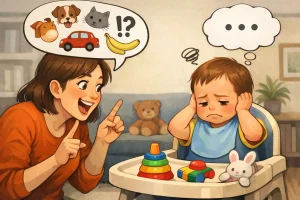
You call your child, you are sure they heard you, and they keep right on playing. If you have found yourself thinking, “My toddler hears name but ignores me,” you are not alone. This moment can feel surprisingly personal, even when you know your child is not trying to be rude. The good news is that there are many everyday reasons this happens, and plenty of responses still count as real connection, even if they are not a clear head turn and eye contact right away.
Read More: My Child Ignores the Name call When Playing – Is That Normal?
Why It Feels So Upsetting When Your Child Does Not Look Up
Most parents do not mind repeating themselves once or twice. What stings is the feeling of being blanked, especially when you are certain your toddler heard you. It can bring up a mix of emotions: worry, frustration, embarrassment in public, or even a quiet thought like, “Do they not care?”
In real life, toddlers are not choosing between “listen to parent” and “ignore parent” the way adults might. They are often choosing between two competing pulls: the thing in front of them that is interesting right now, and the sound of your voice that asks them to shift attention. That shift is a skill. It takes practice, and it is influenced by sleep, hunger, stress, and how absorbed they are.
It also helps to remember that “looking up” is only one kind of response. Some toddlers show they heard you by pausing for half a second, tightening their grip on a toy, changing their breathing, or making a tiny sound. Those are easy to miss when you are hoping for eye contact.
Learn More: How Long Does It Take for a Child to Respond to Their Name Consistently?
Toddler Hears Name but Ignores: Common, Non-Worrying Reasons
When a toddler hears their name but does not look up, it often comes down to attention, timing, and the environment, not attitude. Here are some common reasons that fit everyday family life.
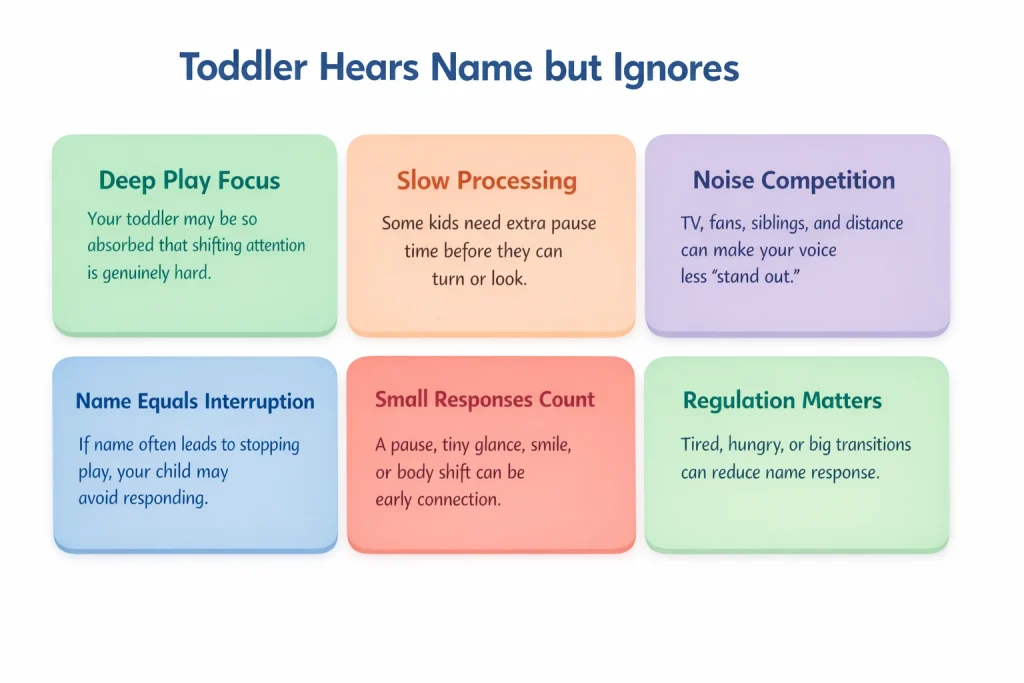
1. Deep play focus can block out everything else
Toddlers can get intensely absorbed, especially with cause and effect toys, building, water play, or anything that involves repetition. Their brain is busy. Shifting attention is harder than it looks.
2. They are processing, just slowly
Some children need a longer pause to take in what you said, decide what it means, and plan a response. If you call their name and then immediately repeat it, it can actually make it harder for them to respond because they never get a clean moment to process.
3. The room is louder than you think
Fans, TVs, siblings, kitchen noise, or a busy street outside can all compete with your voice. Even if your toddler “hears” you, your voice may not stand out enough to trigger a turn.
4. They are used to their name being a “test”
If name calling often leads to “Come here,” “Stop,” or “No,” some toddlers start to protect their play by not responding. This is not defiance. It is a pattern they have learned: name equals interruption.
5. They are responding in a different way
A toddler might keep playing but smile, hum, or shift their body slightly. Some children glance with their eyes without moving their head. Others look for a second and then look away quickly. These can be early forms of responding.
6. They are tired, hungry, or in transition
Right before meals, after daycare, or near nap time, attention can be thin. In those moments, even a child who usually responds well may seem to tune out.
What Counts As Responding, Even if It Is Not Eye Contact
Parents often picture one clear response: you call, your toddler turns, makes eye contact, and says “Yeah?” That can happen, but it is not the only meaningful sign.
A response can be small and still real. You might notice:
- A brief pause in hand movement
- A quick eye flick toward you, even without a head turn
- A smile, a sound, or a little breathy laugh
- A body shift, like turning their shoulders slightly
- Moving closer later, after finishing what they were doing
These are early building blocks. Over time, many toddlers go from “tiny pause” to “quick glance,” then to “turning more often,” then to responding across more routines. Progress is often uneven. A child might respond beautifully at snack time but not during blocks, because blocks are simply more absorbing.
If you are also noticing a broader pattern of toddler not responding to name across most settings, it can help to zoom out and look at the whole week rather than one hard moment. One moment can feel huge, but patterns tell the clearer story.
Read More: What Counts as Progress When Your Child Starts Responding to Their Name?
Why Repeating Their Name Can Make the Ignoring Look Worse
When you call your toddler and they do not look up, it is natural to repeat their name. Most parents do it. Many loving caregivers do it. The tricky part is that repetition can accidentally turn the moment into background noise.
If your toddler hears “Ava, Ava, Ava” while they are trying to finish lining up cars, their brain may start filtering it out the same way it filters out a running TV. Then, when you finally say it in a sharper tone, your child might startle or melt down, and nobody feels good.
Another common pattern is calling from far away. If you are in the kitchen and your toddler is in the living room, they may hear you but not feel pulled to respond because you are not in their “interaction space.” Toddlers learn best when connection is close, warm, and easy.
If you want a gentle reframe, think of name response as a social skill, not a compliance skill. The goal is not “They must answer immediately.” The goal is “They learn that hearing their name leads to a pleasant moment of connection.”
What To Watch for Next Time, so You Feel Less Stuck in the Moment
When parents tell me, “My toddler hears name but ignores,” they often want one clear answer: Is this normal or not? Real life is usually more nuanced. A calmer question is: What is changing over time?
Here are a few signs that the skill is moving in a good direction, even if it is not consistent yet:
1. You get more responses in easier routines
Some toddlers respond first during predictable moments like snack, bath, or getting dressed. That is a great starting point because routines reduce the thinking load.
2. Your child responds faster when you are close
That suggests the connection piece is there, and the environment is supporting them.
3. You notice fewer repeats are needed
Even going from three calls to two is progress. It means your toddler is beginning to register that their name matters.
4. Responses show up with more than one person
If your child starts responding to another caregiver or a grandparent, that is a meaningful step toward generalizing the skill.
5. The response looks different, but it is there
A quick glance, a grin, or a shoulder turn can be your child’s version of “I hear you.”
If you are unsure, it can help to pick one or two daily moments to observe without trying to fix anything. Just notice: Were they tired? Was the room loud? Were they deeply focused? Did they pause at all? This kind of noticing tends to reduce self blame and makes the pattern clearer.
A gentle note if you are worried about communication overall
Sometimes the name response worry is not only about the name. It is about a bigger feeling: “Are we connecting the way I expected?” If that is where you are, you deserve support and clarity, not pressure.
If you have tried warm, close, everyday practice for a while and your toddler is still not responding to name in most routines, some families choose to talk with a pediatrician or seek a developmental screening to better understand communication delays or possible autism-related differences. This is not about jumping to conclusions. It is about getting a clearer picture and feeling more confident about what helps your child connect.
Most importantly, try not to measure your bond by one moment when your child does not look up. Toddlers are busy learning how to shift attention, manage big feelings, and stay engaged in play. If your toddler hears name but ignores you sometimes, it does not mean you are doing anything wrong. Keep looking for the small responses, because those are often the first signs that the connection is already growing.
About the Author:
Anuradha Karanam
Speech-language pathologist (7+ years of experience)
Anuradha Karanam is a skilled speech-language pathologist with over 6 years of experience. Fluent in Tamil, Telugu, Hindi, and English, she specializes in parent counseling, speech sound disorders, fluency assessment, and speech-language evaluations. Anuradha excels at working with children with developmental disorders, offering creative and effective therapy programs. Currently, at Wellness Hub, she holds a BASLP degree and is registered with the RCI (CRR No A85500). Her patience, ambition, and dedication make her a trusted expert in her field.
Book your Free Consultation Today
Parent/Caregiver Info:
Client’s Details:
* Error Message