10+ Easy Home Activities That Encourage Sound Imitation and Playful Noises
Last Updated: March 2, 2026
If you’ve ever made a silly sound for your child—“baaa,” “ooo,” a squeal, or a raspberry—and waited for them to copy it, you’re not alone. Many parents quietly wonder, Should they be imitating me by now? Am I doing enough? At the same time, there’s often a worry about turning play into a mini “lesson” if they try too hard while trying different sound imitation activities at home.
Here’s the reassuring truth: sound imitation usually grows best in small, light moments. It’s not about getting a perfect copy on demand. It’s about sharing playful noises—coos, squeals, raspberries, and animal sounds—and letting your child feel the joy of joining in. These short exchanges help children become comfortable using their voice, build confidence, and begin to notice the back-and-forth rhythm that later supports conversation.
Below is an idea bank of simple, everyday activities that naturally invite copying—without pressure and without special toys.
10+ Easy Home Activities That Encourage Sound Imitation and Playful Noises
If you’ve ever made a silly sound for your child—“baaa,” “ooo,” a squeal, or a raspberry—and waited for them to copy it, you’re not alone. Many parents quietly wonder, Should they be imitating me by now? Am I doing enough? At the same time, there’s often a worry about turning play into a mini “lesson” if they try too hard while trying different sound imitation activities at home.
Here’s the reassuring truth: sound imitation usually grows best in small, light moments. It’s not about getting a perfect copy on demand. It’s about sharing playful noises—coos, squeals, raspberries, and animal sounds—and letting your child feel the joy of joining in. These short exchanges help children become comfortable using their voice, build confidence, and begin to notice the back-and-forth rhythm that later supports conversation.
Below is an idea bank of simple, everyday activities that naturally invite copying—without pressure and without special toys.
Also read: My Baby Isn’t Imitating Sounds Yet Is That Normal?
What “sound imitation” can look like in real life
Sound imitation is not only about “saying words.” It can be repeating a silly noise you make, echoing a squeal, trying a raspberry, or responding with an animal-like sound after you do. Sometimes it won’t sound exact at first. Your child might answer with a different sound, a smile, a wiggle, or a look that says, “Do that again.”
Those moments still count because they show your child is tuned into you and the interaction itself.
Over time, you may notice your child making more playful noises, glancing at you after they vocalize, or experimenting with new sounds just to see what happens. That growing curiosity is a lovely sign that vocal play is becoming part of your connection.
Read more: What Counts as “Imitating Sounds” It’s More Than First Words
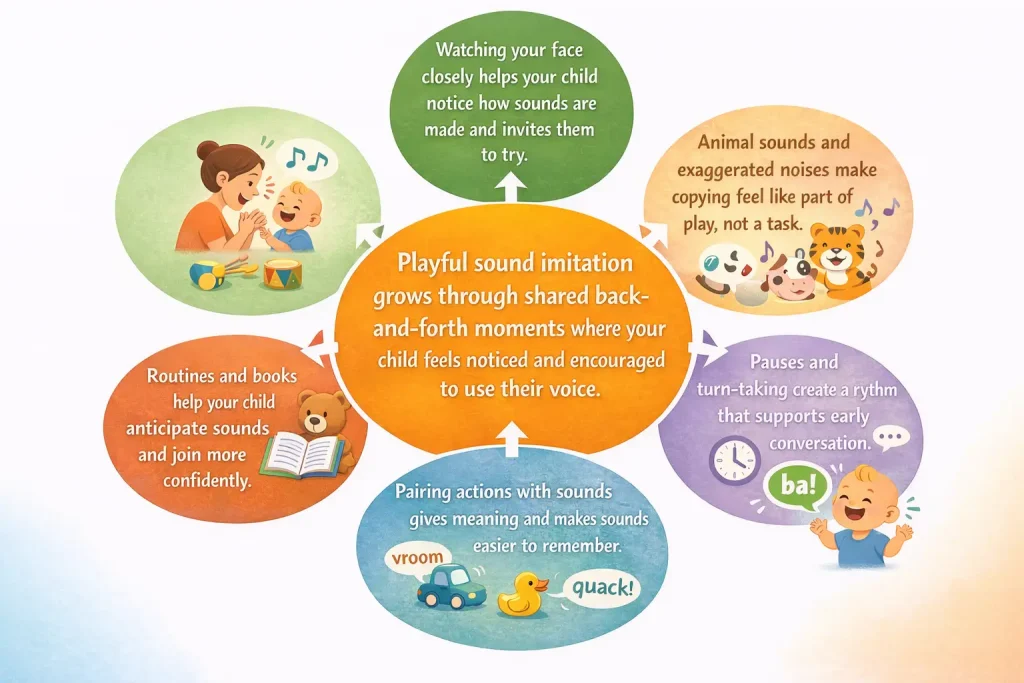
10+ easy activities that invite playful sound copying
1. Face-to-face sound play
Some of the richest sound moments happen when you’re close enough for your child to see your face clearly on the floor, during cuddles, or while waiting together. When your child can watch your mouth and eyes, playful sounds often feel more inviting, like an open door to join in.
2. Raspberry and lip-sound fun
Raspberries, lip pops, and gentle “brrr” sounds catch many children’s attention because they look funny and feel silly. Even if your child doesn’t copy right away, they may watch closely, smile, or touch their mouth early signs they’re thinking about trying.
3. Animal sound imitation game
Animal sounds work so well because they are exaggerated, memorable, and tied to something your child can see. A “moo” with a cow, a “quack” with a duck, or a “sss” with a snake makes sound play feel like part of a story rather than a task.
4. Echo microphone game
Many children love the idea of a “microphone,” even if it’s just a spoon, a toy block, or your hand. The pretend performance makes copying feel playful and low-pressure. Some children echo you; others make their own sound and look at you as if to say, “Now it’s your turn.”
5. Sound-in-a-box surprise
A box, bag, or container with a few familiar items can create natural sound moments. The fun is not the object itself but the shared anticipation. When something appears, a simple “oh!” or “wow!” can invite your child to try their own version.
6. Action plus sound pairing
Pairing sounds with actions helps children understand the exchange more easily. Think of sounds that match movement: a “wee!” for lifting up, a “boom” when a block tower falls, or a “shhh” for a quiet moment. The action gives the sound meaning, and meaning helps it stick.
7. Vocal turn-taking games
Turn-taking is the heartbeat of conversation, and it can begin with the simplest sound exchange. You make a sound, pause, and your child has space to respond—by copying, making a new sound, or even just looking at you. The goal isn’t correctness. The goal is shared rhythm: my turn, your turn.
8. Puppet sound echo
A puppet, stuffed animal, or even a sock can become a playful “sound buddy.” Some children feel more comfortable responding to a character than directly to an adult. The puppet can be excited, shy, or dramatic whatever fits your child’s mood.
9. Mouth-movement mirror play
A mirror can turn sound exploration into a game. Children often enjoy watching their own mouth open wide, smile, or pucker especially when you do it too. Even if the sound doesn’t come yet, copying the mouth movement can be an important step toward it.
10. Sound sequence copying
Once sound play feels familiar, some families naturally try tiny sound patterns—two quick sounds in a row or a repeated silly noise. Many children enjoy patterns. And if your child changes the pattern or invents their own, that still counts as engagement and experimentation.
11. Bath time and routine noises
Routines are full of opportunities for playful sounds because they happen every day. A squeal when the water splashes, a “buh-buh-buh” with bubbles, or a funny sound while washing hands can turn ordinary moments into shared jokes. Predictable routines often make children feel more comfortable joining in.
12. Book sound effects
Some books practically invite sound effects—animals, vehicles, surprised characters, sleepy scenes. Adding playful noises while reading makes the story interactive. Many children begin to anticipate the sound and look at you like, “Do the funny one!”
If your child doesn’t imitate right away, it still counts
It’s very common for children to take time before they copy a sound. Some prefer to watch first. Some try quietly. Some respond with movement instead of voice at the beginning—smiling, bouncing, clapping, or making eye contact. All of that is communication.
A helpful way to think about progress is to ask:
Is my child more interested in my sounds over time? Are we sharing more back-and-forth moments? Do they look at me after they make a noise?
These are meaningful signs that the “conversation rhythm” is developing, even before clear imitation appears.
Keeping it playful without turning it into a lesson
Many parents worry about “doing it wrong.” There is no perfect method. Sound imitation grows best when your child feels safe, noticed, and unpressured. A warm response smiling, laughing gently, and treating their sound as important often matters more than repeating the same noise again and again.
Short moments add up. A few seconds here and there during play, meals, diaper changes, or car rides can build a lot of confidence over time.
When it helps to get a little extra support
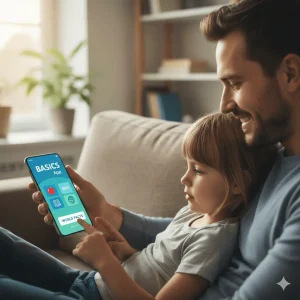
Sometimes parents aren’t worried just unsure what to try next or how to make sound play easier. If you’d like ideas that fit your child and daily routines, Speech and Autism therapy apps like BASICS can offer gentle guidance and simple activity suggestions without turning your day into “therapy time.” It’s there if you want it, and it’s also fine to simply follow your child’s lead with simple sound imitation activities that feel natural.
A calm reminder to take with you
Imitating sounds and playful noises is, at its heart, about connection. It’s your child learning, “My voice can do things, and when I use it, you respond.”
Whether your child copies a raspberry perfectly, offers a tiny coo, or simply looks at you with a grin, those are real steps forward. You don’t need long practice sessions. You just need small, happy moments that invite your child to join in, and permission to enjoy them as they are.
About the Author:
Rajini Darugupally
M.Sc., Speech-Language Pathologist (9+ years of experience)
Rajini is a passionate and dedicated Speech-Language Pathologist with over 9+ years of experience, specializing in both developmental speech and language disorders in children and rehabilitation in adults. Driven by a desire to empower each individual to find their voice, Rajini brings a wealth of experience and a warm, genuine approach to therapy. Currently, at Wellness Hub, she thrives in a team environment that values innovation, compassion, and achieving results for their clients. Connect with Rajini to learn more about how she can help you or your loved one find their voice.
Book your Free Consultation Today
Parent/Caregiver Info:
Client’s Details:
* Error Message