


Social Story: Adjusting to a Parent Being Away
₹80
₹160
50% off
0 (0 ratings)
Grade Levels
Kindergarten - Grade 3 (Ages 5-9)
Content Overview
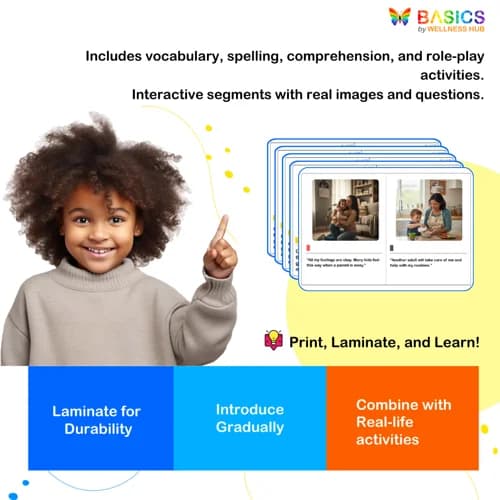
Format: Printable PDF, Total Pages: 11, Features: 16 segments with real images, vocabulary, spelling, comprehension, role-play activities
Categories
Share


About the Product
Introduction
Helping children adjust to changes in their family dynamics, such as a parent being away, can be challenging. The "Adjusting to a Parent Being Away: Social Story PDF" is a supportive tool designed to ease this transition by providing relatable scenarios and coping strategies. This resource uses real-life images and first-person narratives to help children understand and express their feelings, making it easier for them to adapt to temporary separations. Ideal for use in therapy sessions, classrooms, or at home, this social story encourages emotional resilience and communication skills.
Product Details
- Format: Printable PDF
- Total Pages: 11
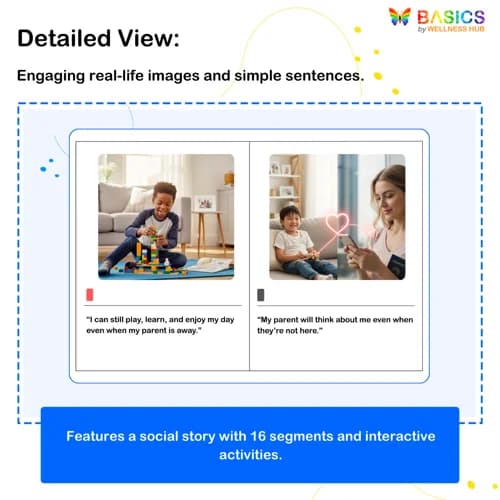
- Social Story: 8 pages, divided into 16 segments, each with a real picture and sentence
- Narrative Style: First-person perspective to enhance relatability and understanding
- Page 9: Vocabulary and Spelling Exercises
- Vocabulary: 5 words with 2 definition options each
- Spelling: 5 words with 2 spelling options each
- Page 10: Comprehension and Open-Ended Questions
- Page 11: Role-Play Activities
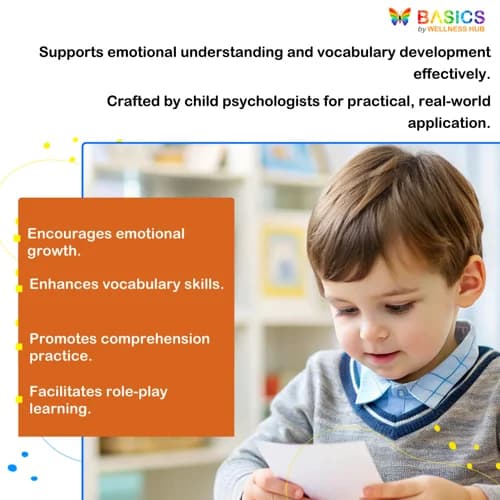
- Purpose: Supports emotional development, language skills, and coping mechanisms for children experiencing a parent's absence
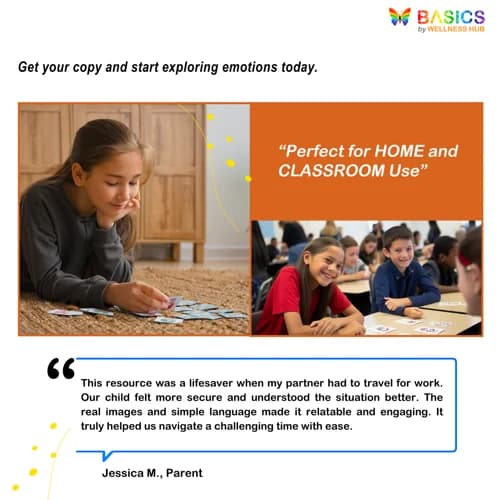
- Suitable For: Home use, therapy, special education, and classroom settings
Additional Activities:
Educational Benefits
1. Emotional Resilience and Coping Skills
- Helps children understand and manage their emotions when a parent is away.
- Provides strategies for coping with feelings of sadness, anxiety, or loneliness.
- Encourages children to express their emotions in healthy ways.
2. Language and Vocabulary Development
- Enhances vocabulary through targeted exercises, helping children learn new words related to family dynamics and emotions.
- Improves spelling skills with engaging activities that reinforce correct spelling.
3. Comprehension and Critical Thinking
- Boosts reading comprehension through open-ended questions that encourage children to think about and discuss the story.
- Promotes critical thinking by asking children to consider different perspectives and solutions.
4. Social Skills and Role-Playing
- Encourages role-play activities that help children practice social interactions and empathy.
- Supports the development of communication skills by modeling how to express feelings and ask for support.
5. Visual Learning and Engagement
- Uses real-life images to make the story more relatable and engaging for visual learners.
- Helps children with special needs, such as autism, connect with the material through clear and realistic visuals.
Instructions for Use
Step 1: Reading the Social Story
- Read the story with the child in a quiet, comfortable setting.
- Discuss each segment, focusing on the images and sentences to ensure understanding.
- Encourage the child to express how they feel about the scenarios presented.
Step 2: Vocabulary and Spelling Activities
- Go through the vocabulary section on page 9 with the child.
- Ask them to choose the correct meaning for each word, discussing why it fits the context of the story.
- Review the spelling section, helping the child identify the correct spelling of each word.
Step 3: Comprehension and Open-Ended Questions
- Use page 10 to discuss the comprehension questions with the child.
- Encourage them to think about and articulate their responses, promoting deeper understanding.
- Ask open-ended questions to facilitate discussion about their own experiences and feelings.
Step 4: Role-Play Activities
- Engage the child in role-play scenarios from page 11, using props or toys if available.
- Practice different situations, such as saying goodbye to a parent or talking about their day.
- Encourage the child to express emotions and problem-solve during role-play.
Step 5: Reinforcement and Follow-Up
- Revisit the social story regularly to reinforce learning and coping strategies.
- Provide positive reinforcement and praise as the child demonstrates understanding and uses new skills.
- Share the story with teachers or therapists to ensure a consistent approach across different settings.
Activities Using the Resource
1. Picture and Sentence Connection
Objective: Enhance understanding of the story by linking images to text.
How to Play:
- Go through each segment of the social story, focusing on the picture and sentence.
- Ask the child to describe what they see in the picture and how it relates to the sentence.
- Encourage them to share personal experiences that relate to the scenario.
Skill Development:
- Visual literacy
- Personal connection
- Expressive language
2. Vocabulary and Spelling Games
Objective: Reinforce language skills through interactive exercises.
How to Play:
- Use page 9 to explore vocabulary words.
- Create a matching game where the child pairs words with their correct meanings.
- For spelling, play a "spell it out" game where the child spells the word aloud after choosing the correct option.
Skill Development:
- Vocabulary expansion
- Spelling accuracy
- Language comprehension
3. Comprehension Discussion
Objective: Deepen understanding through critical thinking and personal reflection.
How to Play:
- Discuss the comprehension questions on page 10.
- Encourage the child to think about the story's themes and relate them to their own life.
- Use open-ended questions to explore their feelings and thoughts about a parent's absence.
Skill Development:
- Critical thinking
- Emotional articulation
- Perspective-taking
4. Role-Play Scenarios
Objective: Practice social skills and emotional expression in a safe environment.
How to Play:
- Use page 11 to guide role-play activities.
- Act out scenarios such as saying goodbye or sharing feelings about a parent's absence.
- Use props or toys to make the role-play more engaging.
Skill Development:
- Social interaction
- Empathy building
- Problem-solving
5. Create a Personal Storybook
Objective: Personalize learning by creating a storybook about their own experiences.
How to Play:
- Encourage the child to create a storybook using their own pictures and sentences.
- Have them narrate their story, focusing on how they cope with a parent's absence.
- Review the story together, discussing emotions and strategies used.
Skill Development:
- Creative expression
- Emotional processing
- Narrative skills
6. Daily Reflection Journal
Objective: Foster ongoing emotional awareness and coping strategy practice.
How to Play:
- Encourage the child to keep a daily journal about their feelings and experiences.
- Use prompts from the social story to guide reflections (e.g., "Today, I felt... because...").
- Review the journal weekly to celebrate progress and discuss any challenges.
Skill Development:
- Self-reflection
- Emotional regulation
- Consistent practice of coping skills
Frequently Asked Questions
Q1: How can the "Adjusting to a Parent Being Away" social story help my child?
A1: This social story helps children understand and manage emotions related to a parent's absence by providing relatable scenarios and coping strategies. It uses real-life images and first-person narratives to make the content more engaging and relatable, promoting emotional resilience and communication skills.
Q2: What additional activities are included in the social story PDF?
A2: The PDF includes vocabulary and spelling exercises, comprehension and open-ended questions, and role-play activities. These activities support language development, critical thinking, and social skills, helping children process and articulate their feelings.
Q3: Can this resource be used in therapy sessions?
A3: Yes, it is ideal for use in therapy sessions, as well as in classrooms and at home. Therapists can use it to facilitate discussions about emotions and coping strategies, while the role-play activities provide a practical way to practice social interactions and empathy.
Q4: Is this social story suitable for children with special needs?
A4: Absolutely. The use of real-life images and clear, simple sentences makes it accessible for children with special needs, such as autism. It helps them connect with the material through visual learning and supports the development of emotional and social skills.
Q5: What is Wellness Hub's approach to therapy?
A5: Wellness Hub combines professional expertise with innovative digital tools to make therapy interactive and effective. They offer services like speech and language therapy, occupational therapy, and mental health counselling, focusing on accessibility, caregiver involvement, and privacy.
Q6: How can I access Wellness Hub's services?
A6: You can access Wellness Hub's services through their online platform, which includes video sessions, games, and structured resources. They offer a free consultation, followed by personalized therapy planning and regular progress tracking to ensure effective outcomes.
Q7: What resources does Wellness Hub provide for home therapy?
A7: Wellness Hub offers a vast library of home therapy resources, including flashcards, worksheets, and visual schedules. These resources are designed to support parents and caregivers in continuing progress at home, making therapy a collaborative and ongoing process.
Q8: What is the typical session length and structure at Wellness Hub?
A8: Sessions are typically 45 minutes long and conducted one-on-one. They start with a free consultation, followed by assessments, therapy planning, and regular progress tracking. This structured approach ensures personalized and effective therapy for each child.
Q9: What is Wellness Hub's refund policy?
A9: Wellness Hub is committed to customer satisfaction. For specific details about their refund policy, it's best to contact their customer support directly. They aim to address any concerns promptly and ensure a positive experience for all users.
Q10: How can I get support if I have questions about the social story or other resources?
A10: For any questions or support regarding the social story or other resources, you can reach out to Wellness Hub's customer service team. They are available to assist with any inquiries and provide guidance on using their resources effectively.
Usage Rights and Restrictions
Allowed Usage:
- Personal use by parents, teachers, and therapists.
- Printable for classroom, home, or therapy settings.
- Can be used in group or one-on-one learning sessions.
Not Allowed:
- Reselling, redistributing, or modifying the resource for commercial use.
- Sharing publicly (e.g., on blogs, social media, or websites) without permission.
- Uploading the file to public sharing platforms.
If you need a bulk license for schools or therapy centers, please contact us.
Conclusion
The "Adjusting to a Parent Being Away: Social Story PDF" is a comprehensive resource designed to support children through the emotional challenges of a parent's absence. By combining real-life images with first-person narratives, it offers relatable scenarios and practical coping strategies. This resource is ideal for parents, teachers, and therapists seeking to foster emotional resilience, language development, and social skills in children. With additional activities like vocabulary exercises, comprehension questions, and role-play scenarios, it ensures a holistic approach to learning and emotional growth. Whether used at home, in classrooms, or therapy sessions, this social story is a valuable tool for helping children navigate changes in family dynamics with confidence and understanding.