


It's Okay Not to Be Perfect – Social Story for Kids
₹80
₹160
50% off
0 (0 ratings)
Grade Levels
Kindergarten - Grade 3 (Ages 5-9)
Content Overview
Format: Printable PDF, Total Pages: 11, Features: 16 segments with real images, vocabulary, spelling, comprehension, role-play
Categories
Share


About the Product
Introduction
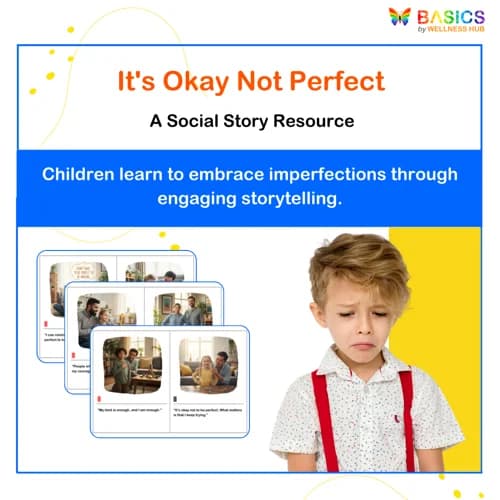
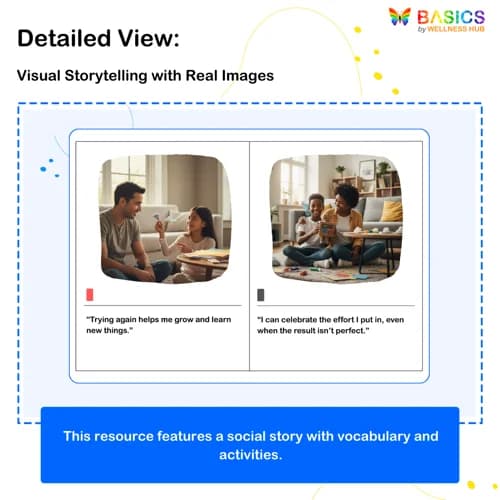
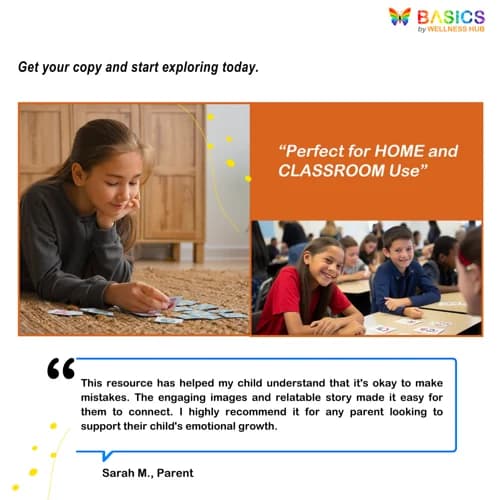
Understanding that it's okay not to be perfect is an important lesson for children, helping them build resilience, self-acceptance, and a positive mindset. The "It's Okay Not to Be Perfect" Social Story PDF is designed to guide children through this concept using relatable scenarios and real-life images. This resource is crafted to support children in developing emotional intelligence and coping strategies, making it ideal for use in both educational and therapeutic settings. By presenting the story in the first person, children can better relate to and internalize the message, fostering a healthy self-image and acceptance of imperfections.
Product Details
- Format: Printable PDF
- Total Pages: 11
- Social Story: 8 pages, divided into 16 segments, each featuring a real-life image and a sentence in the first person.
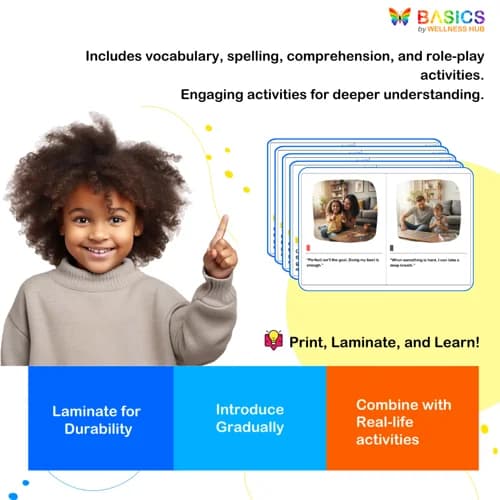
- Vocabulary and Spelling (Page 9): Includes 5 vocabulary words with multiple-choice definitions and 5 spelling words with correct and incorrect options.
- Comprehension and Open-Ended Questions (Page 10): Designed to encourage critical thinking and personal reflection.
- Role-Play Activities (Page 11): Engaging exercises to practice scenarios from the social story, enhancing understanding and application of the concepts.
- Ideal For: Parents, educators, therapists, and caregivers working with children on emotional and social development.
Additional Activities:
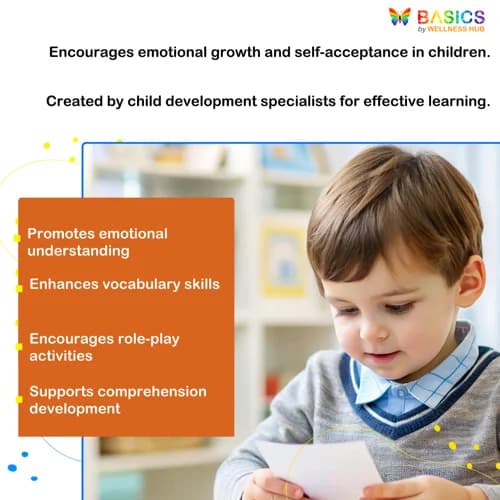
Educational Benefits
1. Promotes Self-Acceptance and Confidence
- Encourages children to embrace their imperfections and understand that making mistakes is a natural part of learning.
- Helps build self-esteem by reinforcing the idea that they are valued for who they are, not just for their achievements.
2. Develops Emotional Intelligence
- Teaches children to recognize and manage their emotions when faced with challenges or setbacks.
- Encourages empathy by helping them understand that everyone makes mistakes and it's okay.
3. Enhances Vocabulary and Language Skills
- Improves language comprehension through vocabulary and spelling exercises.
- Encourages children to articulate their thoughts and feelings more clearly.
4. Strengthens Critical Thinking and Reflection
- Promotes critical thinking through comprehension questions that require children to reflect on the story and relate it to their own experiences.
- Encourages open-ended discussions, allowing children to explore different perspectives and solutions.
5. Supports Social Skills and Role-Playing
- Provides opportunities for role-playing, helping children practice real-life scenarios and develop problem-solving skills.
- Enhances social interactions by teaching children how to respond to imperfections in themselves and others.
Instructions for Use
Step 1: Read the Social Story Together
- Sit with the child and read through the social story, discussing each segment and image.
- Encourage the child to relate the scenarios to their own experiences and feelings.
- Ask questions like:
- "How do you feel when you make a mistake?"
- "What can you do when things don't go as planned?"
Step 2: Vocabulary and Spelling Activities
- Review the vocabulary and spelling section on page 9.
- Ask the child to choose the correct meaning for each vocabulary word and the correct spelling for each word.
- Discuss the meanings and use the words in sentences to reinforce understanding.
Step 3: Comprehension and Open-Ended Questions
- Engage the child with the comprehension and open-ended questions on page 10.
- Encourage them to think critically and express their thoughts and feelings.
- Use prompts like:
- "Why do you think it's important to accept mistakes?"
- "How can you help a friend who feels bad about making a mistake?"
Step 4: Role-Play Activities
- Use the role-play activities on page 11 to act out scenarios from the social story.
- Encourage the child to practice responding to situations where things don't go perfectly.
- Provide feedback and support as they explore different ways to handle mistakes and challenges.
Step 5: Reinforce Learning in Daily Life
- Encourage the child to apply the lessons from the social story in their daily interactions.
- Praise their efforts to accept imperfections and learn from mistakes.
- Provide gentle reminders and support as they continue to develop resilience and self-acceptance.
Activities Using the Resource
1. Picture and Sentence Matching
Objective: Enhance comprehension by connecting text with visuals.
How to Play:
- Print and cut out each segment's picture and sentence separately.
- Mix them up and ask the child to match each picture with its corresponding sentence.
- Discuss the scenario depicted in each match to reinforce the story's message.
Skill Development:
- Visual literacy
- Reading comprehension
- Attention to detail
2. Vocabulary and Spelling Quiz
Objective: Reinforce language skills through interactive learning.
How to Play:
- Use the vocabulary and spelling section on page 9.
- Present the child with each word and its two options for meaning or spelling.
- Encourage them to choose the correct option and use the word in a sentence.
Skill Development:
- Vocabulary enhancement
- Spelling accuracy
- Contextual language use
3. Comprehension Discussion
Objective: Foster critical thinking and personal reflection.
How to Play:
- Read the comprehension and open-ended questions on page 10.
- Discuss each question with the child, encouraging them to relate answers to personal experiences.
- Explore different perspectives and solutions together.
Skill Development:
- Critical thinking
- Reflective discussion
- Empathy and perspective-taking
4. Role-Play Scenarios
Objective: Practice real-life application of the story's concepts.
How to Play:
- Choose scenarios from page 11's role-play activities.
- Act out each scenario, taking turns with the child to play different roles.
- Discuss how each character feels and explore various responses to mistakes.
Skill Development:
- Social interaction
- Problem-solving
- Emotional regulation
5. Daily Imperfection Journal
Objective: Apply lessons from the story to everyday life.
How to Play:
- Encourage the child to keep a journal of daily experiences where things didn't go perfectly.
- Write or draw about what happened, how they felt, and what they learned.
- Review entries together weekly to celebrate growth and resilience.
Skill Development:
- Self-reflection
- Emotional expression
- Growth mindset development
Frequently Asked Questions
Q1: How can this social story help my child?
A1: The "It's Okay Not to Be Perfect" social story helps children understand and accept imperfections, promoting resilience and self-acceptance. By using real-life images and first-person narratives, it makes the concepts relatable and easier for children to internalize.
Q2: What activities are included in the PDF?
A2: The PDF includes vocabulary and spelling exercises, comprehension and open-ended questions, and role-play activities. These are designed to reinforce the story's message, enhance language skills, and encourage critical thinking and empathy.
Q3: Can this resource be used in therapy sessions?
A3: Yes, it is ideal for use in both educational and therapeutic settings. Therapists can use it to support emotional intelligence development and coping strategies, making it a versatile tool for speech therapy, behavioral therapy, and more.
Q4: How can I incorporate this resource into daily life?
A4: Encourage your child to apply the lessons from the social story in everyday situations. Use the role-play activities to practice real-life scenarios, and consider keeping a daily imperfection journal to reflect on experiences and growth.
Q5: What is Wellness Hub's approach to therapy?
A5: Wellness Hub combines professional expertise with innovative digital tools to make therapy interactive and effective. They offer a range of services, including speech and language therapy, occupational therapy, and mental health counseling, all designed to be accessible and engaging.
Q6: How does Wellness Hub ensure the quality of its services?
A6: Wellness Hub emphasizes therapist qualifications, privacy, and caregiver involvement. They offer one-on-one sessions, starting with a free consultation, followed by assessments and regular progress tracking to ensure effective and personalized care.
Q7: What is the Tele-BASICS platform?
A7: The Tele-BASICS platform is a digital tool offered by Wellness Hub that makes therapy sessions interactive and engaging. It includes video sessions, games, and structured resources to enhance the therapeutic experience.
Q8: Are the resources provided by Wellness Hub suitable for home use?
A8: Yes, Wellness Hub offers a vast library of home therapy resources, including flashcards, worksheets, and visual schedules. These resources support parents and caregivers in continuing progress at home, complementing professional therapy sessions.
Q9: How can I access Wellness Hub's services?
A9: Wellness Hub's services are accessible online, making high-quality care available across India and beyond. You can start with a free consultation to discuss your child's needs and explore the range of therapy options available.
Q10: What is Wellness Hub's refund policy?
A10: Wellness Hub is committed to customer satisfaction. For specific details about their refund policy, it is best to contact their customer support directly to get accurate and up-to-date information tailored to your situation.
Usage Rights and Restrictions
Allowed Usage:
- Personal use by parents, teachers, and therapists.
- Printable for classroom, home, or therapy settings.
- Can be used in group or one-on-one learning sessions.
Not Allowed:
- Reselling, redistributing, or modifying the resource for commercial use.
- Sharing publicly (e.g., on blogs, social media, or websites) without permission.
- Uploading the file to public sharing platforms.
If you need a bulk license for schools or therapy centers, please contact us.
Conclusion
The "It's Okay Not to Be Perfect" Social Story PDF is a comprehensive resource designed to foster self-acceptance, resilience, and emotional intelligence in children. By using real-life images and first-person narratives, it helps children relate to and internalize the message that imperfections are a natural part of life. With engaging activities such as vocabulary and spelling exercises, comprehension questions, and role-play scenarios, this resource supports language development, critical thinking, and social skills. Ideal for parents, educators, and therapists, it provides a versatile tool for guiding children toward a positive mindset and healthy self-image. Encourage your child to embrace their uniqueness and learn from their experiences with this valuable resource.